As a buyer or brand owner, sourcing Realtree patterned apparel is a high-stakes endeavor. The allure of a popular camo can quickly turn into a legal and financial nightmare if your factory is not authorized to produce with this licensed intellectual property. How can you, from across the globe, verify that a Chinese or Asian factory’s claim of legitimacy is real? Relying on their word is not enough; you need a concrete, multi-step verification process to protect your investment and brand reputation.
A buyer can check a factory’s Realtree license legitimacy through direct verification with the licensor, scrutinizing the factory’s documentation chain, and investigating their established track record. Crucially, the factory must be an approved manufacturer for a specific, active licensee—they cannot hold a “general” factory license independent of a brand client.
Fake or overstated licensing claims are a common risk in global sourcing. A thorough due diligence process separates credible partners from those who could embroil you in infringement lawsuits. Let’s break down the actionable verification steps.
Why is direct verification with the licensor essential?
The only definitive source of truth is the IP owner. Realtree’s licensing program, managed by its parent company Jordan Outdoor Enterprises, maintains records of authorized licensees and their approved manufacturing facilities. Bypassing the factory and going straight to the source is your most powerful verification tool.
We advise all our prospective clients to take this step. Recently, a startup outdoor brand from Colorado was evaluating two factories, including us at Shanghai Fumao, and another cheaper competitor who claimed "full Realtree authorization." We encouraged the brand to contact Realtree’s licensing department directly. They provided our company name and our client’s pending licensee number. Realtree confirmed our status as an approved producer for that licensee. The competitor could not provide a verifiable licensee number for the brand to reference, and their claim dissolved upon direct inquiry. This simple call saved the brand from a catastrophic partnership.

How do I contact Realtree for verification?
The official Realtree website has a dedicated section for licensing inquiries. You should:
- Locate the contact information for the licensing or brand protection department.
- Prepare a formal email. State that you are a potential buyer/ licensee and wish to verify the manufacturing authorization of [Factory Name] and [Factory Address] for the production of Realtree products.
- If you already have a licensee number, include it. The licensor can then confirm if the factory is listed against that specific number.
Expect this process to take a few business days. A legitimate factory will have no issue with you taking this step; in fact, they should facilitate it.
What specific question should I ask the licensor?
Be precise. Do not ask, "Is this factory licensed?" Instead, ask: "Can you confirm that [Factory Full Name and Complete Address] is currently listed as an approved manufacturing facility for licensee number [XXX-XXX-XXX]?"
This phrasing addresses the core relationship: the factory is approved to produce for you (the licensee), under your license. The licensor’s confirmation of this link is the gold standard of verification.
What documents should a legitimate factory provide?
Paperwork tells a story. A factory with legitimate access to Realtree fabrics will have a clear, auditable documentation chain from the licensor, through the mill, and to their production floor. Requesting and scrutinizing these documents is a key part of your audit.
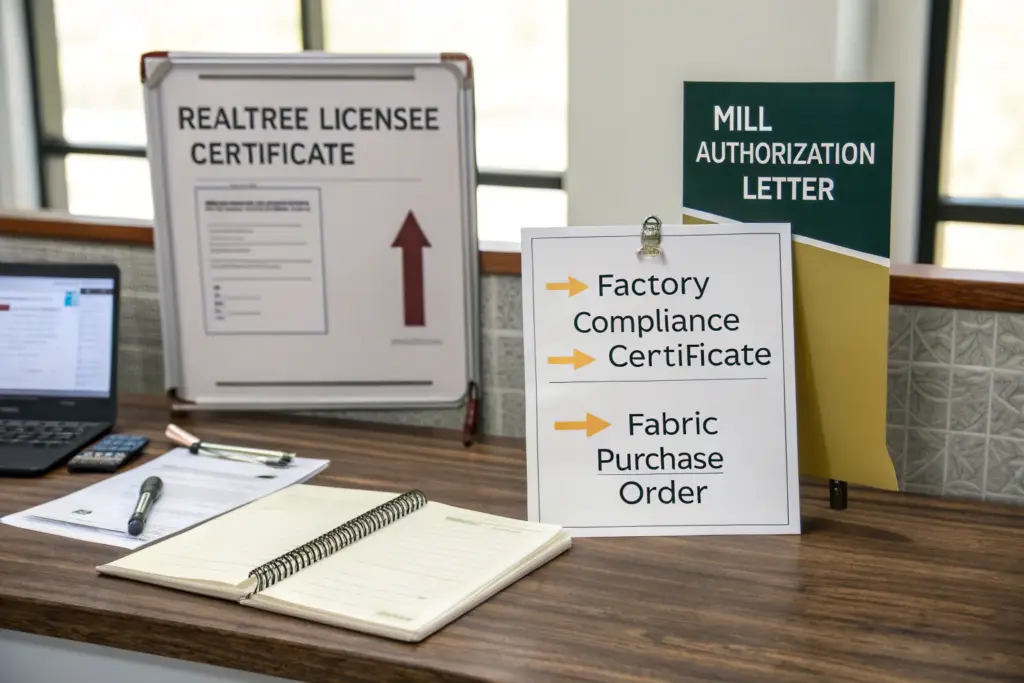
When we onboard a new licensed brand client, we proactively provide a Licensed Production Compliance Package. This includes not just our own certifications, but documentation showing our link to authorized mills. For instance, we can show past Mill Verification Letters (on mill letterhead) stating that they are authorized to supply specific Realtree fabrics to our factory for production under a specific client’s licensee number. This creates a transparent chain of custody.
What is a Mill Verification Letter and why is it critical?
This is a document from an authorized fabric mill (the company that prints the Realtree pattern on cloth) stating they have a business relationship with the factory in question. It should:
- Be on official mill letterhead.
- Name the factory specifically.
- Reference the production of Realtree patterns.
- Ideally, state that supplies are contingent on a valid licensee number.
Since mills are directly contracted by Realtree, their endorsement of a factory is a strong secondary proof point. You can cross-check the mill's name against Realtree’s list of authorized suppliers.
What should I look for in the factory's internal compliance documents?
Ask for:
- Quality Control (QC) Records for Licensed Goods: Check past inspection reports for Realtree projects. Do they include checks for correct hangtags, logos, and pattern alignment? This shows experience.
- Material Inventory Logs: How do they track and segregate licensed fabric from regular stock? A system of separate, logged storage is a sign of serious compliance.
- Training Records: Do they have records of training staff on IP protection and compliance procedures? This indicates an embedded culture, not just a checkbox.
How can I assess the factory's practical experience and reputation?
Documents can be forged, but a track record of successfully delivered, compliant licensed orders is much harder to fake. Investigating a factory’s real-world experience is about looking for evidence of sustained, trouble-free production.
We encourage clients to request references from other brands that use the factory for Realtree production. We connect them (with permission) with a long-term US client of ours who produces Mossy Oak and Realtree lines. That client can vouch for our processes, our handling of licensor approvals, and our consistent delivery of compliant goods. This peer validation is invaluable. Additionally, a factory should be able to show you physical samples of past Realtree work, complete with the official hangtags and labels that only a legitimate licensee can obtain.
What are red flags in a factory's claim?
Be extremely wary if a factory:
- Claims to Have a "General" Factory License: This does not exist. Authorization is always client/licensee-specific.
- Offers to "Get" the License for You: While they can guide you, the legal application must come from your brand entity. If they imply they can handle it entirely off your books, it’s a major risk.
- Has No Verifiable Client References: They cannot name a single US or EU brand they’ve produced licensed goods for.
- Suggests Using "Similar" Patterns to Avoid Royalties: This is an explicit admission they are not operating legally and will likely cut corners elsewhere.
How do supply chain audits reveal legitimacy?
Propose or insist on an on-site audit that includes a licensed production review. During the audit, you or a third-party auditor should:
- Visit the Fabric Warehouse: Ask to see the segregated storage for licensed materials. Is it clearly marked and controlled?
- Review Current Production: If they are running a licensed order, ask to see the Production Approval (PA) sheet from the licensor for that specific style. This document is unique to each approved product.
- Interview the Compliance Officer: Speak directly to the staff member responsible for IP compliance. Their depth of knowledge will be telling.
What are the risks of working with an unverified factory?
The consequences of failing to verify are severe and multi-dimensional, extending far beyond a single delayed order. Understanding these risks fully underscores the importance of due diligence.
A distributor client came to us after a disaster with a previous factory. They had produced 5,000 Realtree jackets with an unverified supplier. The goods were seized by U.S. Customs at the port of Los Angeles for suspected IP infringement. The licensor initiated legal action. The distributor lost the entire shipment, paid legal fees, and faced a permanent ban from future licensing. Their brand reputation in the hunting community was severely damaged. The upfront cost savings of using the cheaper, unverified factory were obliterated a hundred times over.
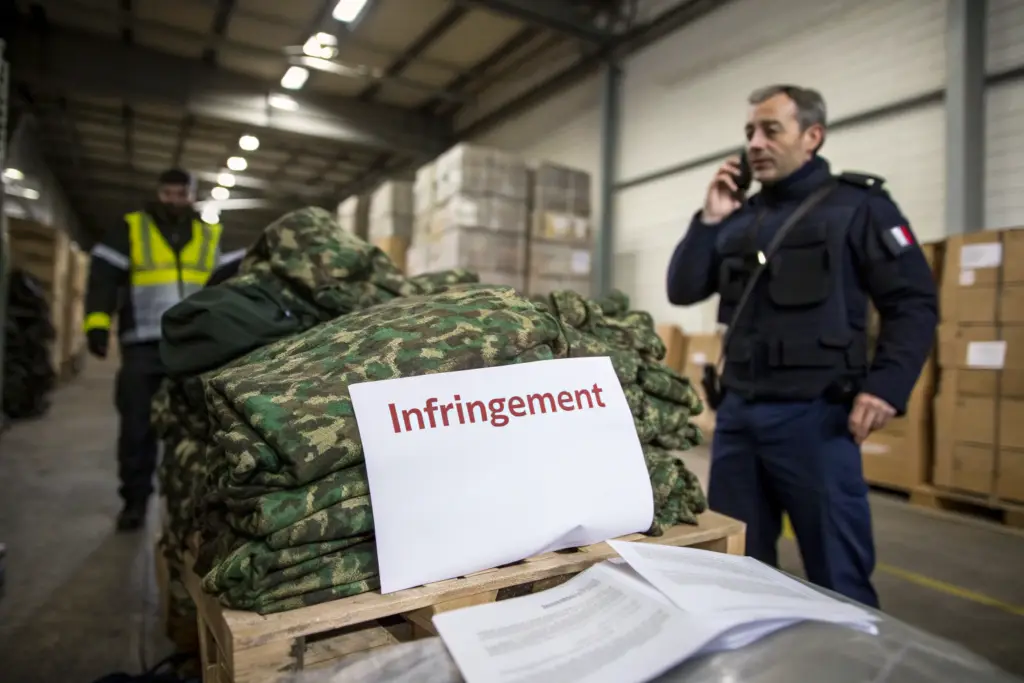
What are the legal and financial risks?
- Seizure of Goods: Customs authorities worldwide are trained to identify counterfeit goods. Shipments can be seized without compensation.
- Lawsuits and Fines: The IP holder can sue for damages, which can amount to multiples of the product's retail value, plus legal costs.
- Contract Nullification: Retail partners may have clauses that void agreements if you supply infringing goods, leading to lost business and claims.
What are the brand and operational risks?
- Irreparable Brand Damage: Being known for selling "fake" camo destroys credibility in the tight-knit outdoor industry.
- Supply Chain Disruption: A seized or destroyed order means missing your selling season entirely, losing revenue and shelf space to competitors.
- Blacklisting: Licensors share information. Being flagged for infringement can make it impossible to obtain a legitimate license in the future.
Conclusion
Verifying a factory’s Realtree license legitimacy is a non-negotiable, multi-faceted process that combines direct communication with the licensor, rigorous document review, and practical assessment of the factory’s track record. It moves beyond trust to establish verifiable proof. The buyer’s mantra must be: "Verify, then trust."
The complexity of licensed manufacturing makes choosing the right partner your most critical decision. A truly legitimate factory will not see this verification as an affront but as a sign of your professionalism and commitment to a long-term, secure supply chain.
If you are seeking a verified and experienced partner for your Realtree apparel production, Shanghai Fumao welcomes this level of scrutiny. We are transparent with our documentation, encourage direct licensor verification, and have a proven track record of compliant production for U.S. brands. Contact our Business Director, Elaine, at elaine@fumaoclothing.com to begin a partnership built on verified legitimacy and peace of mind.