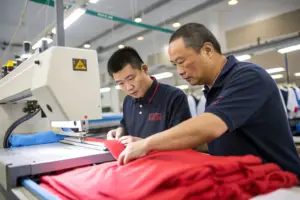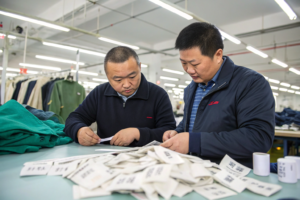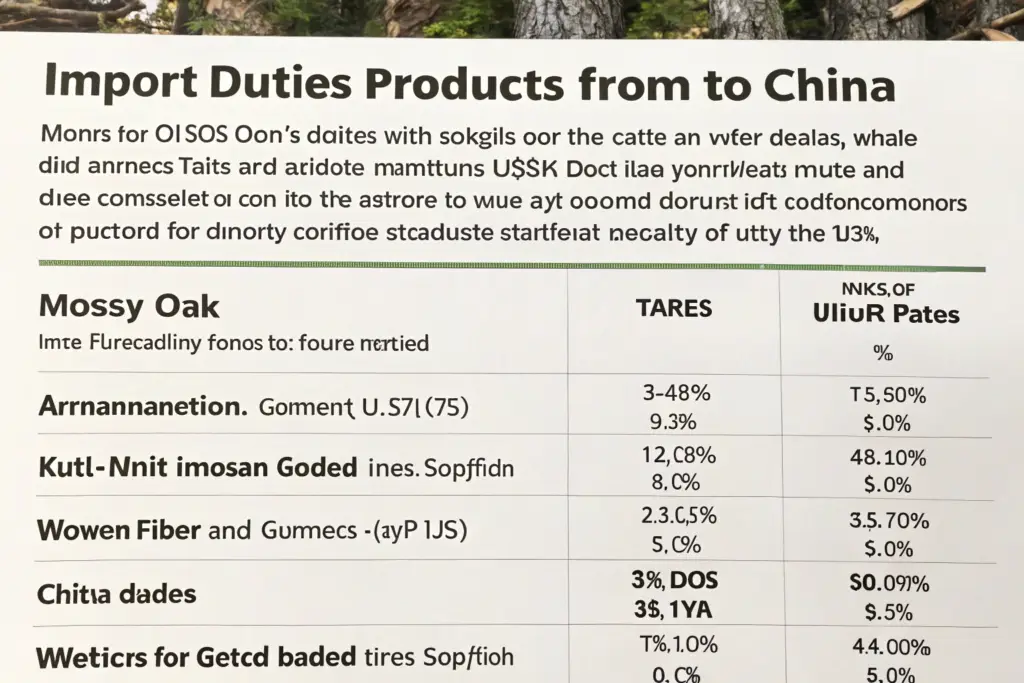
If you are a brand owner, buyer, or distributor sourcing Mossy Oak licensed apparel from China, understanding the true landed cost is critical for your pricing and profitability. The question of import duties often comes as a complex surprise, with rates varying significantly based on the specific product, its material composition, and even its intended use. A simple error in classification can lead to costly customs holds, unexpected fees, and missed selling seasons.
The import duties for Mossy Oak products from China to the USA are not a single rate but are determined by the Harmonized Tariff Schedule (HTS) code of the specific garment. Duty rates primarily depend on the garment’s construction (knit vs. woven), fiber content, and gender designation, typically ranging from 10% to 30% of the product’s declared customs value. Additional fees for licensed intellectual property may also apply.
Navigating this landscape requires precision and expertise. This guide will break down the key factors determining your duty rate, explain associated costs, and provide actionable strategies to ensure a smooth, predictable customs clearance process for your Mossy Oak shipments.
How is the correct HTS code determined for Mossy Oak apparel?
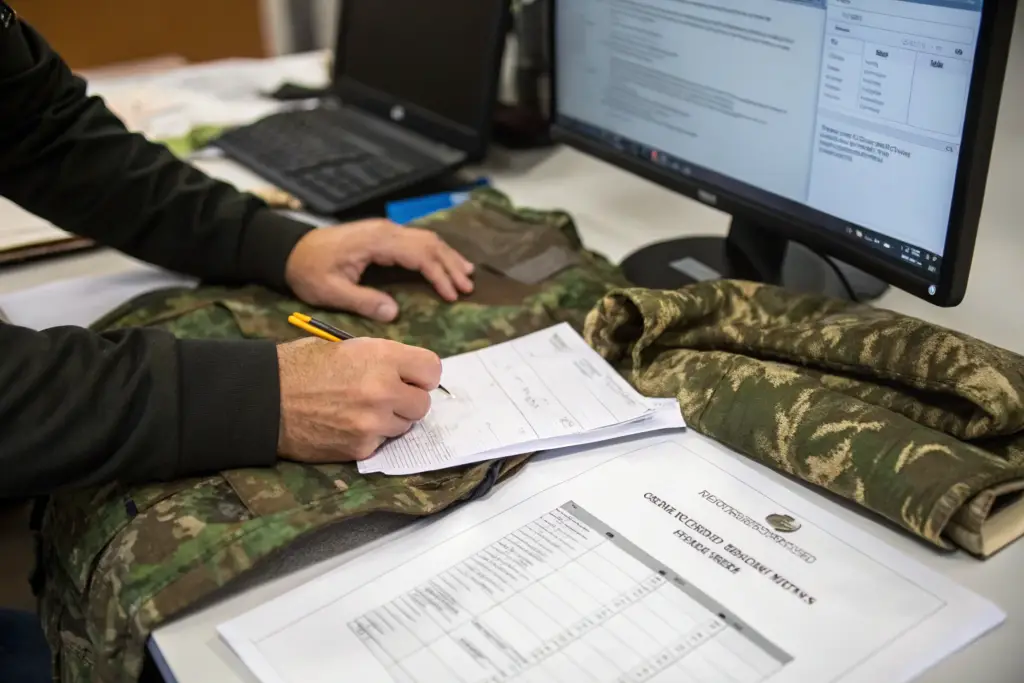
The cornerstone of calculating import duty is the correct HTS code—a 10-digit number that precisely describes your product to U.S. Customs and Border Protection (CBP). Assigning this code is a technical exercise, not a guess. An incorrect code can result in underpayment (leading to penalties and audits) or overpayment (eroding your margin).
Last year, we assisted a startup hunting apparel brand that had been incorrectly classifying their Mossy Oak men’s woven hunting pants as general workwear at a 16% duty. Upon our detailed analysis of the fabric (a blend with specific water-resistant properties) and design features (reinforced knees, multiple utility pockets), we helped them identify a more precise HTS code under “water-resistant trousers.” This shifted the duty to 8.5%, saving them over $12,000 on their first major container shipment. This underscores the value of manufacturer support in this process.
What are the key classification factors?
The CBP uses a decision tree to classify apparel. The primary factors are:
- Gender: Codes differ for men’s/boys’ vs. women’s/girls’ apparel.
- Construction: The fundamental split is between knit (e.g., performance base layers, fleece jackets) and woven (e.g., button-down shirts, canvas jackets).
- Fiber Content: The predominant material by weight (e.g., “of cotton,” “of man-made fibers,” “of wool”).
- Specific Features: Is the garment waterproof? Is it a suit? Does it have insulation?
For example, a Mossy Oak men’s knit fleece jacket made primarily of polyester will have a vastly different HTS code and duty rate than a men’s woven cotton hunting shirt. The official U.S. International Trade Commission (USITC) HTS Search Tool is the authoritative source for these codes.
Who is responsible for determining the HTS code?
Legally, the importer of record (typically the U.S. buyer) bears ultimate responsibility for correct classification. However, a competent and transparent manufacturer in China should provide expert guidance. At Shanghai Fumao, we provide a preliminary HTS code recommendation and a detailed Commercial Invoice and Packing List that clearly state the gender, material breakdown, and construction for each item, forming the essential documentation for our clients’ customs brokers to make the final determination. This collaborative approach prevents costly mistakes.
What are the typical duty rates for common hunting apparel categories?
While exact rates require precise classification, we can outline typical duty ranges for core Mossy Oak product categories imported from China. Note that these are general estimates, and you must consult with a licensed customs broker for your final calculation.
The following table provides a simplified overview. The “General Rate” column assumes trade under Normal Trade Relations (NTR) status, which applies to imports from China.
| Product Category | Typical HTS Chapter | General Duty Rate Range (Est.) | Key Determining Factors |
|---|---|---|---|
| Knit Performance Base Layers (Polyester) | 61 | 14.9% - 28.2% | Gender, specific knit type, elastane content. |
| Woven Hunting Shirts (Cotton) | 62 | 8.5% - 16.5% | Gender, whether shirt is waterproof, pocket style. |
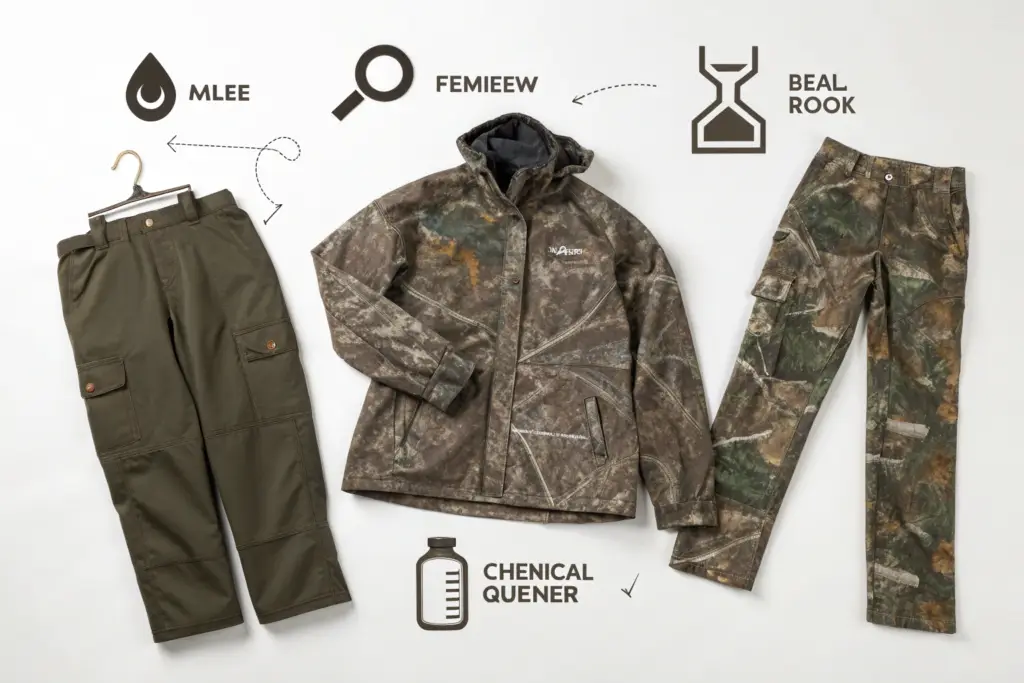
| Woven Hunting Pants & Cargo Pants | 62 | 8.5% - 16.0% | Gender, water-resistant properties, belt loops. |
| Fleece Jackets & Vests (Knit, polyester) | 61 | 14.9% - 32% | Gender, whether lined or coated, weight. |
| Insulated/Winter Jackets | 62 | 9.3% - 16.5% | Gender, outer shell material (e.g., nylon), down vs. synthetic fill. |
| Headwear (Knit Beanie) | 65 | 8.4% - 20% | Material composition, construction. |
Why do rates for “man-made fibers” tend to be higher?
Apparel made from man-made fibers (like polyester and nylon) generally carries higher duty rates than those made from cotton or wool. This is a long-standing structure in the U.S. tariff schedule designed to protect domestic textile industries. Since much of today’s technical hunting apparel uses high-performance synthetics, this is a significant cost factor. For instance, a simple men’s woven cotton shirt may have a duty around 16.5%, while a comparable shirt made of polyester could be subject to a rate above 26%. Understanding this material impact is crucial for product costing and sourcing decisions.
Are there additional duties on licensed products like Mossy Oak?
Yes. In addition to the standard duty, you may be liable for royalty payments on the value attributed to the licensed intellectual property. This is not an additional tariff but a dutiable value adjustment. If you pay a royalty or license fee to Mossy Oak Brands (or its agents) for the right to use the camo pattern, that fee must typically be added to the declared value of the goods upon which duty is calculated. Your customs broker must be made aware of any such licensing agreements. Failure to declare this can lead to charges of duty evasion.
What other costs are involved beyond basic import duty?
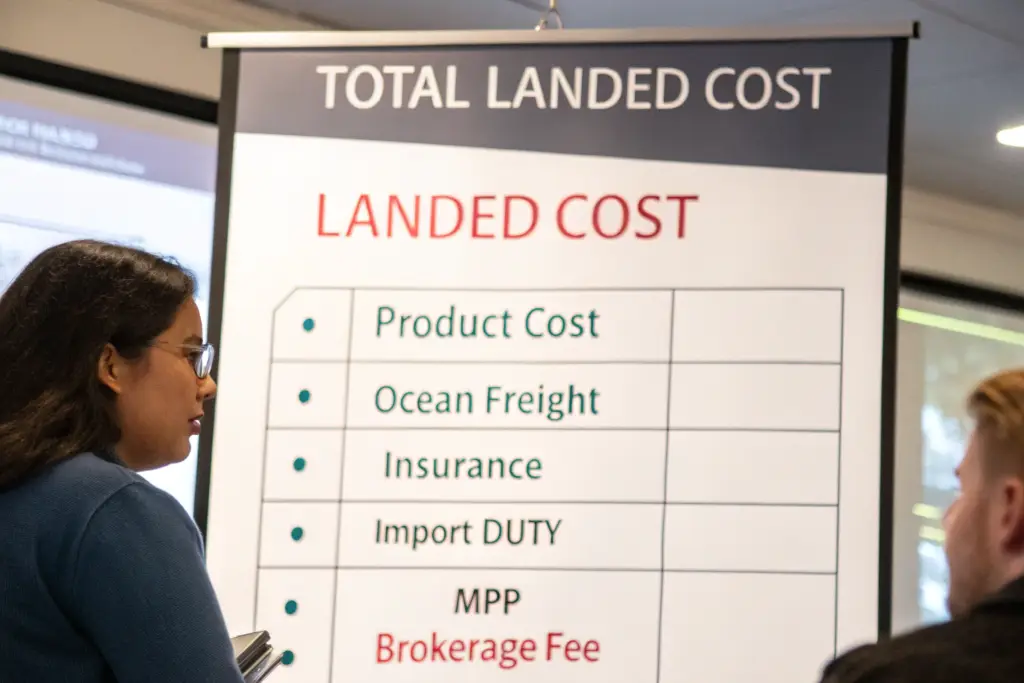
The landed cost of your goods includes a suite of charges beyond the basic duty rate. Budgeting only for duty is a common and costly mistake. A comprehensive understanding prevents budget overruns.
A client from Tennessee once faced a 15% budget overrun because their previous supplier shipped under FOB (Free On Board) terms and did not clarify all destination costs. When we took over their Mossy Oak line, we provided a DDP (Delivered Duty Paid) quote that included all fees up to their warehouse door. This gave them a single, predictable cost and eliminated the surprise of brokerage fees, harbor maintenance fees, and merchandise processing fees (MPF) that they had previously paid separately.
What are the standard U.S. customs processing fees?
Two mandatory fees apply to nearly all formal entries:
- Merchandise Processing Fee (MPF): This is an ad valorem fee of 0.3464% of the entered value (minimum $29.22, maximum $614.35). It is paid on almost every shipment.
- Harbor Maintenance Fee (HMF): This is 0.125% of the cargo’s value and applies to commercial shipments arriving by vessel.
These fees are collected by your customs broker and paid to CBP. They are in addition to the duty itself.
What are the costs of using a customs broker?
You cannot clear goods yourself commercially; a licensed customs broker is required. Their fees vary but typically range from $100 to $500 per entry, depending on complexity. A broker’s services include filing the entry, communicating with CBP, and arranging payment of duties and fees on your behalf. A reliable manufacturer will work seamlessly with your chosen broker, providing all necessary documentation accurately and promptly to avoid delays that incur demurrage or storage charges at the port.
How can DDP shipping simplify and de-risk the process?
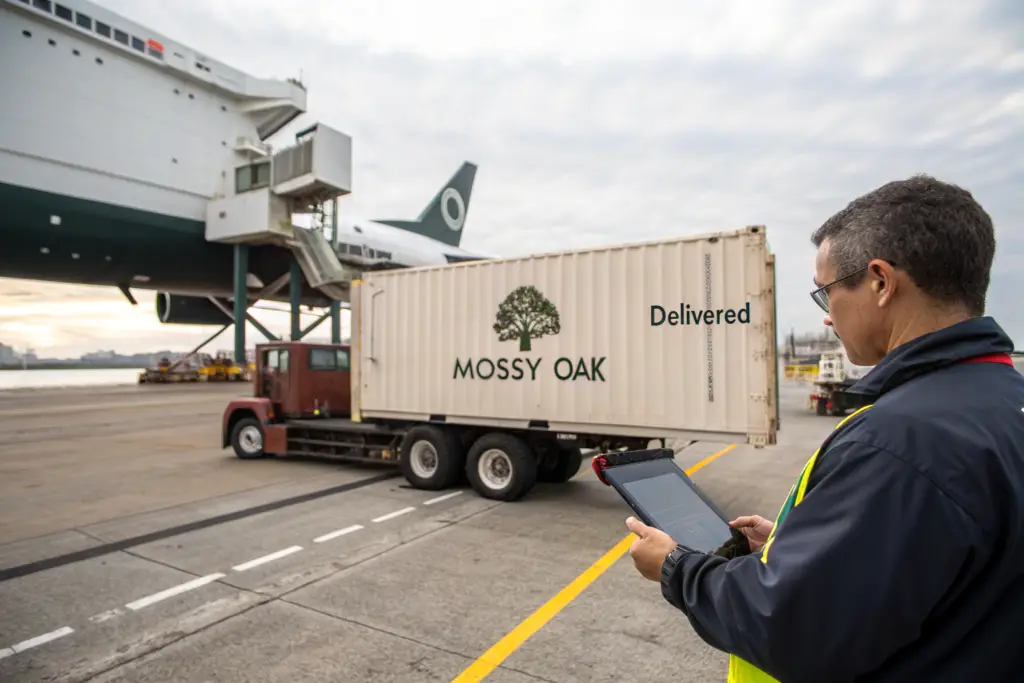
For importers seeking predictability and reduced administrative burden, Delivered Duty Paid (DDP) shipping is the most effective solution. Under DDP terms, the Chinese manufacturer (seller) assumes all risks and costs, including export duties, international freight, insurance, and U.S. import duties and taxes, until the goods are delivered to your designated warehouse.
We strongly advocate for DDP for our clients handling licensed brands like Mossy Oak. For example, for a Midwest distributor, we manage the entire logistics chain. We classify the goods with our experienced partner broker, pay all duties and MPF/HMF upfront, and deliver the container directly to their fulfillment center. They receive one inclusive invoice from us and never worry about customs paperwork or unexpected border charges. This allows them to focus on sales and marketing.
What are the key benefits of DDP for the U.S. importer?
- Cost Certainty: You know your exact landed cost upfront, with no surprises.
- Reduced Complexity: The manufacturer and their freight forwarder handle all customs formalities.
- Faster Resolution: If CBP has questions, the manufacturer’s agent is the importer of record and handles issues directly, preventing delays at your port.
- Compliance Security: A reputable manufacturer like Shanghai Fumao has a vested interest in perfect compliance to ensure smooth delivery, reducing your risk of fines or seizures.
When might DDP not be the best choice?
DDP may not be optimal for very large importers with their own in-house customs brokerage teams who can secure volume-based freight and brokerage rates. However, for most small to mid-sized brands and distributors, the efficiency, risk mitigation, and predictability of DDP far outweigh the potential marginal savings of managing a fragmented FOB supply chain, especially for high-value, licensed goods.
Conclusion
Determining the import duties for Mossy Oak products from China is a detailed process centered on precise HTS classification. Rates vary widely based on garment type, material, and design, typically falling between 10% and 30%. Beyond duty, importers must budget for MPF, HMF, and brokerage fees. The most effective strategy for ensuring compliance, avoiding delays, and achieving cost predictability is to partner with a knowledgeable manufacturer in China who offers transparent costing and robust DDP shipping solutions.
Navigating U.S. customs doesn’t have to be a source of anxiety. With the right partner, it becomes a streamlined, predictable part of your supply chain.
If you are looking for a manufacturing partner that provides not only top-quality Mossy Oak production but also expert guidance and hassle-free DDP logistics to your U.S. door, Shanghai Fumao is your solution. We bring clarity and reliability to the entire process, from fabric to fulfillment. Contact our Business Director, Elaine, at elaine@fumaoclothing.com to discuss your next order with confidence.