The market for kids' hunting and outdoor wear is growing, and parents are looking for gear that is not only functional and durable but also visually appealing with authentic designs. Customizing kids' wear with licensed camouflage patterns like Realtree, Mossy Oak, or KUIU requires navigating a specific set of challenges, from licensing compliance and size scaling to child-specific safety and comfort features. As a manufacturer who has helped numerous U.S. brands launch successful kids' lines, I understand the pitfalls and opportunities in this niche.
To successfully customize kids' hunting wear with licensed camo patterns, you must follow a structured process: First, secure official licensing rights for your chosen pattern. Then, partner with a manufacturer experienced in scaling adult patterns for children's sizes and integrating child-specific functional and safety features, all while maintaining the pattern's integrity and the garment's durability.
The process blends creative design with stringent legal and practical requirements. Let's walk through the key steps, from legalities to production, to ensure your customized kids' camo line is a hit.
How do you legally obtain and use licensed camo patterns?
You cannot simply print a famous camo pattern on your garments. These patterns are intellectual property, and their use requires formal licensing agreements to avoid costly legal action.
Licensing ensures authenticity for your customers and revenue for the pattern owner. It's the essential first step before any design or production begins.
What is the process to secure a licensing agreement?
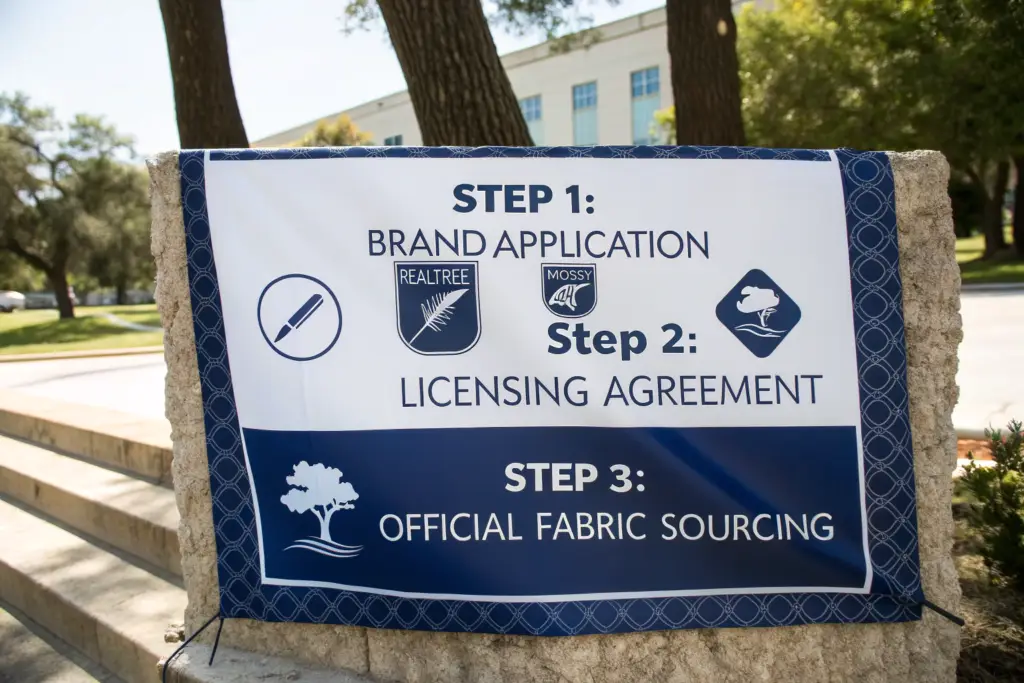
The process starts by contacting the intellectual property holder—like Realtree or Mossy Oak—directly through their brand licensing department. You will need to submit your brand details, business plan, and intended use of the pattern. They will review your application and, if approved, issue a licensing agreement that outlines royalty fees (usually a percentage of wholesale sales), quality standards, and approved manufacturers. For instance, a client of ours launching a kids' turkey hunting line had to provide our factory credentials to Mossy Oak for audit before they could be approved as a licensed producer. Working with a manufacturer like Shanghai Fumao who has experience with licensed production can significantly streamline this vetting process.
License holders strictly control where and how their patterns are printed. You cannot buy generic "camo" fabric. The license agreement will mandate that you purchase fabric from their authorized mills, which guarantee the pattern's color accuracy, print quality, and authenticity. These mills provide documentation certifying the fabric is genuine. This step is non-negotiable for compliance. Our sourcing team has established relationships with several licensed fabric mills across Asia, allowing us to procure the correct, certified materials efficiently for our clients' custom apparel manufacturing projects.
How are adult camo patterns adapted for kids' wear?
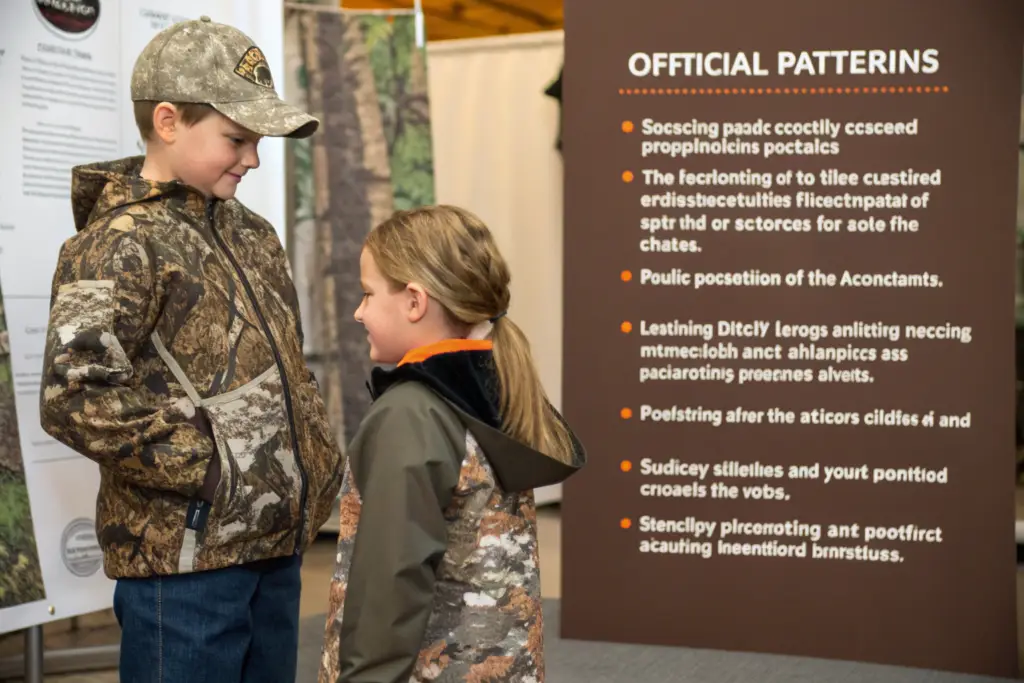
Scaling down an adult hunting pattern for a child's smaller frame is both an art and a science. It's not just about shrinking the print; it's about re-engineering the entire garment.
The goal is to maintain the pattern's recognizability and effectiveness while ensuring it looks proportional and aesthetically pleasing on children's sizes.
What are the key considerations in pattern scaling?
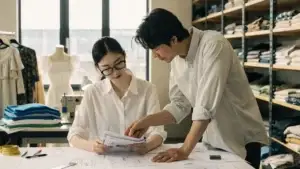
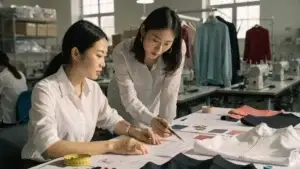
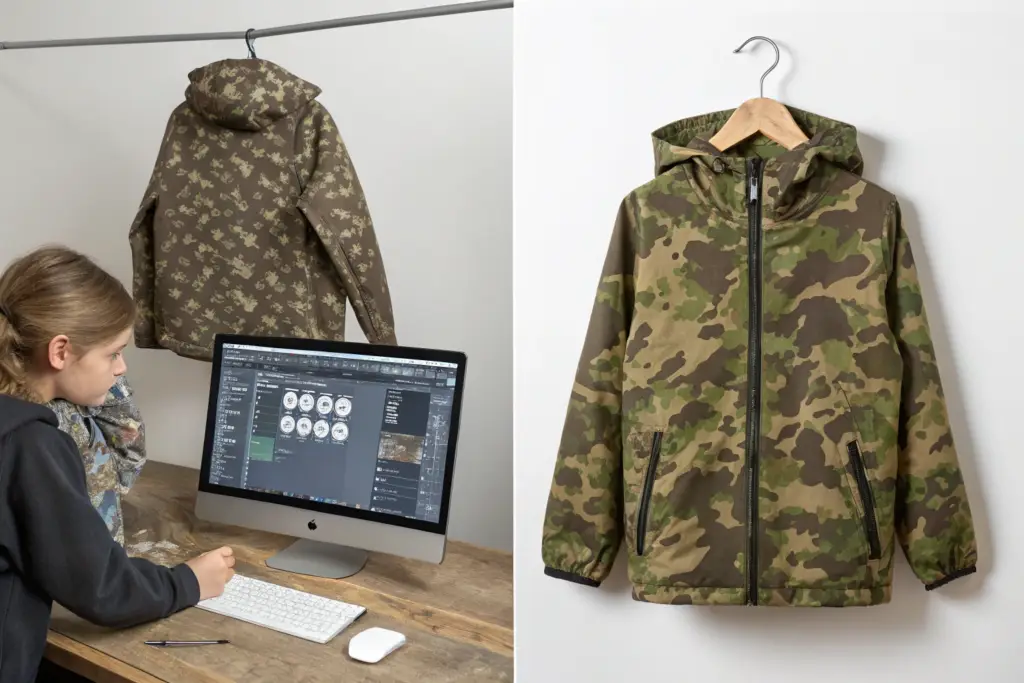
The pattern repeat—the vertical and horizontal distance before the design repeats—must be scaled down. A large branch and leaf detail that looks realistic on an adult XL will look like a blurry blob on a toddler's 2T. Our design team adjusts the repeat size proportionally across the size run. Furthermore, pattern placement is crucial. Key design elements should be centered on major garment panels (like the back) even in smaller sizes. We use specialized CAD pattern making software to meticulously test these adjustments digitally before cutting any fabric.
How does garment design differ for children's active wear?
Beyond the print, the garment itself must be redesigned for a child's body and activity level. Key features include:
- Proportions: Adjusting armhole depth, sleeve taper, and torso length.
- Safety: Using flatlock seams to prevent chafing, and avoiding loose cords or trims that could pose entanglement risks.
- Functionality: Adding growth tucks, adjustable hems, and easier closures (like magnetic snaps or larger zipper pulls) for independence.
- Comfort: Softer, more flexible fabrics and linings. For a recent line of kids' Realtree bib overalls, we integrated extra knee padding and used a quieter, soft-shell fabric to reduce noise in the field.
What are the critical production and quality aspects?
Manufacturing kids' wear, especially technical wear, demands higher attention to detail. The margins for error are smaller, and the expectation for durability is high, given how children use their clothing.
Quality control must be even more rigorous to ensure every stitch, seam, and print alignment meets both licensing standards and practical use demands.
What specific quality checks are mandatory?
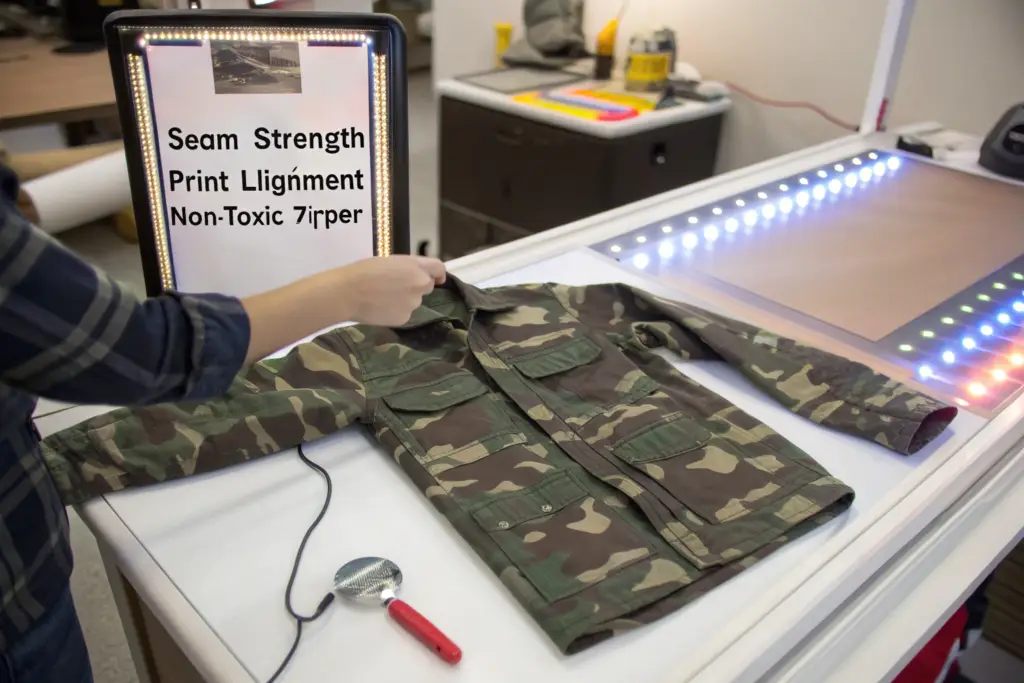
For licensed kids' camo wear, quality assurance happens at multiple stages:
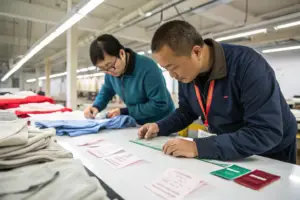
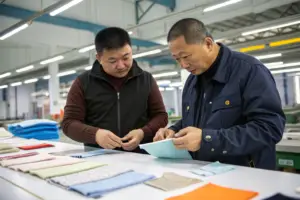
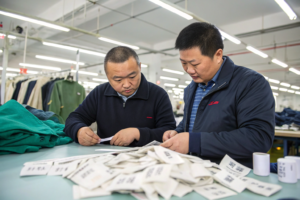
- Fabric Inspection: Verifying the authenticity certificate from the mill and checking for any print defects or color shifts in the camo pattern.
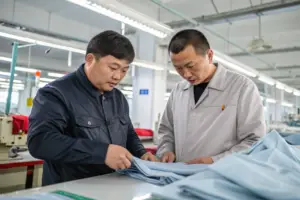
- In-Process QC: Monitoring seam integrity, especially at stress points like knees and seat, and ensuring pattern matching at seams (e.g., the camo pattern lines up across the side seam).
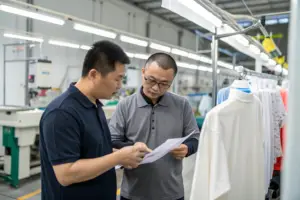
- Pre-Shipment Inspection: A full measurement check against size specs, a thorough examination of all hardware (snaps, zippers) for safety and function, and a final check of care label accuracy. We maintain a stricter Acceptable Quality Level (AQL) for kids' orders compared to adult wear.
How do you ensure durability for active use?
Kids are tough on clothes. We build durability into the construction:
- Reinforced Stitching: Using higher stitch counts per inch (SPI) and bar tacks at all stress points (pocket corners, belt loops).
- Robust Materials: Specifying heavier-duty zippers, snag-resistant fabrics, and applying durable water repellent (DWR) finishes where needed.
- Wash Testing: Conducting pre-production colorfastness and shrinkage tests to ensure the vibrant camo print withstands repeated laundering without fading or cracking.
What are the logistics of minimum order quantities (MOQs)?
Licensed fabrics and specialized production often come with higher minimum order requirements. Balancing these MOQs with market demand for a kids' line is a key business challenge.
Understanding and strategically planning for MOQs is crucial for cost-effectiveness and inventory management.

How do fabric MOQs impact a kids' line?
Licensed camouflage fabrics typically have high minimum purchase yards from the mill. For a kids' line, where garments use less fabric per unit, you must either order a very large quantity of garments or find creative solutions. One effective strategy we use at Shanghai Fumao is fabric consolidation. We can combine the fabric needs of multiple clients using the same pattern, or use the same licensed fabric across several styles in your collection (e.g., jackets, pants, caps) to meet the mill's MOQ cost-effectively.
Can you produce small batches with licensed patterns?
Traditional licensing and fabric rules make very small batches (e.g., 50 pieces per style) economically challenging. However, some newer, digital printing technologies are beginning to offer more flexibility for smaller runs of licensed patterns, though royalties still apply. For most brands, the practical approach is to start with a core, versatile collection—like a jacket and pant set in one popular camo pattern—produced at scale, and then expand based on sales data. Our full-package manufacturing model helps optimize this by providing detailed cost breakdowns at different order volumes.
Conclusion
Customizing kids' hunting wear with licensed camo patterns is a rewarding venture that taps into a passionate market. Success hinges on respecting the legal framework of licensing, mastering the technical design shift from adult to child proportions, and executing production with an unwavering focus on safety, durability, and quality. Partnering with a manufacturer that understands all these facets—from sourcing certified fabrics to implementing child-specific construction techniques—is the most critical step to de-risking the process.
By following this structured approach, you can create a kids' line that looks authentic, stands up to real-world use, and gives young hunters both confidence and comfort.
If you are looking to develop a high-quality, compliant, and profitable line of kids' hunting apparel with licensed camouflage patterns, Shanghai Fumao has the expertise and resources to guide you from concept to delivery. Let's discuss how we can tailor our development and production process to your specific vision and market needs. Contact our Business Director, Elaine, at elaine@fumaoclothing.com to begin the conversation about your next successful collection.