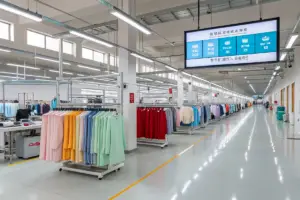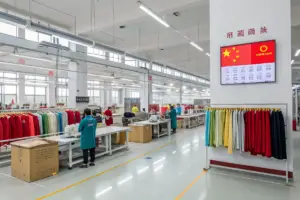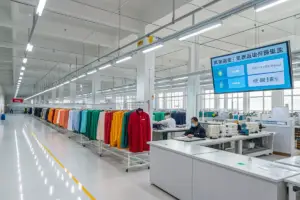
For U.S. brand owners sourcing hunting apparel, finding a supplier who can deliver both unique, on-trend camouflage designs and dependable, full-package service feels like a hunt in itself. The challenge is real: you need standout patterns to capture market attention, but you also require a manufacturer with the technical skill, licensing knowledge, and logistical reliability to turn those rare designs into profitable inventory.
Sourcing rare style camo hunting accessories from a licensed producer requires a strategic approach that balances creative design exploration with rigorous vetting of a manufacturer’s production capabilities, intellectual property compliance, and supply chain reliability. The key is to partner with an experienced apparel producer who not only offers access to licensed camo patterns but also provides integrated services from design to delivery, ensuring your unique vision reaches the market on time and to spec.
Many buyers spend too much time searching for a “design house” and a “factory” separately, creating communication gaps and liability issues. The most efficient path is to find a vertically-integrated partner who handles the entire process. As a company owner myself, I understand the pain of delayed shipments and certificate issues that can derail a selling season. Let’s break down the proven process to secure a trustworthy source for your next line of premium hunting accessories.
How to verify a camo pattern producer’s license and authenticity?
Before any design discussion, verification is non-negotiable. Using an unlicensed pattern can lead to legal disputes, shipment seizures, and irreparable brand damage. The stakes are too high to assume compliance.
You must request and scrutinize the producer’s official licensing agreements. A legitimate manufacturer will have direct contracts with pattern copyright holders (like Realtree, Mossy Oak, or KUIU) or be a sub-licensee under a certified fabric mill. Don’t just accept a certificate; ask to see the specific agreement that authorizes them to produce finished goods for export. For instance, last year a potential partner showed us a fabric mill’s license, but their own contract only covered domestic sales, not export to North America—a critical red flag we caught early.
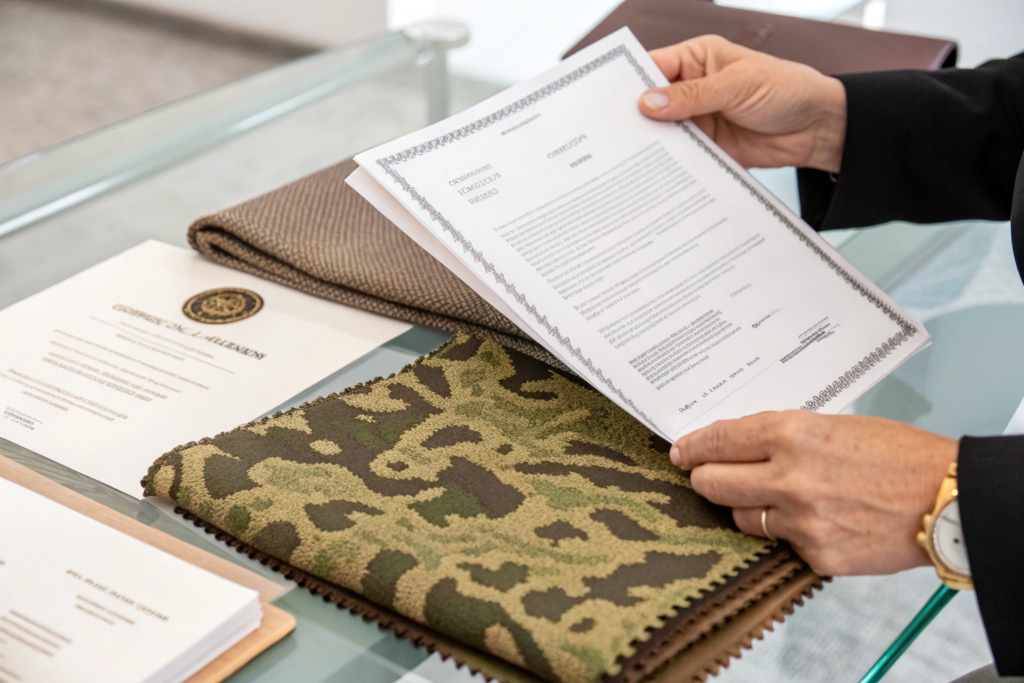
What documents prove legitimate camo pattern licensing?
The core documents are the License Agreement and the Certificate of Compliance. The license agreement is a legal contract between the pattern owner and the manufacturer, outlining scope, territories, and duration. The Certificate of Compliance, often issued per season or per order, confirms authorization for a specific production run. Always cross-reference the company name and address on these documents with your supplier’s business license. Additionally, reputable manufacturers undergo regular social compliance audits, which, while focused on labor standards, indicate a transparent and professionally managed operation. We advise our clients to request this full document set early in the quoting process.
How to avoid suppliers who falsify certifications?
Falsification is a serious risk. To avoid it, practice proactive verification. First, request direct contact information for the license holder’s regional representative and confirm the supplier’s status. Second, examine the physical hunting apparel fabric tags and labels on sample goods; authentic licenses are often woven or printed with official logos and codes. Third, work with a factory that is open about its supply chain. For example, at Shanghai Fumao, we invite key clients to visit our facility and review our active license portfolios for major patterns, building trust through transparency. This hands-on approach prevented a major issue for a Midwest-based distributor we partnered with in 2023, whose previous supplier had provided forged documents for a popular camo variant.
What are the key steps in developing custom camo hunting accessories?
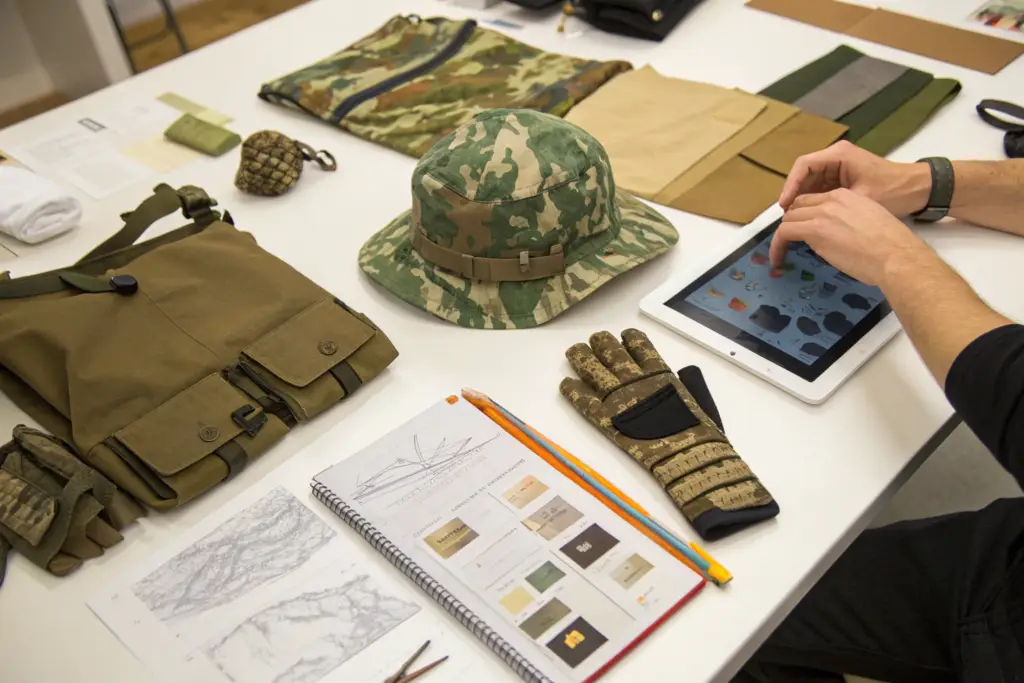
Developing custom accessories like caps, gloves, bags, and gun cases in rare camo styles is a detailed process. It moves from concept to tangible product through defined stages: design conceptualization, pattern application, technical prototyping, and pre-production sampling. Rushing any step risks a final product that doesn’t meet quality or aesthetic expectations.
The first step is a creative briefing where you share inspiration, target audience, and functional requirements. A skilled manufacturer will then guide you on which base materials (like durable polyester or blended fabrics) best suit the accessory and the chosen camo print technique. The success lies in the factory’s ability to translate a 2D pattern onto a 3D product effectively.
How does the sampling process work for rare camo designs?
The sampling process is your safety net. It typically involves two main rounds: a development sample and a pre-production sample. The development sample focuses on design accuracy, color matching, and initial fit. This is where you assess if the rare camo pattern aligns correctly on seams and details. The pre-production sample, made with correct materials and trims, is for final approval of quality and workmanship. For a unique, multi-layer digital camo pattern we developed for a client last fall, we went through three sampling rounds to perfect the color gradient and ensure the print repeat was flawless across different accessory sizes, a diligence that paid off in a flawless production run.
Which materials are best for durable hunting accessories?
Material selection dictates durability, functionality, and print quality. For accessories facing abrasion, high-density nylon packcloth or polyester oxford fabrics are excellent for bags and cases. For items requiring flexibility and touch sensitivity, like gloves, a blend with spandex is key. The material must also be suitable for the printing or dyeing method—sublimation printing offers vibrant, all-over patterns on lighter fabrics, while printed vinyl overlays work for heavy-duty items. Always request material swatches and tested quality control reports for tear strength and colorfastness from your producer.
How to ensure quality control for specialized camo apparel production?
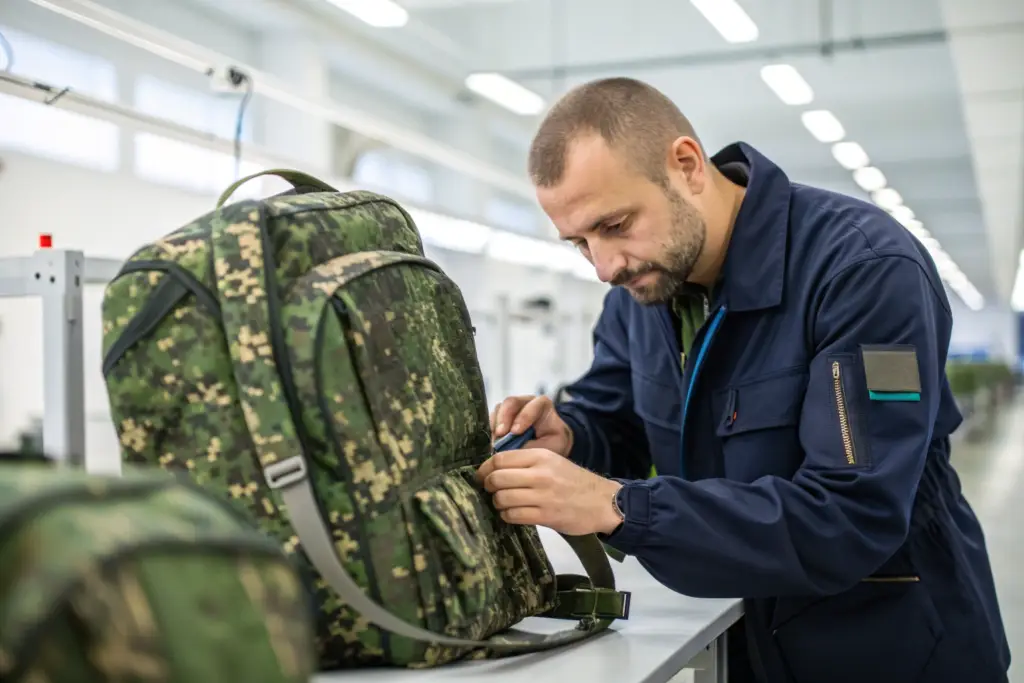
Quality control for camo accessories is twofold: it’s about consistent pattern alignment and rugged product construction. A single misaligned seam can ruin the visual continuity of a camouflage pattern, defeating its purpose. Your manufacturer must have QC protocols specifically for printed and patterned goods.
This involves inline checks during cutting and sewing, and a final random inspection (AQL) before shipment. The standard AQL inspection is a good baseline, but for camo, you need added checkpoints. We implement a “pattern match audit” at the cutting stage, where supervisors verify that the pattern pieces are cut and bundled to ensure seamless alignment when sewn. This level of detail is what separates a premium product from a generic one.
What are common quality defects in camo accessory manufacturing?
| Defect Category | Specific Examples | Impact |
|---|---|---|
| Pattern/Print Defects | Misalignment at seams, color inconsistency between batches, blurry print, incorrect pattern repeat. | Ruins aesthetic, reduces product value and effectiveness. |
| Material Defects | Dye spots, streaks, fabric weak points, wrong material weight or composition. | Affects durability, functionality, and safety. |
| Construction Defects | Weak stitches, faulty zippers or buckles, incorrect sizing, poor logo customization. | Leads to product failure and customer returns. |
| Compliance Defects | Incorrect or missing legal labels, care labels, or safety certifications. | Can result in customs holds or legal penalties. |
Can you visit the factory for production audits?
Absolutely, and we encourage it. A factory visit is the most effective way to audit production capability, social compliance, and quality systems firsthand. You can see the factory floor organization, the handling of materials, and the skill of the workers. During a visit, you can also meet the production and QC team directly, establishing clearer communication lines. A client from Texas who visited our Shanghai Fumao facility in early 2024 was able to adjust a glove design on the spot after seeing the sewing process, shaving 10% off the production cost and improving durability.
What logistics and payment terms are best for importing camo gear?
Efficient logistics and clear payment terms are the backbone of a profitable import operation. For time-sensitive hunting gear, delays mean missing crucial selling seasons. Therefore, choosing a supplier who manages logistics and offers secure, balanced payment terms is critical.
Opt for a DDP mode agreement where the supplier handles all shipping, duties, and delivery to your U.S. warehouse. This simplifies your costs and reduces risk. For payment, a balanced approach like 30% deposit with order confirmation, 40% before shipment, and 30% upon receipt of goods is standard and fair. This protects both parties and builds a foundation for long-term partnership.

How does DDP shipping simplify the importing process?
DDP shipping mode means Delivered Duty Paid. Under this term, your manufacturer is responsible for the entire logistics chain: export declaration, international freight, import customs clearance, and payment of all duties and taxes, until the goods are delivered to your designated address. This model provides you with a single, all-inclusive price and eliminates the hassle of dealing with customs brokers and freight forwarders. For U.S. brands, it brings much-needed predictability to landed costs. We transitioned a long-term client from FOB to DDP two years ago, and they reported a 15% reduction in administrative time and eliminated unexpected port fee surprises.
What are secure payment methods for international orders?
Secure methods include bank transfers (TT) with milestone payments, letters of credit for large orders, and using escrow services on platforms like Alibaba. While letters of credit offer high security, they involve more banking fees. For established trust, direct bank transfers are most common. The key is to tie payments to clear milestones: deposit upon order, balance before or after shipment based on agreed terms. Always use contracts. As a factory, Shanghai Fumao is flexible and transparent with our terms, understanding that reliable payment practices are a two-way street that underpins every successful order.
Conclusion
Sourcing rare style camo hunting accessories from a licensed producer is a multifaceted endeavor that goes beyond finding the coolest pattern. It demands a partner who integrates licensing assurance, creative and technical development, rigorous quality control, and dependable logistics into a seamless service. The goal is to turn your unique product vision into market-ready goods that arrive on time, every time, allowing you to focus on building your brand and satisfying your customers.
By prioritizing partners with proven expertise, transparent practices, and a full-package approach, you mitigate the common pain points of delayed shipments, quality surprises, and compliance issues. This strategic partnership is the most valuable asset in your sourcing toolkit. If you are looking to develop a line of standout camo hunting accessories with a reliable, licensed manufacturer, we should talk. Let Shanghai Fumao be your trusted manufacturing extension. For a direct conversation about your next project, please reach out to our Business Director, Elaine, at elaine@fumaoclothing.com. We are here to help you bring your most ambitious apparel visions to market successfully.