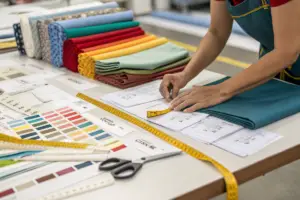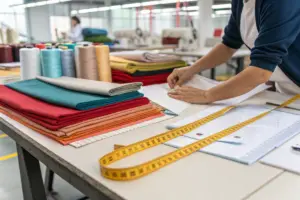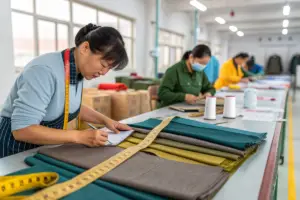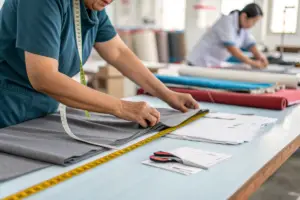
You’re gearing up for the fall hunting season. Your designs are sharp, your marketing is ready, but there’s a knot in your stomach: will your supplier deliver your camo jackets and insulated gear on time? A delayed launch can mean missing the entire selling window. As a factory owner who has lived through countless seasonal rushes, I understand this pressure intimately. The key isn’t just working faster; it’s working smarter from day one.
To speed up production for seasonal hunting apparel, a B2B supplier must master proactive timeline compression. This involves starting fabric sourcing and proto-sample development 8-10 weeks before the official order is placed, utilizing digital collaboration tools for real-time approvals, and implementing a modular production system for high-demand items like camouflage jackets and base layers. The goal is to eliminate sequential waiting periods and run processes in parallel.
Seasonal hunting apparel manufacturing is a race against the calendar. It’s not just about sewing speed; it’s about strategic foresight, supply chain agility, and flawless communication. At Shanghai Fumao, we’ve refined a system that consistently compresses lead times by 30-40% for our partners, turning the stressful seasonal launch into a predictable, streamlined operation. Let’s break down how this is achieved.
Why is early, pre-season collaboration critical?
Waiting for a final purchase order (PO) to start work is the single biggest cause of missed deadlines. For hunting seasons, the timeline is unforgiving. The critical path to acceleration begins long before the official order confirmation.
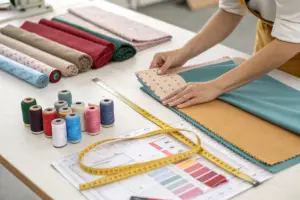
True speed is built on anticipation. When a brand partner engages with us during their concept phase—often 6-8 months before the in-store date—we can activate our pre-production engine. This means we begin researching and sourcing fabric for popular hunting materials like Quiet-Tech softshell or moisture-wicking membranes based on their initial direction. We can also prepare base patterns for common hunting silhouettes (e.g., bib overalls, parkas) so that once the final design is approved, we are weeks ahead.
The traditional, linear process is a timeline killer. The modern approach is parallel processing.
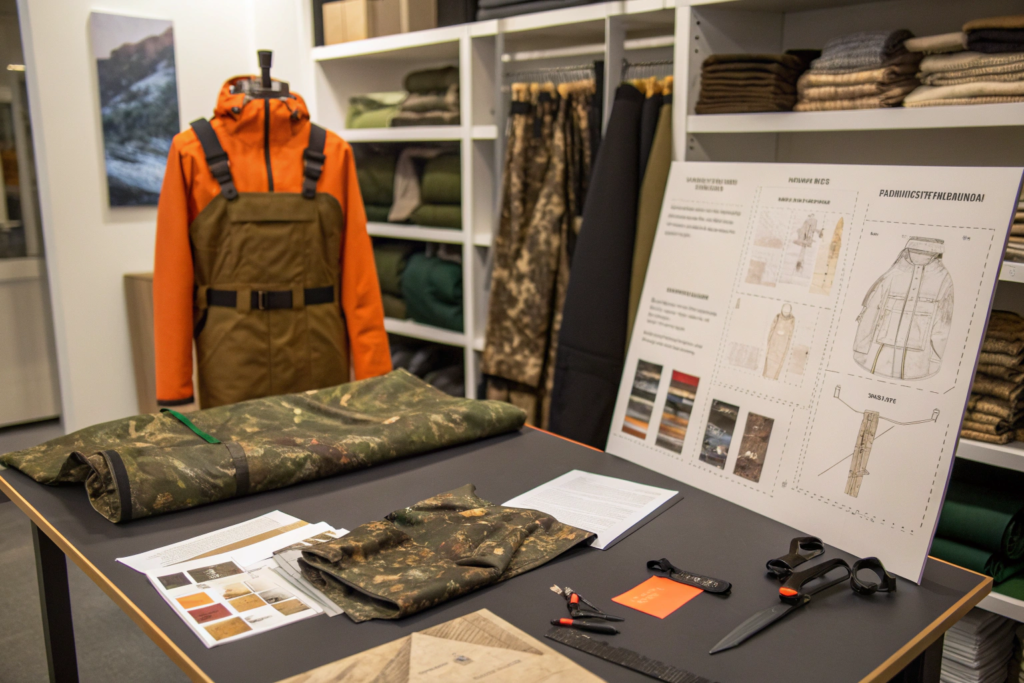
What happens in the pre-PO development phase?
This phase is dedicated to removing future bottlenecks. Here’s our actionable checklist with a client from last spring targeting the whitetail deer season:
- Fabric & Trim Pre-Sourcing: We identified their need for a new, quieter brush-resistant fabric. Instead of waiting, we sourced and tested 5 swatches from our vetted mill network, conducting abrasion tests and noise decibel checks internally. When the PO came, the selected fabric was already in pre-production at the mill.
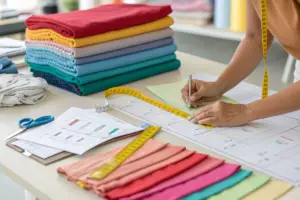
- Proto-Sample Engineering: We created a proto sample based on their tech pack sketches. Using 3D clothing design software, we resolved fit issues on a digital avatar, cutting the physical sample iteration time from 3 weeks to 1 week.
- Capacity Reservation: Based on forecasted volumes, we blocked production line time in our schedule. This guaranteed their slot without requiring a final commitment, a service we offer to trusted partners.
How does digital prototyping save crucial weeks?
The old method of mailing physical samples back and forth across the ocean can consume a month. Now, digital tools collapse that time. We share interactive 3D samples where you can see fabric drape, adjust colors (like Realtree or Mossy Oak pattern placements), and even visualize stitch details. For a client’s hunting vest line, this process allowed for three rounds of virtual fit amendments in 5 days, a task that previously took 21 days. Final physical approval was then achieved in one go.
What supply chain strategies prevent fabric delays?
Fabric procurement is the most unpredictable part of the lead time. For hunting apparel, which often uses specialized, performance-oriented materials, delays here cascade through the entire production schedule. A proactive supplier doesn’t just order fabric; they manage and de-risk the supply chain.
Specialized hunting fabrics—whether it’s waterproof laminated fabrics, insulated Primaloft fill, or licensed camouflage prints—have longer lead times from mills. A speed-focused supplier mitigates this by holding strategic fabric inventory or securing forward commitments with mills based on seasonal forecasts.
The strategy is twofold: consolidate buying power for common materials and develop ultra-responsive channels for custom items.
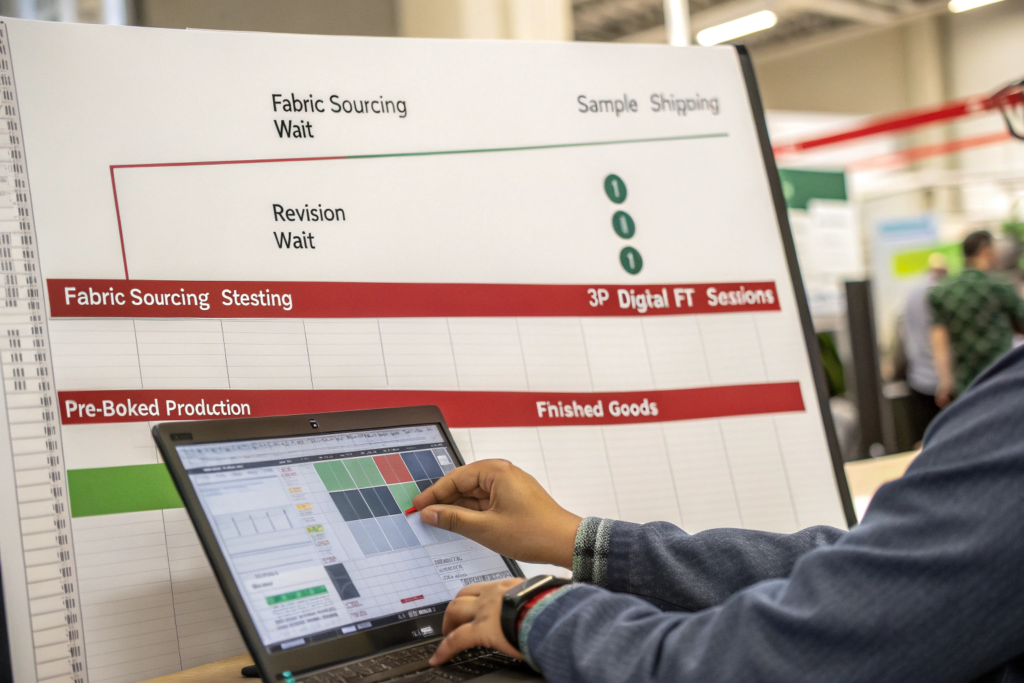
Which fabrics should be stocked or pre-committed?
We maintain a strategic fabric inventory for high-demand, season-agnostic hunting materials. This isn’t a massive warehouse, but a smart buffer of proven performers.
| Fabric Type | Example | Why Stock/Pre-Commit? |
|---|---|---|
| Base Performance Knits | Polyester moisture-wicking mesh, mid-weight fleece | Used in almost every hunting line for base layers; standard colors (olive, grey, camo accents). |
| Essential Insulations | 60g, 80g, 100g weight synthetic insulation | Critical for jackets and bibs; lead times from insulation suppliers can blow out in Q2. |
| Core Woven Fabrics | Durable, quiet polyester/cotton blends in common camo ground colors | The "canvas" for many printed hunting garments; having the base fabric ready saves 3-4 weeks. |
For a major client’s fall line, our pre-committed stock of a specific sherpa-lined fleece fabric allowed us to start cutting 48 hours after PO receipt, while their other suppliers were quoting a 5-week fabric lead time.
How do you handle licensed camouflage print logistics?
Licensed patterns (like Mossy Oak Bottomland or Realtree Edge) add a layer of complexity. Speed here depends on the print method. For sublimation printing on lighter fabrics, we often keep greige (undyed) fabric in-house and partner with a local digital print facility, turning around printed fabric in 7-10 days. For heavier, woven camouflage fabrics, we work with a select group of mills that grant us allotted capacity for the season. We provide them with rolling forecasts, so when the final order with the specific pattern and yardage lands, our slot is prioritized. This system shaved 4 weeks off the production timeline for a partner’s entire camouflage outerwear collection last year.
How can production planning be optimized for quick turnaround?
When materials arrive at the factory, the race is on. Efficiency at this stage separates suppliers who deliver on time from those who deliver excuses. Optimized production planning for seasonal gear is about minimizing changeovers, maximizing line efficiency, and having clear contingency plans.
For hunting apparel, which often involves bulky insulation, multiple pockets, and complex taping for waterproof seams, standard production lines can slow down. Optimization requires a tailored approach, grouping similar construction techniques and deploying skilled operators to critical stations.
The core philosophy is "flow manufacturing," where work-in-progress moves smoothly between stations without batching delays.
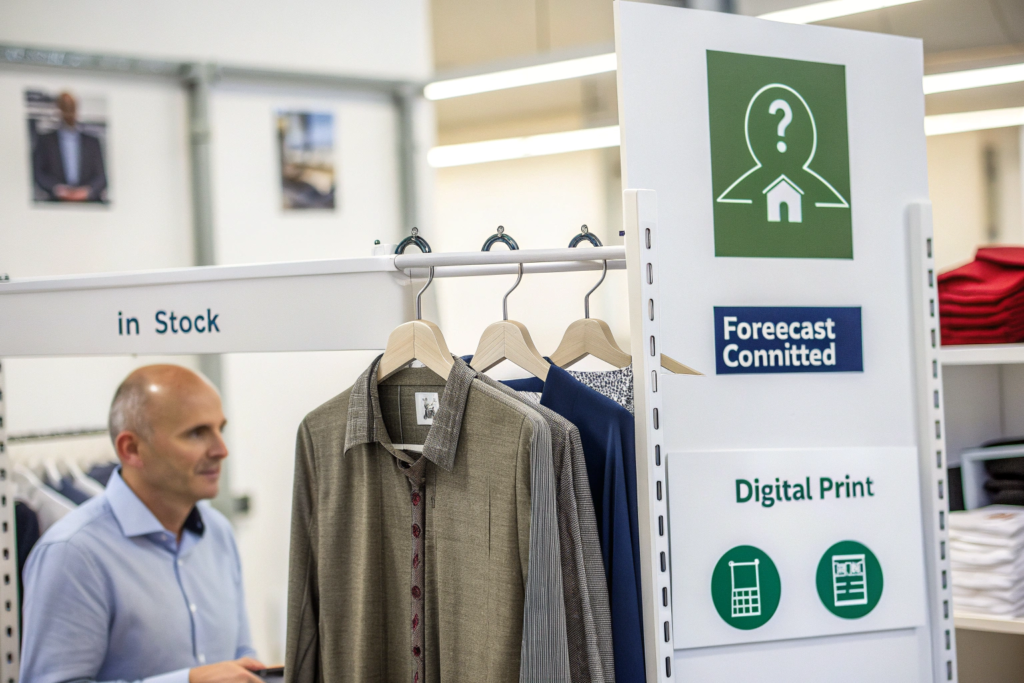
What is a modular or dedicated line setup?
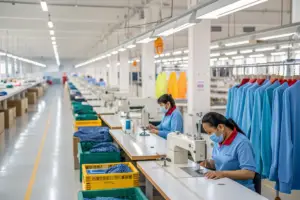
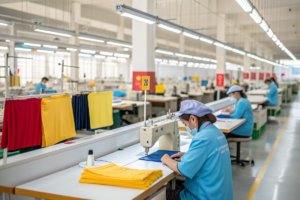
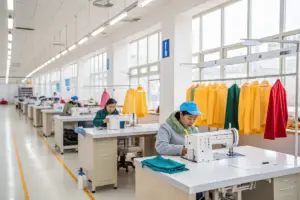
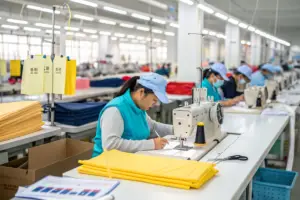
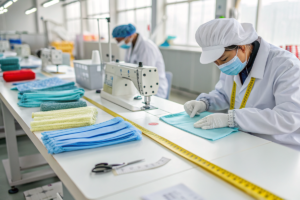
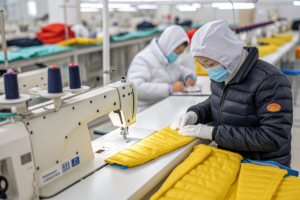
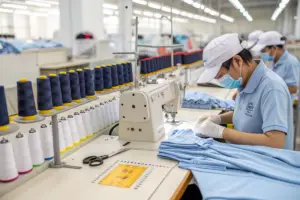
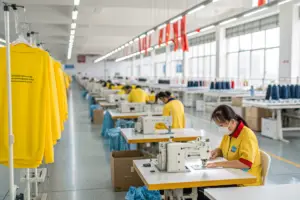
Instead of resetting a production line for every single style, we group similar products. For example, we may dedicate one of our five production lines to "Insulated Outerwear" for a 4-week block. This line is staffed with operators specially skilled in handling insulation, installing heavy-duty zippers like YKK Vislon, and performing seam taping. The machines (e.g., puffers for insulation, tape applicators) are already set up. When orders for insulated jackets, bibs, and vests come in, they flow onto this line with near-zero setup time. Last July, this method allowed us to produce 25,000 units of insulated hunting wear for a key brand in just 5 weeks, a timeline others said was impossible.
How does real-time QC prevent bottlenecks?
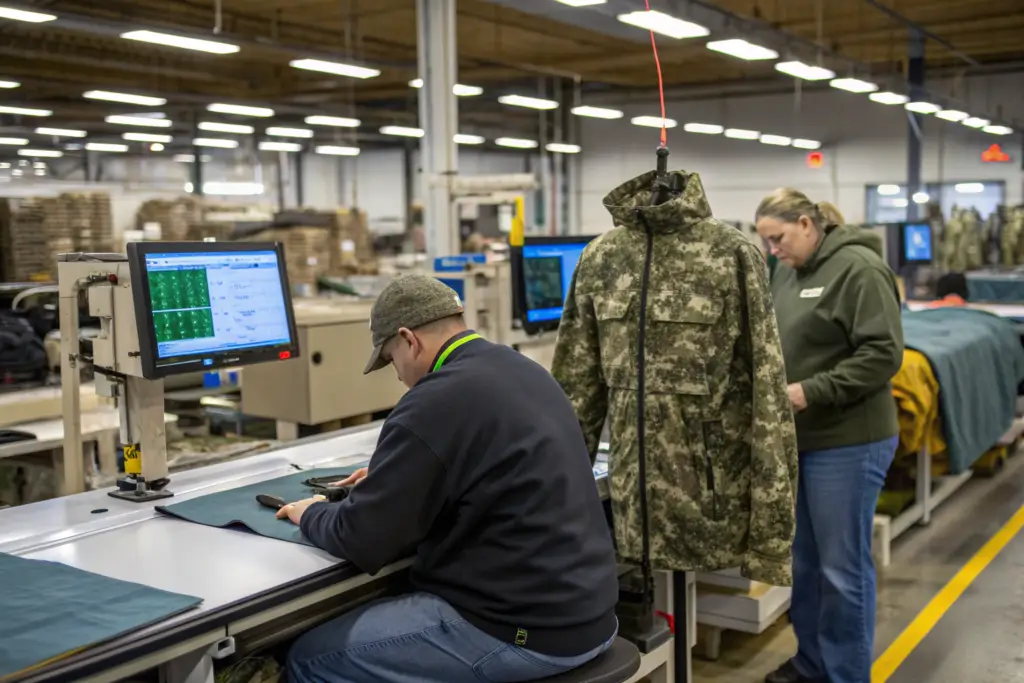
A hidden time thief is the pile-up of finished goods waiting for final quality inspection. If issues are found late, large-scale rework causes massive delays. Our solution is in-line and end-of-line QC stations integrated into the production flow.
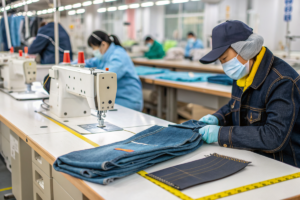
- In-line QC: Skilled checkers audit pieces at critical stages (e.g., after pocket installation, before lining is closed). A flaw is caught and fixed within minutes, on the spot.
- Digital QC Reporting: Inspectors use tablets to log any issues. This data updates a live dashboard, alerting the production and pattern-making teams to systemic issues immediately. For a recent order of hunting pants, in-line QC caught a consistent pocket alignment issue on Day 1, allowing the pattern to be corrected before 90% of the order was cut, saving a potential 10-day rework disaster.
What role does logistics pre-clearance play in on-time delivery?
Your goods leaving the factory on time means nothing if they get stuck at port, in customs, or on a slow boat. For time-sensitive seasonal hunting apparel, the logistics plan must be as meticulously crafted as the garments themselves. The final sprint to market is all about predictable, expedited transit.
A fast supplier partners with logistics experts and uses Incoterms like DDP (Delivered Duty Paid) to control the entire journey to your warehouse. This includes pre-booking air or sea freight space based on the production schedule and preparing all customs documentation in advance.
Pre-clearance is the art of doing paperwork while the goods are being made, not after they’re packed.
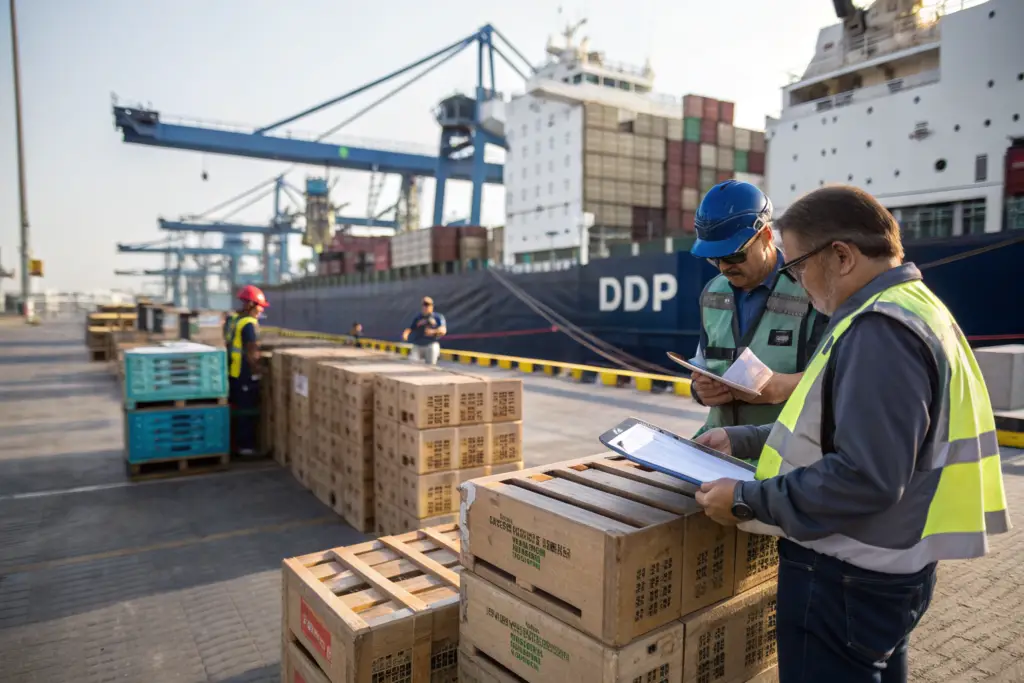
How does advanced documentation preparation work?
The moment a production order is confirmed, our logistics team initiates the documentation file. As the goods are being manufactured, we:
- Prepare the commercial invoice and packing list drafts.
- Gather and validate all necessary certificates, such as textile labeling compliance for the US market or chemical safety reports (e.g., for OEKO-TEX certified fabrics).
- Submit these documents to the freight forwarder and, where possible, initiate pre-filing with customs authorities.
This means that when the container is sealed and its number is known, the final documents can be submitted within hours, not days. For a client shipping a large order of hunting apparel to Miami last September, this pre-clearance process avoided a 7-day customs hold that impacted several of their competitors.
Why is partnering with a reliable freight forwarder non-negotiable?
For seasonal launches, you cannot rely on the cheapest spot freight rate. We maintain long-term partnerships with major freight forwarders. This allows us to pre-book space on vessels or flights during the peak shipping periods (July-September for fall hunting). We have a real case: in 2023, during global port congestion, our pre-booked space guaranteed that a client’s crucial shipment of premium hunting jackets left Shanghai on the exact planned date, while other brands faced rollovers of 2-3 weeks. Their products hit shelves on schedule, dominating early-season sales.
Conclusion
Speeding up production for seasonal hunting apparel is not a mystery; it’s a methodology. It requires a B2B supplier to shift from a reactive order-taker to a proactive launch partner. The acceleration happens in four interconnected zones: pre-season collaboration to compress development, supply chain de-risking to secure materials, modular production planning to maximize factory floor efficiency, and logistics pre-clearance to ensure swift delivery.
The brands that win their season are those whose suppliers master this integrated approach. It turns the high-stakes gamble of a seasonal launch into a managed, predictable process. This is precisely the operational backbone we have built at Shanghai Fumao. Our expertise in performance wear and our systematic timeline compression have made us the behind-the-scenes engine for brands that consistently land their hunting apparel on time, season after season.
If the annual rush to market is straining your operations and risking your revenue, it’s time to explore a partnership built for speed and reliability. Let’s plan your next hunting collection with a strategy that eliminates delays from the first sketch to the final delivery. Contact our Business Director, Elaine, to start building a timeline that guarantees your launch success. Reach her at: elaine@fumaoclothing.com.