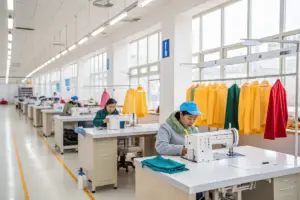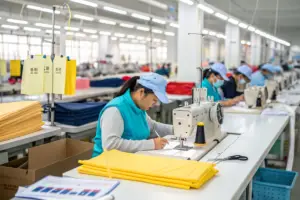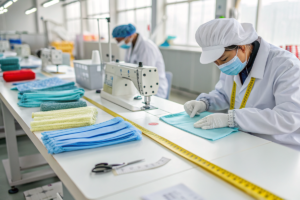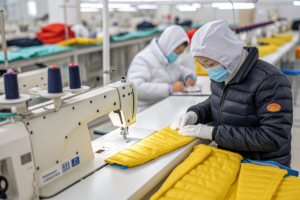
When planning a custom line of Realtree hunting wear, one of the first and most critical questions you face is about Minimum Order Quantities (MOQs). Getting a clear answer can be frustrating, as quotes can vary wildly from factory to factory. A low MOQ might seem attractive but could hide risks like pattern inauthenticity or poor quality, while a high MOQ can strain your cash flow and inventory. Understanding what drives these numbers is key to finding a reliable partner who can balance feasibility with the strict requirements of licensed camouflage production.
Minimum Order Quantities (MOQs) for custom Realtree hunting wear from China are typically higher than for generic apparel, usually starting at 500 to 1,000 pieces per style/color, driven by licensed fabric minimums, pattern-specific production setups, and the factory's need to maintain compliance and quality control across a viable production run. However, strategic partnerships with integrated manufacturers can offer flexible solutions even within these constraints.
Let's dissect the factors that determine MOQ and how you can navigate them for a successful product launch.
Why are MOQs for licensed camouflage inherently higher?
The MOQ is not an arbitrary number set by the factory; it's a financial and operational necessity rooted in the licensed supply chain. For Realtree patterns, the core constraint often comes from the fabric mill, not the sewing factory.
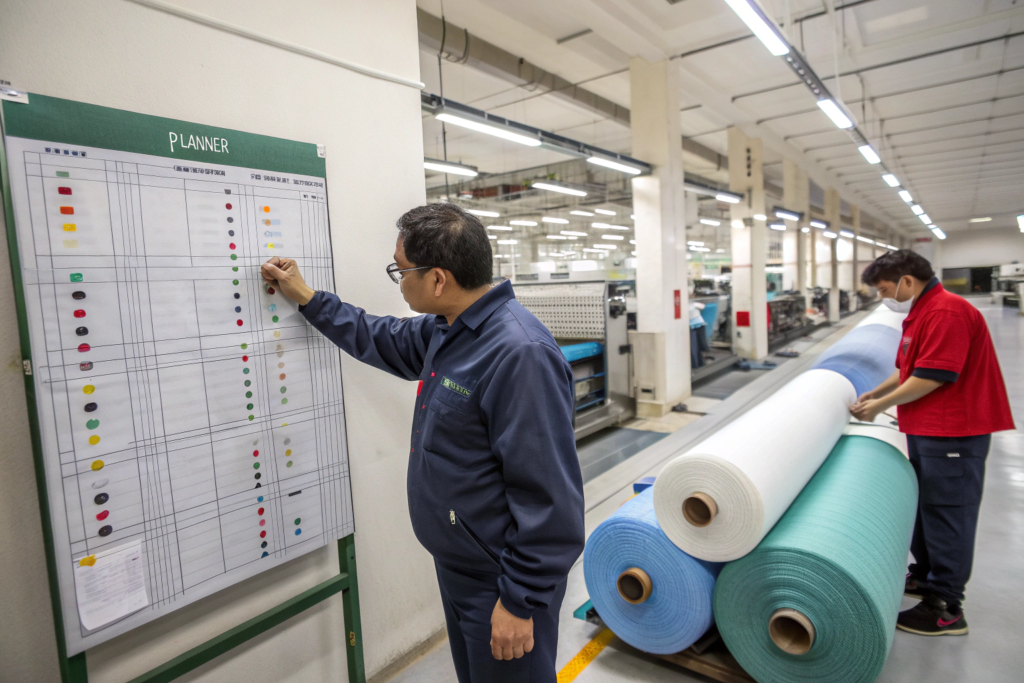
- Licensed Fabric Mill Minimums: Official Realtree patterns must be printed on fabric from authorized mills. These mills operate with high minimums, often requiring a purchase of 1,000 to 3,000 yards per pattern/colorway for a custom print run. A factory must meet this yardage to order the authentic fabric.
- Pattern-Specific Setup Costs: Producing a custom item (like a specific jacket style) in a licensed pattern involves significant one-time costs. This includes creating a tech pack-approved marker plan optimized for that pattern's repeat, calibrating printing screens or digital printers with the exact Realtree file, and conducting a pre-production sample run for licensor approval. These fixed costs must be amortized over a sufficient quantity of garments.
- Compliance and Royalty Administration: Each production run triggers administrative work: tracking fabric consumption, reporting to Realtree, and paying royalties. This overhead is more justifiable per unit on a larger order.
A client once approached us with a request for 200 units of a custom Realtree Bib overall. While possible, the cost per unit was prohibitively high because the licensed fabric minimum alone would have left us with a large surplus of unused, pattern-specific fabric. We guided them towards a more viable initial MOQ of 600 pieces, which brought the unit cost down by 40% and made the project commercially sensible.
How does the garment complexity affect the MOQ?
A simple beanie has a much lower fabric consumption per piece than a fully-lined hunting parka. Therefore, the factory can meet the fabric mill's minimum yardage requirement with a higher piece count for beanies and a lower piece count for parkas. Generally:
- Simple Accessories (Hats, Beanies, Gloves): MOQ can be as low as 300-500 pieces.
- Mid-weight Apparel (Shirts, Pants, Vests): MOQ typically ranges from 500-1,000 pieces.
- Complex Outerwear (Jackets, Bibs, Insulated Coats): MOQ often starts at 300-500 pieces due to high fabric use per unit, but total order value is key.
What is the difference between style MOQ and colorway MOQ?
This is a crucial distinction. A style MOQ refers to the minimum number of pieces for a single garment design (e.g., the "Timberline Jacket"). A colorway MOQ refers to the minimum for each pattern variation (e.g., "Timberline Jacket in Realtree Edge" vs. "Timberline Jacket in Realtree Timber"). If a factory states an MOQ of 500 pieces per colorway, ordering two different Realtree patterns means you need 500 of each, totaling 1,000 pieces.
How can integrated factories offer more flexible MOQ solutions?
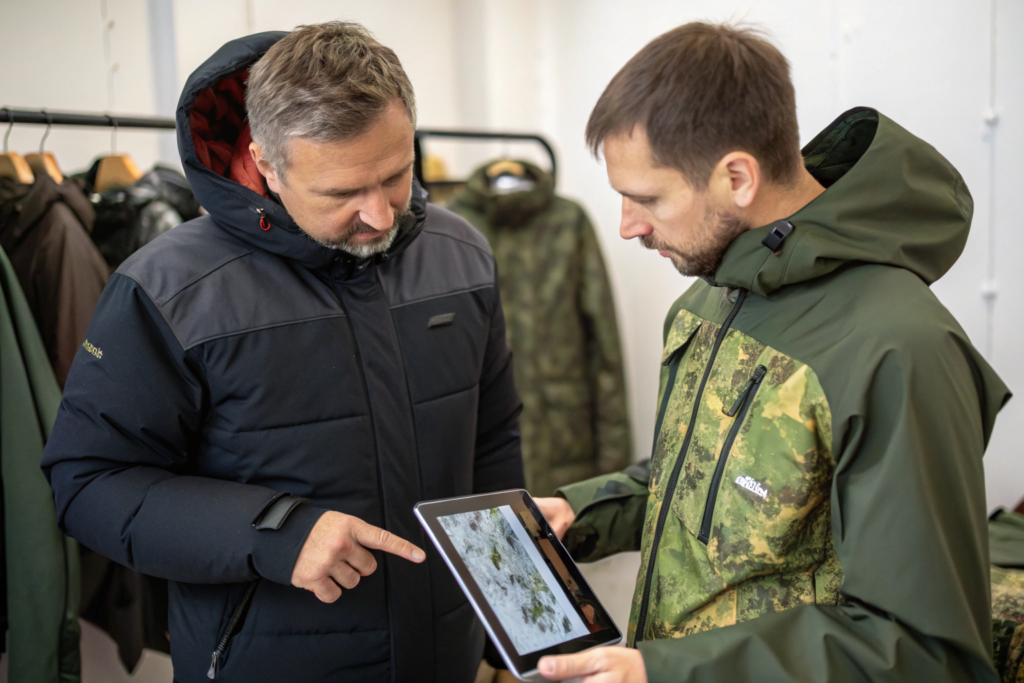
A factory's structure significantly impacts its flexibility. Large trading companies or pure sewing workshops have little room to maneuver on licensed MOQs. In contrast, vertically integrated manufacturers like Shanghai Fumao, which control design, sourcing, and production, can employ strategies to make lower volumes viable for trustworthy clients.
- Fabric Banking or Batch Combining: This is the most common strategy. If we have multiple clients using the same Realtree pattern (e.g., Realtree Original) in the same season, we can combine their fabric orders to meet the mill's minimum. Your custom garment is then cut and sewn from the communal fabric pool according to your unique tech pack. This allows you to access authentic fabric with a lower effective MOQ.
- Pre-developed Base Style Modification: Instead of designing a completely new jacket from scratch, modifying an existing base model from the factory's sample line can drastically reduce development costs and sample lead time, making a lower MOQ more economically feasible for the factory.
- Hybrid Order Programs: Some factories may allow you to reach the total MOQ by combining several related custom styles into one order, all using the same Realtree pattern.
What should you expect when discussing lower MOQs?
If a factory agrees to a very low MOQ (e.g., under 200 pieces for complex wear), be vigilant. Ask pointed questions:
- Fabric Source: "Can you provide the mill's name and proof that this fabric is officially licensed for this Realtree pattern?" Low MOQs may indicate use of "stock" or "grey market" fabric, which carries legal risk.
- Upfront Costs: Expect significantly higher per-unit costs and likely higher upfront development/sampling fees. The factory must cover its fixed costs over fewer units.
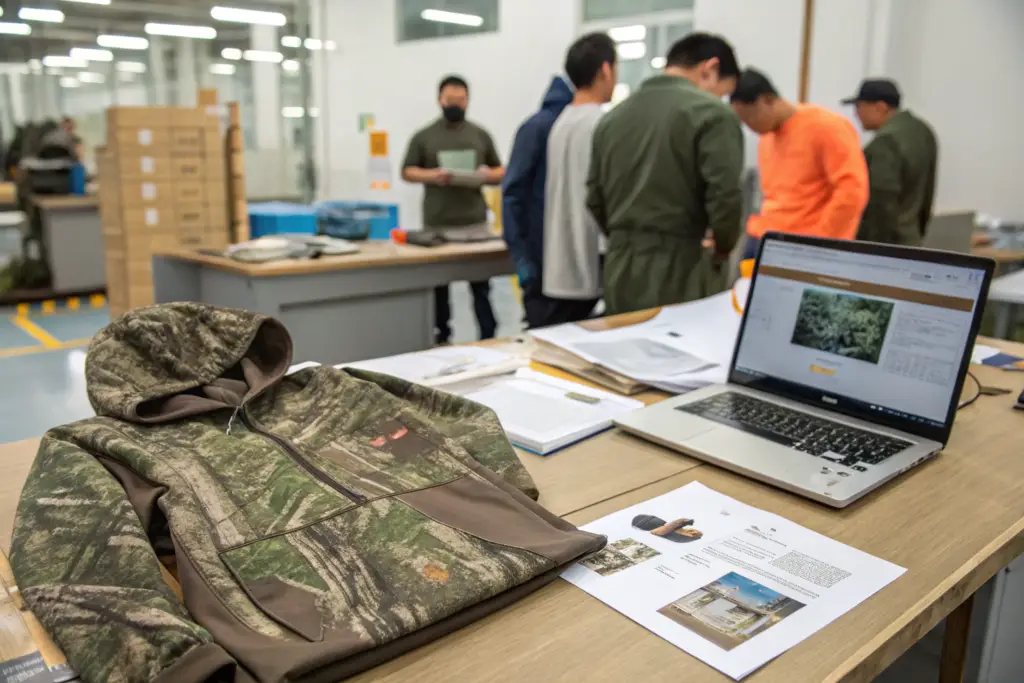
- Sample Verification: Insist on a production-proof sample made from the actual licensed fabric before confirming the bulk order. This sample should be submitted to you (and potentially Realtree) for pattern accuracy approval.
How does the factory's licensing tier impact MOQ?
Factories hold different tiers of licenses. A manufacturer with a broad, direct license has more flexibility and authority to manage production across multiple brands. A smaller workshop might be sub-licensed under a larger entity, which imposes stricter MOQs and less flexibility. Always verify the factory's direct licensing status, not just their agent's claims.
What costs are included in the MOQ price structure?
The quoted price per piece at a given MOQ is a composite of several cost drivers. Understanding them helps you negotiate and assess value.
| Cost Component | Description & MOQ Impact |
|---|---|
| Licensed Fabric | The largest cost. Price drops at higher yardage due to mill tiered pricing. Lower MOQ = higher fabric cost per yard. |
| Trims & Components | Zippers (e.g., YKK), buttons, pulls, insulation. Sourcing small quantities of custom colors/logos on trims increases cost. |
| Development & Sampling | Pattern making, tech pack development, sample sewing. This fixed cost is amortized. Lower MOQ = higher development cost per unit. |
| Setup & Printing | Screen engraving/digital setup for the pattern. A significant one-time fee. |
| Manufacturing Labor | Cutting, sewing, finishing. Becomes more efficient at scale. |
| Royalties | Paid to Realtree per yard/garment. A fixed percentage, but administration cost per unit is higher on small runs. |
| Compliance & QC | In-line inspections, final random inspection, license reporting. Essential fixed costs. |
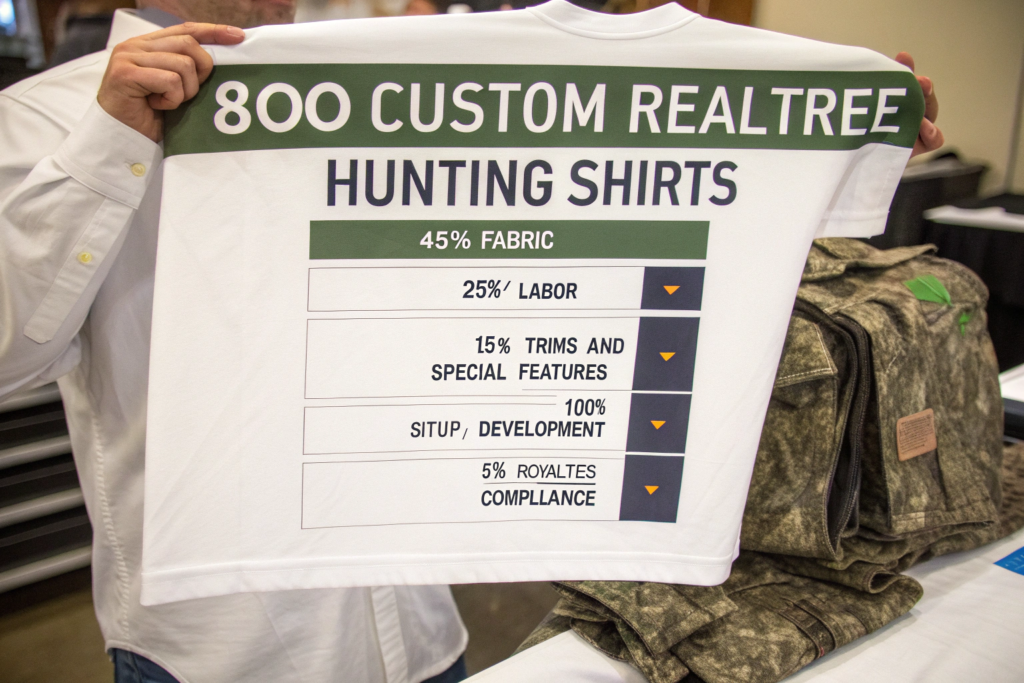
For a recent order of 800 custom Realtree hunting shirts, we broke down the cost for our client: approximately 45% was for fabric, 25% for labor, 15% for trims and special features (like a quiet brush-free fabric), 10% covered setup/development, and 5% was for royalties/compliance. This transparency helped them understand the value behind the MOQ price.
Why do some factories quote deceptively low MOQs?
Be cautious of quotes that seem too good to be true. A factory might quote a low MOQ by:
- Using unlicensed, pirated fabric.
- Skipping essential steps like proper lab testing for colorfastness.
- Operating outside a formal license agreement, putting your shipment at risk of seizure.
- Massively inflating the per-unit price to compensate.
Always request a detailed cost breakdown and verify the license before proceeding.
What strategies can brands use to meet viable MOQs?
If the standard MOQ is challenging for your startup or small brand, consider these strategies:
- Pre-order Campaigns: Use your marketing channels to secure pre-orders before production. This validates demand and helps you fund the MOQ.
- Simplify Initial Designs: Launch with one hero piece (e.g., a performance hoodie) in one Realtree pattern instead of a full collection. This focuses your budget and inventory.
- Phased Launches: Order the MOQ for your core item, but split the shipment into two batches (e.g., 500 now, 500 in 3 months) with a single fabric purchase and production setup. This helps with cash flow. Factories like Shanghai Fumao often accommodate this with proper planning.
- Collaborate with Other Brands: Partner with non-competing brands in the outdoor space to combine orders for the same fabric, effectively creating a "mini bulk" order.
The most important strategy is to partner with a factory that is transparent and willing to work as a consultant. Our role is not just to set an MOQ but to help you find a commercially sound path to market. We've helped numerous brands navigate this by starting with a strong base style and planning a scalable production roadmap.
How does payment terms relate to MOQ negotiation?
Factories may be more flexible on MOQ if payment terms are favorable to them, such as a higher deposit (e.g., 50% instead of 30%) or shorter payment cycles. This improves their cash flow and can offset the lower volume's reduced profitability. Be prepared to discuss this as part of the overall negotiation.
Conclusion
MOQs for custom Realtree hunting wear are a function of a complex, licensed supply chain. While they present a barrier to entry, they also serve as a filter for quality and legal compliance. The goal is not to find the lowest possible MOQ, but to find a credible manufacturing partner who offers a transparent, viable path to producing authentic, high-quality gear. By understanding the drivers behind MOQs, asking the right questions, and leveraging flexible factory strategies, you can successfully launch your custom line with confidence.
Ready to navigate the MOQ landscape with an expert guide? Contact Shanghai Fumao's Business Director, Elaine, at elaine@fumaoclothing.com for a transparent consultation on your custom Realtree project. We'll provide a clear MOQ breakdown and work with you to develop a feasible production plan. Explore our customization capabilities to start the journey.