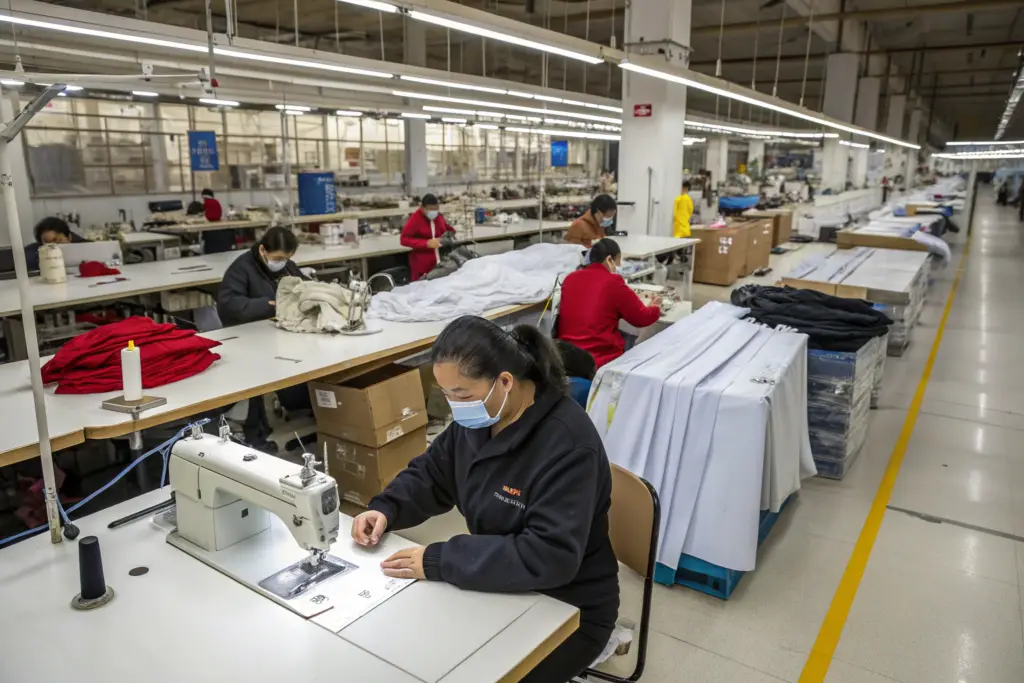
Your entire business rhythm depends on hitting the market at the right time. A delayed bulk clothing shipment doesn't just mean a late delivery; it means missed sales windows, disappointed retailers, and sunk capital stuck in transit. As a business owner, you've likely faced the frustration of excuses about port congestion or fabric delays. The truth is, on-time delivery isn't about luck—it's about a factory's embedded systems and disciplined execution.
A clothing factory can guarantee on-time delivery for bulk orders by implementing a proactive, system-driven approach that encompasses realistic planning with buffer time, rigorous raw material management, precise production monitoring, and a flexible, transparent logistics strategy. This guarantee stems from control, not promises. At Shanghai Fumao, our commitment to on-time shipment is our operational cornerstone, backed by a documented track record of over 98% on-time delivery for our U.S. clients over the past three years.
The key difference between a factory that hopes to deliver on time and one that guarantees it lies in foresight and transparency. The former reacts to problems; the former anticipates and mitigates them. Let's break down the concrete systems that make this guarantee possible, moving beyond vague assurances to measurable processes.
What Are The Pillars Of Realistic Production Planning & Scheduling?
A guarantee begins with a honest timeline. Too many factories agree to unrealistic deadlines to win an order, setting everyone up for failure. True on-time delivery is rooted in a planning phase that respects complexity and builds in safeguards from day one.
The pillars of realistic planning are a detailed Time & Action (T&A) calendar, critical path management that identifies and monitors potential bottlenecks, and the strategic inclusion of buffer time for high-risk stages like fabric sourcing or approval processes. This isn't a simple calendar invite; it's a living document that drives daily operations. We create a shared T&A calendar with our clients at the order confirmation stage, marking every milestone from lab dip approval to vessel departure.

Why Is A Detailed T&A Calendar Non-Negotiable?
A Time & Action calendar transforms an abstract delivery date into a series of smaller, manageable deadlines. It assigns responsibility and creates accountability. For every bulk order, our T&A breaks down into phases: Pre-Production (fabric/trim sourcing, testing, approvals), Production (cutting, sewing, finishing), and Post-Production (quality control, packing, shipping). Each phase has clear start/end dates and dependency links. For instance, cutting cannot start without fabric inspection approval. This visibility allows both us and the client to see if one delayed approval will impact the final ship date, enabling proactive adjustments.
How Does Critical Path Management Prevent Delays?
Within the T&A, we identify the "critical path"—the sequence of stages that directly determines the project's minimum duration. For a standard woven shirt order, the critical path often includes: fabric sourcing -> lab dip approval -> bulk fabric production and shipping -> fabric inspection -> cutting. A delay in any of these will delay the entire order. We monitor these critical path items daily. Last quarter, for a bulk order of 50,000 polo shirts for a Midwestern brand, our system flagged a potential delay from the yarn supplier for the custom piqué fabric. Because we identified this risk three weeks in advance, we activated a pre-qualified backup supplier, avoiding a 15-day delay and keeping the shipment on schedule.
How Does Proactive Raw Material Sourcing Secure The Timeline?
The single biggest cause of production delays is not in the sewing room; it's in the supply chain for fabrics and trims. A factory that only orders materials after receiving a deposit is already behind. Guaranteeing delivery requires a proactive, vetted, and managed sourcing network.
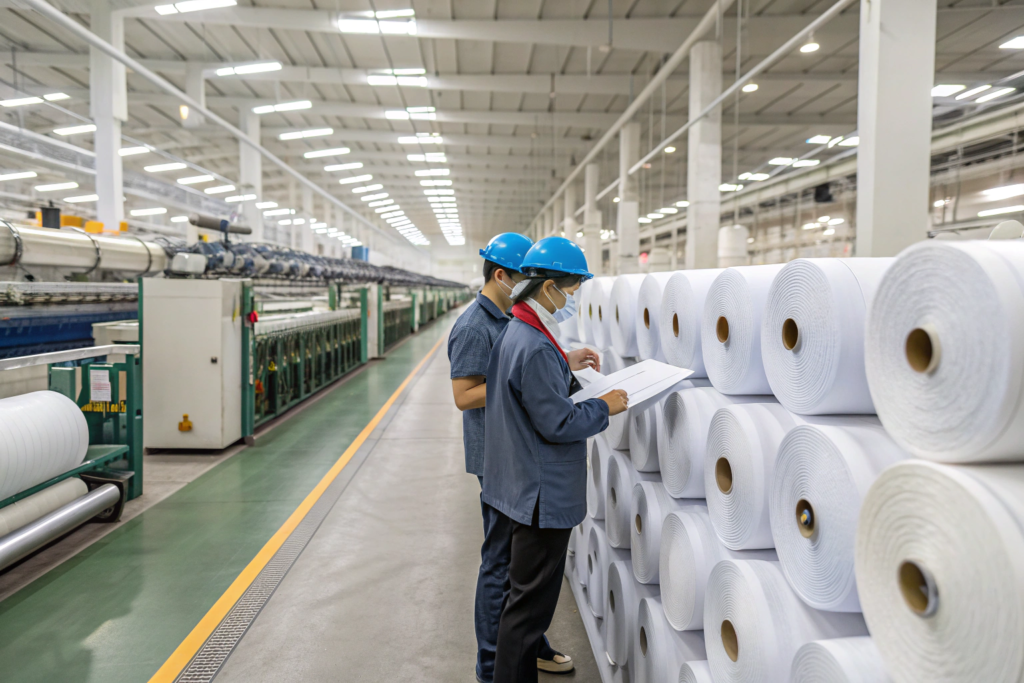
Proactive raw material sourcing secures the timeline through forward-positioning of common fabrics, deep partnerships with certified mills and trim suppliers, and maintaining a real-time inventory of key components, allowing production to launch without the standard 30-45 day fabric lead time. We treat our material suppliers as an extension of our production line, not as separate entities.
What Is The Role Of A Vetted Supplier Network?
Reliability is built on relationships. A factory guaranteeing on-time delivery doesn't source from Alibaba for every order. It has a curated list of mills and suppliers whose quality, ethics, and delivery performance are audited and proven. We maintain a supplier qualification database. For a supplier to be on our list for bulk orders, they must demonstrate a history of on-time delivery themselves, provide valid certifications, and have contingency plans. This network is our first line of defense against material shortages. When global cotton prices fluctuated sharply last year, our long-term partnerships with two major mills ensured we had priority access and price stability for several key clients, preventing both delay and cost overrun.
Can Strategic Inventory Make A Difference?
For high-volume basics or core fabrics used by multiple clients, strategic inventory is a game-changer. We hold stock of certain fabrics like 100% cotton single jersey, polyester fleece, and standard interlock in our warehouse. This "buffer stock" concept, often managed through a Vendor Managed Inventory (VMI) model with our mills, means we can often start cutting within a week of order confirmation for standard items. For a new activewear brand that needed a quick turnaround on a test order of 5,000 leggings, this pre-positioned fabric allowed us to compress the lead time by 25 days, enabling them to catch an early-season marketing campaign.
What In-Process Controls Keep Production On Track?
Once materials are in-house, the focus shifts to the factory floor. Efficiency here is not about rushing; it's about smooth, uninterrupted flow. Bottlenecks in cutting, sewing, or finishing can derail the most carefully planned schedule.
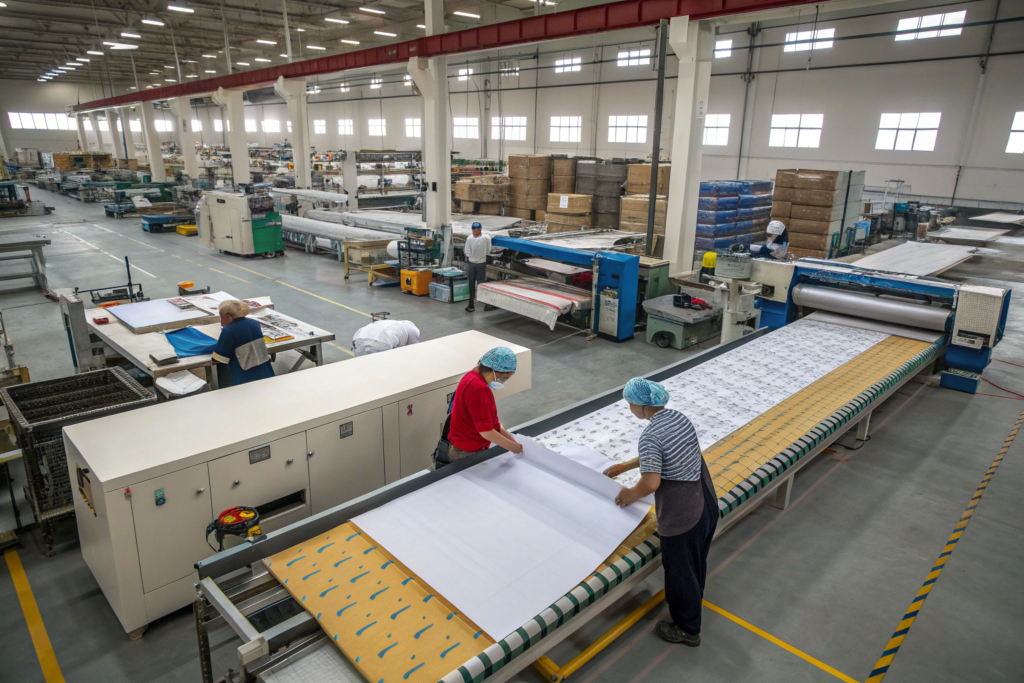
In-process controls that keep production on track include real-time production monitoring using digital systems, daily line balancing to optimize workflow, and stringent quality checks at each stage to prevent the massive delays caused by bulk defects discovered too late. Our factory floors are equipped with digital production trackers that update completion percentages every two hours.
How Does Real-Time Monitoring Work?
We utilize a Manufacturing Execution System (MES) that tracks order progress at the bundle level. Each batch of cut pieces has a barcode. As it moves from sewing section A to section B, the barcode is scanned. This data feeds a dashboard visible to production managers and, in a simplified form, to our clients. If a sewing line's output falls behind the hourly target, the system alerts the line supervisor and production manager immediately. This allows for instant intervention—reassigning workers, fixing a machine, or clarifying a sewing method—long before the delay becomes critical. For a complex outerwear order with many components, this system helped us identify that the quilted panel preparation was 20% slower than planned. We adjusted the manpower the same day, keeping the main assembly line fed and on schedule.
Why Is In-Line QC Vital for Schedule Adherence?
Nothing destroys a schedule faster than discovering a major quality issue after 10,000 pieces are sewn. In-process quality control (IPQC) is a schedule-saving function. Our QC staff are integrated into each production line, checking random pieces against standards throughout the day. If a recurring defect like an uneven collar or misaligned pocket is spotted, the line can be stopped immediately to correct the root cause. This prevents the need for time-consuming and costly full-line rework at the end. This proactive defect containment is a core reason why our final inspection pass rate is high, ensuring packing and shipping proceed without last-minute quality crises.
How Does A Flexible Logistics Strategy Ensure Final Mile Delivery?
The journey isn't over when the garments are packed. Port congestion, space shortages, and customs clearance are final hurdles. A factory that simply books the cheapest freight forwarder is leaving the last leg to chance. A guaranteed delivery requires a managed and flexible logistics operation.
A flexible logistics strategy ensures final mile delivery by maintaining relationships with multiple freight forwarders, booking shipping space early (often at the production start), offering and planning for multiple shipping incoterms (like FOB, CIF, or DDP), and providing full visibility into the shipping documentation and vessel tracking. We treat logistics as a core competency, not an afterthought.

Why Is Multi-Option Freight Planning Crucial?
Reliance on a single shipping route or carrier is risky. We work with a panel of 4-5 reputable forwarders. This gives us options between different carriers (Maersk, COSCO, ONE) and routes (direct vs. transshipment). Our logistics team books tentative space (a "soft booking") as soon as the production T&A is finalized, converting it to a firm booking once the packing list is ready. During the peak season port congestion off the U.S. West Coast in 2022, this multi-option approach allowed us to swiftly switch some client shipments to East Coast ports via the Suez Canal, adding a few days to sea transit but avoiding months of port delay.
How Does DDP Service Simplify On-Time Delivery?
For many of our U.S. clients, we strongly recommend and expertly manage Delivered Duty Paid (DDP) shipments. Under DDP, we handle everything from the factory door to your designated warehouse in the USA. This includes China export formalities, ocean freight, U.S. customs clearance, duties, taxes, and final trucking. The benefit for on-time delivery is centralized control and accountability. There is no finger-pointing between a freight forwarder, a customs broker, and a trucking company. Our team manages the entire chain. For a client in Ohio, switching to our DDP service reduced their total landed cost variability and improved the predictability of warehouse arrival dates by over 40%, because we had full visibility and control of the cargo from start to finish.
Conclusion
Guaranteeing on-time delivery for bulk clothing orders is not a matter of promising a date; it's a comprehensive operational discipline. It requires a factory to master the four interconnected pillars: honest and detailed planning, proactive and secure material sourcing, tightly controlled and efficient production, and a flexible, well-managed logistics chain. When these systems work in unison, they create predictability and reliability, transforming delivery from a constant worry into a competitive advantage for your brand.
Choosing a manufacturing partner is, in essence, choosing a set of systems. The right partner's processes will protect your timelines as fiercely as they protect your product quality.
If you are tired of unpredictable deliveries and seek a partner whose systems are built to guarantee on-time shipment, Shanghai Fumao is ready to demonstrate our capability. Let us provide you with a detailed T&A plan for your next order and show you how our controlled process safeguards your timeline. To discuss how we can bring reliability to your supply chain, please contact our Business Director, Elaine. She can connect you with our planning and logistics teams for a thorough review. Reach her at: elaine@fumaoclothing.com.