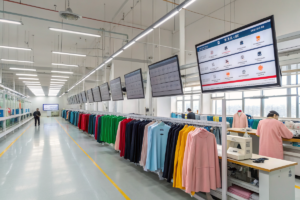
You’re committed to producing a women’s wear line that’s not only beautiful but also responsible. But the goalposts of sustainability are always moving. Beyond organic cotton and recycled polyester, what are the truly innovative practices that are setting the standard today? It’s no longer just about the material—it’s about the entire lifecycle: how you design, how you make, how you ship, and even what happens after the garment is worn.
The latest sustainable practices in women’s wear production are holistic, tech-driven, and circular. They move beyond single-attribute fixes to integrate regenerative agriculture, digital design and sampling, waterless dyeing, zero-waste cutting, and end-of-life recycling programs. At Shanghai Fumao, we are implementing these next-generation practices to help brands create women’s wear that is lower impact, longer-lasting, and part of a restorative system, not just a less harmful one.
Sustainability is now a multi-dimensional challenge. The leading edge combines material science with digital innovation and new business models. It’s about designing out waste from the start, using data to slash overproduction, and closing the loop so that a garment never becomes trash. For women’s wear, this also means designing for longevity and versatility, not just seasonal trends.
How Are Regenerative Materials and Next-Gen Fibers Changing the Game?
Organic is now table stakes. The new frontier is in fibers that actively restore ecosystems or are born from revolutionary, low-impact processes. These materials are moving from niche concepts to commercial availability, offering unprecedented storytelling and environmental benefits.
We are moving from “less bad” inputs to “net positive” ones. This means sourcing materials that sequester carbon, improve soil health, and use radically less water and land than conventional alternatives. For women’s wear, this translates to fabrics that are not only sustainable but also offer new aesthetics and performance.
Dive Deeper Paragraph: The shift is towards agriculture that heals and biosynthesis that innovates.
What is Regenerative Agriculture for Apparel?
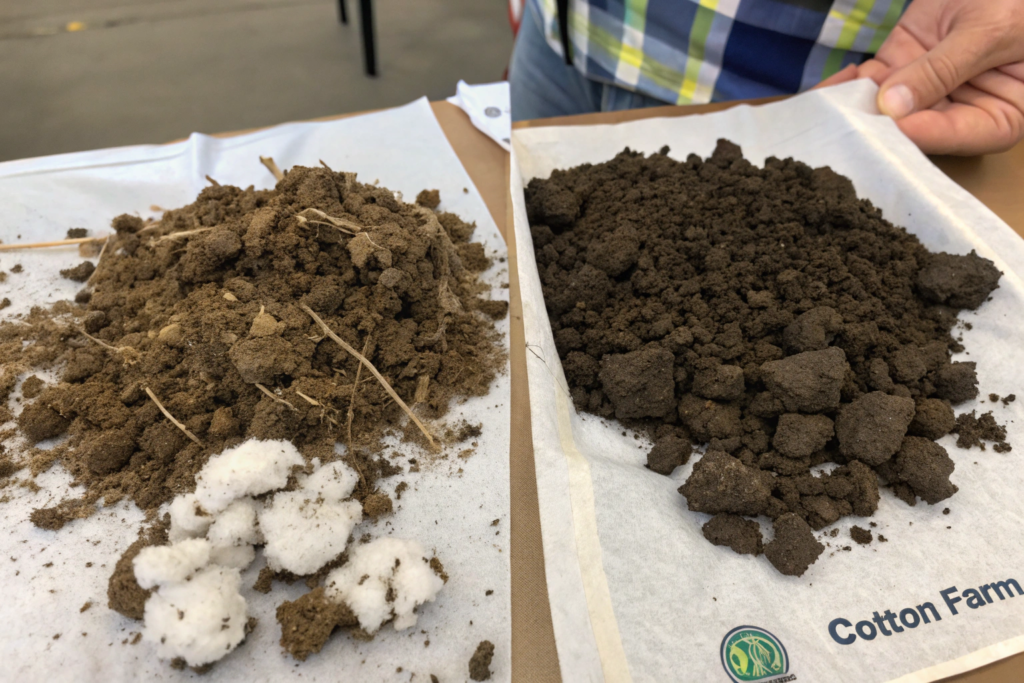
This goes beyond organic certification. Regenerative farming practices—like no-till planting, cover cropping, and rotational grazing—rebuild soil organic matter, increase biodiversity, and draw down atmospheric carbon. We are now partnering with farms and mills that provide regenerative wool and cotton with verified outcomes. For a recent capsule collection, we sourced regeneratively grown cotton that, according to the supplier’s Life Cycle Assessment, had a carbon negative footprint at the raw material stage. This powerful claim became the centerpiece of the brand’s marketing, resonating deeply with eco-conscious consumers.
What Are the Most Promising Next-Gen Fibers?
Beyond recycled synthetics, we are trialing and sourcing:
- Lab-Grown/Cellulosic Materials: Fabrics like Tencel™ Lyocell with Refibra™ technology, which incorporates cotton scraps from production back into new fiber.
- Biosynthetic Fibers: Materials like Orange Fiber (from citrus juice by-products) for silky blends, or Mycelium Leather as an alternative to animal and plastic-based leathers.
- Agricultural Waste Fibers: Using leftover hemp stalks or pineapple leaves (Piñatex) to create durable textiles.
While scaling these remains a challenge, their inclusion in limited editions signals innovation and tests the market, preparing for wider adoption. We see them as critical for the future of sustainable material sourcing.
How Is Digitalization Reducing Waste Before a Single Stitch is Made?
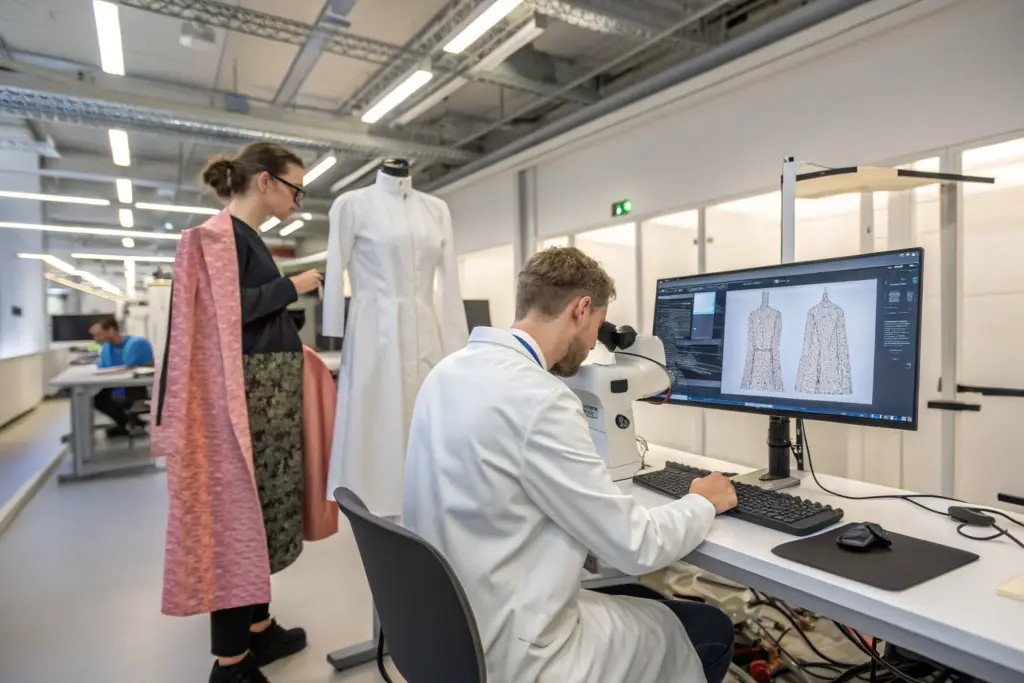
The most sustainable garment is the one you don’t have to make twice, or the one you never overproduce. Digital tools are revolutionizing the design and development phase, slashing the need for physical samples and enabling ultra-accurate forecasting, which are massive sources of waste and carbon emissions.
Digital product creation allows for perfecting design, fit, and visualization in a virtual space. This reduces the number of physical samples (and their associated fabric, shipping, and time costs) from 4-5 to often just 1 final prototype for validation.
Dive Deeper Paragraph: Digitalization targets the root causes of waste in the design and planning stages.

What Impact Does 3D Design and Sampling Have?
Using platforms like CLO 3D or Browzwear, our designers can create true-to-life digital samples. This allows for:
- Fit and Design Iteration: Adjusting darts, hems, and silhouettes instantly without cutting fabric.
- Fabric Simulation: Seeing how a specific knit or woven will drape and move on an avatar.
- Stakeholder Alignment: Brands can review, comment, and approve styles remotely, eliminating the carbon footprint of shipping samples back and forth.
For a client’s complex draped dress, we reduced physical sampling from three rounds to one “confirmation sample,” saving approximately 15 meters of silk fabric and 3 weeks of development time per colorway. This is a direct application of digital twin technology in fashion.
How Does AI-Driven Demand Planning Minimize Overproduction?
Overproduction is the industry’s dirtiest secret, leading to deadstock that is often incinerated or landfilled. We are integrating with brands that use AI forecasting tools that analyze past sales, real-time trends, and even weather data to predict demand with far greater accuracy. By producing closer to actual demand (through our agile manufacturing setup), brands can order smaller, more frequent batches, drastically reducing the risk of unsold inventory. This is a systemic shift from “push” to “pull” production.
What Are Advanced Water and Energy Conservation Techniques in Manufacturing?
The dyeing and finishing stages are historically the most resource-intensive. The latest practices are moving toward closed-loop systems that eliminate wastewater discharge and harness renewable energy, moving the needle from “reducing impact” to “neutralizing impact.”
The focus is on decoupling production growth from resource consumption. This means adopting technologies that allow us to make more with less—or even give back—particularly in wet processing, which is critical for women’s wear with its diverse colors and finishes.
Dive Deeper Paragraph: Innovation is happening in chemical application and energy sourcing.
What is the State of Waterless Dyeing Technology?
While still scaling, several technologies are proving viable:
- Supercritical CO2 Dyeing: Uses pressurized carbon dioxide as the dyeing medium instead of water. It’s a completely dry process, with over 95% of the CO2 recycled per cycle. We are working with pioneering partner mills that offer this for synthetic fabrics.
- Digital Printing: Especially for small batches or intricate designs, digital printing applies ink directly to fabric with minimal waste and water use compared to traditional rotary screen printing.
- Foam Dyeing: Applying dye in a foam state uses up to 90% less water and 50% less energy than traditional water-based dyeing.
We recently produced a line of polyester activewear using fabric dyed with supercritical CO2. The brand was able to legitimately market it as “waterless dyed,” a compelling and technically accurate claim.
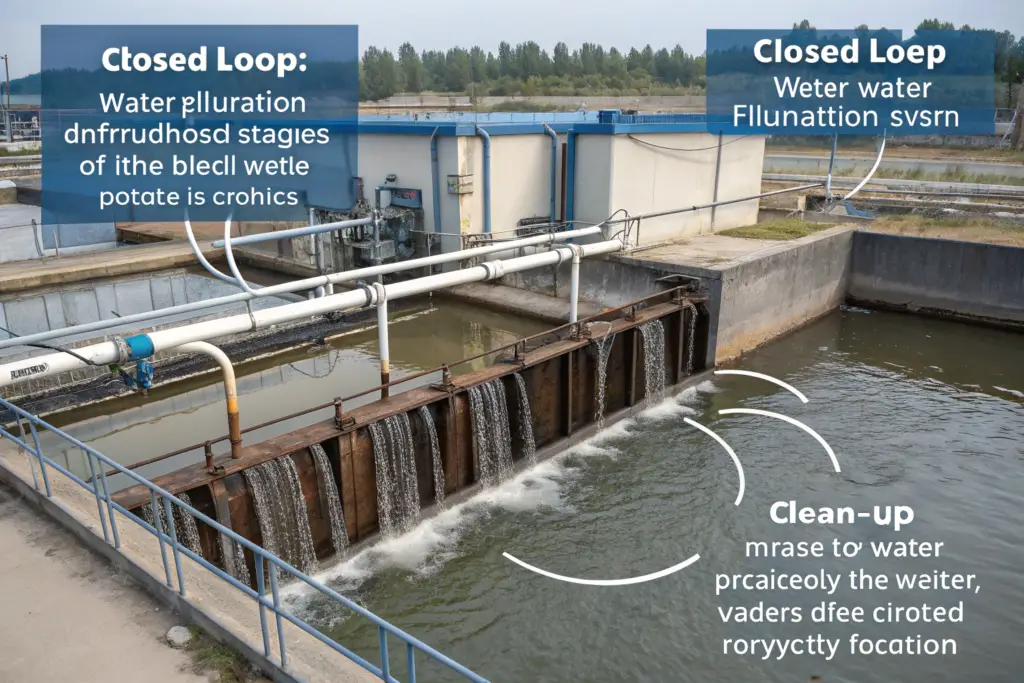
How Are Factories Implementing Circular Energy and Water?
On-site, we are moving beyond efficiency to circularity:
- Wastewater Heat Recovery: Capturing heat from outgoing hot wastewater to pre-heat incoming fresh water.
- Solar Power Installation: Our main facility’s rooftop solar array now covers over 30% of our non-production energy needs, and we are expanding it.
- Rainwater Harvesting: Collected and used for non-production purposes like landscape irrigation.
These investments are part of our long-term Environmental Management System and are quantifiable in the sustainability reports we provide to partners.
How Is Circular Design and End-of-Life Management Being Integrated?
True sustainability means designing for the entire lifecycle, including a garment’s second, third, or nth life. The latest practice is to design for disassembly and recycling from the outset and to establish take-back systems that keep materials in use.
This shifts the responsibility from the consumer back to the producer (Extended Producer Responsibility) and requires close collaboration between brands, manufacturers, and recyclers. For women’s wear, this means rethinking trims, seams, and material blends.
Dive Deeper Paragraph: Circularity is a design challenge first, followed by a logistics and partnerships challenge.
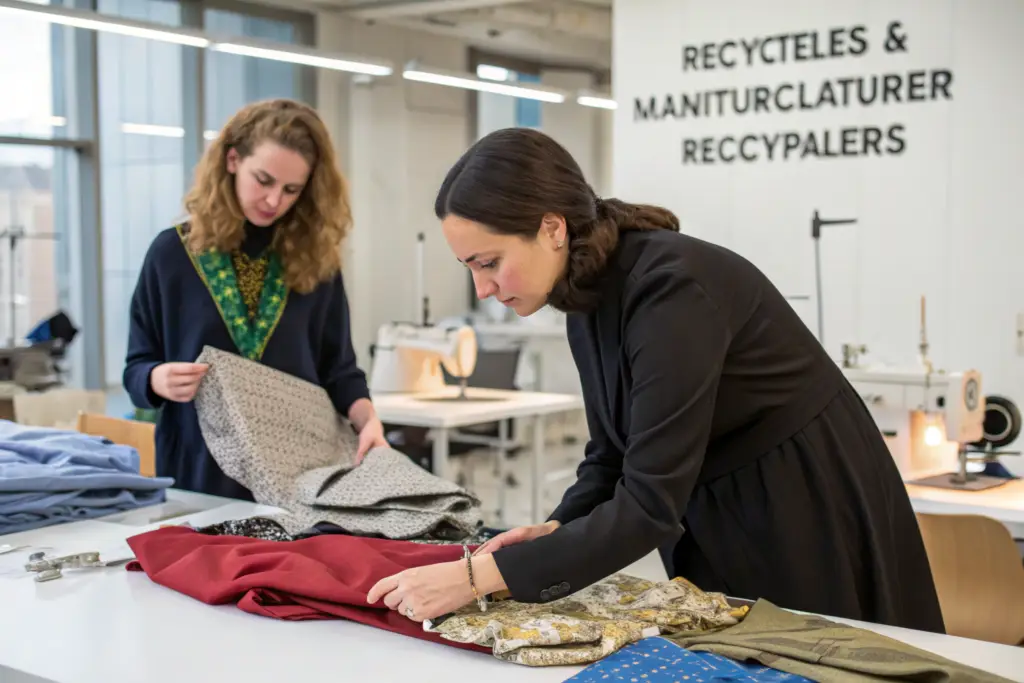
What Does “Design for Disassembly” Look Like in Womenswear?
Our technical designers now apply circularity checklists:
- Mono-Material Construction: Designing a blazer from 100% wool, including the interlining and thread, to simplify recycling.
- Mechanical Fastenings: Using snaps or buttons that can be easily removed, instead of permanent chemical adhesives or fused elements.
- Standardized Components: Using common zipper types and buttons across collections to make harvesting for reuse easier.
A client launched a “Circular Denim” line where every component was 100% cotton (including the thread) and labels were printed directly onto the fabric. At its end of life, the entire garment can be shredded and recycled into new denim or insulation without contamination.
How Are Take-Back and Recycling Programs Evolving?
Leading brands are moving from one-off回收 events to integrated systems. We are piloting a program where we act as the collection hub. For brands we produce for, we accept their end-of-life garments (any brand, but especially ours). We then sort them:
- Wearable: For donation or resale.
- Unwearable: Sent to specialized recyclers for fiber-to-fiber recycling.
We provide the brand with a certificate of recycling, closing the loop and providing tangible data for their sustainability reporting. This turns waste management into a value-added service.
Conclusion
The latest sustainable practices in women’s wear production represent a fundamental rethinking of how clothes are conceived, created, and circulated. It’s a convergence of regenerative agriculture, digital precision, industrial innovation, and circular business models. This is no longer a niche concern but the core of future-proofing a brand.
At Shanghai Fumao, we are actively investing in and integrating these practices—from sourcing regenerative fibers and utilizing 3D design to implementing water-saving technologies and designing for circularity. We partner with brands who are serious about leading this change, not just following it. If you are ready to produce a women’s wear collection that stands at the forefront of sustainability, let’s build it with the future in mind. Contact our Business Director, Elaine, at elaine@fumaoclothing.com or visit Shanghai Fumao to discuss how we can apply these next-generation practices to your line.