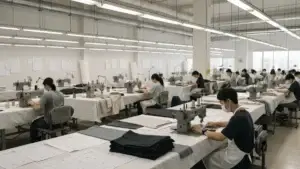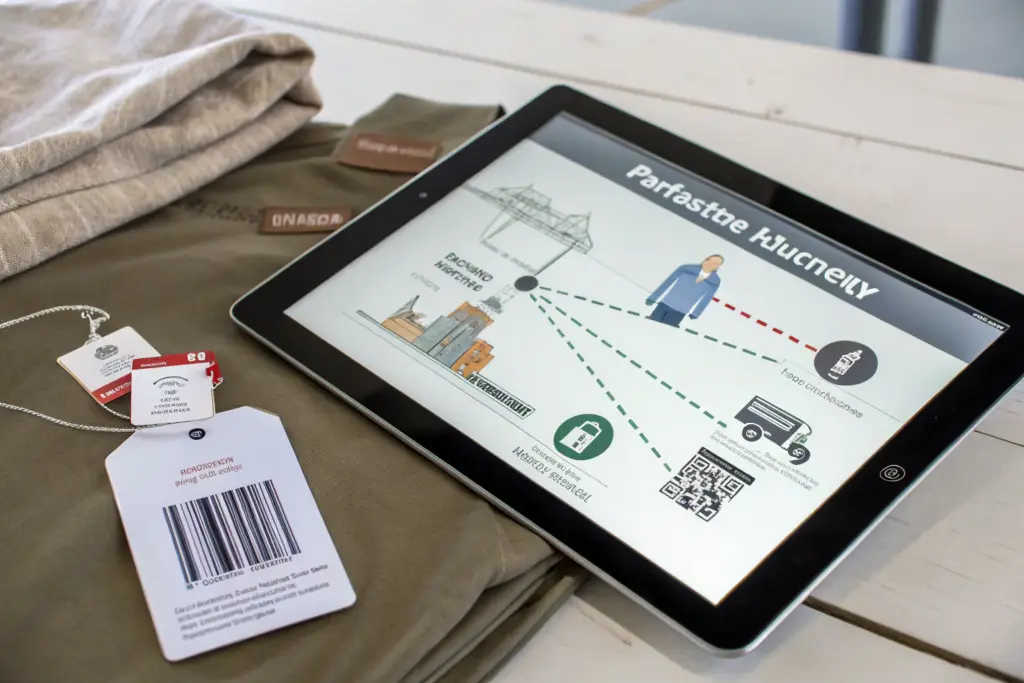
You've selected organic cotton and low-impact dyes for your new collection. Your labels say "sustainable," but a savvy customer asks: "Can you prove it?" In an era of greenwashing, claims are cheap. The real value—and your brand's integrity—lies in proof. That proof is traceability. Without it, sustainability is just a hopeful story. With it, you have a verifiable, marketable asset.
Traceability is the backbone of credible sustainable garment manufacturing. It is the documented journey of a product from raw material origin through every processing stage to the finished garment. For Shanghai Fumao, traceability transforms sustainability from a marketing claim into a measurable, transparent, and accountable system. It builds consumer trust, ensures compliance with stringent standards, manages risk, and drives continuous improvement within the supply chain.
Without traceability, you cannot know if your organic cotton was blended with conventional fiber, if your recycled polyester actually contains recycled content, or if the factory that sewed your garment paid fair wages. Traceability closes the gap between intention and reality, providing the evidence needed to back every ethical and environmental claim you make.
How Does Traceability Build Consumer Trust and Brand Value?
Modern consumers, especially Millennials and Gen Z, are increasingly skeptical. They don't just buy products; they buy values and stories they can verify. A label that says "eco-friendly" is no longer enough. They demand transparency. Traceability provides the tangible evidence that turns skeptical shoppers into loyal brand advocates.
Traceability empowers you to tell a specific, verifiable story about your product. Instead of saying "made sustainably," you can say "made with GOTS-certified organic cotton from farm X in Texas, spun at mill Y, and sewn in a SA8000-certified facility." This level of detail builds immense credibility and differentiates your brand in a crowded market.
Dive Deeper Paragraph: This trust is built on the pillars of transparency and storytelling.
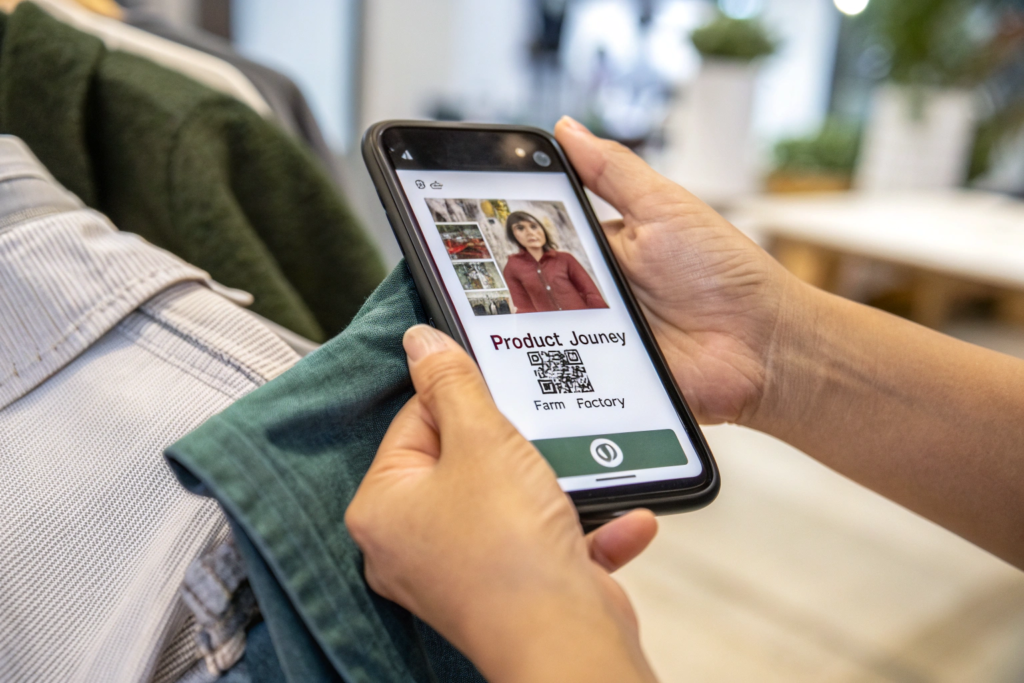
Can Transparency Actually Increase Sales and Loyalty?
Yes, decisively. Brands that provide supply chain transparency often see higher conversion rates and customer retention. It reduces purchase hesitation. For a client in the premium basics sector, we helped implement a blockchain-enabled traceability pilot for their organic tee line. Each garment had a unique QR code linking to an immutable record of its journey. Marketing this feature led to a 15% increase in online sales for that product and a significant reduction in returns, as customers felt more confident in their purchase. This direct link between proof and purchase is a powerful return on investment (ROI) for sustainability.
How Does It Protect Against Accusations of Greenwashing?
In a regulatory environment increasingly focused on sustainable claims compliance (like the EU's Green Claims Directive), traceability is your legal and reputational shield. If challenged, you can produce documented evidence for every claim. Without it, you are vulnerable to fines and devastating public relations crises. Traceability turns your sustainability statement from a vague promise into a defendable fact.
How Does It Ensure Compliance with International Standards?
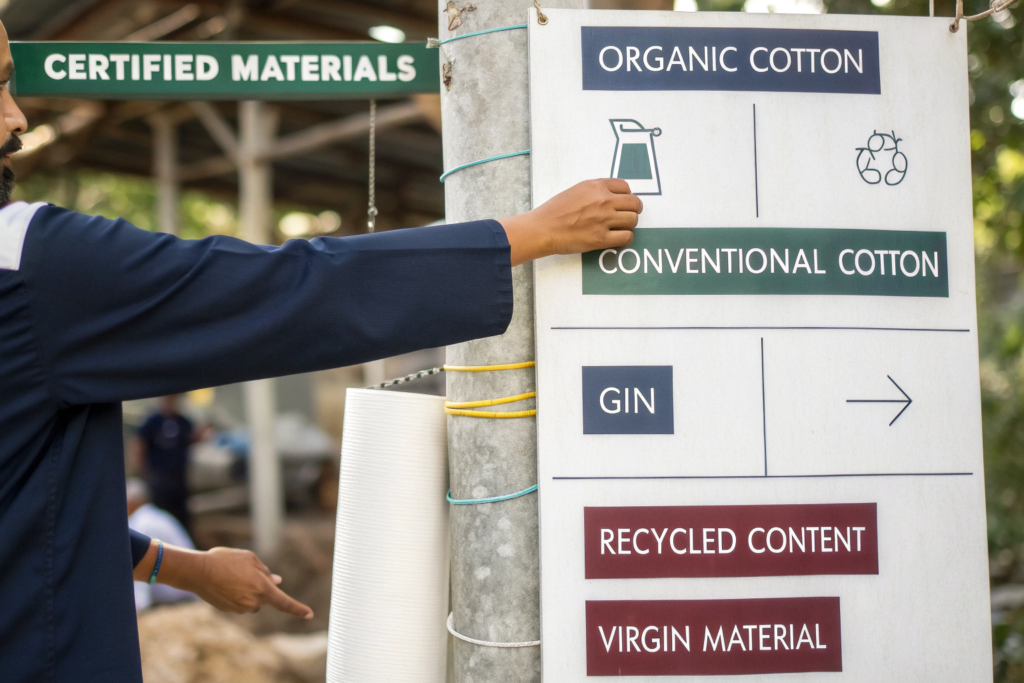
Certifications like GOTS (Global Organic Textile Standard), GRS (Global Recycled Standard), and Fair Trade are not just about the end product; they are about the entire chain of custody. You cannot achieve or maintain these certifications without robust traceability systems.
These standards require a documented "chain of custody" that tracks the certified material from its source through every transformation. This ensures that a batch of organic cotton isn't mixed with conventional cotton at the gin, or that recycled content isn't diluted with virgin material.
Dive Deeper Paragraph: Compliance is a procedural outcome of traceability, not an independent achievement.
What is a Transaction Certificate and Why is it Crucial?
The Transaction Certificate (TC) is the golden ticket of traceability for certified materials. Issued by the certification body (e.g., Control Union for GOTS), it is a legal document that proves a specific quantity of certified material was delivered from one certified entity to the next. For a GOTS-certified garment, you should be able to trace back from the final product through TCs from the factory, to the fabric supplier, to the spinner, to the farm. We provide TCs for every order using certified materials, giving our clients the auditable proof needed for their own certification and labeling.
How Does Traceability Enforce Social Compliance?
Social sustainability is part of the equation. Standards like Fair Trade or SA8000 require knowing exactly where your products are made to ensure fair wages and safe conditions. Traceability prevents unauthorized subcontracting to unapproved, potentially exploitative facilities. Our system includes factory identification codes and regular audits at our partner hubs. We can definitively state which unit sewed which garment, holding that specific facility accountable. This level of oversight is impossible without a traceability framework.
How Does Traceability Mitigate Supply Chain Risk and Enable Rapid Response?
When a quality or ethical issue arises—like a contaminated dye lot or a social compliance scandal at a subcontractor—a lack of traceability means you cannot quickly identify the source or scope of the problem. This leads to massive, costly recalls and brand damage. Traceability allows for surgical precision in crisis management.
With a mapped supply chain, you can pinpoint the origin of a problem instantly. This enables you to contain the issue to a specific batch, factory, or material lot, minimizing disruption, cost, and reputational harm.
Dive Deeper Paragraph: Traceability transforms crisis management from reactive panic to proactive containment.
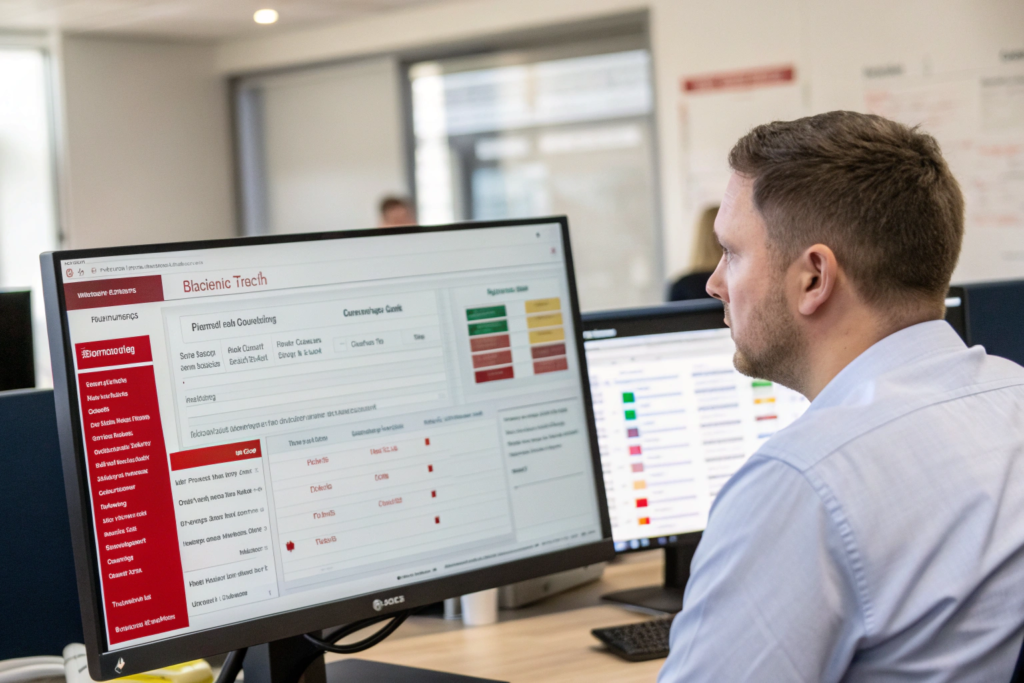
Last year, a supplier for recycled polyester yarn was accused of falsifying its recycled content claims. Because we had full traceability for a client's order that used that specific yarn lot, we were able to:
- Immediately identify every garment in production or inventory that contained that yarn.
- Halt further production with that material.
- Proactively inform the client and provide them with the complete batch data.
- Swiftly switch to a verified alternate supplier.
The client was able to manage a limited, transparent communication with their retail partners, recalling only a few hundred units instead of a whole season's collection. Their trust in us grew because our systems protected them from a far worse scenario.
How Does It Improve Quality Control and Recall Efficiency?
Traceability links finished goods back to the specific rolls of fabric, dye lots, and production lines. If a consumer reports a specific flaw (e.g., a fabric weakness), we can trace it back to the exact fabric batch and check if other garments from that batch are affected. This allows for a hyper-efficient, limited recall, protecting the vast majority of your inventory and saving enormous costs compared to a blanket recall.
How Does It Drive Continuous Improvement and Value Engineering?
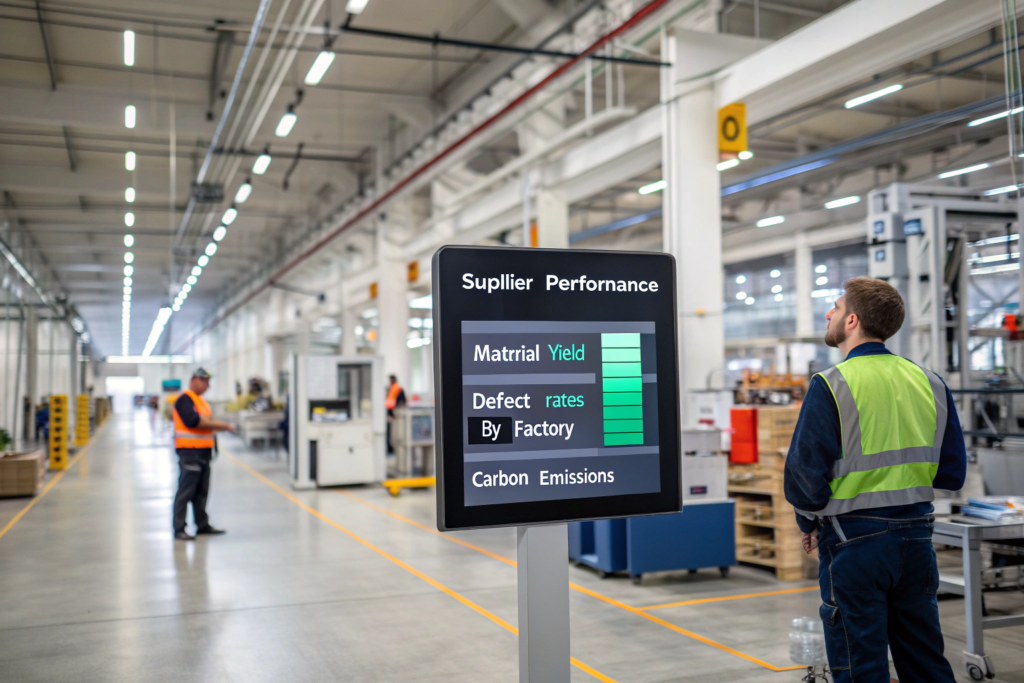
Traceability isn't just for crises; it's a tool for optimization. The data collected—on supplier performance, material yield, defect rates by factory, and carbon emissions at each stage—creates a feedback loop for making your supply chain more efficient, cost-effective, and lower-impact.
When you can measure every link in the chain, you can identify bottlenecks, waste, and opportunities for improvement. This turns your supply chain into a strategic asset for continuous improvement.
Dive Deeper Paragraph: Data-driven improvement is the long-term strategic benefit of traceability.
How Can Traceability Data Reduce Costs and Waste?
By tracking material yields from specific fabric mills, we can identify which suppliers provide the most efficient, low-waste fabric. By tracking defect rates per production line or factory, we can target training and process improvements. For instance, our traceability data revealed that a particular style had higher fabric waste when cut in Hub A versus Hub B due to minor pattern engineering differences. We standardized the more efficient method across all hubs, reducing fabric consumption by 2.5% for that style, a direct cost saving and environmental benefit.
How Does It Enable Accurate Carbon Footprint Calculation?
You cannot manage what you cannot measure. True carbon footprint assessment for a product (Life Cycle Assessment) requires data from every stage: raw material production, processing, manufacturing, and transportation. Traceability provides the specific "what" and "where" needed to gather accurate activity data. We are working with partners to use our traceability maps to calculate a more precise carbon footprint for orders, allowing brands to set science-based reduction targets and communicate credible progress to their customers.
Conclusion
Traceability is the critical infrastructure that makes sustainable garment manufacturing honest, resilient, and intelligent. It is the mechanism that converts ethical intentions into verifiable outcomes, protects your brand from risk and greenwashing, and provides the data needed to constantly improve. In today's market, transparency is not a bonus feature; it is a baseline expectation for any brand claiming sustainability.
At Shanghai Fumao, we have invested in building traceability into the core of our operations—from certified material sourcing with documented chains of custody to digital tracking of production batches. We believe that providing this level of transparency is fundamental to a true partnership. If you are ready to build a brand that stands on solid, provable ground, let us show you how our traceable systems can support your mission. Contact our Business Director, Elaine, at elaine@fumaoclothing.com or visit Shanghai Fumao to request a sample traceability report for our sustainable product lines. Prove your values, from seed to stitch.