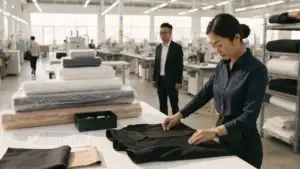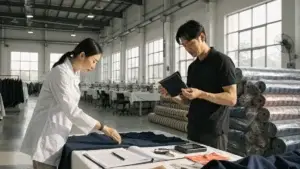
You've just secured a massive order from a major retailer, or your new collection is trending after a successful marketing launch. The excitement is quickly shadowed by a pressing reality: the market waits for no one. Every extra day in production is a day of missed sales, strained cash flow, and risk. In fast-paced fashion, extended lead times aren't just an inconvenience; they are a direct threat to your profitability and competitiveness.
We minimize lead times through a holistic system of parallel processing, strategic inventory, and digitized coordination, not by cutting corners. At Shanghai Fumao, we treat time as a critical raw material to be managed as meticulously as fabric or thread. Our integrated approach systematically compresses the production timeline while maintaining our commitment to quality, giving you a crucial speed-to-market advantage.
Minimizing lead time isn't about rushing; it's about eliminating delays, overlaps, and bottlenecks. It requires viewing the entire supply chain—from your design file to the loaded shipping container—as a single, synchronized operation. For bulk orders, where complexity multiplies, this synchronization is the difference between catching the season and missing it entirely.
How Does Parallel Processing Revolutionize the Traditional Timeline?
The traditional manufacturing model is linear: finish one step completely before beginning the next. This sequential approach is the biggest culprit behind long lead times. Our method is built on parallel processing, where multiple critical path activities happen simultaneously, dramatically shrinking the calendar.
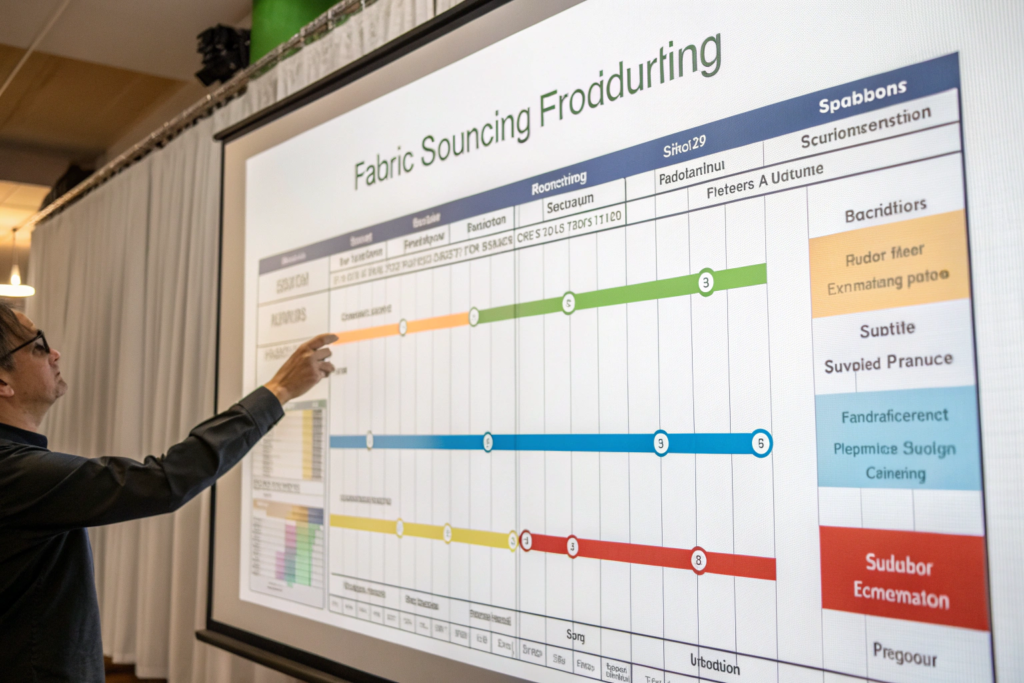
We deconstruct the standard timeline and run interdependent stages in parallel wherever safely possible. This requires precise initial planning and constant communication but can reduce the total project duration by 30% or more compared to a linear approach.
Dive Deeper Paragraph: This concurrency is engineered at two key phases: the development-to-production handoff and within production itself.
How Do We Overlap Development and Pre-Production?
The moment a design is finalized, we trigger multiple processes at once:
- Tech Pack Finalization & Pattern Making begin immediately.
- Fabric and Trim Sourcing is initiated in parallel based on preliminary specifications. We leverage our approved supplier network to request quotes and reserve capacity even as the tech pack is being polished.
- Sample Making uses existing similar fabrics or prototype materials to perfect fit and construction, without waiting for the actual bulk fabric to arrive.
For a client launching a 20,000-unit activewear line, this parallel start allowed us to lock in fabric from the mill and secure a production slot 14 days earlier than their previous supplier, turning a theoretical 90-day timeline into a firm 76-day commitment.
What Does Concurrent Action Within Production Look Like?
Once bulk fabric is confirmed, the parallelism intensifies:
- While the fabric is being woven or dyed, we finalize and test the marker (fabric layout for cutting) digitally.
- As the fabric is in transit to our factory, we pre-cut all interlinings, tapes, and smaller trim components.
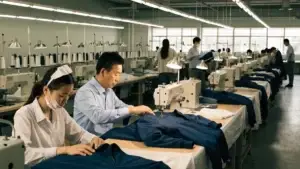
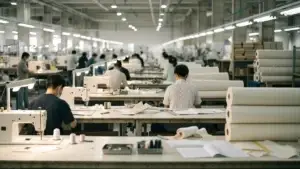
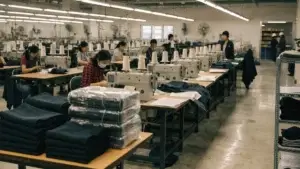
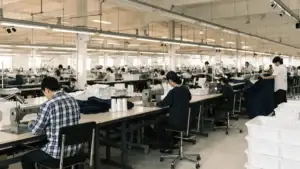
- The cutting, sewing, and finishing stages are scheduled in overlapping waves, not discrete blocks.
This method requires exceptional supply chain visibility and trust with material suppliers, which we have built over years. It transforms waiting time into active preparation time.
What Role Does Strategic Raw Material Sourcing Play?
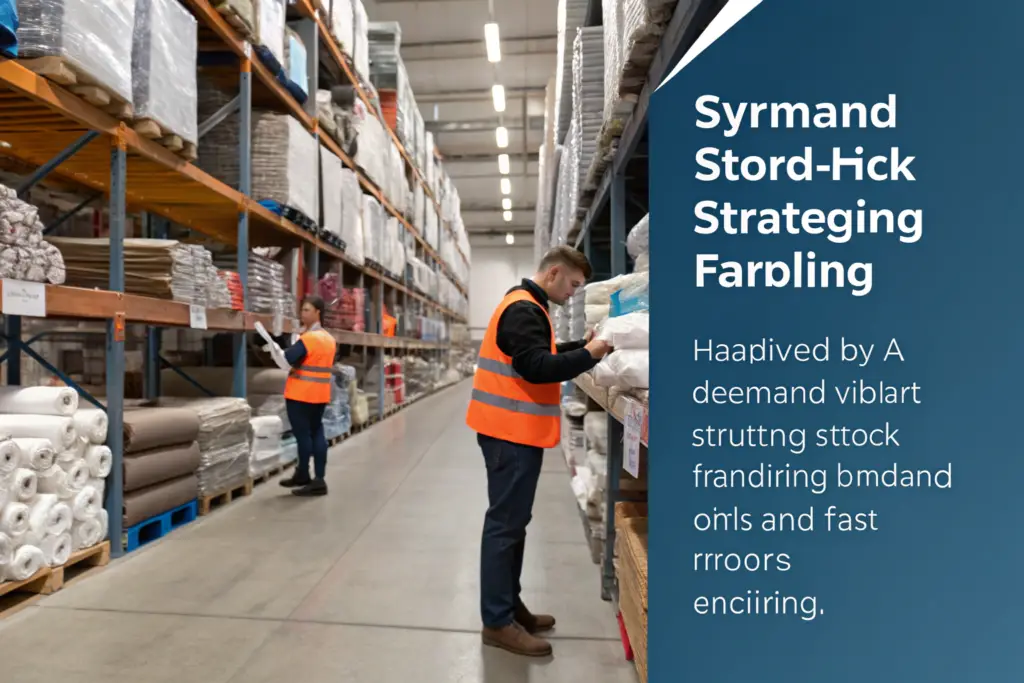
The single longest delay in most bulk orders is waiting for fabric and trim. Unpredictable mill schedules, quality rejections, and shipping logjams can add weeks of uncertainty. Our strategy moves beyond reactive purchasing to proactive partnership and smart inventory.
We minimize material lead times through a hybrid approach: combining the agility of on-demand sourcing with the speed of strategic stock-holding for key items. This gives us the flexibility to handle custom orders while having a "fast-track" option for standard fabrics.
Dive Deeper Paragraph: Speed in sourcing is achieved through relationships, data, and intelligent prepositioning.
How Do Deep Supplier Partnerships Accelerate Sourcing?
We don't just have suppliers; we have integrated partners. For our core fabric types (like certain poplins, jerseys, or denims), we have established Vendor Managed Inventory (VMI) programs or guaranteed capacity allocations with top-tier mills. This means:
- Priority Scheduling: Our orders get slotted into their production queue faster.
- Shared Forecasts: We provide them with rolling forecasts based on our clients' trends, allowing them to prepare base greige goods in advance.
- Expedited Logistics: We use consolidated and pre-booked freight routes for raw materials.
For example, our partnership with a major blended fabric mill includes a 15-day guaranteed turnaround from order to shipment for their top 10 substrates, a benefit we pass directly to our clients.
What is the "Fabric Bank" Strategy for Common Materials?
For ultra-common, high-demand materials (e.g., 230gsm cotton jersey in standard colors, certain polyester linings), we maintain a "Fabric Bank" – a strategically held inventory at our warehouse or the mill's facility nearby. When a client's order uses these materials, we can literally start cutting within 48 hours of order confirmation, bypassing the 4-6 week weaving and dyeing lead time entirely. This strategy was pivotal for a sports brand that needed a 10,000-unit reorder of best-selling polo shirts within 5 weeks to restock for a major event; we tapped the Fabric Bank and delivered with days to spare.
How Does Technology Drive Efficiency and Prevent Delays?
Manual processes, paper-based tracking, and communication gaps are silent time thieves. In bulk manufacturing, a miscommunication about a shade approval or a lost trim bundle can halt a line for days. Our investment in technology automates information flow and provides real-time transparency, preventing stoppages before they happen.
We utilize a suite of digital tools that connect design, planning, production, and quality control on a single platform. This creates a "digital thread" for each order, ensuring every department works from the latest, correct information instantly.
Dive Deeper Paragraph: The technological advantage manifests in communication, execution, and problem-solving.
How Do Digital PLM and Real-Time Dashboards Eliminate Wait States?
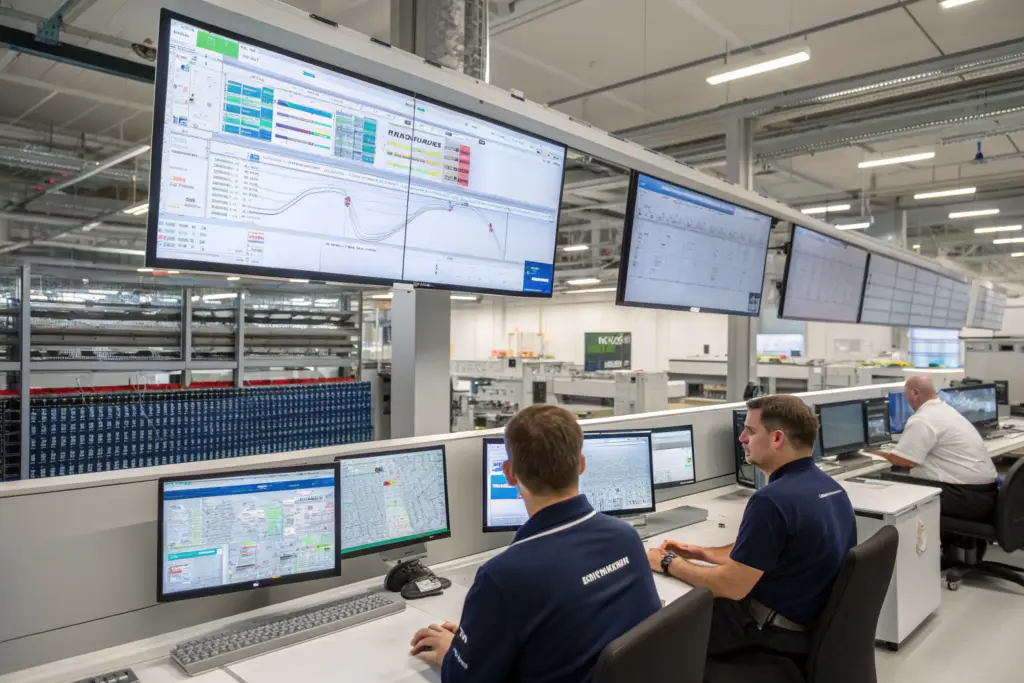
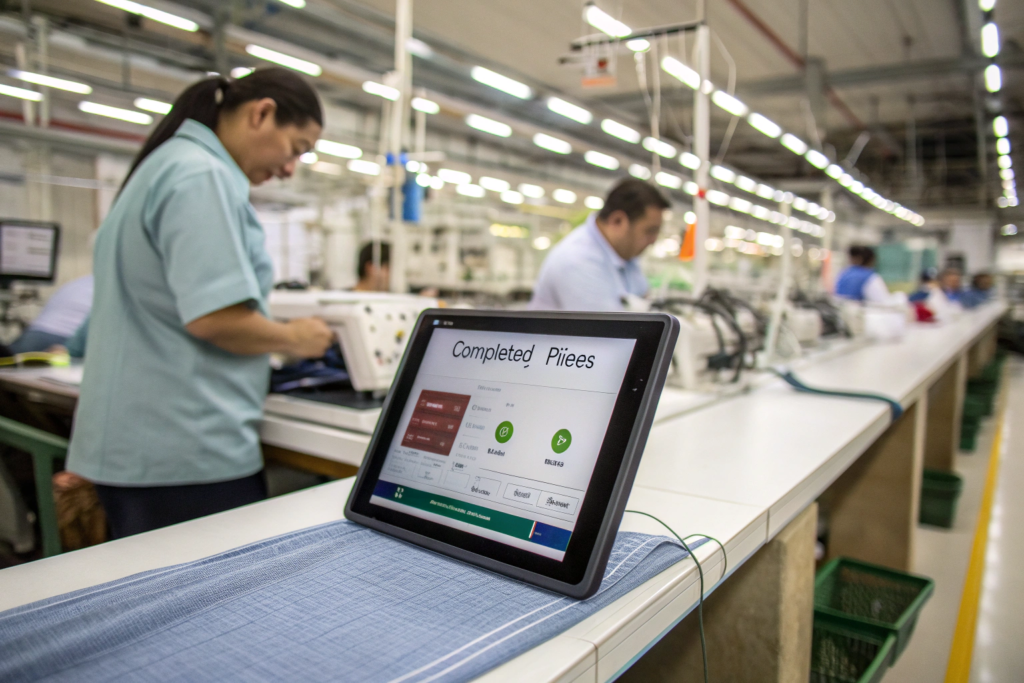
We implement Product Lifecycle Management (PLM) software shared with key clients. All comments, approvals, and revisions on tech packs, samples, and lab dips are logged here. There is no more "I didn't get that email" or "the attachment was too large." Approval cycles that used to take 5-7 days via email now take 2-3. Internally, our production dashboard shows the real-time status of every order: which line it's on, what the hourly output is, and if it's on track. Managers can redeploy resources at a moment's notice to address any slowdown, a key practice in lean manufacturing.
Can IoT and Automation Shorten Physical Processes?
Yes, in targeted ways. We employ:
- Automated Fabric Spreaders and Cutters: These machines work 3x faster than manual teams with higher accuracy, reducing the cutting stage for a 10,000-piece order from several days to under 24 hours.
- IoT-enabled Machines: Key sewing machines are connected to monitor needle breaks, thread run-out, and downtime. Maintenance is predictive, not reactive, preventing unexpected line stoppages.
- Barcode Tracking: Every bundle of cut pieces has a unique barcode. Its movement through sewing, pressing, and inspection is scanned, instantly locating it and providing progress data. This eliminated 2-3 days of "search time" per order that was common in our old paper-based system.
How Is Logistics and Shipping Pre-Planned Into the Schedule?
The lead time isn't over when the last garment is packed. The journey to your warehouse is often the most unpredictable segment. We treat logistics not as a last-minute task, but as a phase integrated into the initial production schedule, with pre-arranged solutions to avoid port congestion and booking scrambles.
From day one of an order, we work backward from the required delivery date. We factor in ocean or air transit times, customs clearance, and final-mile delivery to book freight space and prepare documentation well in advance of the cargo being ready.
Dive Deeper Paragraph: Proactive logistics management involves strategic booking and flexible pathways.

Why Do We Book Freight Space Before Production Finishes?
As soon as we have a firm production finish date and carton count estimate, our logistics team books space on vessels or flights. For ocean freight, we often use FAK (Freight All Kinds) contracts with carriers that guarantee space allocation. This is critical during peak seasons when space is scarce. Last Q4, while competitors faced 2-3 week booking delays, our pre-booked space ensured a client's holiday collection shipped on the exact day production was completed, meeting their Black Friday in-store deadline.
How Do We Maintain Flexibility with Shipping Options?
We develop a "Plan A and Plan B" shipping strategy for every bulk order.
- Plan A (Optimal): Full container load (FCL) via the most cost-effective port rotation.
- Plan B (Expedited): A pre-reserved option for air freight or less than container load (LCL) consolidation through an express lane if production faces an unavoidable, minor delay.
Having this contingency pre-negotiated and costed allows us—and you—to make swift, informed decisions if timelines tighten, rather than panicking. This end-to-stage planning is what defines a true full-package manufacturing partner.
Conclusion
Minimizing lead times in bulk garment manufacturing is not about working faster in chaos; it's about working smarter in a synchronized system. It requires parallel processing to collapse the calendar, strategic sourcing to secure materials, digital integration to prevent errors, and forward logistics planning to seal the timeline. This holistic discipline transforms speed from a risky gamble into a reliable, repeatable component of your supply chain.
At Shanghai Fumao, we have engineered our operations around this time-compression philosophy. We understand that in today's market, your ability to execute quickly is as important as your ability to design brilliantly. Let us turn your bulk production from a source of stress into a competitive advantage. To explore how we can optimize the timeline for your next major order, contact our Business Director, Elaine, at elaine@fumaoclothing.com. Deliver on trend, on time, every time.