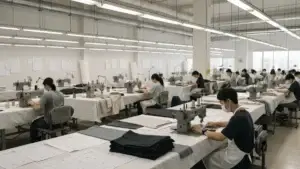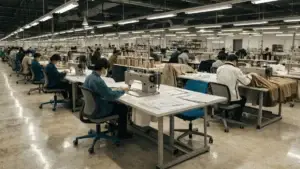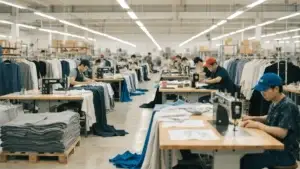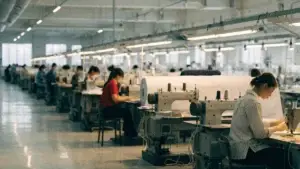
You're committed to building an eco-conscious apparel brand. You source organic cotton, use low-impact dyes, and design for longevity. But when it comes to production, you face a tough question: Can full-package manufacturing (FPP) truly align with your sustainability goals, or does it add opaque, resource-heavy steps to your supply chain?
Absolutely, yes. When executed with intention, Full-Package Production (FPP) is not just compatible with sustainable clothing manufacturing—it is one of its most powerful enablers. At Shanghai Fumao, we leverage the centralized control and oversight inherent in FPP to implement and enforce sustainable practices at every stage, from fiber to finished garment, often more effectively than a fragmented supply chain model.
The common misconception is that sustainability is solely about materials. In reality, the most significant environmental and social impacts are often determined during the manufacturing processes. FPP gives a single responsible partner—the manufacturer—the authority and accountability to manage these impacts holistically.
How Does FPP Centralize Control Over Sustainable Material Sourcing?
Managing sustainability across multiple, disconnected suppliers is a monumental challenge. You might secure organic fabric from one mill, but have no visibility into the dye house's wastewater treatment or the trim supplier's labor practices. FPP consolidates this complexity under one roof of responsibility.
With FPP, your manufacturer becomes the gatekeeper of your supply chain's sustainability. They are responsible for vetting and selecting all material suppliers against your specific environmental and social criteria. This centralized control ensures consistency, reduces compliance risk, and simplifies your certification tracking.
Dive Deeper Paragraph: This control manifests in two key areas: verified sourcing and waste reduction at the source.
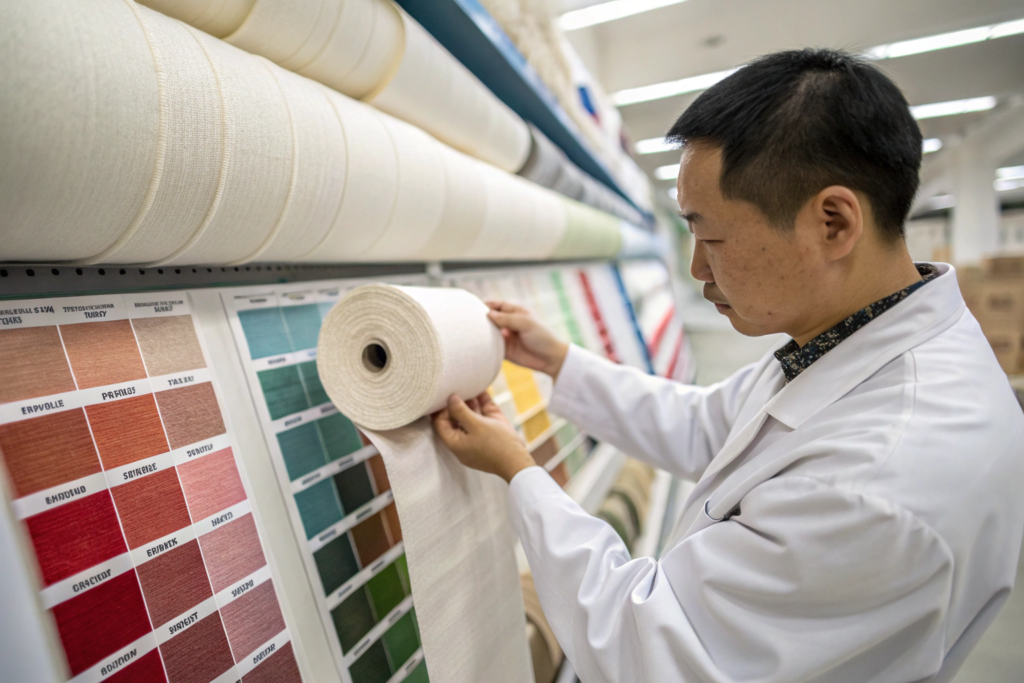
What Role Does a FPP Partner Play in Certifying Raw Materials?
A professional FPP partner does not just order "organic cotton." They ensure it comes with verified credentials. We maintain a vetted database of mills that provide certified materials, such as:
- Global Organic Textile Standard (GOTS) for organic fibers.
- OEKO-TEX® Standard 100 for harmless substances.
- GRS (Global Recycled Standard) for recycled content.
- Bluesign® approval for environmentally friendly chemicals.
For example, last year, we helped a startup brand launch a fully GOTS-certified activewear line. As their FPP partner, we sourced every component—from the GOTS-certified organic fabric and thread to the GOTS-approved elastic and labels—ensuring the final product met the stringent chain-of-custody requirements for certification, which would have been nearly impossible for them to coordinate alone.
How Can Integrated Sourcing Minimize Pre-Production Waste?
In a fragmented model, a fabric mill may over-produce and ship excess material to a cut-and-sew factory, where the leftovers become instant waste. In an integrated FPP model, fabric procurement and production planning are directly linked. Our technical team calculates the precise fabric yield needed for an order, leveraging lean manufacturing principles to order optimal quantities. We then manage the entire roll allocation, cutting markers are engineered for maximum efficiency, and fabric remnants are systematically collected for recycling into non-woven materials or other products, drastically reducing pre-consumer textile waste.
How Does On-Site Production Management Reduce Environmental Impact?
Transporting semi-finished goods between specialized factories—fabric mill to dyer, dyer to printer, printer to assembler—creates a significant carbon footprint. FPP consolidates core processes, slashing this "production mileage" and enabling direct management of energy and resource use.
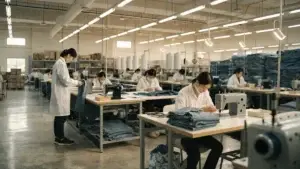
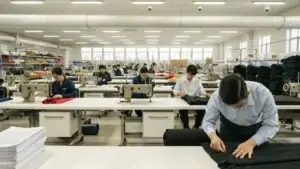
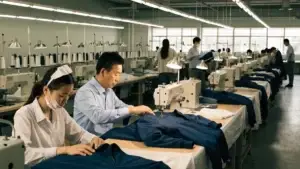
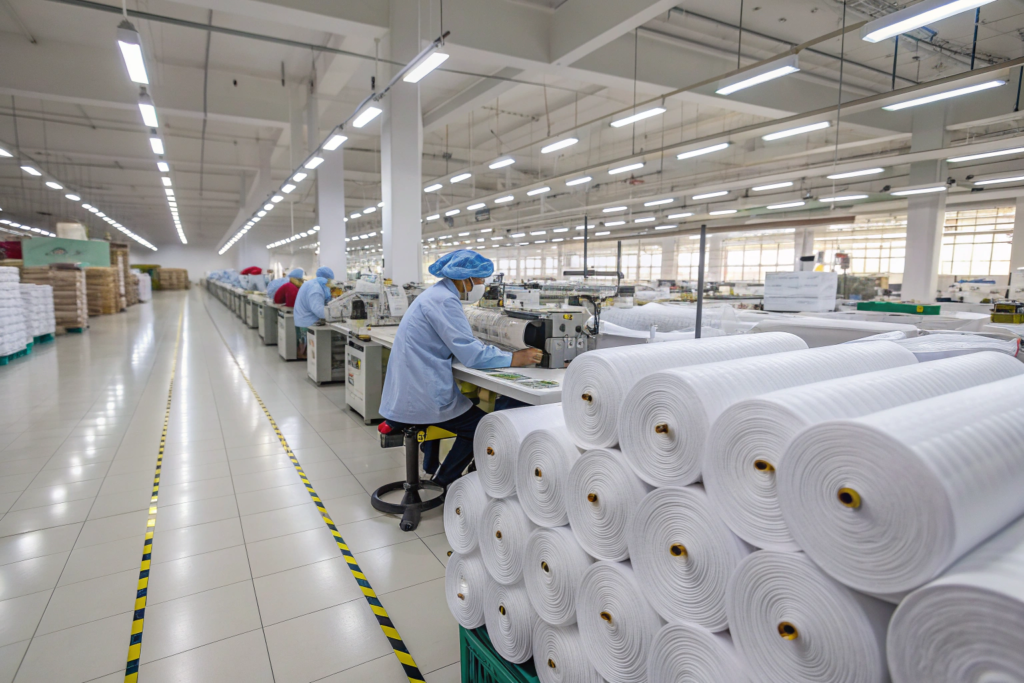
The environmental benefit of FPP lies in process integration and localized oversight. By bringing key production stages like cutting, sewing, finishing, and packing under one managed facility or nearby partner network, we eliminate numerous intermediate shipments and gain direct control over the utilities and resources consumed during transformation.
Dive Deeper Paragraph: Impact reduction is achieved through logistics efficiency and direct resource stewardship.
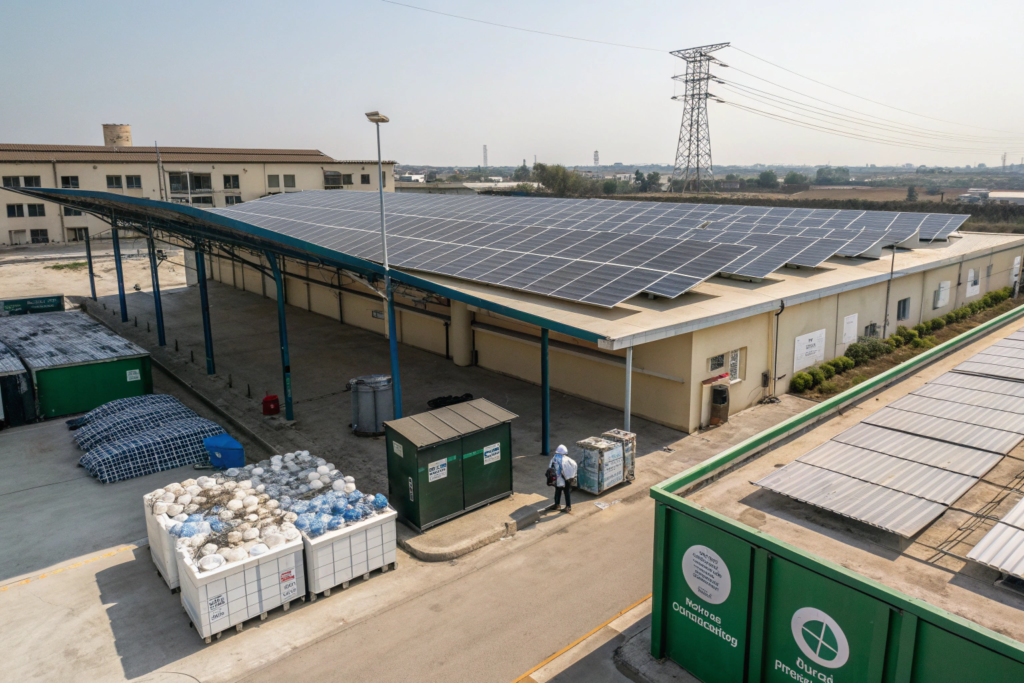
Can Consolidating Manufacturing Steps Lower Carbon Emissions?
Yes, significantly. A study by the Sustainable Apparel Coalition highlights that logistics and intermediate transportation contribute substantially to a garment's carbon footprint. Consider a typical route: fabric mill (Country A) -> dye house (Country B) -> embroidery unit (Country C) -> final factory (Country D). Each leg involves freight, packaging, and handling. Our FPP model at Shanghai Fumao streamlines this. We source fabric and coordinate dyeing with nearby, audited partners, then bring everything to our consolidated production campus for the remaining value-add processes. For a recent 50,000-piece order, our integrated logistics model reduced intermediate transport distance by an estimated 60% compared to the industry norm.
How Do FPP Factories Implement Energy and Water Conservation?
Direct management allows for direct investment in conservation. In our own facilities, we have implemented:
- LED Lighting Retrofit: A full shift to LED across five production lines, reducing energy for lighting by over 50%.
- Water Recycling in Wet Processing: While we partner with specialized dye houses, our selection criteria mandate they have water treatment and recycling systems. We require and review their environmental audit reports.
- Efficient Equipment: Investing in modern, automated cutters and sewing machines that use less power per unit produced.
This control level is seldom available to brands who merely purchase from a factory; it is the purview of a true manufacturing partner.
How Does FPP Ensure Ethical Labor Practices and Supply Chain Transparency?
Sustainability is incomplete without social responsibility. The complexity of the apparel supply chain often obscures labor conditions. FPP, by condensing the chain, brings the majority of the workforce under the direct purview of one entity, making ethical oversight and transparency more achievable.
A responsible FPP provider doesn't just make your clothes; they safeguard the people who make them. By employing workers directly in core production processes and enforcing a strict code of conduct across all managed facilities, FPP establishes a clear line of accountability for fair wages, safe working conditions, and workers' rights.
Dive Deeper Paragraph: Transparency and ethics are built through direct governance and traceability systems.
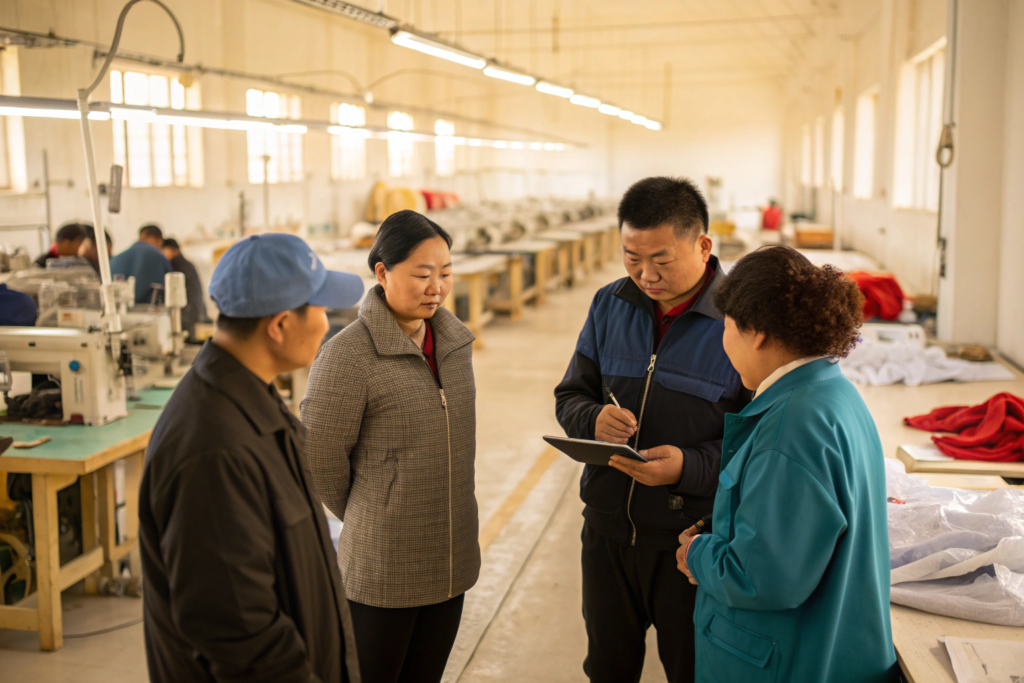
Why Is Direct Employment Critical for Social Accountability?
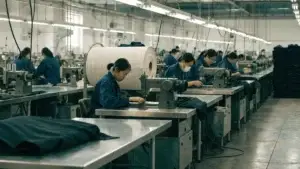
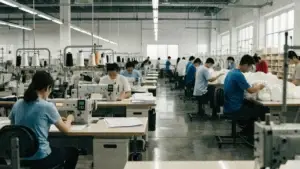
Many social compliance issues arise in unregulated subcontracting. A brand may audit Factory A, but not know Factory A has secretly outsourced to Factory B with poor conditions. In our FPP model, over 85% of production is completed in-house or through long-term, jointly audited partner facilities where we have management oversight. We conduct regular, unannounced internal audits and welcome third-party audits from brands or bodies like Sedex or Fair Trade. We provide our partners with detailed social compliance reports, not just factory certificates. Last year, we invested in upskilling programs for 200 workers, focusing on advanced sewing techniques and quality control, directly linking workforce development to product excellence.
How Can FPP Provide Unmatched Supply Chain Traceability?
Traceability is the backbone of credible sustainability claims. FPP simplifies the traceability map from a sprawling web to a streamlined flowchart. We implement batch tracking from fabric intake through to carton. For instance, using a simple but effective digital tracking system, we can trace a finished jacket back to the specific roll of recycled polyester fabric it came from and the production line on which it was assembled. This level of detail supports brands in creating authentic "storytelling" for consumers and provides robust data for environmental impact assessments like Life Cycle Analysis (LCA).
How Does FPP Facilitate Design for Longevity and End-of-Life Planning?
True sustainability means designing clothes to last and planning for their next life after disposal. FPP partners, involved from the prototype stage, are uniquely positioned to advise on construction and material choices that enhance durability and recyclability.
Your FPP manufacturer is not just an order taker; they are your technical collaborator. Their expertise in garment engineering becomes a critical resource for designing products that are not only stylish but also durable, repairable, and ultimately easier to disassemble for recycling, supporting a circular fashion economy.
Dive Deeper Paragraph: The collaboration extends a product's life in both the use and post-use phases.
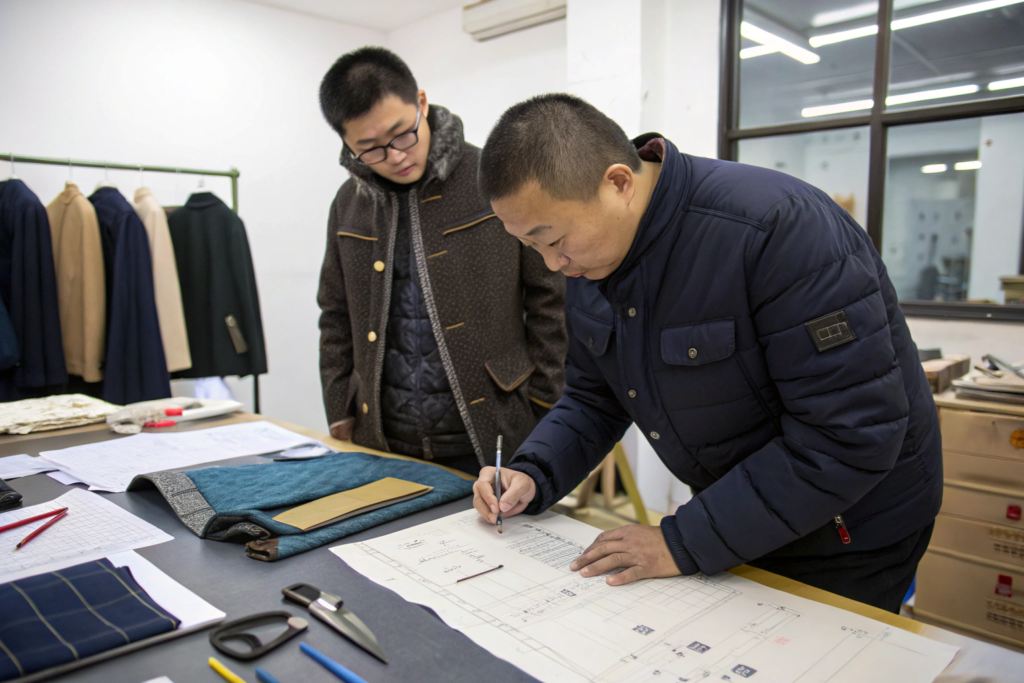
How Can Production Expertise Enhance Product Durability?
Durability is engineered. Our product development team works with brand designers to recommend:
- Reinforced Stress Points: Using bar tacks at pocket corners and high-wear areas.
- Superior Seam Construction: Proposing flatlock seams for activewear to reduce chafing and increase strength, or French seams for luxury linens for a clean finish and added robustness.
- Quality Component Sourcing: Selecting robust zippers, durable buttons, and colorfast threads.
Two years ago, we collaborated with an outdoor brand to redesign a best-selling hiking pant. By switching to a higher-grade, recycled nylon fabric and revising the stitch density and seam type, we helped increase the product's average lifespan, a key metric for their sustainability report, by an estimated 40%.
What Role Can a Manufacturer Play in Garment Recycling?
The end-of-life journey begins at the design stage. We are now working with forward-thinking brands to explore mono-material design—creating a garment from a single type of fiber (e.g., 100% polyester) to simplify recycling. As the maker, we can advise on minimizing trim varieties, using easily removable labels, and avoiding permanent chemical finishes that contaminate fabric streams. We are also piloting a take-back program with a European partner, where we collect production off-cuts and post-consumer garments (of our making) to feed into a dedicated recycling pipeline, closing the loop we helped open.
Conclusion
Full-Package Production, far from being an obstacle to sustainability, is its logical accelerator. It replaces supply chain opacity with transparency, fragmented responsibility with centralized accountability, and isolated initiatives with integrated systems. From guaranteeing ethical materials and reducing carbon miles to ensuring fair labor and engineering for circularity, a strategically leveraged FPP model turns sustainability ambitions into traceable, verified outcomes.
At Shanghai Fumao, sustainable FPP is our operational standard. We believe that producing high-quality apparel responsibly is the only viable future for our industry. We equip our partners with the data, processes, and expertise to build brands that are both profitable and principled. If you are looking for a manufacturing partner who views sustainability as a core engineering and operational discipline, not just a marketing add-on, let's build a better supply chain together. For a detailed discussion on how our FPP model can support your brand's environmental and social goals, please contact our Business Director, Elaine, at elaine@fumaoclothing.com.