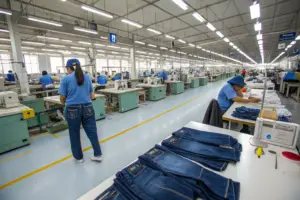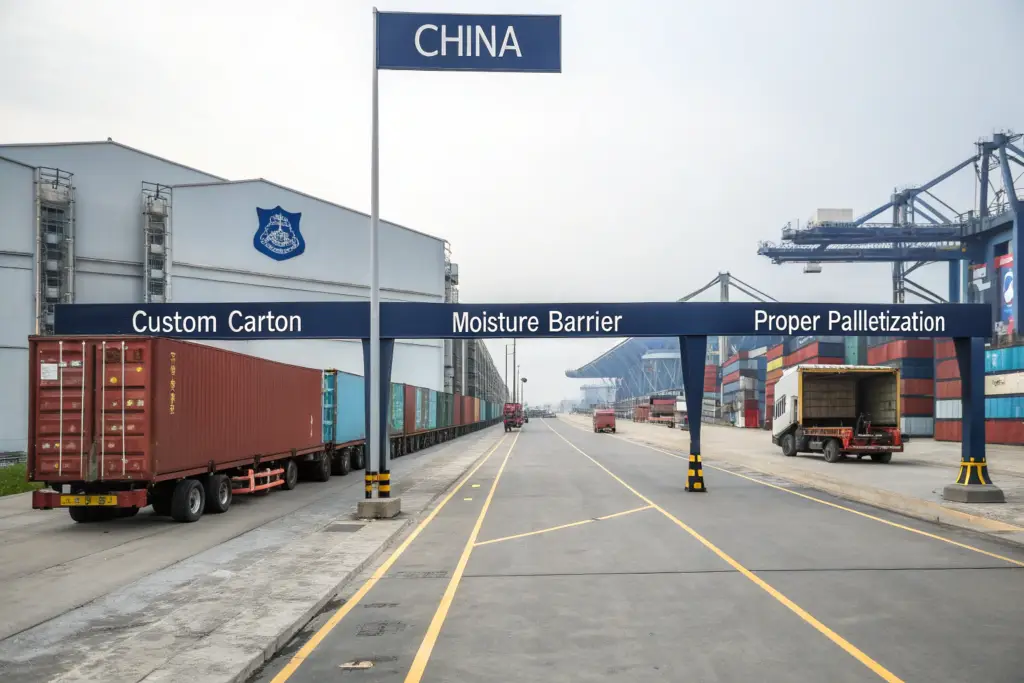
You’ve spent months perfecting your apparel designs, meticulously sourcing fabric, and overseeing production in China. The factory sends photos of the finished goods—they look perfect. But when the shipment arrives at your warehouse, the excitement turns to frustration: boxes are crushed, garments are wrinkled and dusty, some have mysterious stains, and a few are even torn or snagged. The damage isn’t just a nuisance; it represents lost revenue, costly returns, and a damaged brand reputation. This scenario is all too common, but it is entirely preventable with a proactive, multi-layered strategy.
To ensure your apparel arrives undamaged from China, you must implement a comprehensive system that combines robust in-factory packaging design, rigorous in-transit protection, professional handling protocols, and clear accountability. This involves custom, product-specific packaging, mandatory pre-shipment inspections, choosing the right Incoterms, and partnering with a factory that treats packaging as a critical part of quality control, not an afterthought.
The journey from a factory in Shanghai to a warehouse in Los Angeles is a gauntlet of potential hazards. Protecting your investment requires planning for each stage. Let’s build your damage-prevention playbook.
How Does In-Factory Packaging Design Form the First Line of Defense?
The protection of your garments begins the moment they come off the production line. Relying on the factory’s standard, generic packaging is the number one cause of preventable damage. The packaging must be engineered for your specific product.
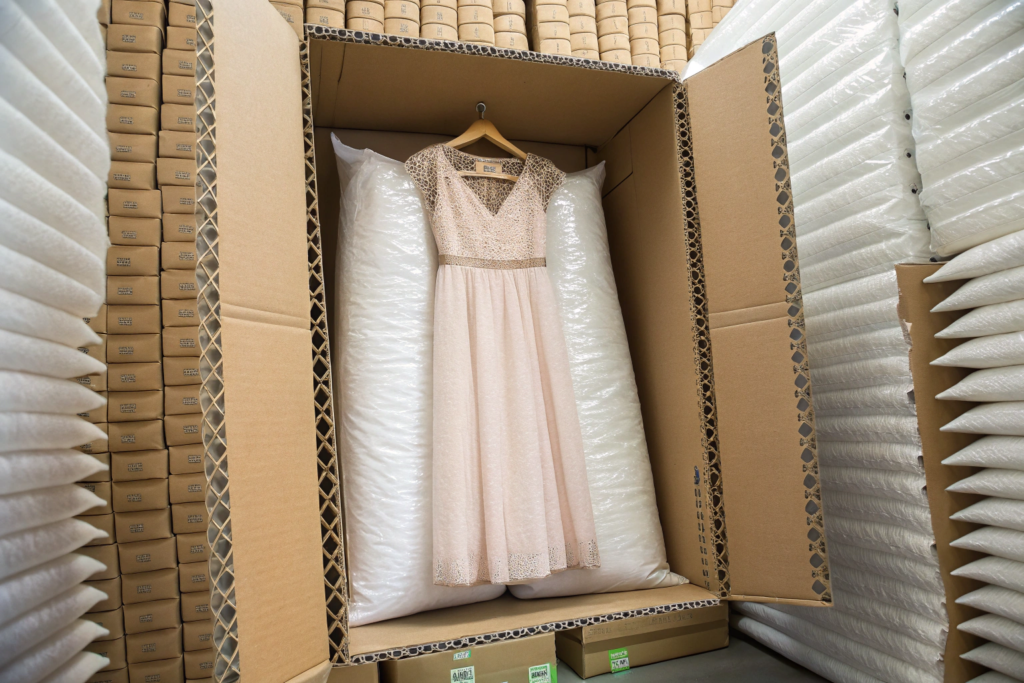
In-factory packaging is your first and most critical line of defense. It must be tailored to the garment’s weight, fabric, and structure to prevent movement, crushing, moisture ingress, and abrasion. This means using custom-sized polybags, internal dividers, properly sized cartons with adequate burst strength, and secure sealing methods.
What Are the Non-Negotiable Elements of Protective In-Factory Packing?
- Individual Garment Protection: Each item must be in a sealed polybag. For delicate fabrics (silk, lace), use soft non-woven garment bags to prevent snagging.
- Proper Folding: Use consistent, tight folding to minimize wrinkles and create uniform bundles that pack neatly. For heavy knits or structured blazers, consider hanger packs or box packing to avoid deformation.
- Carton Specification: Do not accept “whatever box is available.” Specify:
- Bursting Strength: Minimum 200# test for standard apparel; 275#+ for heavy denim or outerwear.
- Custom Dimensions: The box should fit the folded garment bundle with minimal empty space (<2 inches of void).
- Reinforced Sealing: Use H-taping (tape on both seams) or reinforced tape.
At Shanghai Fumao, we conduct packaging qualification tests for new styles. We’ll pack a sample carton, ship it across China and back, and then inspect the contents. This led us to add corner protectors for a client’s hoodies, eliminating crushed hoods.
How Can You Enforce This Standard?
Include detailed packaging specifications in your tech pack and purchase order (PO). Make approval of packaging samples a mandatory pre-production milestone. A client of ours provided a one-page “Packing Guide” with diagrams for folding and carton labeling. We followed it exactly, and their damage rate dropped to near zero.
Why Are Pre-Shipment Inspections (PSI) Critical for Damage Prevention?
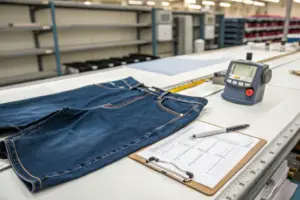
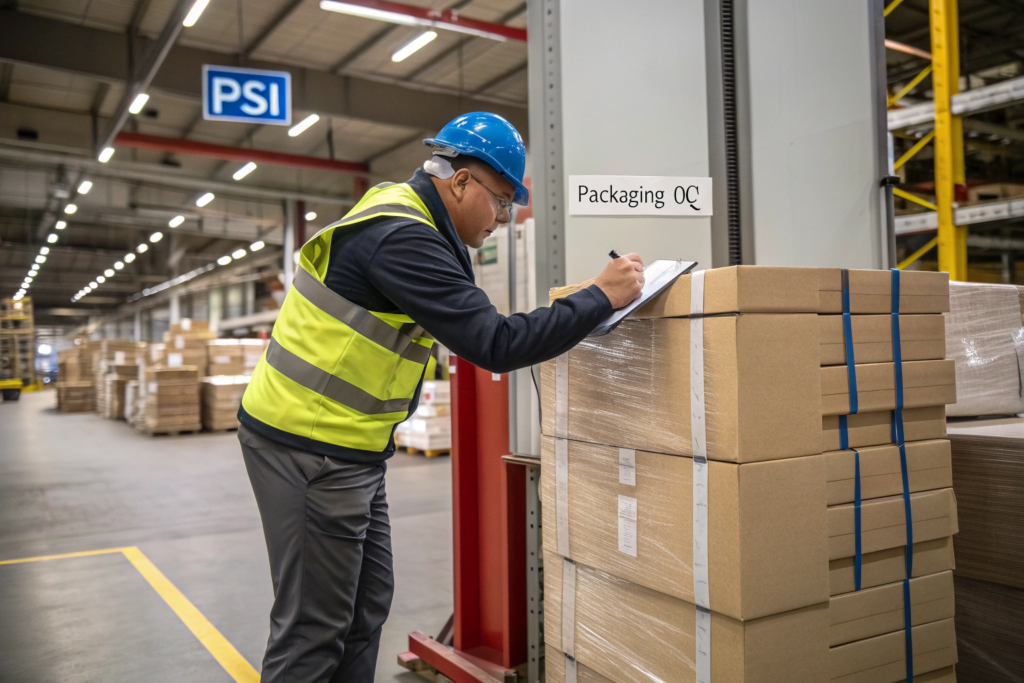
A pre-shipment inspection isn’t just about checking stitching and colors; it’s your final opportunity to verify that the packaging system is correctly implemented before goods leave the factory’s control. A poorly packed carton will fail long before it reaches you.
A Pre-Shipment Inspection (PSI) is critical because it audits the entire packaged unit. A qualified inspector checks carton strength, packing method, polybag sealing, labeling accuracy, and overall readiness for shipment. Catching and correcting packaging failures here is cheap; discovering them after ocean freight is expensive and irreversible.
What Specific Packaging Checks Should a PSI Include?
Your inspection checklist must mandate:
- Carton Drop Test: Randomly selected cartons are dropped from a height (e.g., 3 feet) to simulate rough handling. They should not burst open.
- Carton Weight and Measurement: To verify correct dimensional weight and ensure uniform carton sizes for palletization.
- Internal Packing Audit: Opening a few cartons to check for proper folding, use of tissue/padding, and that garments are clean and dry before sealing.
- Moisture Check: Ensuring garments are packed in a climate-controlled environment to prevent transpiration damage (mold from packing slightly damp garments).
We had a case where the PSI found workers using cheap, thin polybags that ripped easily. We halted packing, sourced the correct bags, and repacked the entire order. This added two days but prevented what would have been a massive damage claim.
Who Should Conduct the PSI?
Always use a third-party inspection company (like SGS, QIMA, or BV). The factory’s own QC has a conflict of interest. The cost (typically 0.3%-0.8% of order value) is insignificant compared to the value it protects.
How Do Logistics Choices and Incoterms Impact In-Transit Safety?
Once goods leave the factory, they enter the volatile world of international logistics. Your choices in shipping methods, partners, and contractual terms (Incoterms) directly influence how much control you have over their handling.
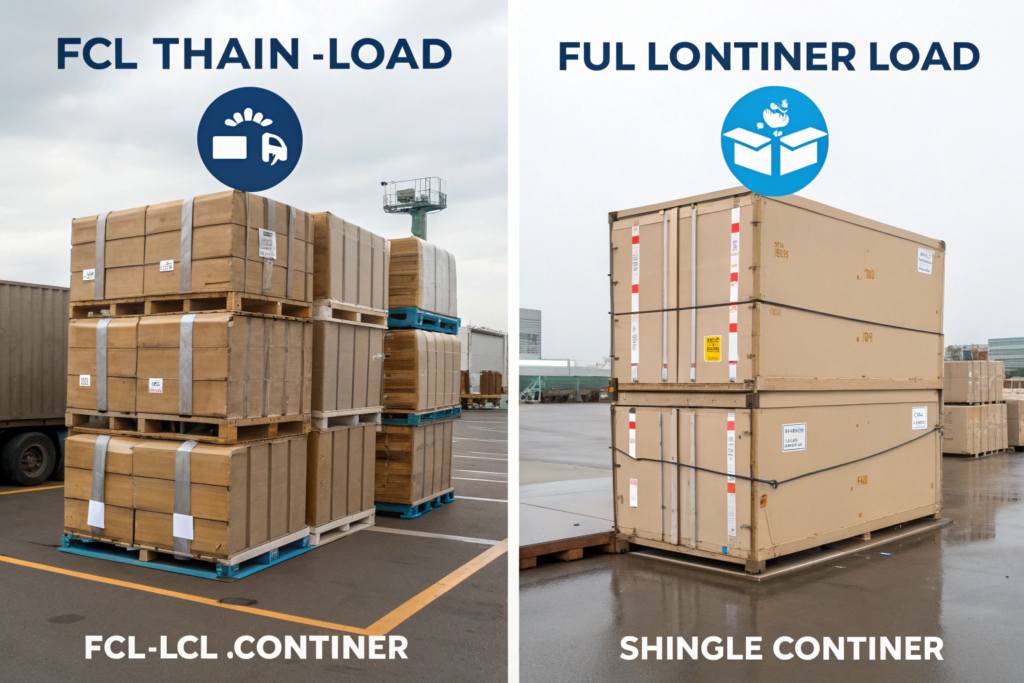
Your logistics choices directly impact safety. Opting for Full Container Load (FCL) over Less than Container Load (LCL) minimizes handling. Choosing a reputable freight forwarder ensures proper palletization and container stuffing. Selecting DDP (Delivered Duty Paid) terms often means the supplier manages the entire chain with more care, as they bear the risk until delivery.
Why is FCL Almost Always Safer than LCL?
In LCL, your cartons are mixed with other shippers’ goods in a shared container. They are handled multiple times at consolidation and deconsolidation warehouses, significantly increasing the risk of crushing, misplacement, and exposure to dirt or pests. FCL means your goods alone are loaded and sealed at the factory’s warehouse, and the seal isn’t broken until it reaches your destination port. The reduction in touchpoints is a massive risk reducer.
How Does the Choice of Incoterms Affect Accountability?
Under FOB (Free On Board), the factory’s responsibility ends at the origin port. If the container is poorly stuffed by the freight forwarder you hired, causing damage, the factory is not liable. Under DDP, the factory (or their agent) is responsible for the entire journey. This gives them a strong incentive to use careful handling and reliable partners throughout. For high-value or delicate collections, DDP can provide greater peace of mind.
What Are the Final Steps for Receiving and Documenting Damage?
Despite all precautions, damage can occur. How you handle receipt at your warehouse determines your ability to claim insurance and hold the right party accountable.
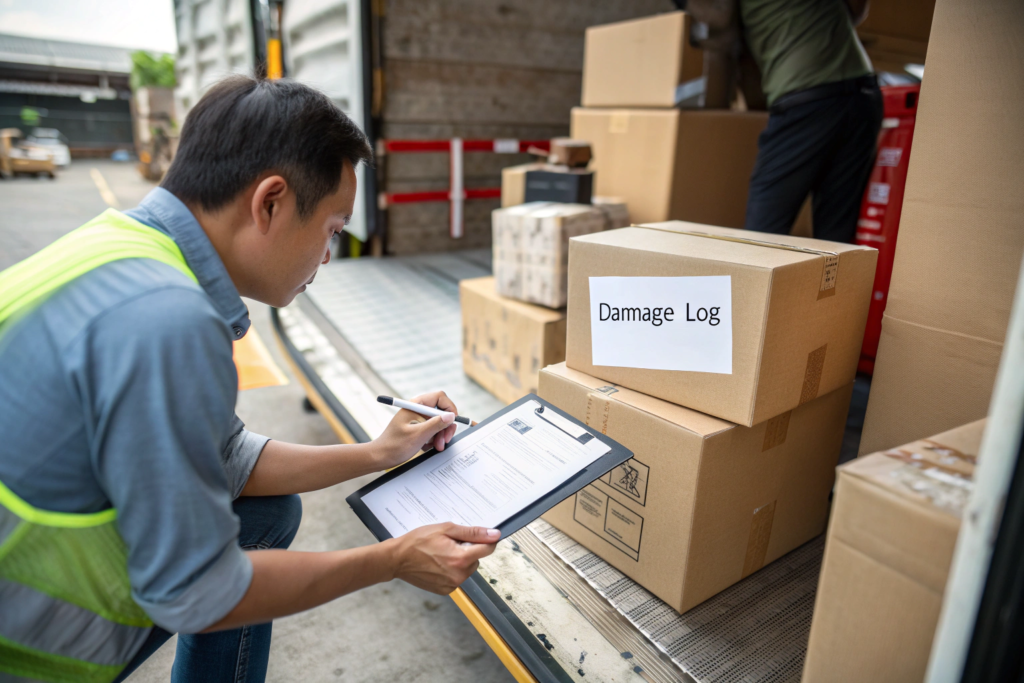
The final step is a systematic receiving process. Conduct an immediate inspection upon delivery, document any damage with photos and notes before signing the delivery receipt, and file claims with the carrier or insurer within the strict time window (often 24-48 hours). Proper documentation is your only leverage for reimbursement.
What is the “Golden Hour” for Damage Inspection?
Most carrier contracts limit your time to report concealed damage (damage not visible from the outside). This can be as short as 24 hours. Your warehouse must be prepared to:
- Inspect the Exterior: Note any crushed, wet, or torn cartons on the driver’s delivery receipt. Write “Subject to Inspection” if you can.
- Sample Inspect Immediately: Open a percentage of cartons from each SKU, especially those from damaged exterior boxes, to check for internal damage.
- Document Everything: Photos, videos, written descriptions.
How Does Insurance Fit Into the Strategy?
Marine Cargo Insurance is non-negotiable. Ensure your policy (whether you buy it or it’s included under CIF/DDP) is “All Risk” and covers from warehouse to warehouse. The documentation you collect at receipt is the evidence required to file a successful claim. One of our DDP clients had a container damaged in a port accident. Because we had insured the shipment and provided full packing documentation, the insurance claim was settled in full within 30 days.
Conclusion
Ensuring your apparel arrives undamaged from China is not a matter of luck; it’s a deliberate process of risk management at every node of the supply chain. It requires investing in custom packaging, mandating rigorous inspections, making smart logistics choices, and having a disciplined receiving protocol. This holistic approach protects your financial investment, your launch timelines, and your brand’s reputation.
Partnering with a factory like Shanghai Fumao that prioritizes and engineers packaging as part of the core product offering is the first and most important step. We view our responsibility as delivering your vision in perfect condition, ready for your customer.
If you want to end the cycle of damaged goods and build a resilient, reliable supply chain, let’s implement these strategies for your next order. Contact our Business Director, Elaine, at elaine@fumaoclothing.com to discuss creating a bulletproof shipment plan.