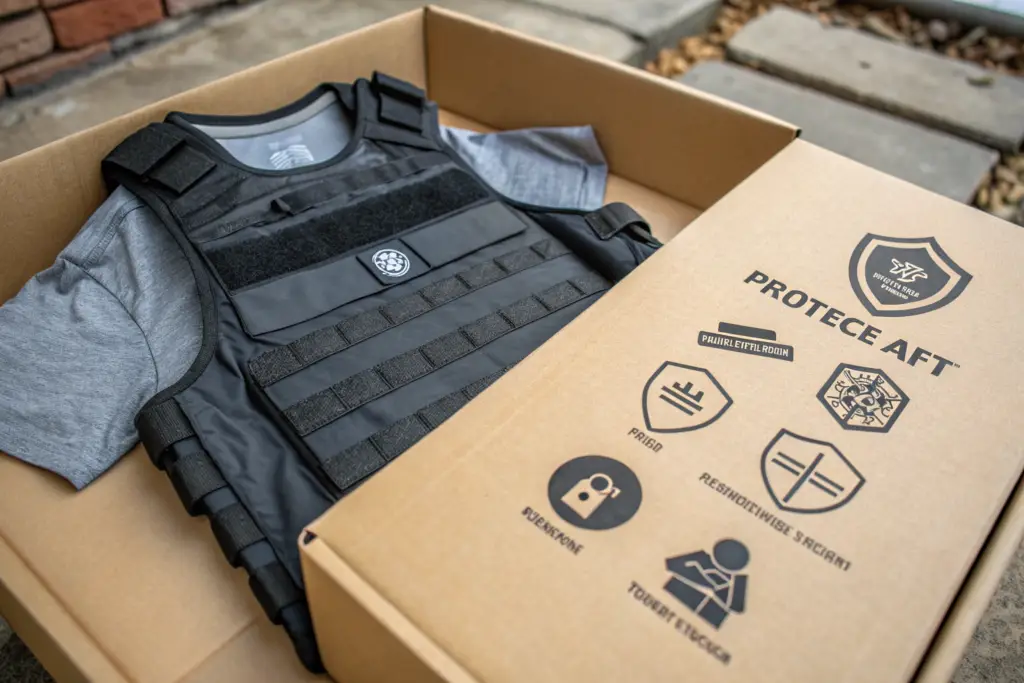
Your new clothing collection is finished—perfectly stitched, inspected, and ready for your customers. But the journey from the factory floor to the customer’s doorstep is a gauntlet of potential hazards: moisture, dust, rough handling, compression, and extreme temperatures. Too often, brands discover that their beautiful garments arrive wrinkled, stained, or damaged, leading to returns, negative reviews, and lost profit. The culprit is frequently inadequate or generic packaging that fails to defend against these real-world threats.
Custom packaging protects your garment shipments on two critical fronts: physical protection and brand integrity. It provides a tailored, multi-layered defense system against moisture, dirt, crushing, and abrasion during transit, while simultaneously safeguarding your brand’s image by ensuring a pristine, professional, and memorable unboxing experience that reduces customer complaints and reinforces perceived value.
Think of custom packaging not as a decorative afterthought, but as an essential component of your product’s quality control and risk management strategy. Let’s examine the specific protective mechanisms it offers.
How Does Packaging Provide Physical Defense During Transit?
The international and domestic shipping environment is harsh. Packages are stacked, dropped, exposed to humidity in container holds, and jostled in trucks. Generic, one-size-fits-all packaging is often insufficient for the specific needs of different garment types.
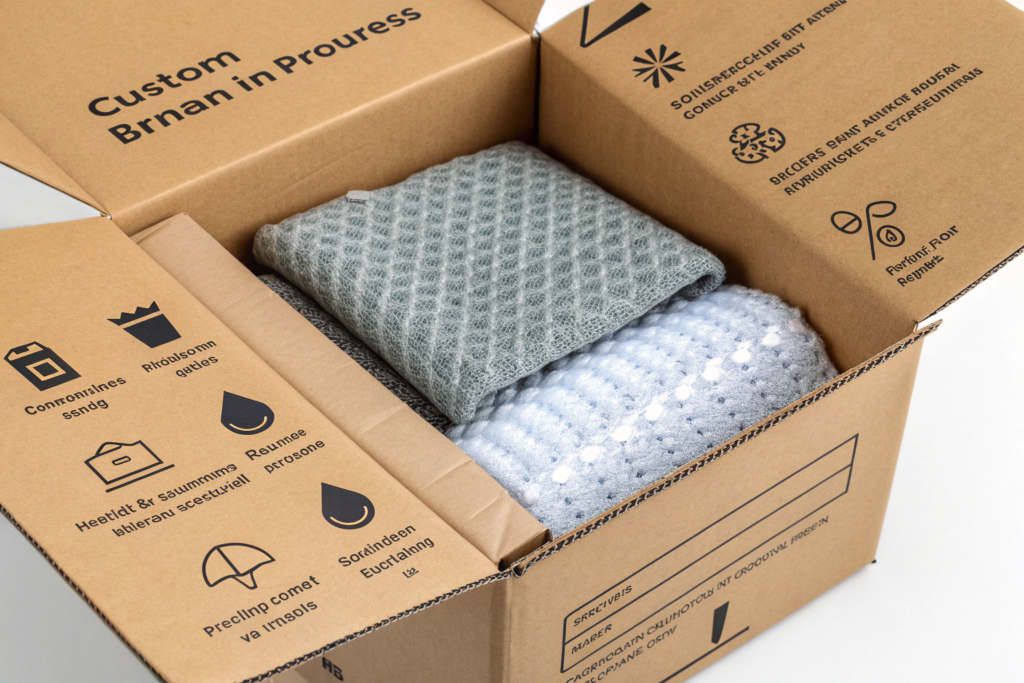
Custom packaging provides physical defense through material selection, precise sizing, and structural design. It uses barrier materials to block moisture, cushioning to absorb shock, and rigid structures to resist crushing, all tailored to the weight, fabric, and shape of your specific garments.
What Are the Key Threats and How Does Custom Packaging Counter Them?
- Moisture & Humidity: Non-breathable, sealed custom polybags made from appropriate plastic (e.g., HDPE or with desiccant packets) create a barrier against ambient humidity during ocean freight, preventing mold and mildew. A client shipping linen to a humid region switched to anti-moisture bags, eliminating a previous 5% damage rate.
- Dust & Dirt: Sealed inner packaging keeps garments clean throughout the often-dusty journey from factory to port to warehouse. This is crucial for light-colored items like white dresses or wedding apparel.
- Crushing & Compression: Custom-sized corrugated cartons with the correct burst strength (e.g., 200# test) and internal partitions prevent garments from being flattened under weight. For heavy items like jackets, double-wall cartons are essential.
- Abrasion & Snagging: Smooth, custom-sized polybags prevent buttons, zippers, or embellishments from catching on other garments or the box interior, which can cause pulls or tears.
At Shanghai Fumao, we conduct packaging tests for new clients. We’ll ship a prototype box across the country and back to see how it holds up, adjusting materials before bulk production. This proactive step has saved brands thousands in damaged goods.
Why Does "One-Size-Fits-All" Packaging Fail?
A large carton with a small garment inside allows too much movement, leading to crushing and wrinkling. A polybag that’s too tight can stress seams. Custom packaging is engineered to the exact dimensions of your folded garment, minimizing empty space (which reduces shipping costs) and providing a snug, supportive fit that holds the garment’s shape.
How Does Custom Packaging Uphold Brand Integrity and Reduce Returns?
Protection isn’t just about preventing physical damage; it’s about protecting the customer’s perception of your brand. The moment of unboxing is a powerful brand touchpoint that can either build loyalty or trigger a return.
Custom packaging upholds brand integrity by delivering a product in flawless, presentation-ready condition. It reduces returns by eliminating the primary causes of “item not as described” claims—damage, excessive wrinkling, and a perceived lack of quality upon arrival. A positive unboxing experience turns customers into brand advocates.
What is the Direct Link Between Packaging and Return Rates?
Studies show a significant portion of fashion returns are due to items arriving damaged or looking “cheap.” Custom packaging directly addresses this:
- Wrinkling: Garments folded with tissue paper and held firmly in place arrive ready to wear or with minimal steaming needed, meeting customer expectations.
- Presentation: A branded, undamaged box signals care and quality, setting a positive tone before the garment is even seen.
One of our e-commerce clients saw their return rate for “item damaged” drop by over 60% after implementing our custom folding and boxing system. The investment in packaging paid for itself by slashing return processing and lost inventory costs.
How Does Packaging Become a Marketing Tool?
A memorable unboxing experience is shareable. Customers post it on Instagram and TikTok, providing free, authentic marketing. Custom elements like branded tissue paper, stickers, or thank-you cards extend the brand story and increase perceived value, making customers feel they received a premium product, which justifies price and fosters loyalty.
What Are the Logistical and Cost Benefits of Optimized Packaging?
Beyond protection and branding, well-designed custom packaging creates significant operational efficiencies that impact your bottom line.
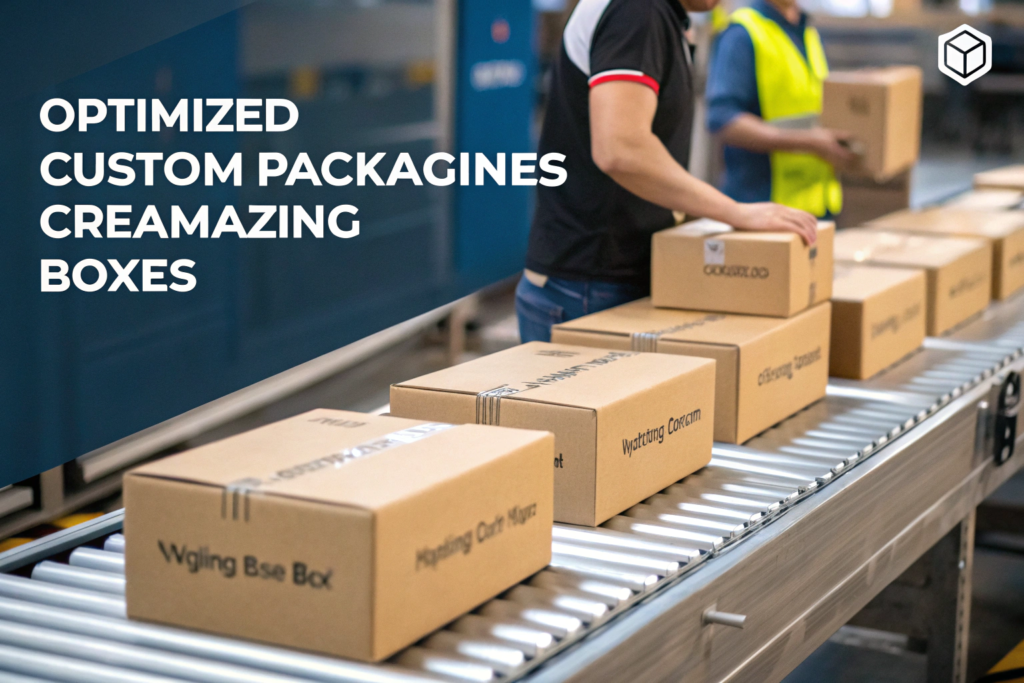
Optimized custom packaging provides logistical benefits by reducing dimensional weight (DIM) charges from carriers, streamlining warehouse picking and packing processes, and improving inventory management through clear labeling. It turns a cost center into a value-adding, efficiency-driving asset.
How Does It Reduce Shipping Costs?
Carriers charge based on dimensional weight (DIM weight)—the size of the box, not just its actual weight. A custom-sized carton that fits your garment snugly minimizes wasted space, directly lowering your DIM weight and shipping costs. For a brand shipping 10,000 units a year, reducing each box size by even an inch can save thousands in freight. We perform cartonization studies for clients to find the most cost-effective box size for their garment mix.
How Does It Improve Warehouse Operations?
Uniform, branded cartons are easily identifiable in a warehouse, reducing picking errors. They are designed to stack securely on pallets, maximizing container and truck space. Furthermore, packaging that allows for easy, damage-free inspection (like easy-open polybags) speeds up quality control processes at your distribution center.
How to Design and Implement a Protective Custom Packaging System?
Creating effective custom packaging is a collaborative process between you and your manufacturer. It requires thinking about the entire supply chain journey.
To design a protective system, collaborate with your factory to analyze transit risks, select appropriate materials (e.g., moisture barrier bags, reinforced cartons), prototype and test the packaging, and integrate its production seamlessly into your garment manufacturing timeline. Your tech pack should include packaging specs.
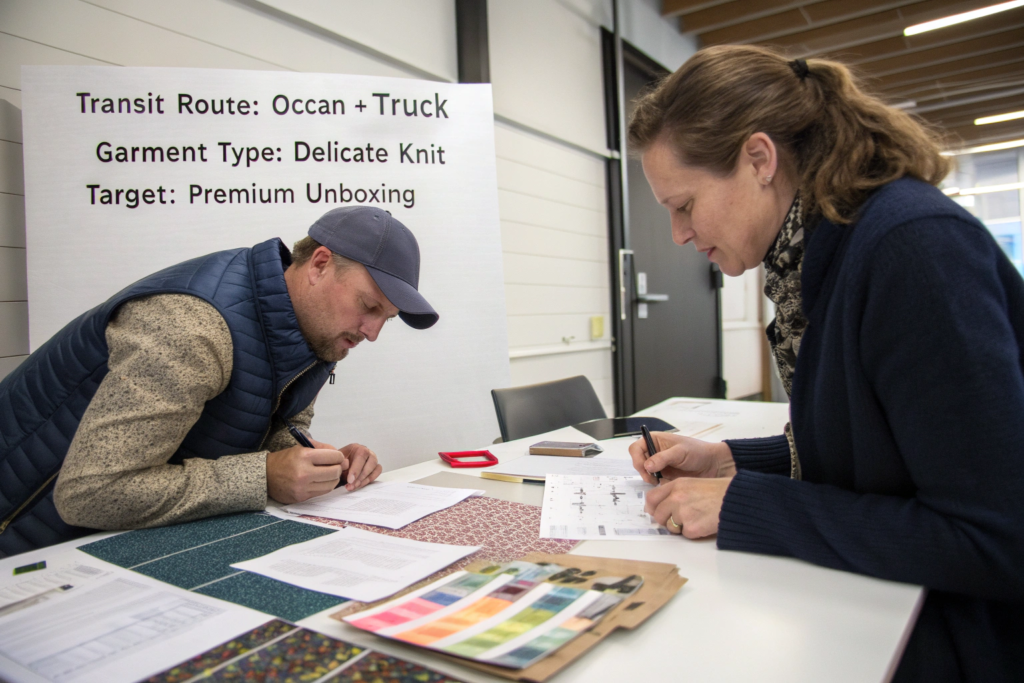
What Questions Should You Ask Your Factory?
- What is your standard packaging, and what are its limitations for my product?
- Can you provide options and cost for upgraded, custom protective materials?
- Can we conduct a drop-test or transit test before bulk production?
- What is the lead time and MOQ for custom boxes/polybags?
- How will the packaging process be integrated on the production line?
What is a Real-World Example of Problem-Solving Through Packaging?
A client sold heavyweight hoodies. Their original packaging used flimsy cartons that collapsed in transit, resulting in crushed hoods and customer complaints. We collaborated to design a two-piece corrugated mailer with reinforced corners and a custom insert that held the hood in shape. The new packaging was slightly more expensive per unit but eliminated damage-related returns and reduced shipping costs due to a better dimensional profile. The total cost of ownership went down.
Conclusion
Custom packaging is a strategic investment that protects your garments in the most literal sense—shielding them from physical harm—while also protecting your brand’s reputation and your profitability. It is the final, critical step in quality assurance, ensuring the care and craftsmanship invested in your clothing is preserved all the way to the end customer.
Neglecting packaging is a high-risk gamble with your product’s condition and your customer’s satisfaction. Partnering with a manufacturer like Shanghai Fumao that understands and offers robust custom packaging solutions means you are safeguarding your entire investment, from stitch to shipment.
Ready to ensure your collections arrive in perfect condition, every time? Let’s design a packaging system that protects your products and elevates your brand. Contact our Business Director, Elaine, at elaine@fumaoclothing.com.