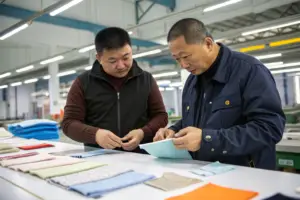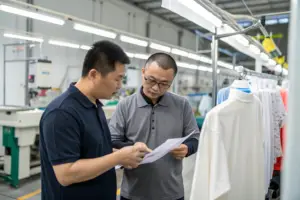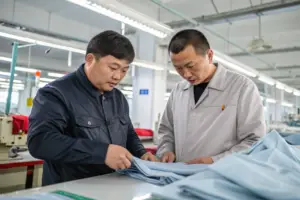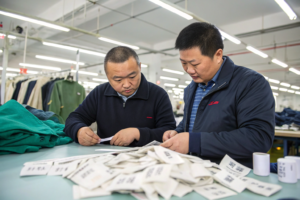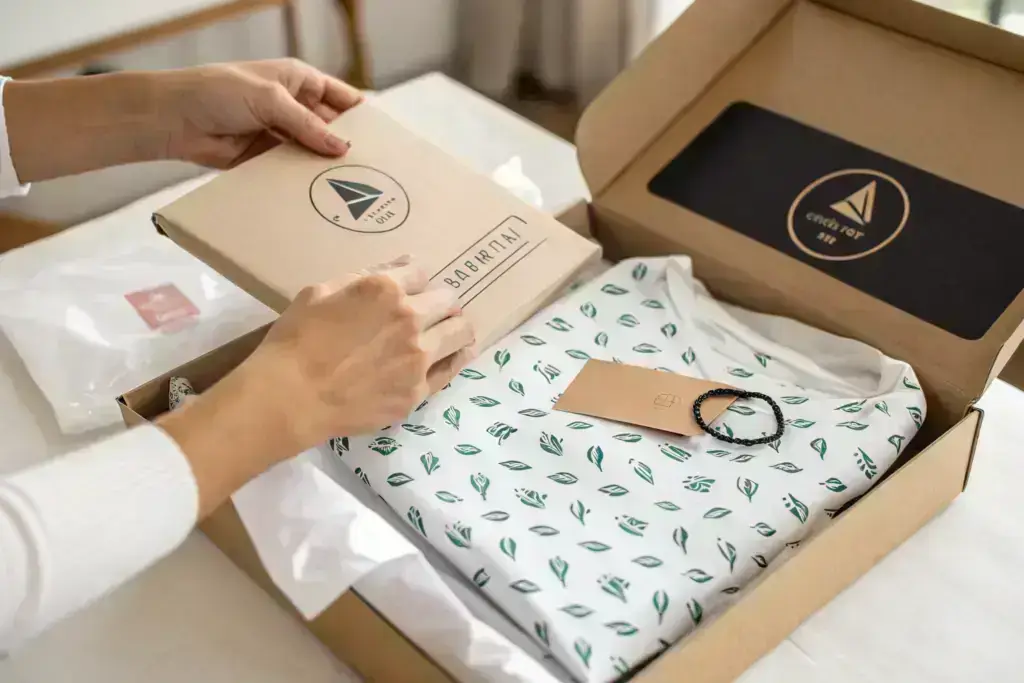
You’ve invested in designing a beautiful clothing line, selected premium fabrics, and perfected the fit. The garments are ready, but they arrive at your warehouse in plain, unbranded polybags, stuffed into generic brown cartons. Your brand story ends at the factory door. For today’s consumers, especially in e-commerce, the unboxing experience is a critical part of brand perception. It’s the first physical touchpoint. So, when evaluating a garment supplier, one key question is: Can they elevate my product from a commodity to a branded experience through custom packaging?
Yes, professional garment suppliers like us at Shanghai Fumao absolutely provide comprehensive custom packaging services. This goes beyond just printing a logo on a polybag; it includes the design, sourcing, and production of custom hangtags, labels, polybags, tissue paper, stickers, and export cartons—all tailored to your brand’s aesthetic and sustainability goals.
Offering custom packaging isn’t just an add-on service; it’s a hallmark of a full-package, brand-oriented manufacturer. It reflects an understanding that your product isn’t complete until it’s presented as a cohesive brand asset. Let’s unpack what true custom packaging entails and why it’s a strategic partnership decision.
What Does Full Custom Packaging Service Actually Include?
Custom packaging is an ecosystem of branded touchpoints that protect the garment and communicate your brand identity at every stage, from factory to customer closet.
Full custom packaging includes the development and production of: 1) Internal Packaging (custom polybags, tissue paper, pins); 2) Garment Branding (woven/written labels, hangtags, care labels); 3) External Shipping Packaging (branded corrugated cartons, tape, stickers). A true partner coordinates all these elements seamlessly into your production timeline.
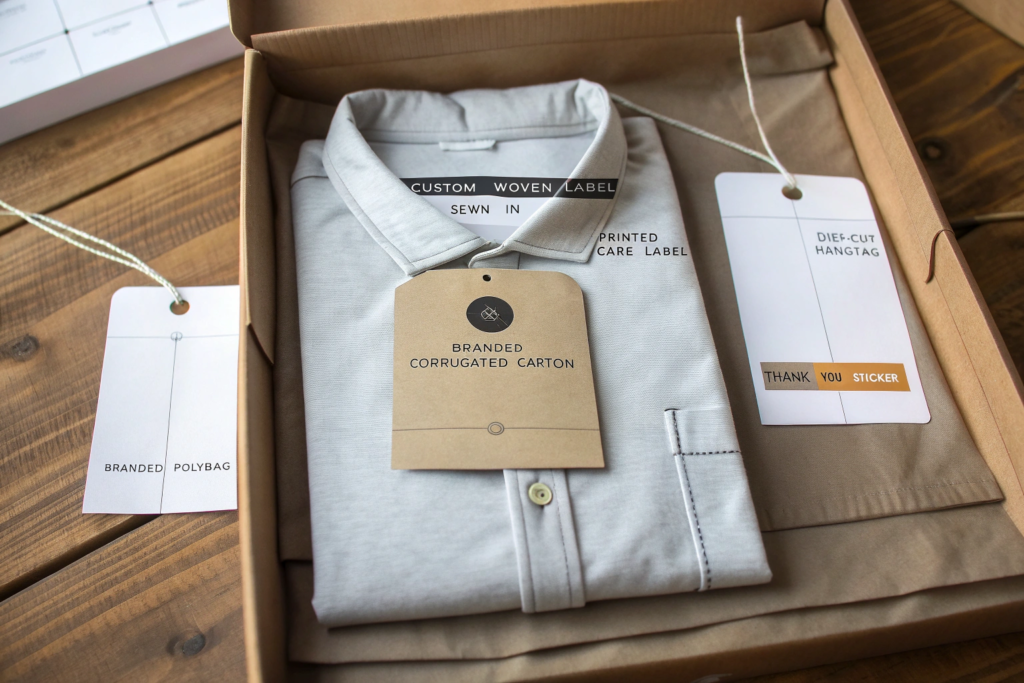
These are the identity markers on the garment itself. A flimsy, generic care label or a poorly printed hangtag undermines perceived quality instantly.
- Woven Labels: For brand logos inside the neckline or side seam. We work with specialized mills; minimum order quantities (MOQs) can start from 1,000 pieces.
- Printed Care/Content Labels: These are mandatory for compliance. We can ensure they meet legal requirements for your target market (e.g., FTC care labeling in the USA).
- Hangtags: These are your marketing real estate. We offer various options: standard card, die-cut shapes, with ribbons or plastic fasteners. We handled a launch for a sustainable brand where the hangtag was made from recycled seed paper—a detail that powerfully communicated their ethos.
How Complex is Custom Polybag and Carton Production?
This is where many factories push back due to MOQ challenges. Custom printing on polybags or cartons often requires orders of 5,000-10,000 units. A professional supplier solves this by:
- Consolidating Orders: Using the same custom polybag for multiple styles across seasons.
- Offering Stock+Print Solutions: Using a stock colored polybag and printing just your logo, reducing MOQs.
- Managing Lead Times: Building the 2-3 week production time for these items into the overall schedule.
At Shanghai Fumao, we have long-term relationships with packaging suppliers, allowing us to offer more flexible MOQs and faster turnaround for our partners.
How Does Custom Packaging Impact Brand Perception and Unboxing?
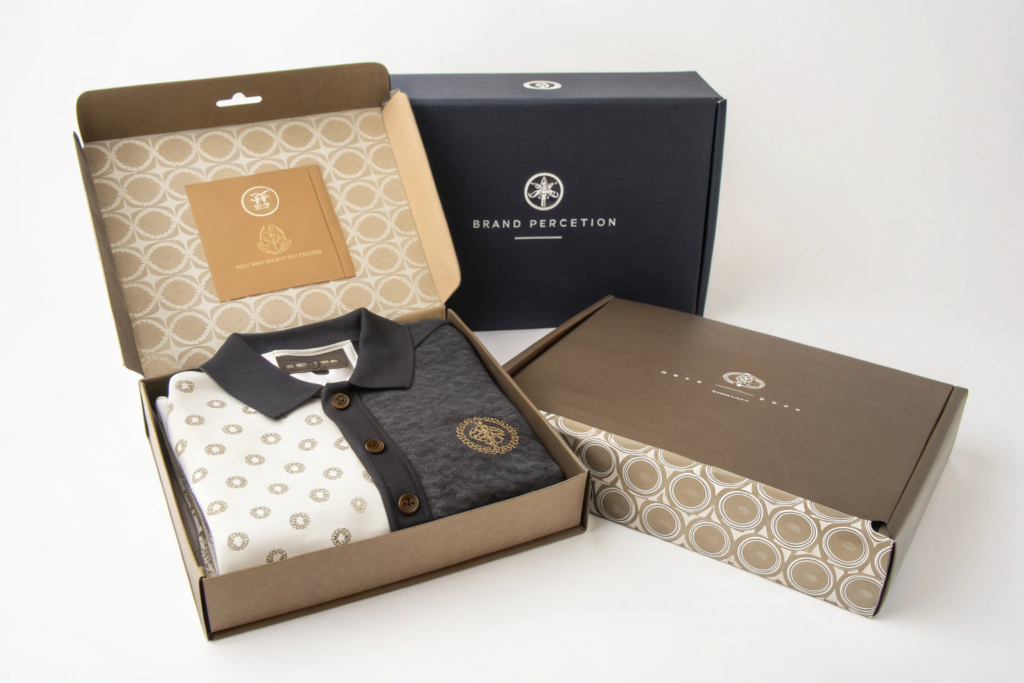
In the digital age, the unboxing moment is a shareable, sensory experience. It’s where your brand transitions from pixels on a screen to a tangible reality. Generic packaging misses this powerful marketing opportunity.
Custom packaging directly elevates brand perception, signaling quality, attention to detail, and a premium position. It creates a memorable unboxing experience that drives customer loyalty, increases social media sharing, and justifies a higher price point by enhancing perceived value.
Can Packaging Influence Customer Reviews and Returns?
Absolutely. High-quality, secure packaging (like sturdy cartons and proper inner protection) reduces the chance of garments arriving damaged, which is a primary cause of returns and negative reviews. Furthermore, thoughtful packaging (e.g., reusable garment bags, nice tissue paper) makes the customer feel valued, increasing the likelihood of positive reviews and repeat purchases. One of our clients, a DTC womenswear brand, reported a 15% decrease in “damaged in transit” complaints after switching to our double-wall branded cartons.
Is Custom Packaging Only for Luxury Brands?
No. It’s for any brand that cares about its customer experience. Even a streetwear or value-oriented brand can use simple, clever packaging—a custom sticker, a unique thank you card—to create a connection. The investment is scalable. We help brands start with one key element (like a hangtag) and build out their packaging suite as they grow.
What Are the Cost, MOQ, and Sustainability Considerations?
The decision to pursue custom packaging involves practical considerations around budget, volume, and environmental impact. A good supplier guides you through these trade-offs.
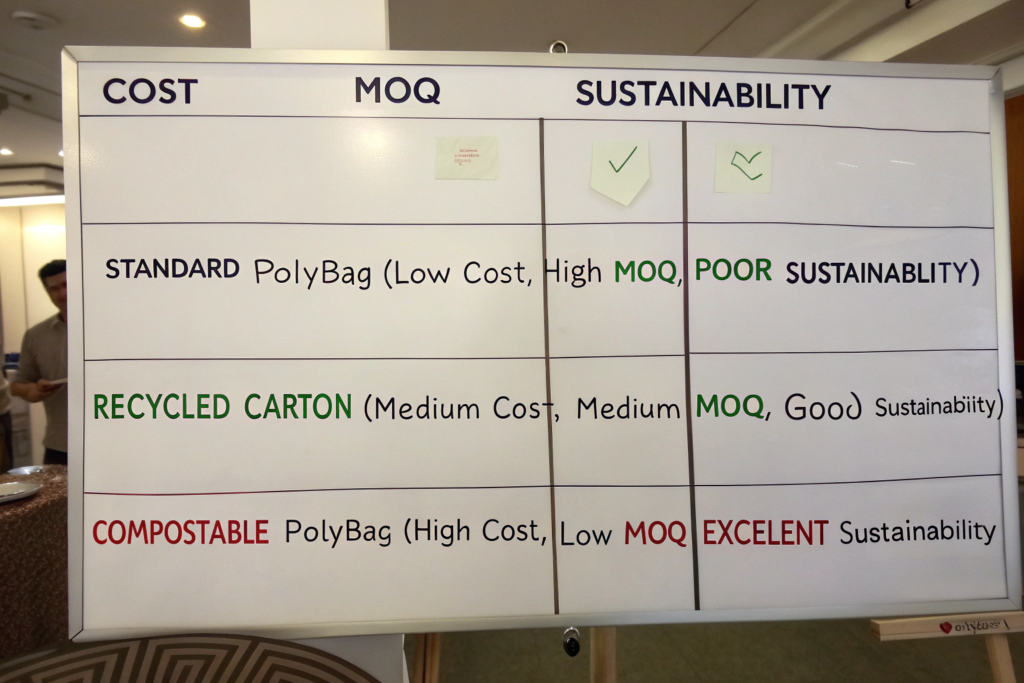
Key considerations include: the per-unit cost added to your FOB price, the minimum order quantities (MOQs) for each component, and the environmental impact of materials. Sustainable options (like recycled or compostable materials) are increasingly available but come with different cost and lead time implications.
How Much Does Custom Packaging Add to the Unit Cost?
It varies widely. A simple printed polybag might add $0.10-$0.30 per piece. A full suite (custom label, hangtag, polybag, tissue, sticker, carton) could add $0.80-$2.50+ per garment. The cost decreases significantly with volume. We provide transparent quotes so you can decide if the brand uplift justifies the cost for your margin structure. For a client’s premium knitwear line, the $1.20 added cost for custom packaging allowed them to increase their wholesale price by $4.00, resulting in a strong net positive.
What Are Realistic MOQs and Sustainable Options?
- MOQs: Labels/Hangtags: 1,000-2,000 pcs. Polybags: 5,000-10,000 pcs. Cartons: 1,000-3,000 pcs.
- Sustainable Swaps: We can source recycled paper hangtags, biodegradable or recycled polybags, soy-based ink for printing, and FSC-certified cardboard. These choices often have longer lead times and a 20-50% cost premium, but they resonate powerfully with conscious consumers. We are currently helping a brand develop a fully plastic-free packaging suite using compostable bags and paper tape.
How Does a Supplier Integrate Packaging into the Production Flow?
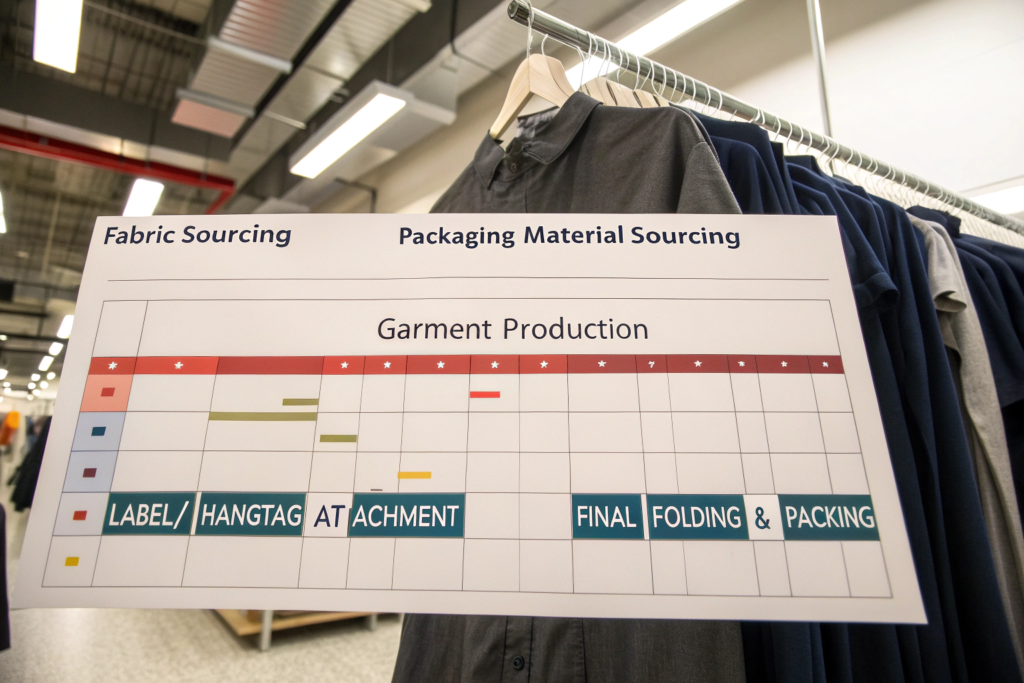
Custom packaging isn’t a last-minute afterthought. It must be meticulously planned and synchronized with garment production. Poor coordination leads to delays—garments waiting for hangtags, or finished goods waiting for cartons.
Professional suppliers integrate packaging by sourcing components in parallel with fabric, pre-production testing of all materials, and establishing a streamlined packing line process. The packaging specs are included in the tech pack, and timelines are managed as part of the critical path.
What Can Go Wrong Without Integrated Management?
A common pitfall is the hangtag delay. The garments are finished, but the hangtags are stuck in customs or haven’t been ordered in time. The entire shipment is held, incurring costs. Another issue is size-specific polybags or cartons. If not coordinated, you may have Medium garments going into Large polybags, looking sloppy. Our system at Shanghai Fumao treats packaging as a core raw material. We have a dedicated packaging coordinator who ensures all elements arrive, are quality-checked, and are fed to the packing line exactly when needed.
Can You Supply Your Own Packaging to the Factory?
Yes, this is called “customer-supplied material” or consignment. Some brands prefer to design and source packaging themselves for maximum control. In this case, the supplier needs clear instructions on quantities, timing for delivery to their factory, and assembly instructions. We support this model but advise clients to build in significant buffer time for shipping their materials to us to avoid production delays.
Conclusion
The question of whether a garment supplier provides custom packaging is a litmus test for their capabilities as a brand partner. It separates basic cut-and-sew operations from full-service manufacturers who understand the complete product journey. Custom packaging is a powerful tool for brand building, customer experience, and operational professionalism.
Choosing a supplier like Shanghai Fumao, which offers integrated, flexible, and sustainable custom packaging solutions, means your brand’s story is told consistently from the inside seam to the outer box. It’s an investment that pays dividends in perceived value, customer loyalty, and market differentiation.
If you’re ready to ensure your product’s presentation matches its quality and elevates your brand, let’s discuss how our custom packaging services can be tailored for your line. Contact our Business Director, Elaine, to begin crafting your complete brand experience at elaine@fumaoclothing.com.