You’re about to wire a 30% deposit for your new clothing line to a factory overseas. The quote says “FOB Price: $15,000.” But is that the full story? What about the cost of the fabric itself? The labor breakdown? Potential charges for testing or special packaging? When these details are hidden, you’re not just paying for clothes—you’re paying for uncertainty. That uncertainty breeds distrust, leads to unexpected costs, and can derail the entire partnership before production even begins.
Transparency in clothing manufacturing payments is the cornerstone of trust and operational efficiency. It means both the brand and the factory have a clear, mutually understood breakdown of what every dollar pays for—from raw material costs to labor, overhead, and profit. This clarity prevents disputes, enables accurate budgeting, fosters fair negotiations, and builds the long-term partnership necessary for a brand to scale.
Opaque pricing is a red flag. In an industry where margins are tight and risks are high, transparent financial dealings are not just ethical; they are a strategic imperative for survival and growth. Let’s examine why shrouded costs are dangerous and how clear financial communication creates unshakable partnerships.
How Does Opaque Pricing Lead to Costly Surprises and Disputes?
When you receive a single, bottom-line price without a breakdown, you are flying blind. You have no way to validate the fairness of the quote or to make informed decisions when changes are needed. This lack of visibility is a primary source of conflict.
Opaque pricing leads to unexpected “extra” charges for things you assumed were included, inability to negotiate intelligently, and suspicions of being overcharged. When a change is required (e.g., a different button), you have no baseline to understand the true cost impact, leading to disagreements and delays.

What Are the Most Common Hidden Cost Surprises?
Based on client feedback, the biggest shocks come from:
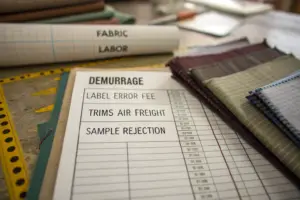
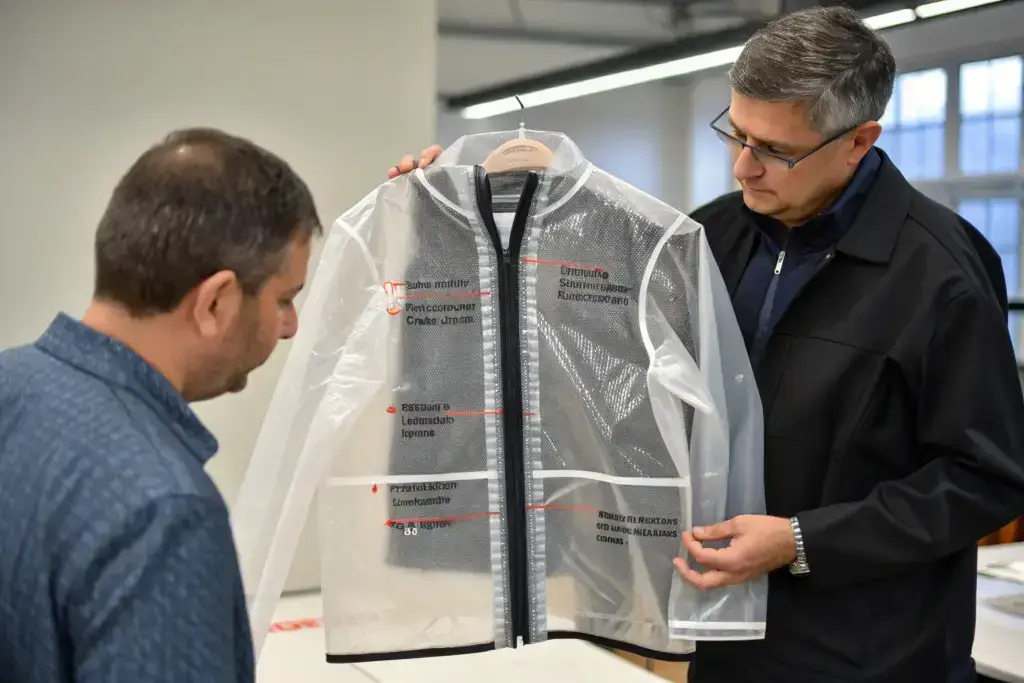
- Testing and Compliance Certificates: Quotes often omit the cost of lab testing for fabrics (e.g., colorfastness, phthalate content) or social compliance audits.
- Packaging: Hangtags, polybags, and cartons may be quoted at a standard price, but custom designs or eco-friendly options incur large, un-budgeted extras.
- Logistics within China: The cost to truck goods from the factory to the port (a key part of FOB terms) is sometimes added later.
A sportswear client once received a final bill 12% higher than the FOB quote. The factory had added charges for “special thread” and “complex seam handling” that were never discussed. With no transparent initial breakdown, the client had no ground to dispute it and paid to avoid shipment delays.
How Does Transparency Prevent These Disputes?
A transparent factory like Shanghai Fumao provides a cost breakdown sheet with the initial quote. For a pair of trousers, it would show:
- Fabric: $7.50 (based on 1.5m @ $5/m)
- Trims (zipper, button): $0.80
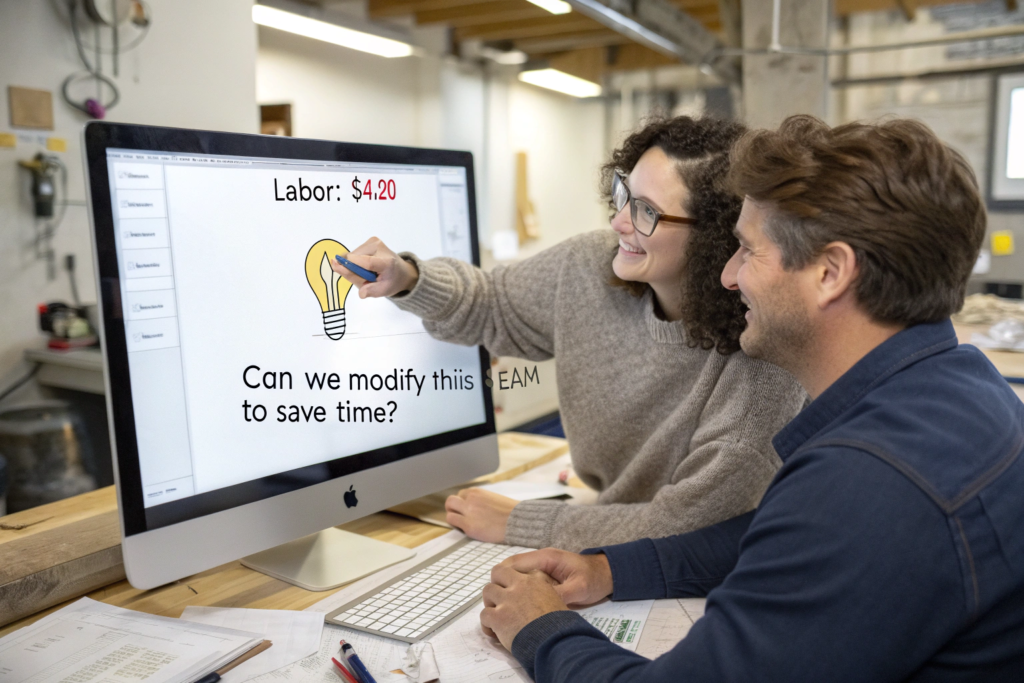
- Labor (cutting, sewing, finishing): $4.20
- Packaging: $0.50
- Factory Overhead & Profit: $2.00
- Total FOB: $15.00
If you want to change to a $6/m fabric, we can instantly recalculate: Fabric becomes $9.00, so new FOB is $16.50. There’s no argument, just math.
How Does Payment Transparency Build Strategic Partnerships?
Transparency moves the relationship from a transactional “vendor-client” dynamic to a strategic “partner-partner” dynamic. When financial intentions are clear, both parties can work together to optimize value, not just fight over price.
Payment transparency builds strategic partnerships by aligning goals. When both sides understand the cost drivers, they can collaborate to reduce them (e.g., by ordering fabric in larger volumes, simplifying a design to save labor). This creates shared value and fosters loyalty that transcends any single order.
Can Transparency Lead to Cost Savings for the Brand?
Absolutely. When you see that labor is a large component, you might decide to simplify a design detail. When you see the high cost of a custom-dyed fabric, you might choose a stock color. This is value engineering, and it requires transparency to work. We had a client whose design had eight separate fabric panels. Our breakdown showed high cutting and sewing costs. We suggested a redesign with four panels that maintained the aesthetic. The client saved 18% on unit cost, and we secured a loyal, long-term partner because we helped them succeed.
How Does It Improve Production Planning and Reliability?
When a factory is transparent about its costs, it usually means it has strong internal management. It knows its true costs and isn’t desperate to win orders by quoting unsustainably low prices only to cut corners later. This financial stability translates into operational reliability. They are less likely to delay your order to work on a more profitable (but opaque) job, because your order’s fair profitability is clear and agreed upon.
Why Is Transparency Critical for Managing Margins and Scaling?
For a growing brand, predicting your Cost of Goods Sold (COGS) accurately is the difference between scaling and stalling. Opaque payments make forecasting impossible and jeopardize your ability to plan for marketing, growth, and future collections.
Transparency is critical for scaling because it allows for accurate financial forecasting. Knowing the exact cost structure of your products enables you to model margins, plan production budgets for future seasons, and secure financing from investors or banks who require detailed financials.

How Does Opaque Costing Sabotage Business Planning?
If your FOB cost is a black box, you cannot accurately predict what your next order will cost. A 10% price increase from the factory could be due to market forces (fabric inflation) or could be an arbitrary hike. Without transparency, you can’t tell the difference. This makes it impossible to set retail prices, plan sales, or talk to investors with confidence. A brand we worked with was seeking a bank loan. The bank requested detailed supplier cost breakdowns. Our transparent reports satisfied them immediately, while the brand’s other, opaque factory could not provide the needed documentation, putting the loan at risk.
How Can Transparency Unlock Better Financing Options?
Transparent payment history and clear cost structures are assets. They allow you to access modern supply chain finance. Platforms that offer dynamic discounting or invoice financing rely on verified, transparent transaction data between you and your supplier. An opaque relationship looks riskier to these financiers. At Shanghai Fumao, our clear invoicing has helped clients secure faster payment terms and better rates from their financial partners.
What Does True Payment Transparency Look Like in Practice?
Transparency isn’t just a nice idea; it’s a set of concrete, actionable practices that define a professional manufacturing partnership.
True payment transparency includes a detailed pre-order cost breakdown, clear terms for change orders, open communication about cost fluctuations (like fabric price changes), and the willingness to share mid-production financial updates, such as material procurement receipts or extra cost approvals.
What Should You Demand in a Transparent Cost Breakdown?
Request a line-item breakdown that includes:
- Material Cost: Calculated as (consumption per piece x price per meter/unit).
- Labor Cost: Often broken into cutting, sewing, finishing.
- Trim & Packaging Cost: Itemized.
- Factory Cost (CMT): Sum of 1-3.
- Factory Overhead & Profit Margin: A clear percentage or amount added to CMT.
- Total FOB Price.
How Should a Factory Handle Cost Increases?
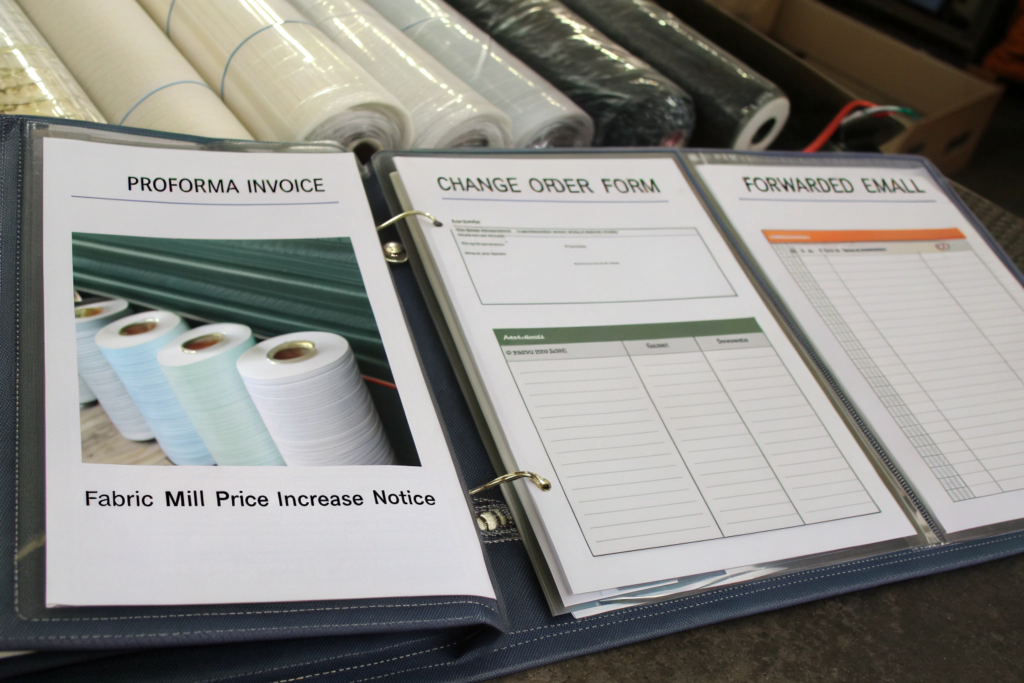
A transparent factory will notify you immediately if a quoted material price increases before they purchase it. They will provide evidence (e.g., the mill’s updated price list) and ask for your approval to proceed. They do not silently absorb the cost and then degrade quality, nor do they surprise you with a higher final invoice. This is how we operate. Last quarter, a cotton price spike occurred after a client’s order was placed but before we bought the fabric. We sent them the mill’s notice, discussed options (including a slight design change), and got written approval for the increase before spending a single dollar. The relationship remained strong.
Conclusion
In clothing manufacturing, transparency in payments is not a luxury; it is the essential framework for a healthy, profitable, and scalable business. It is the antidote to the fear, uncertainty, and conflict that plague global sourcing. Choosing a transparent factory means choosing a partner invested in your success, because they build the relationship on the solid ground of honesty, not the shifting sands of hidden fees.
This clarity protects your margin, enables smart decision-making, and builds the trust required to navigate the inevitable challenges of production together. At Shanghai Fumao, we believe our success is tied directly to the success of our clients. That’s why we champion radical transparency—it’s the only way to build something that lasts.
If you are ready to move from stressful, opaque transactions to a clear, collaborative manufacturing partnership, let’s talk. We will show you exactly how your investment becomes your product. Contact our Business Director, Elaine, at strong>elaine@fumaoclothing.com</strong.