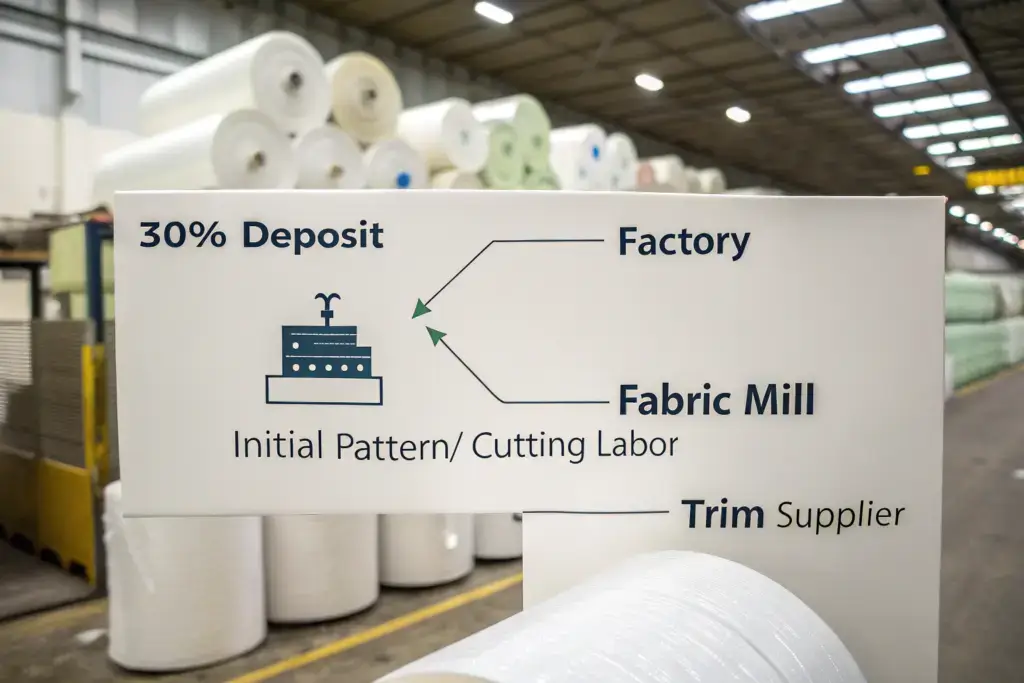
You've just signed your first purchase order and wired a 30% deposit to your garment factory in China. As the money leaves your account, a natural question arises: "What exactly is my deposit being used for?" There’s a common misconception that this payment is simply a security or a token of commitment. In reality, that 30% is the critical fuel that starts the entire production engine. For a factory, it’s not just cash in the bank; it’s a tightly allocated resource with a very specific job.
A garment factory allocates the 30% deposit almost exclusively to cover the upfront costs of raw materials—primarily fabric, lining, and trims (zippers, buttons, labels). In a standard order, raw materials can account for 50-70% of the total FOB cost. The 30% deposit is designed to secure these materials, allowing production to begin without the factory bearing the full financial burden alone.
Understanding this allocation is key to grasping the financial dynamics of manufacturing and why certain payment terms are non-negotiable. Let’s follow the money and see how your deposit moves through the factory’s system to become the physical components of your order.
What Is the Exact Breakdown of Raw Material Costs?
The term "raw materials" encompasses everything that goes into the garment besides labor. When a factory receives your deposit, its first and most urgent task is to place orders with its own suppliers. These suppliers also require deposits or full payment upfront.
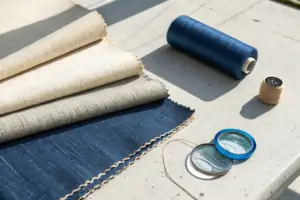
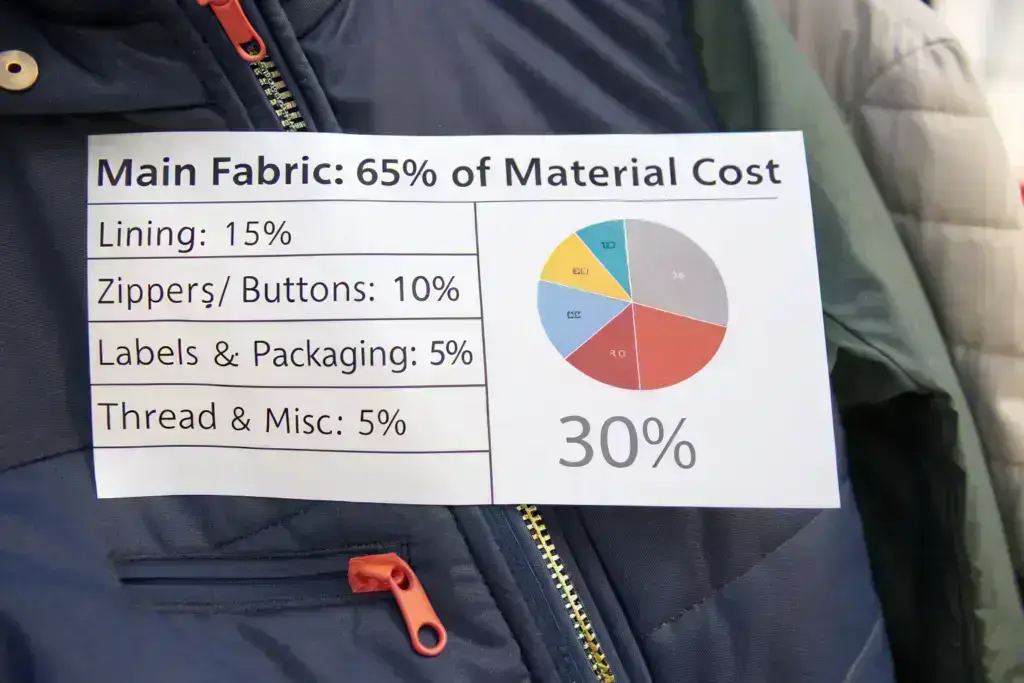
The breakdown typically includes fabric (the largest portion, 60-80% of the material cost), linings/interlinings, sewing threads, and all trims (zippers, buttons, care labels, brand labels, hangtags, and packaging like polybags and cartons). Each of these items has its own minimum order quantity (MOQ) and lead time, which your deposit unlocks.
Why Is Fabric the Primary Destination of Your Deposit?
Fabric is the single most expensive and lead-time-sensitive component. Mills often require a 50-100% deposit to begin production, especially for custom colors or compositions. For a $50,000 order where fabric is $30,000 (60%), your $15,000 (30%) deposit goes almost entirely to the fabric mill just to secure the yarn and start weaving or knitting. Last month, a client ordered a custom-dyed organic cotton jersey. The mill's terms were 70% deposit. Our 30% deposit from the client, plus a portion of our own working capital, was immediately wired to the mill to start the dyeing process. Without that deposit, the fabric—and thus the entire order—would be stalled.
How Do MOQs for Trims Impact the Allocation?
Minimum Order Quantities (MOQs) for trims can force a factory to allocate more of your deposit than expected. For example, you may only need 5,000 custom metal buttons for your order, but the button factory's MOQ is 10,000 pieces. The factory must pay for 10,000 upfront. The excess cost for the unused 5,000 buttons either comes from your deposit (if the contract allows for trim cost pass-through) or from the factory's reserves, tying up cash. At Shanghai Fumao, we are transparent about these MOQs and often advise clients to choose from stock trims for their first order to avoid this cash trap.
Does Any of the Deposit Go Towards Labor or Overhead?
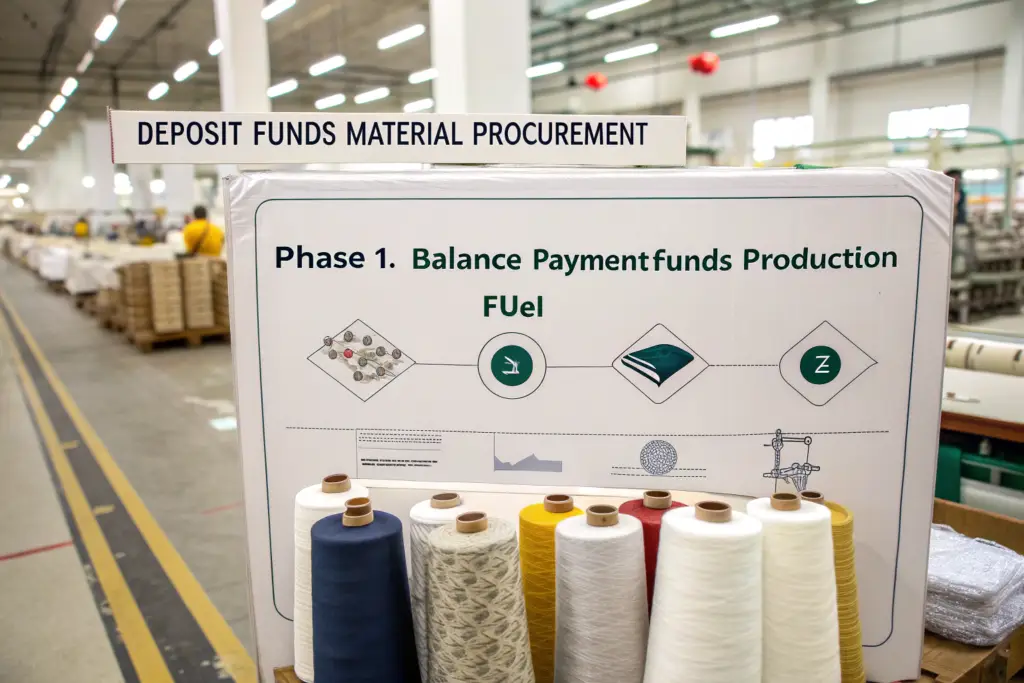
This is a crucial distinction. In the standard FOB (Free on Board) costing model, labor and factory overhead are not funded by the deposit. They are covered by the balance payment (the remaining 70%). The deposit is for materials; the balance is for transformation (turning materials into finished goods).
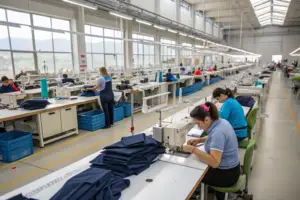
Virtually none of the standard 30% deposit is allocated to direct labor or factory overhead. Labor costs (cutting, sewing, finishing, quality control) and factory overhead (utilities, rent, management salaries) are incurred during the production process and are paid from the factory's cash flow, which is replenished by your final balance payment.
What Happens if the Deposit Doesn't Cover All Material Costs?
In many cases, especially with complex garments, the 30% deposit does not cover 100% of the material costs. High-end fabrics or large volumes can mean materials cost 50% or more of the total order. In this scenario, the factory must use its own working capital to bridge the gap. This is a key reason why factories are hesitant to accept lower deposits (like 10% or 20%)—it puts too much strain on their cash flow and increases their risk if you cancel. A reliable factory like ours plans for this, but it underscores why the deposit percentage is so important to them.
How Are Sampling and Pre-Production Costs Handled?
The costs for prototype samples and pre-production (PP) samples are usually separate, non-refundable fees paid before the bulk order deposit. They cover the specialized labor and small-lot materials for R&D. Your 30% production deposit does not typically pay for these. They are considered sunk costs in the development phase. This is why sample fees are critical for factories to even begin the conversation.
How Does the Factory's Financial Management Affect Your Order?
The way a factory manages its cash flow, including your deposit, has a direct impact on your order's timeline and security. A financially disciplined factory allocates deposits immediately and specifically, while a poorly managed one might commingle funds, leading to delays.
A well-managed factory treats your deposit as a dedicated project fund. It is allocated to your specific order's material purchases, ensuring those resources are locked in. Poor financial management can lead to deposits being used to pay for other orders' labor or overhead, creating a cash shortfall that delays your fabric purchase and pushes back your production start date.
What Are the Signs of a Financially Healthy Factory?
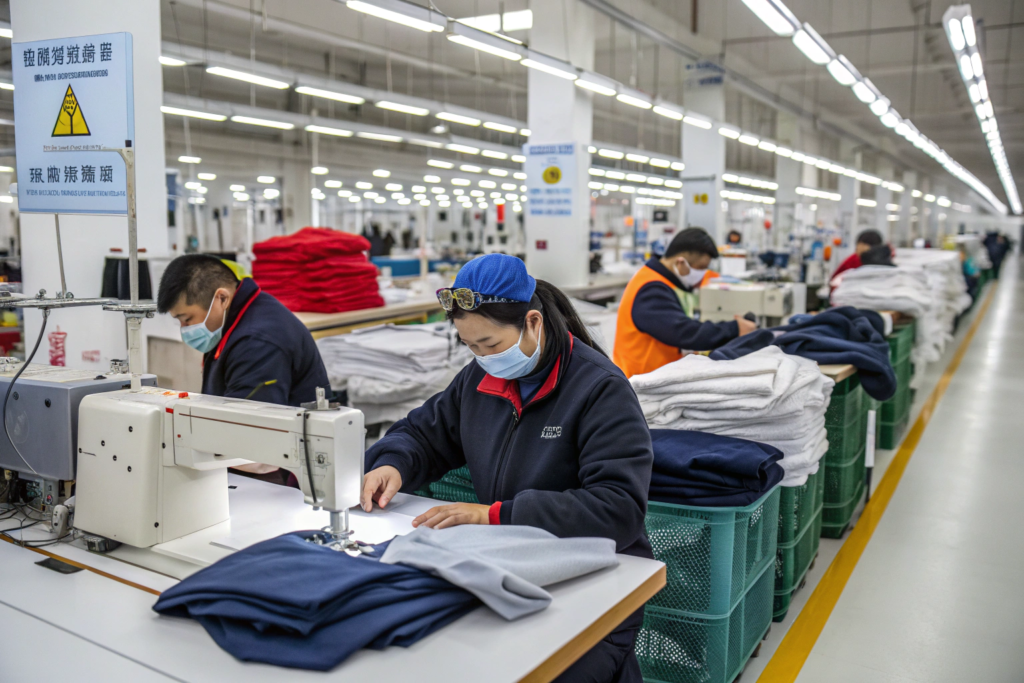
A factory that asks for reasonable, industry-standard deposits (30%) and provides clear cost breakdowns is typically financially stable. They may also offer more secure terms like Escrow because they are confident in their delivery. They communicate proactively about material lead times. At Shanghai Fumao, we use project-based accounting. When we receive your deposit, it is tagged to your order number in our system, and our procurement team receives immediate authorization to spend that exact amount on your materials.
What Risk Does a Commingled Deposit Pose to You?
If a factory uses your deposit to pay unrelated expenses, your fabric order may be delayed while they wait for another client's payment to arrive. This creates a domino effect of delays. In the worst case, if the factory goes bankrupt, your deposit (which was supposed to be held as materials) may be unrecoverable because it wasn't used to purchase tangible, traceable assets for your order. This is a core reason for conducting thorough factory audits.
Why Can't the Deposit Be Lower, and What Are the Alternatives?
Brands often want to preserve cash flow and ask for a 10% or 20% deposit. From the factory's perspective, this request significantly alters the financial risk model.
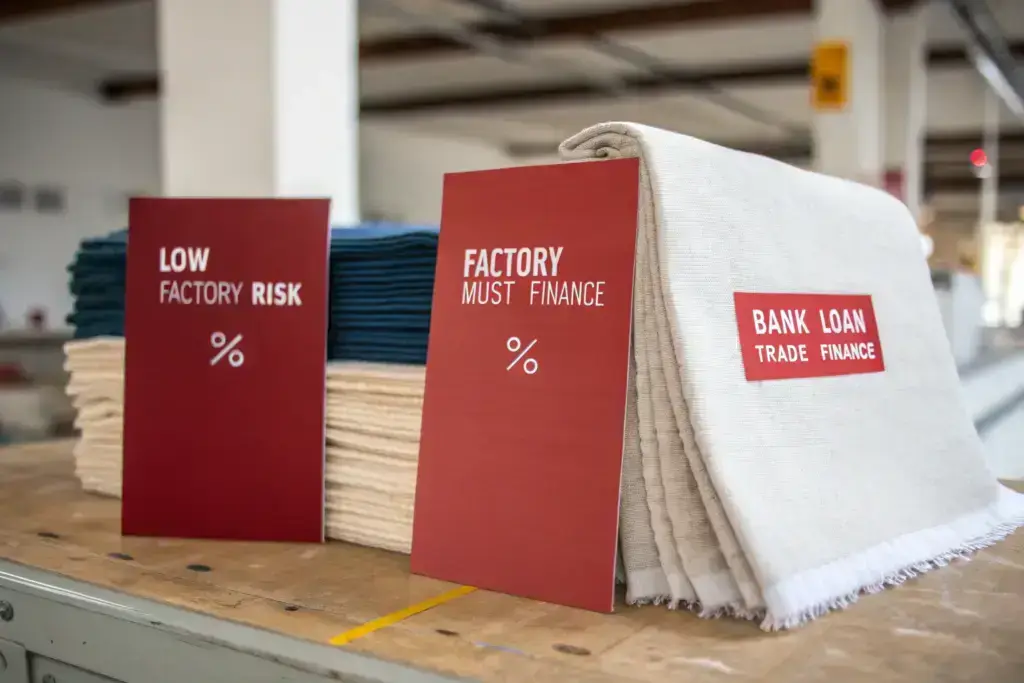
The deposit can't easily be lower because it would not cover the mandatory upfront material costs, forcing the factory to finance a larger portion of your order with its own capital. This increases their risk, which they may offset by raising your overall price or deprioritizing your order in the schedule.
What Are the Real Alternatives to a Large Cash Deposit?
- Trade Finance/Supply Chain Finance: This is the modern solution. You can agree to the factory's 30% term, but use a fintech platform or bank to provide that deposit as a loan. The factory gets paid in full upfront, and you repay the financier over time. This separates production financing from your working capital.
- Letter of Credit (LC): An LC shifts the payment guarantee to the banks. The factory may accept a lower deposit because they have the bank's assurance of payment upon shipment.
- Consignment or Brand-Supplied Materials: You purchase the fabric and trims directly and ship them to the factory. This eliminates their need for a material deposit. However, this requires significant expertise and transfers all material risk and logistics to you.
We worked with a startup that had strong sales potential but tight cash flow. We structured the deal where they paid a 15% deposit, and they used a supply chain finance provider to fund the remaining 15% needed to hit our 30% material threshold. This allowed production to start immediately without straining either party.
Conclusion
Your 30% deposit is far more than a gesture of commitment; it is the essential capital that converts your design into physical components. It is almost entirely allocated to securing the fabric and trims that will become your collection. Understanding this flow demystifies the factory's priorities and explains why terms are structured as they are.
A transparent factory will have no issue explaining this allocation. This understanding also empowers you to have smarter conversations about payment terms, explore alternative financing options, and choose partners who demonstrate disciplined financial management. At Shanghai Fumao, we believe an informed client is our best partner. We see the deposit as the first step in a shared investment toward a successful product.
If you want to work with a manufacturer that provides clarity on costs and uses your funds responsibly to ensure a smooth production journey, let's connect. Contact our Business Director, Elaine, to discuss your next project at strong>elaine@fumaoclothing.com</strong.