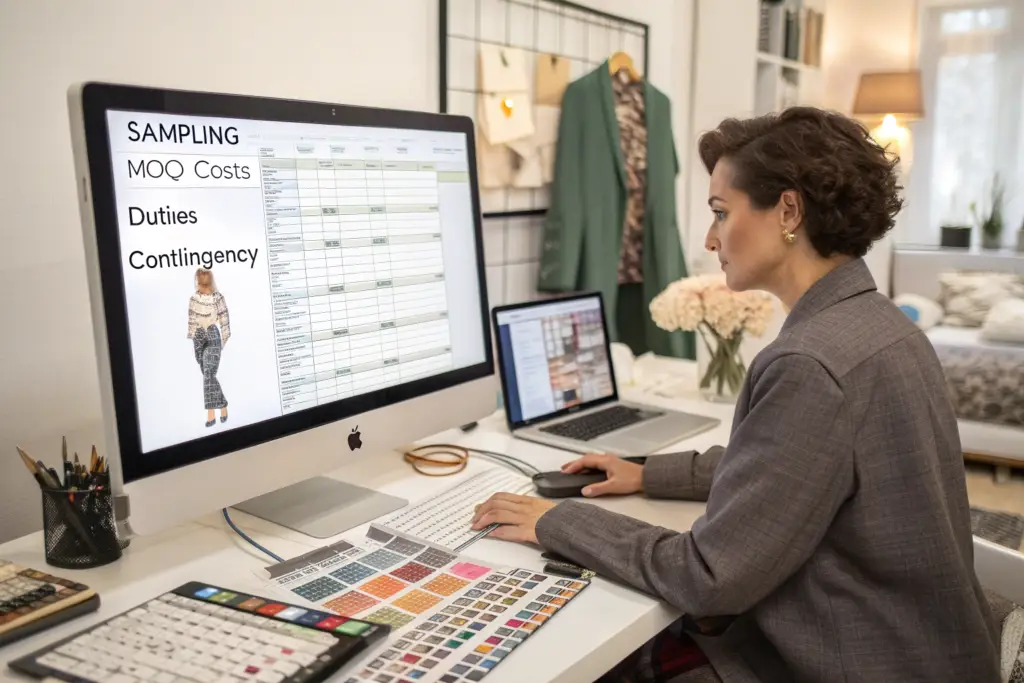
Launching a new clothing line is an exciting venture, but the road from sketchbook to sales rack is paved with financial pitfalls. Many passionate designers and brand owners underestimate the true cost, leading to a common scenario: you’ve spent your entire budget on beautiful samples and a production deposit, only to realize you have no money left for shipping, duties, marketing, or unexpected delays. This cash crunch can stall your launch before it even begins.
Planning your budget for a new clothing line requires a comprehensive, line-item approach that accounts for every cost from design to delivery, plus a significant contingency fund. It’s not just the cost per garment; it’s the sum of development, production, logistics, compliance, and launch expenses, all calculated before you commit to a single order.
A realistic budget is your most crucial business tool. It transforms your creative vision into a financially viable plan. Let’s break down the essential categories and hidden costs you must include to avoid the number one killer of new fashion brands: undercapitalization.
What Are The Upfront Development & Sampling Costs?
Before you even think about bulk production, you will incur non-recoverable costs to develop your product. This is the R&D phase, and it’s often where budgets are first blown.
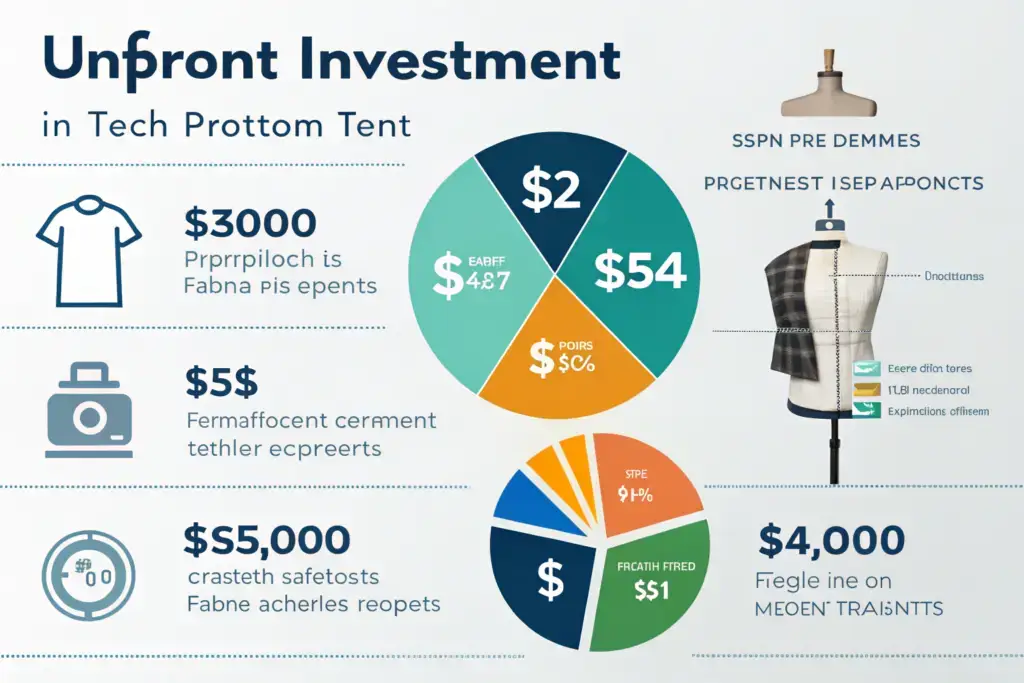
Upfront costs include tech pack creation, prototype and pre-production (PP) samples, fabric sourcing and testing, trim development, and potentially pattern making and grading fees. These are fixed costs that must be paid regardless of your final production quantity, and they typically range from $2,000 to $10,000+ depending on complexity.
Why Are Tech Packs and Samples Your Most Important Investment?
A detailed tech pack is your blueprint. Investing $500-$800 per style for a professional tech pack from a freelancer or agency prevents thousands in mistakes during sampling and production. A vague pack leads to multiple, costly sample rounds. For samples, budget for at least two rounds: a prototype sample in similar fabric to perfect fit, and a Pre-Production (PP) sample in exact materials for final approval. Last year, a client tried to save $200 by skipping the prototype for a tailored blazer. The PP sample had major fit issues, requiring a third sample round, which delayed their launch by a month and cost them more in the end.
What Hidden Costs Lurk in Material Development?
- Fabric Testing: Safety and performance tests (e.g., colorfastness, phthalate content, fabric weight) are mandatory for compliance and often cost $150-$300 per fabric.
- Trim MOQs: Custom buttons, zippers, and labels have high Minimum Order Quantities (MOQs). You may have to buy 10,000 buttons for a 500-piece order, tying up cash.
- Pattern Grading: If your factory doesn’t include it, grading your base pattern into all sizes (XS-3XL) can cost $150-$400 per style.
How To Accurately Calculate Your Bulk Production Cost?
The FOB (Free On Board) cost per garment is just the starting point. To understand your true cost of goods sold (COGS), you must build it up from raw materials and build in all manufacturing fees.
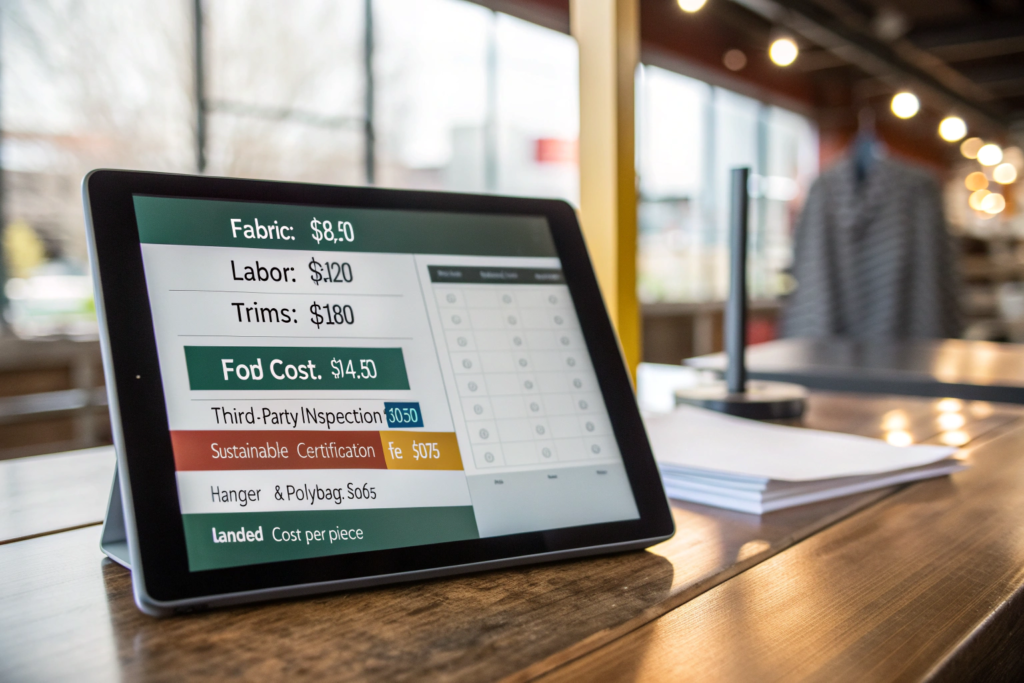
Accurate bulk cost calculation requires a detailed cost breakdown from your factory that includes fabric consumption, labor (cutting, sewing, finishing), trims, packaging, and factory profit. You must then add costs for quality control inspections, factory compliance audits, and any premium for sustainable or certified materials.
What Should You Demand in a Factory Cost Breakdown?
| A professional factory should provide a transparent breakdown. For a woven shirt, it might look like this: | Cost Component | Calculation Basis | Cost (USD) |
|---|---|---|---|
| Main Fabric (100% Cotton Poplin) | 1.5 meters x $3.2/m | $4.80 | |
| Sewing Labor | 25 minutes x $0.17/min | $4.25 | |
| Buttons & Thread | $0.45 | ||
| Hangtag & Polybag | $0.40 | ||
| Subtotal (CMT) | $9.90 | ||
| Factory Overhead & Profit (20%) | $1.98 | ||
| Total FOB Price per Piece | $11.88 |
Always ask if the price includes packaging, ordinary labels, and standard shipping within the factory. At Shanghai Fumao, we provide this detail so clients understand exactly what they are paying for and can make informed decisions, like choosing a slightly cheaper button to hit a target price point.
Why Must You Budget for Quality Control Separately?
Never assume the factory's QC is sufficient. Budget 0.5%-1.5% of the total order value for a third-party inspection company like SGS, QIMA, or BV to conduct a Pre-Shipment Inspection (PSI). For a $30,000 order, that's $300-$450—a small price to prevent a $30,000 loss from defective goods. I've seen brands skip this to save money, only to receive garments with mismatched colors across panels, rendering them unsellable.
What Are The Often-Forgotten Logistics & Compliance Costs?
This is the most common budget killer. The journey from the factory floor to your warehouse involves a maze of fees that are easy to overlook if you’re new to international trade.
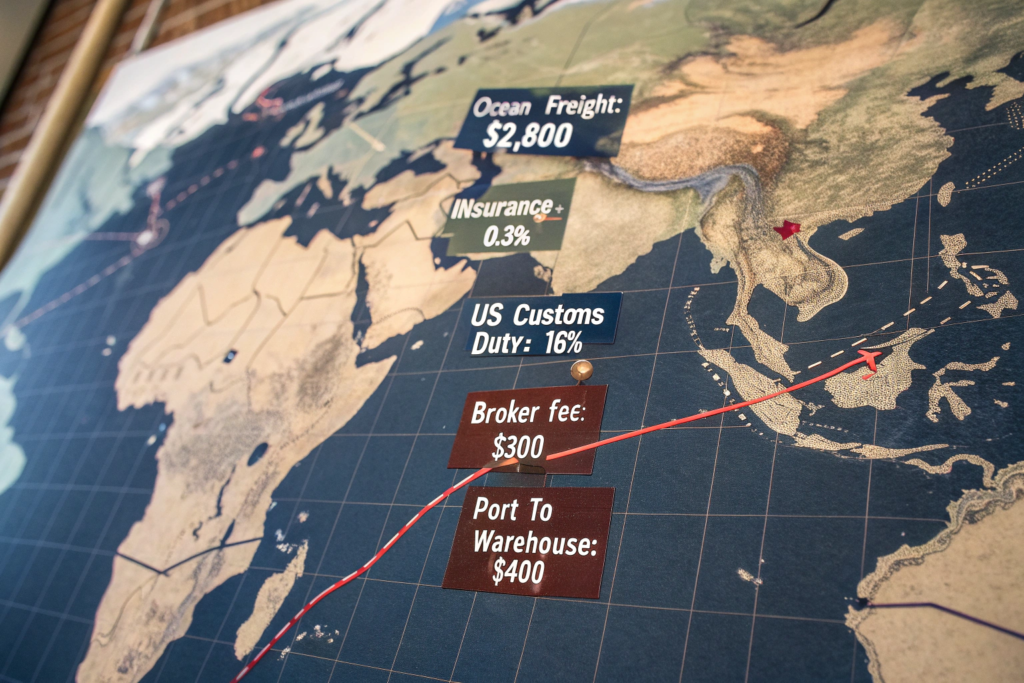
Forgotten costs include international freight (air or sea), marine insurance, import duties and taxes, customs broker fees, local trucking (drayage), and warehouse receiving fees. For a sea freight shipment from China to the USA, these costs can add 25%-40% to your FOB value.
How Do Duties and Taxes Impact Your Final Cost?
The Harmonized Tariff Schedule (HTS) code of your garment determines the duty rate. A men’s cotton sweater (HTS 6110.20) might have a 16% duty. This is calculated on the landed value (cost of goods + insurance + freight). If your FOB value is $20,000 and freight/insurance is $3,000, your duty is 16% of $23,000 = $3,680. You must also consider sales tax when you sell. Using a DDP (Delivered Duty Paid) shipping term with a supplier like us can simplify this, as you get one all-in price, but it must be budgeted for.
What Are the Real Costs of Shipping?
- Sea Freight: Volatile. Budget at least $2,500-$4,000 for a 20ft container (FCL) from Asia to the US West Coast. For smaller orders (LCL), budget $800-$1,500 per cubic meter.
- Customs Broker: $300-$600 per shipment to clear your goods.
- Port & Handling Fees: Another $200-$800.
A client once budgeted only for the FOB cost and basic sea freight. A last-minute switch to air freight due to a delay cost them $12,000 instead of $3,000, wiping out their entire marketing budget. This is why a contingency fund is critical.
How To Structure Your Contingency and Working Capital?
No production run goes 100% according to plan. Your budget must have built-in buffers for the unexpected and for the capital needed to operate after the goods arrive.
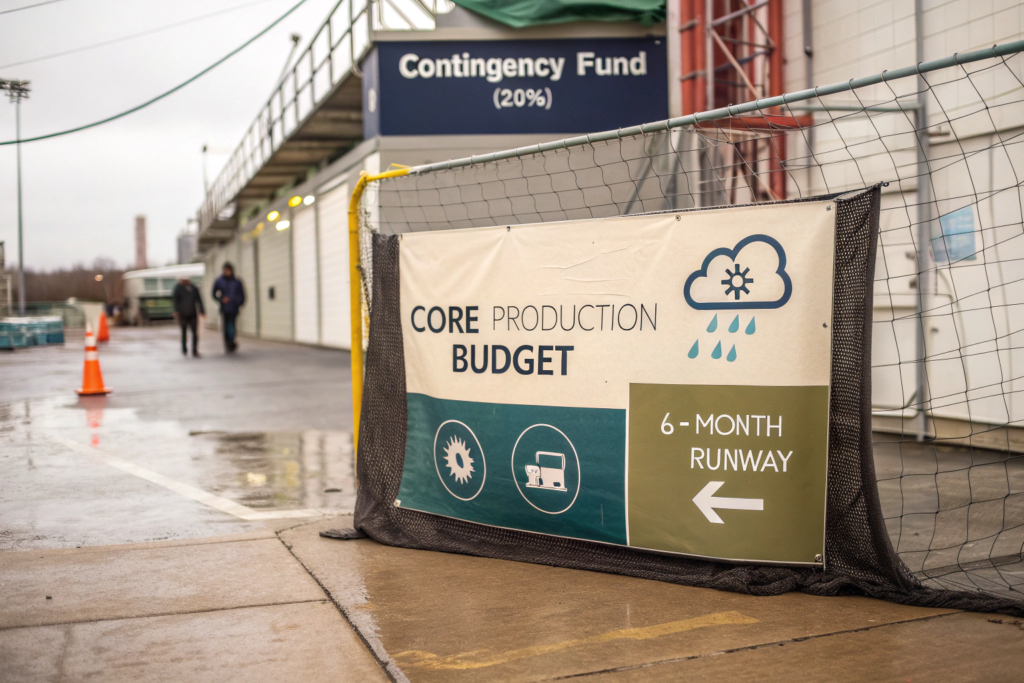
You must allocate a contingency fund of 15-25% of your total production budget for unexpected costs (like price hikes, reworks, or shipping delays). Additionally, you need separate working capital to cover ongoing business expenses (rent, salaries, marketing) for at least 3-6 months post-production, as you may not sell inventory immediately.
What Should the Contingency Fund Cover?
This fund is for production-related surprises:
- Fabric Price Increase: If your order is delayed and the fabric mill raises prices.
- Rework Costs: If 10% of goods fail inspection and need repair.
- Expedited Shipping: To make up for a production delay and hit your launch window.
In 2022, a client’s shipment was caught in port congestion. To save their holiday season, we used their contingency fund to air-freight a portion of the order. The 20% contingency was fully used, but it saved their launch.
Why is Post-Production Working Capital Non-Negotiable?
Your financial journey doesn’t end when goods land. You need money to:
- Pay for marketing and photoshoots to sell the inventory.
- Cover e-commerce platform fees and distribution costs.
- Fund the next production cycle before the first one sells out.
A common mistake is putting every dollar into production, leaving the business paralyzed with a warehouse full of clothes and no money to tell anyone about them. Plan to have your operating expenses covered independently.
Conclusion
Planning your clothing line budget is a rigorous exercise in forecasting and risk management. It requires looking beyond the unit cost and accounting for every stage of the journey, from the first sketch to the customer's doorstep. The brands that succeed are those that respect the complexity of global supply chains and fund their ventures accordingly.
By meticulously budgeting for development, demanding transparent cost breakdowns, planning for all logistics and compliance hurdles, and—most importantly—securing a robust contingency and operating fund, you transform your creative dream into a viable business. At Shanghai Fumao, we partner with brands through this process, providing clarity on costs and timelines to help build realistic financial plans.
If you are ready to move from concept to calculated launch with a manufacturing partner that values financial transparency, let’s connect. We can help you model your costs and build a production plan that sets you up for success. Contact our Business Director, Elaine, to begin the conversation at elaine@fumaoclothing.com.