
As a garment factory owner in Shanghai dealing daily with American and European brands, I see a constant challenge: buyers want flexible payment terms to manage their cash flow, while we need reliable financing to purchase fabric and pay workers upfront. The traditional tools—30% deposit T/T or cumbersome Letters of Credit—often feel outdated in today’s fast-paced, digital fashion cycle. This gap creates tension and limits growth for both brands and manufacturers.
The latest trends in apparel trade finance are overwhelmingly digital, data-driven, and inclusive, moving towards platforms that offer supply chain finance, dynamic discounting, blockchain-based solutions, and ESG-linked financing. These innovations aim to de-risk global trade, improve cash flow transparency, and make funding accessible not just to large corporations but to SMEs and even tier-2 suppliers.
The industry is undergoing a quiet revolution. Let’s explore how these emerging financial technologies are changing how brands pay and how factories get funded, creating a more resilient and collaborative supply chain.
How Is Supply Chain Finance (SCF) Revolutionizing Buyer-Supplier Relationships?
Gone are the days when payment terms were a simple binary choice between risky and secure. Supply Chain Finance (SCF), often called reverse factoring, is becoming a game-changer. It allows a buyer’s strong credit rating to benefit its suppliers directly. Here’s how it works: After the buyer approves an invoice from the supplier (like us at Shanghai Fumao), we can choose to sell that approved invoice to a financier (often a bank or fintech platform) at a small discount to get paid immediately. The buyer then pays the financier on the original, longer terms (e.g., 60 or 90 days).
Supply Chain Finance revolutionizes relationships by decoupling the supplier's need for immediate cash from the buyer's desire for extended payment terms. It creates a win-win: suppliers improve cash flow and reduce borrowing costs, while buyers can negotiate better terms and strengthen their supply chain's financial health without impacting their own balance sheet.

What Are the Practical Benefits for Brands and Factories?
For a brand, the benefit is strategic. You can extend your payment terms from 30 to 90 days without crippling your supplier’s operations. This is crucial for managing inventory cycles, especially for seasonal fashion. For us as a manufacturer, it means we no longer have to heavily rely on expensive, short-term bank loans to finance raw material purchases for every order. Last year, we onboarded a promising but cash-strapped sustainable brand from California onto an SCF platform. They got 90-day terms, and we got paid within 5 days of shipment. Their growth didn’t strain our liquidity—a true partnership enabler.
Are There Different Models of SCF Platforms?
Yes. Traditional bank-led SCF is giving way to fintech-powered platforms that offer greater accessibility and user-friendliness. Some platforms are buyer-centric, initiated by large retailers. Others are multi-buyer platforms where suppliers like us can manage all approved invoices from different clients in one dashboard. There are also blockchain-based SCF solutions emerging, which use distributed ledger technology to create immutable, transparent records of transactions, reducing fraud and speeding up approval processes. The key trend is integration—these platforms are increasingly connecting directly with Enterprise Resource Planning (ERP) systems and even IoT sensors in warehouses for automated invoice triggering.
Why Is Dynamic Discounting Gaining Traction with Agile Brands?
While SCF relies on a third-party financier, Dynamic Discounting is a more direct financial tool between buyer and supplier. It allows a buyer to offer early payment on an invoice in exchange for a discount. The key word is “dynamic”—the discount rate typically varies based on how early the payment is made.
Dynamic Discounting is gaining traction because it turns accounts payable into a profit center for buyers and provides suppliers with optional, low-cost financing. It’s highly flexible, managed through digital platforms, and allows brands to earn a risk-free return on their cash while helping key suppliers.
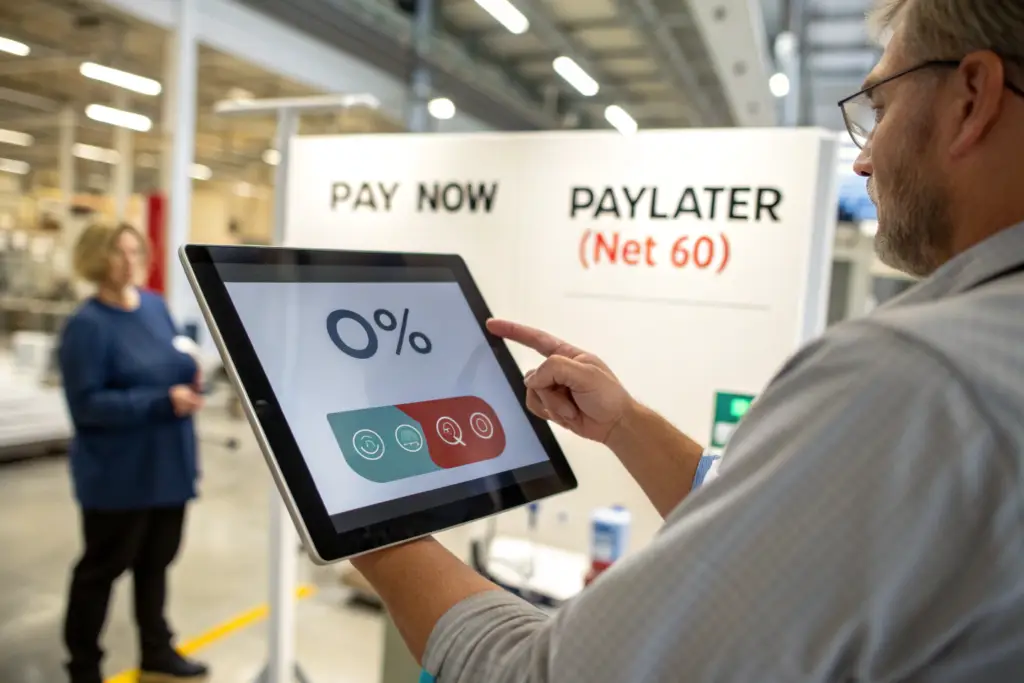
How Does a Dynamic Discounting Transaction Work in Apparel?
Imagine we invoice a brand $100,000 with net-60 terms. Their digital procurement platform immediately offers us a menu: “Get paid today for a 2% discount ($98,000), in 30 days for a 1% discount ($99,000), or wait for the full $100,000 in 60 days.” The choice is ours, based on our immediate cash needs. This is far more efficient than the old way of negotiating a one-off early payment request.
We see this most with tech-savvy, mid-sized brands. One of our clients, an activewear company in Austin, uses this model. When they have a strong cash quarter, they aggressively pay invoices early to secure discounts, boosting their margin. When cash is tighter, they let terms run. For us, it’s a valuable, predictable option. We used it in Q1 to get early payment on a large knitwear order, which we then used to fund a bulk purchase of organic cotton at a better price—a virtuous cycle.
What Are the Limitations of This Model?
The main limitation is that it requires the buyer to have available cash to fund the early payments. It’s not a financing solution for cash-strapped buyers. Also, the discount represents a cost to the supplier. Therefore, it’s typically used selectively for strategic liquidity needs, not for every invoice. The trend is towards platforms that combine SCF (for when the buyer doesn’t have cash) and Dynamic Discounting (for when they do) in a single interface, giving both parties maximum flexibility.
How Are ESG and Sustainability Linked to Financing?
Perhaps the most significant trend is the rise of ESG-linked trade finance. Environmental, Social, and Governance (ESG) performance is no longer just a marketing claim; it’s becoming a financial metric. Banks and financiers are now offering lower interest rates or better terms to suppliers and buyers who meet verified sustainability standards.
ESG-linked financing ties the cost of capital directly to a company’s sustainability performance, measured by audits or certifications. This creates a powerful financial incentive for apparel suppliers to invest in green processes, ethical labor practices, and transparent supply chains, as it reduces their cost of doing business.

What Kind of Sustainability Triggers Better Financing?
Lenders are looking for concrete, verifiable actions. Common triggers include:
- Environmental Certifications: Holding recognized certificates like GOTS (Global Organic Textile Standard), GRS (Global Recycled Standard), or having a verified carbon reduction plan.
- Social Compliance: High scores on audits like SMETA (Sedex Members Ethical Trade Audit) or BSCI, demonstrating ethical labor practices.
- Traceability: Using technology to map the supply chain for raw materials like cotton or polyester.
We are actively pursuing this at Shanghai Fumao. After investing in a water recycling system and achieving SMETA certification, we secured a revolving credit facility from our bank at a rate 0.8% lower than before. This directly improves our competitiveness. A European brand we work with now preferentially allocates orders to factories with green financing lines, as it de-risks their own supply chain.
Is This Just for Large Corporations?
Not anymore. Fintechs are democratizing access. New platforms allow smaller factories to upload their audit reports and sustainability data to access a pool of “green” capital from impact investors. This is a massive trend for the next decade. It aligns the entire industry’s financial incentives with its ethical aspirations.
What Role Do AI and Data Platforms Play in Modern Trade Finance?
Underpinning all these trends is data. Traditional finance was document-heavy. Modern trade finance is becoming data-driven. Artificial Intelligence (AI) and machine learning platforms are now used to assess credit risk in real-time, not based on old financial statements but on live data feeds from the supply chain itself.
AI and data platforms are reducing risk and friction by enabling predictive credit scoring, automating document handling (like Bills of Lading and invoices), and detecting fraud. They create a digital twin of the physical trade, allowing financiers to lend with more confidence and speed, especially to smaller players.
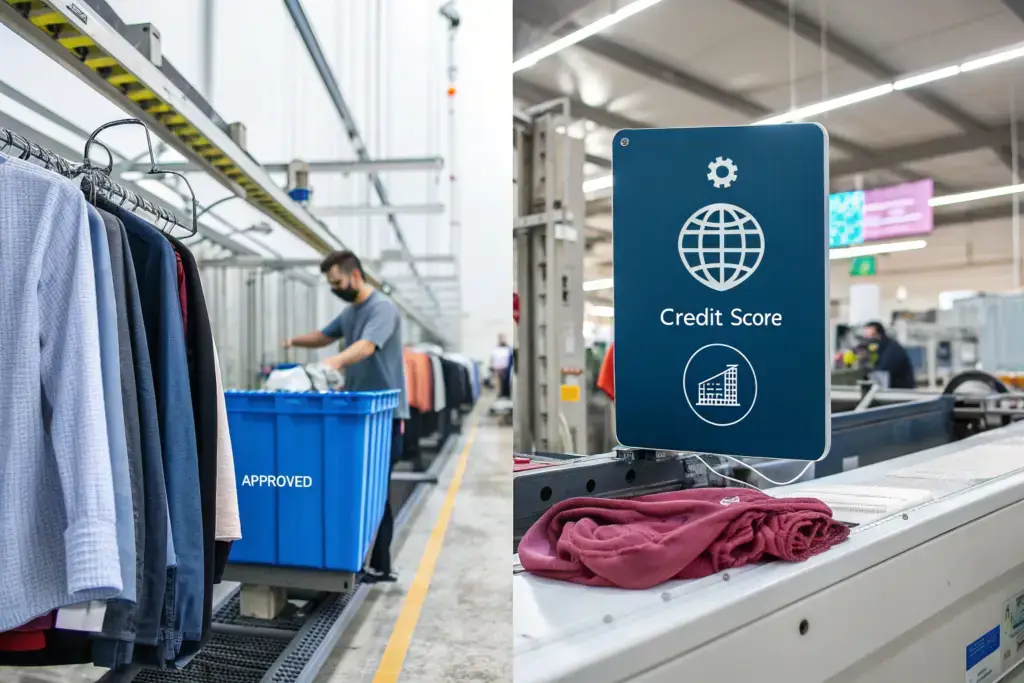
How Does AI Assess the Risk of a Specific Garment Order?
Instead of just looking at our company’s overall credit, a platform might analyze the risk of financing a specific purchase order. It factors in:
- Buyer’s Creditworthiness: The brand’s payment history and financial health.
- Transaction History: Our historical on-time delivery and quality performance with that buyer.
- Supply Chain Data: Real-time updates on fabric arrival, production progress, and shipping status.
This allows for “transactional financing” rather than corporate lending. In 2023, we piloted a platform that used such data. Because of our high on-time delivery rate (>98%), the system pre-approved financing for orders from new, smaller brands we wanted to work with, removing a major barrier to onboarding them.
Can This Solve the Pain Point of Delayed Shipments?
Absolutely. Predictive analytics can flag potential delays (like port congestion or material shortages) early. This allows for proactive communication and, crucially, lets financiers adjust payment triggers or risk models in real time. This moves the industry from reactive problem-solving to proactive risk management, directly addressing a core pain point for buyers like Ron who fear missing selling seasons.
Conclusion
The landscape of apparel trade finance is shifting from opaque, slow, and exclusionary to transparent, fast, and collaborative. The latest trends—digitized supply chain finance, dynamic discounting, ESG-linked incentives, and AI-powered risk assessment—are converging to create a financial ecosystem that supports the entire supply chain’s health, not just one party’s advantage.
For brands, this means more tools to optimize cash flow and ensure supplier stability. For manufacturers like Shanghai Fumao, it means access to fairer, lower-cost capital that allows us to invest in quality, sustainability, and innovation. The future winner is the brand-manufacturer partnership that leverages these digital tools to build a faster, more resilient, and financially transparent supply chain.
If you are looking to modernize your sourcing partnerships and leverage financial tools that protect your margins and strengthen your supply base, partnering with a forward-thinking manufacturer is the first step. We are integrating these very trends into how we do business. To discuss how we can build a financially smarter partnership for your brand, contact our Business Director, Elaine, at strong>elaine@fumaoclothing.com</strong.