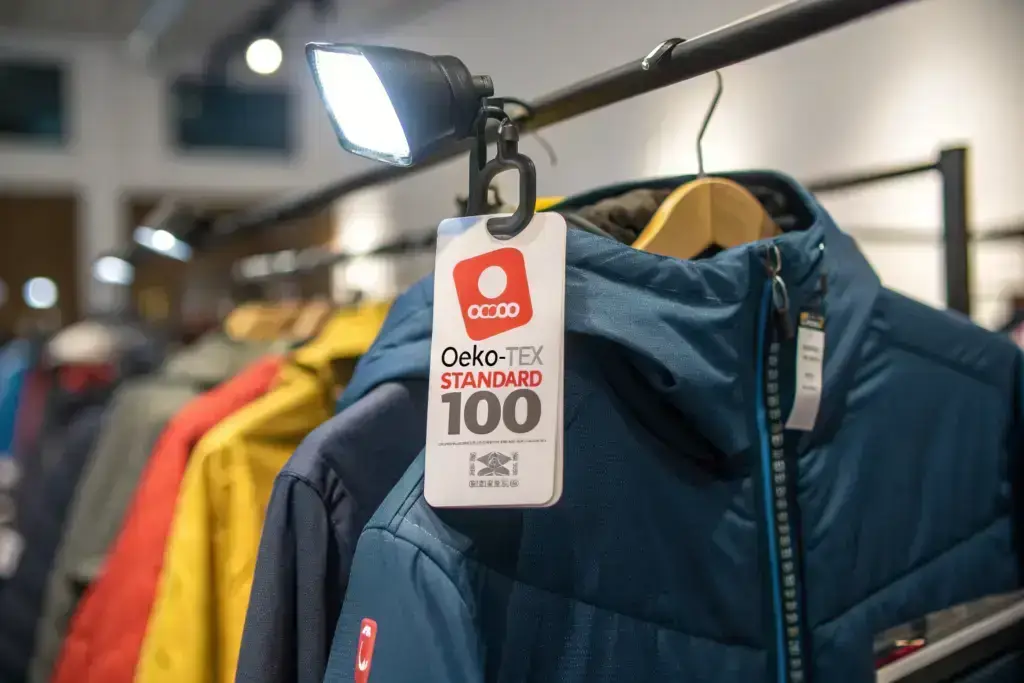
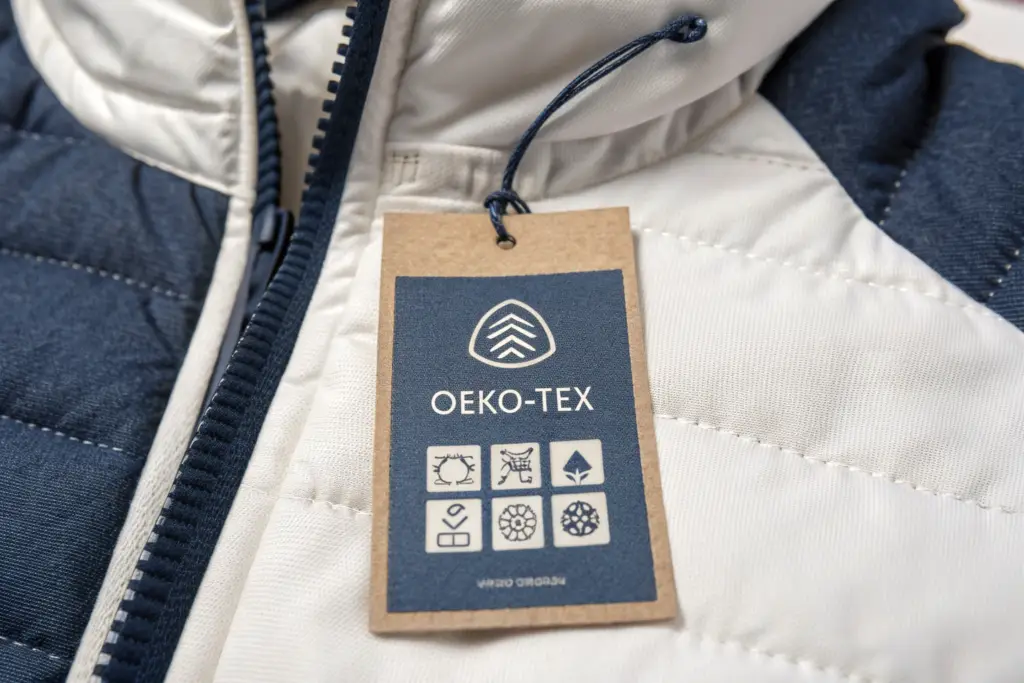
Walk into any premium ski or outdoor retailer today, and you'll see a growing trend: the distinctive OEKO-TEX Standard 100 label prominently displayed on product hangtags. It's no longer tucked away in a care booklet or mentioned only online. Brands are putting it front and center at the critical point of purchase. Why is this simple tag becoming a key battleground for consumer trust and sales conversion in the competitive skiwear market?
More brands are showcasing OEKO-TEX on their hangtags because it serves as an immediate, tangible trust signal that directly addresses modern consumer anxieties about product safety, quality, and sustainability. In a crowded retail environment, it provides a competitive edge, justifies premium pricing, and simplifies a complex value proposition into a single, recognized symbol that influences purchase decisions at the final moment of truth.
As a manufacturer, I see this shift firsthand. Brands are increasingly requesting specific hangtag designs that feature the OEKO-TEX logo with greater visual weight. They're not doing this because it's a minor detail; they're doing it because it works. Let's explore the strategic reasons behind this move.
How Does a Hangtag Act as a "Silent Salesperson" for Trust?
The hangtag is the last piece of marketing collateral a customer engages with before deciding to buy. It's a physical object they hold while feeling the fabric, checking the price, and making a final judgment. In this moment, words like "premium," "high-performance," or "sustainable" can feel subjective or exaggerated. A recognized third-party certification logo cuts through the noise.
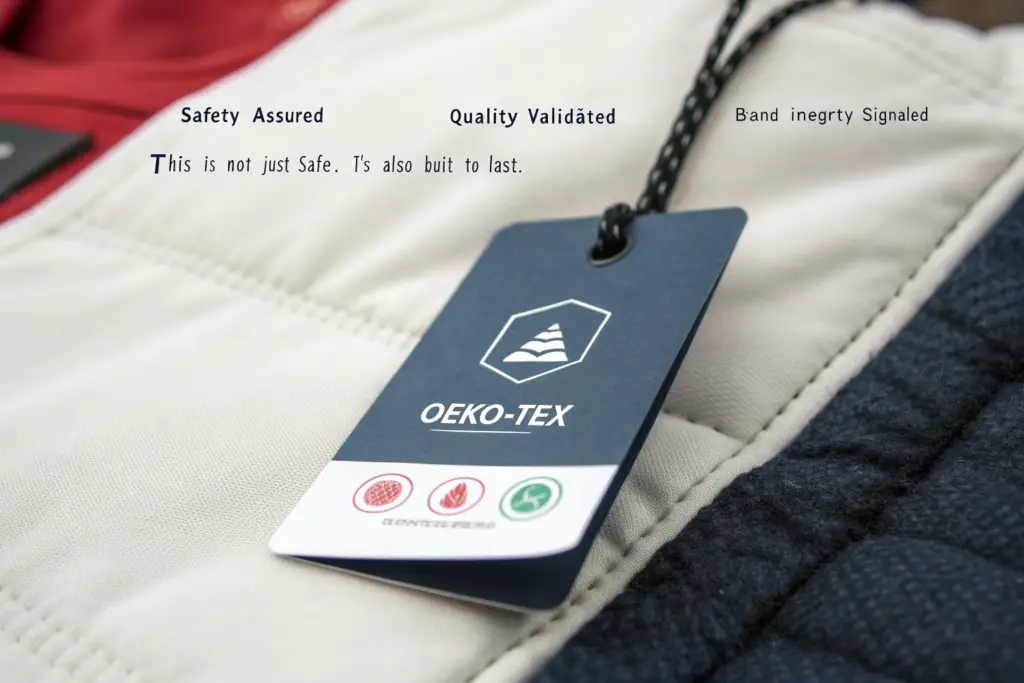
The OEKO-TEX label on a hangtag functions as a powerful "silent salesperson" by delivering three instant messages:
- Safety Assured: It communicates, "This product has been scientifically tested and is free from harmful substances." This directly counters concerns about chemicals in textiles, which are especially top-of-mind for parents buying kids' ski gear or anyone with sensitive skin.
- Quality Validated: Savvy consumers now associate the certification with rigorous testing for durability (colorfastness, abrasion resistance). The logo implies, "This is not just safe; it's also built to last."
- Brand Integrity Signaled: It tells the customer, "This brand cares enough to invest in independent verification and is transparent about it." This builds emotional trust that transcends the product itself.
What Does Consumer Behavior Research Indicate?
Studies in retail environments show that certifications on packaging and tags significantly reduce "perceived risk" for shoppers. In the context of technical apparel like skiwear, where performance and longevity are critical, reducing perceived risk directly increases the likelihood of purchase. A hangtag with the OEKO-TEX label answers unspoken questions before the customer even has to ask a sales associate. For a brand, this means higher conversion rates and fewer abandoned purchases due to doubt.
How Does This Compare to Online-Only Certification Claims?
Online, a certification can be one of many features listed in a bullet point. On a physical hangtag, it has a tactile presence and authority. It bridges the online research a customer may have done with the in-store reality. A customer who has read about OEKO-TEX online will actively look for the logo on the tag as confirmation. For the uninformed customer, it prompts curiosity and provides a quick, credible reason to choose one jacket over another.
Does Showcasing OEKO-TEX Justify a Higher Price Point?
In a market saturated with options, price competition is fierce. However, competing solely on price is a race to the bottom. Brands are using OEKO-TEX certification as a cornerstone of value-based pricing strategy. The hangtag is where this value proposition is crystallized for the consumer.
When a customer sees a $350 jacket and a $300 jacket that look similar, the hangtag can tip the scales. The OEKO-TEX label provides a concrete, explainable reason for that $50 difference. The brand can frame it as an investment in:
- Health & Comfort: "You're paying for guaranteed skin safety and comfort."
- Long-Term Value: "You're paying for a garment that will look good and perform longer, reducing cost per wear."
- Ethical Consumption: "You're supporting responsible manufacturing practices."
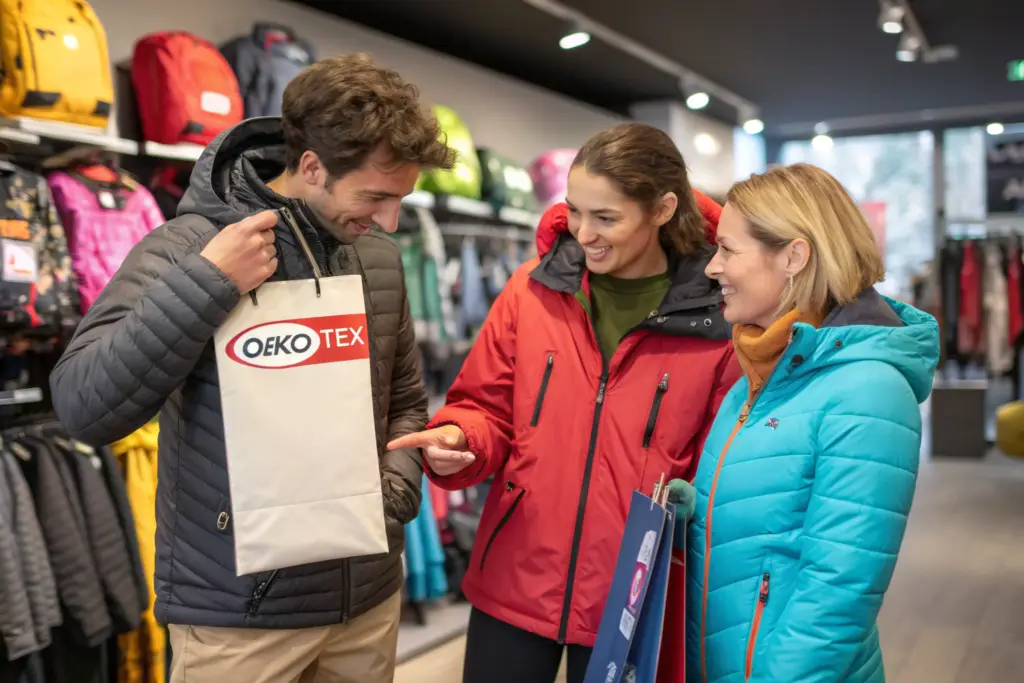
This transforms the purchase from a commodity transaction into a values-driven choice. Retail sales staff are trained to use these tags as conversation starters: "You'll notice this line is OEKO-TEX certified, which means it's been independently tested to be free from harmful substances—it's a really popular feature with our customers who are out on the mountain all day."
Can You Quantify the Pricing Power?
While direct sales data is proprietary, the logic is clear in margin analysis. Let's assume the certification adds a 5% cost to the garment's production (for testing, certified materials). A brand can often apply a retail price premium of 10-15% while still offering compelling value, because the perceived benefit to the customer is high. The hangtag is the vehicle that communicates and justifies this premium at the moment the price is evaluated. We've had clients at Shanghai Fumao report that after adding prominent OEKO-TEX hangtags, their sell-through rates at full price improved, and discounting pressures at the end of the season were reduced.
How Does This Align with the "Premiumization" Trend?
The entire outdoor and ski industry is trending towards premiumization—consumers buying fewer, but better, items. OEKO-TEX certification is a perfect fit for this trend. It's a mark of "better." Showcasing it on the hangtag aligns the product with the premium segment visually and substantively, attracting the target customer who is willing to pay more for assured quality and peace of mind.
Successfully showcasing the certification on a hangtag isn't as simple as slapping on a logo. It requires careful planning with your manufacturing partner to ensure compliance and impact.
1. Logo Usage Compliance: OEKO-TEX has strict guidelines for how its labels can be used. You must be a license holder (or your manufacturer must hold the license for the product) to legally place the logo on your hangtag. The logo cannot be altered in color or proportion. Your manufacturer should guide you through this licensing process and provide the correct digital artwork.
2. Tag Design Integration: The OEKO-TEX label should be integrated thoughtfully into the overall tag design. It should be clearly visible but not look like an afterthought. Many brands now use a dedicated "Certifications" section or a "Our Promise" call-out box. The tag itself can be made from OEKO-TEX certified paper or recycled materials, reinforcing the commitment.
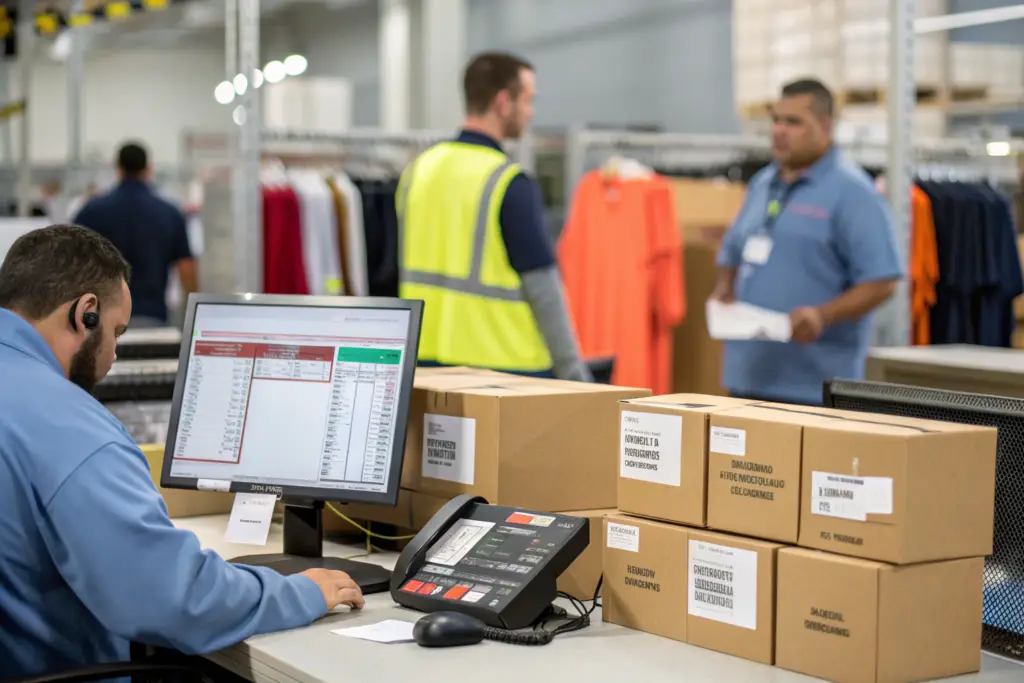
3. Supply Chain Coordination: The hangtags must be produced and delivered to the garment factory in sync with the production schedule. They need to be attached to the correct certified styles. This requires precise communication between your brand, the tag printer, and the apparel manufacturer. At our facility, we manage this by having clients approve and ship hangtags to us as part of the pre-production milestone, and our QC team verifies that the correct tags are attached to the corresponding certified garments.
What About Multi-Label Strategies (e.g., OEKO-TEX + bluesign®)?
It's common to see multiple certifications on a premium skiwear tag. This creates a "wall of trust." The key is clear hierarchy and messaging. Don't just cluster logos. Use short, benefit-driven text next to each: "OEKO-TEX: Tested for Harmful Substances" and "bluesign®: Sustainable Manufacturing." This educates the consumer rather than overwhelming them. We help clients design these multi-certification tags to ensure clarity and compliance for all labels involved.
Can Small Brands Afford This?
Absolutely. The cost of printing the logo on a hangtag is negligible. The primary investment is in achieving the product certification itself. Once certified, showcasing it on the tag is a high-ROI move that levels the playing field, allowing a small brand to project the same credibility as a giant. It's one of the most cost-effective marketing investments a brand can make.
How Does This Trend Impact Brand Relationships with Retailers?
Retailers are gatekeepers. Getting your product on the shelf is one thing; getting retailers to actively promote it is another. OEKO-TEX on the hangtag makes a retailer's job easier and reduces their risk.
For Retail Buyers: The certification is a tangible, defensible reason to select your brand for their store. It answers their due diligence questions about product safety and quality. In buying meetings, it's a solid data point that supports the selection.
For Floor Staff: As mentioned, it provides a ready-made sales script. It reduces training burden and gives staff confidence in the product's features. Staff are more likely to recommend a product they can easily explain and trust.
For the Retailer's Brand: Stocking certified products enhances the retailer's own reputation as a curator of responsible, high-quality gear. It protects them from potential liability or customer complaints about product issues related to chemicals or durability.
A tangible example: a boutique outdoor retailer in Oregon specifically curated a "Clean Ride" shop-in-shop section featuring only apparel with OEKO-TEX or similar certifications. The hangtags were a critical filtering tool for them and a central part of their in-store marketing. Brands featured in that section saw a significant sales lift within that retailer.
What is the Future of the Hangtag in a Digital World?
The hangtag is evolving into a hybrid physical-digital touchpoint. The OEKO-TEX logo on the tag is now often accompanied by a QR code. Scanning the code might take the customer to a page with the digital certificate, a video about the certification's meaning, or the garment's Digital Product Passport. The physical tag with the trusted logo provides the initial assurance, while the digital layer offers deeper engagement and proof. This synergy makes the hangtag more powerful than ever.
Conclusion
The growing prominence of the OEKO-TEX label on skiwear hangtags is a strategic response to a more informed and cautious consumer. It is a masterstroke in retail psychology, serving as an on-the-spot validator of safety, quality, and brand ethics. It justifies premium pricing, empowers retail sales staff, and provides a critical competitive differentiator in a visually saturated marketplace.
For brands, this means that securing the certification is only half the battle; showcasing it effectively at the point of purchase is the other. It requires intentional design, precise logistics, and a deep understanding of the modern consumer's path to purchase.
If you are looking to enhance your brand's shelf presence and consumer trust with professionally executed, compliance-ready OEKO-TEX hangtags and the certified products to go with them, the right manufacturing partner is essential. At Shanghai Fumao, we guide our clients through every step—from achieving certification to designing and attaching the impactful hangtags that close the sale. Contact our Business Director Elaine to ensure your next collection makes a powerful first and last impression: elaine@fumaoclothing.com.