You've sourced OEKO-TEX certified fabrics and components for your ski apparel line. The garments are ready, and now it's time for the final branding touch: the logo print. But here's a critical and often overlooked question: does your logo printing method comply with the same OEKO-TEX standards? A non-compliant logo can compromise the entire garment's certification, turning your premium, trusted product into a liability. For U.S. apparel brands, ensuring end-to-end compliance is non-negotiable for protecting your investment and your brand's integrity.
To ensure your logo printing is OEKO-TEX compliant, you must work with your manufacturer to use only certified printing inks and processes, require and verify the printer's or ink supplier's OEKO-TEX certification documentation, and integrate logo printing into the final garment's certification (license number), not just rely on fabric certification alone.
This is a common pitfall. I've seen a brand's entire shipment held up because their vibrant silicone ink logo, while durable, contained non-compliant plasticizers. Let's walk through the precise steps to get this right, from design to delivery.
Why Does the Logo Print Need Separate OEKO-TEX Compliance?
Many brands mistakenly believe that if the main fabric is certified, the entire garment is automatically covered. This is not true. OEKO-TEX Standard 100 certifies the final, ready-to-sell article in its entirety. Any component added during production—including prints, embroidery threads, heat-transfer films, or labels—must also comply with the standard's strict substance limits.
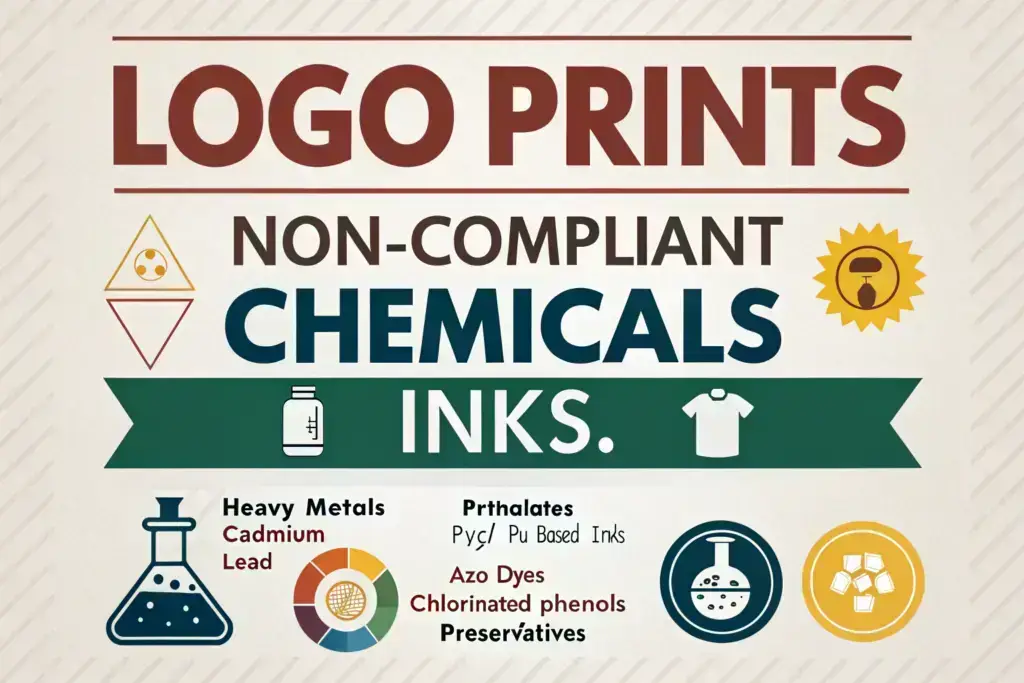
Logo prints, especially, can be a hotspot for non-compliant chemicals. Depending on the printing method, inks may contain:
- Heavy metals (like cadmium, lead) in certain pigments.
- Phthalates (often used as plasticizers in PVC/PU-based inks to make them flexible).
- Azo dyes or other allergenic disperse dyes.
- Chlorinated phenols and other preservatives.
If these are present above the allowed limits, the final garment will fail the certification test, regardless of how clean the base fabric is. The certification body tests a sample that includes all components.
What Are the Most Common Compliant Printing Methods?
The compliance depends less on the method and more on the materials used within that method. However, some methods are easier to manage:
- Screen Printing: Very common. The key is using water-based or plastisol inks that are specifically OEKO-TEX certified. The ink supplier must provide a valid certificate.
- Heat Transfer (Sublimation): Common for all-over prints. The dye-sublimation inks and the transfer paper must be certified.
- DTG (Direct-to-Garment): The printer's ink set must be certified.
- Embroidery: The embroidery thread itself must be certified. This is often overlooked.
The rule is: Ask for the certificate for the consumable (ink, thread, film) from its supplier.
How Does This Affect Design and Durability Choices?
Your design choices must consider compliance. For example, a design requiring extremely high elasticity (like on a stretch ski gasket) might traditionally use a phthalate-heavy plastisol. To be compliant, you need to work with your printer to source a phthalate-free, OEKO-TEX certified elastic ink. This may slightly alter the hand feel or minimum print size, so early collaboration is key. A brand we worked with wanted a metallic silver logo. Standard metallic inks often contain non-compliant pigments. We sourced a certified alternative, achieving a similar aesthetic without compromising the certification.
What Specific Documentation Should You Request from Your Supplier?
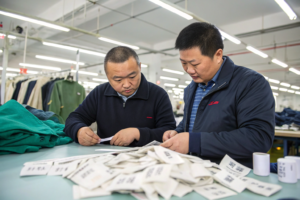
Transparency through documentation is your only guarantee. Verbal assurances are not enough. When you place an order for printed apparel, you must request and archive a specific set of documents from your manufacturing partner.
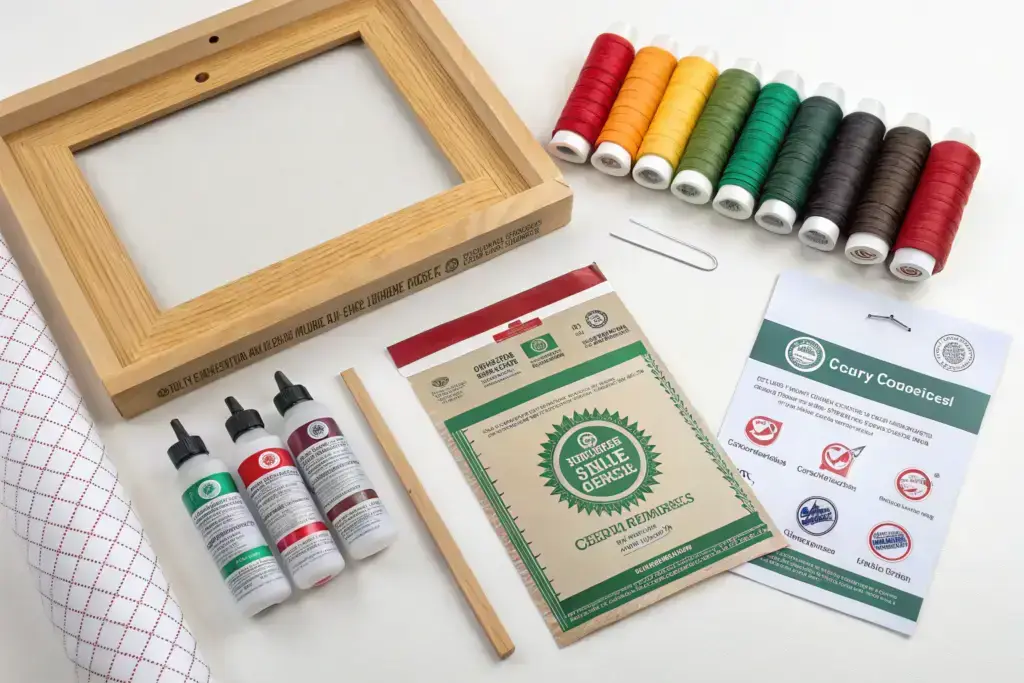
1. The OEKO-TEX Certificate for the Printing Inks/Threads.
This is the foundation. The certificate should be from the ink or thread manufacturer (e.g., a chemical company like BASF for pigments) or a printer who has certified their own ink system. It will have a unique license number. Verify its validity on the OEKO-TEX website.
2. The Final Garment's OEKO-TEX Certificate (the "Making Number").
This is the most critical document. After production, your manufacturer must submit a sample of the finished garment (with the logo print) to an OEKO-TEX institute for testing. Upon passing, they receive a certificate with a "making number" that covers that specific article type. This is your proof that the entire product, logo included, is compliant. Do not accept a certificate that only lists the fabric.
3. A Statement of Conformity or Component Certificate from the Printer.
If your manufacturer subcontracts the printing, they should obtain and provide a document from the printer stating that the inks and process used comply with OEKO-TEX Standard 100 for the specified product class (e.g., Class II).
What Are the Red Flags in Documentation?
- The supplier cannot provide any ink/thread certificates.
- The final garment certificate lists only fabric components, not the final article type (e.g., "jacket").
- The certificate is expired.
- The supplier hesitates or refuses to share the full certificate, offering only a logo image.
At Shanghai Fumao, our process is built around this transparency. For every OEKO-TEX order involving printing, we provide clients with a Compliance Dossier that includes all upstream component certificates and the final garment certificate. This eliminates guesswork and builds absolute trust.
How to Handle Custom or Specialty Inks (e.g., Reflective, Glow-in-the-Dark)?
These specialty effects are high-risk for non-compliance. The process is the same but requires more lead time. You must inform your manufacturer during the sampling phase that you require OEKO-TEX compliance. They will then need to source certified specialty inks, which may have minimum order quantities or longer lead times. Testing the final garment with these inks is mandatory. We recently helped a brand integrate a certified reflective print into their ski pants. It required a 6-week lead time to source and test the ink, but it ensured their high-visibility safety feature didn't violate their chemical safety promise.
How to Integrate Logo Compliance into Your Production Timeline?
Failing to plan for compliance is planning to fail. Adding OEKO-TEX verification for printing adds crucial steps to your critical path. You must account for this from the beginning to avoid costly delays.
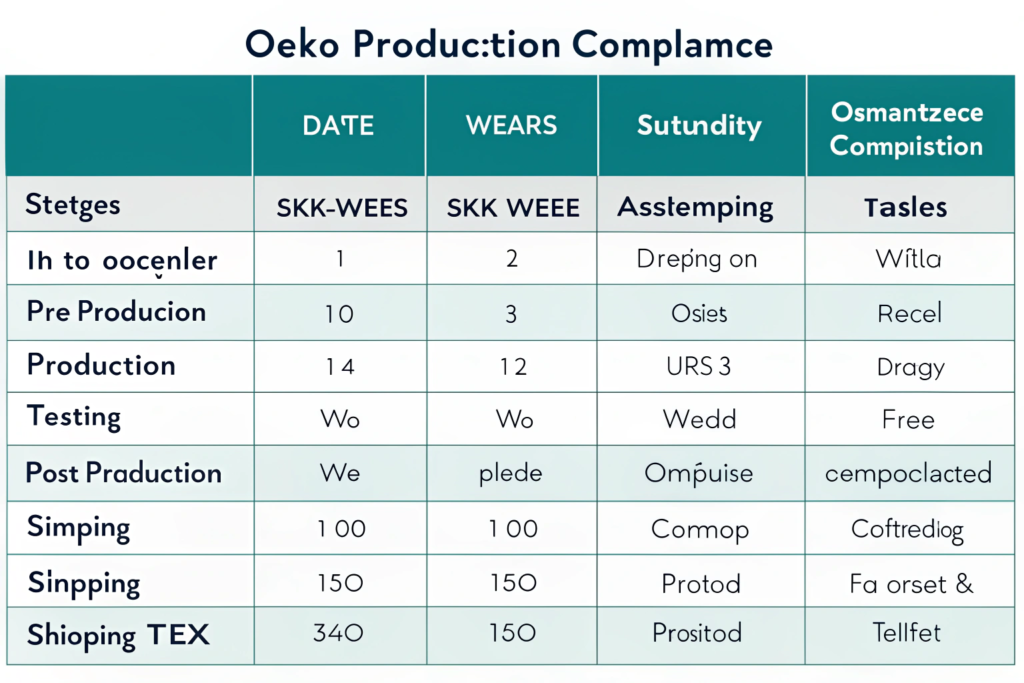
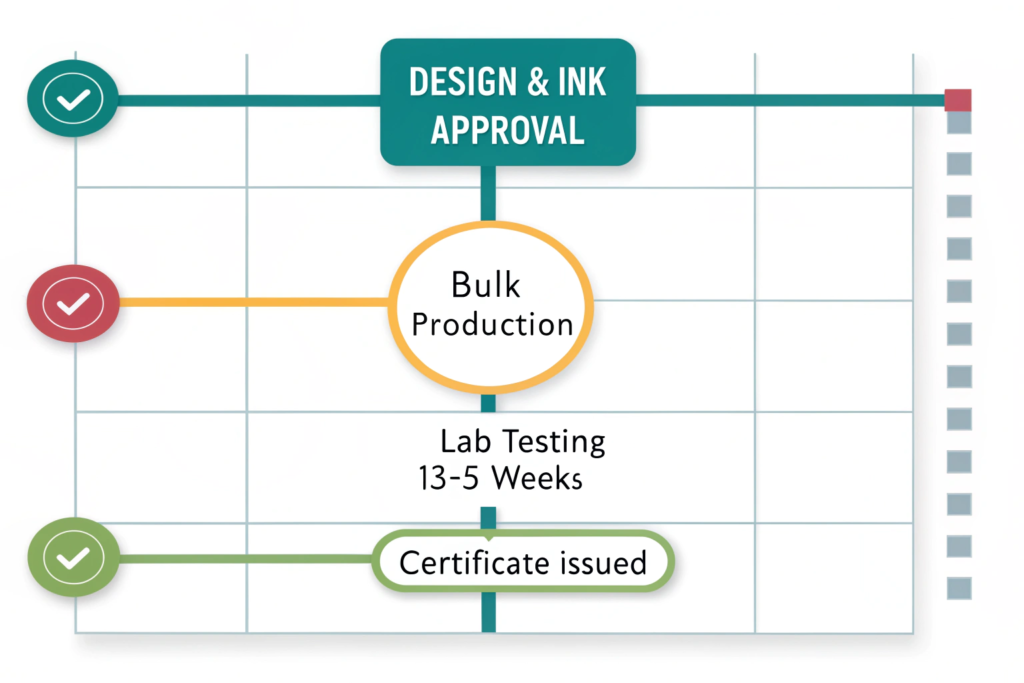
Here is a simplified timeline integrating logo compliance:
| Phase | Key Action | Responsible Party | Duration (Est.) |
|---|---|---|---|
| Design & Sampling | Specify OEKO-TEX compliance for all prints/embroidery. Request ink options and certs from supplier. | Brand / Manufacturer | +1-2 weeks |
| Pre-Production | Approve strike-off sample made with certified inks. Confirm final ink/thread certs are received. | Brand | +1 week |
| Production | Manufacturer produces bulk with certified materials. | Manufacturer | (Standard) |
| Post-Production Testing | Manufacturer submits finished garment sample (with logo) to OEKO-TEX lab for final certification. | Manufacturer | +3-5 weeks |
| Shipping & Delivery | Final garment certificate ("making number") is issued and provided to brand. Shipment released. | Manufacturer / Lab |
The 3-5 week lab testing period is the most common cause of delay brands don't anticipate. You cannot ship goods under an OEKO-TEX claim until you have the final certificate in hand. Smart planning builds this window into the schedule from the start.
What Happens If You Need a Last-Minute Design Change?
If you change the logo design, color, or placement after ink certification, you may need to re-verify compliance, especially if it involves a new ink color. The safest practice is to use the same certified ink system for all variations. This is why we maintain a library of pre-certified ink colors at our facility. When a client from Colorado needed to add a small flag logo to an existing certified style, we used an ink from our certified library, avoiding a full retest and saving them 4 weeks of potential delay.
How Does This Affect Small Batch or Prototype Orders?
For very small batches, the cost and time of obtaining a unique "making number" can be prohibitive. In these cases, work with a manufacturer who operates under a "OEKO-TEX Standard 100 Company Certificate." This means their entire production system, including their printing processes and ink inventory, is audited and certified. While a prototype itself may not have a unique number, it is produced under a certified system, providing a high degree of confidence. For market launch, however, the specific product certificate is still required.
What Are the Risks and Costs of Non-Compliant Logo Printing?
The risks far outweigh the minor cost savings of using uncertified inks. Ignoring logo compliance can lead to a cascade of operational, financial, and reputational problems.
1. Certification Voidance and Legal Liability:
The entire shipment loses its OEKO-TEX certification claim. If you have already tagged, labeled, or marketed the garments as certified, you are liable for false advertising. This can lead to forced recalls, fines from regulatory bodies like the Federal Trade Commission (FTC) in the U.S., and rejection by eco-conscious retailers.
2. Supply Chain Disruption and Financial Loss:
Goods may be stuck at the factory or port, unable to ship until the issue is resolved. The cost of rework (stripping prints, re-printing) or, worse, producing a whole new batch, is devastating. You also face missed delivery windows and chargebacks from retailers.
3. Irreparable Brand Damage:
If a consumer or a vigilant retailer independently tests your product and finds non-compliant substances in the logo, the scandal can spread quickly on social media and industry press. Trust, once broken, is incredibly hard to rebuild. For a brand built on safety and sustainability, this is a fatal blow.
How to Build a Fail-Safe with Your Manufacturer?
The solution is partnership and clear contracts. Your manufacturing agreement should include:
- A Warranty Clause: The manufacturer warrants that all components, including prints, are OEKO-TEX compliant and will provide all supporting documentation.
- Liability Clause: The manufacturer bears full financial responsibility for any costs arising from non-compliant components they source or apply.
- Audit Rights: You reserve the right to audit their ink inventory and printer certificates.
Working with an integrated manufacturer like Shanghai Fumao Clothing, which controls the printing in-house or through vetted, audited partners, significantly reduces this risk. Our quality management system is designed to prevent non-compliant materials from ever entering the production line for certified orders.
Conclusion
Ensuring your logo printing is OEKO-TEX compliant is a meticulous but essential process that protects the integrity of your certified apparel. It requires proactive specification, rigorous documentation checks, careful timeline planning, and a trusted manufacturing partnership. By securing certificates for your inks, obtaining the final garment "making number," and understanding the associated timelines, you transform your logo from a potential liability into a symbol of your brand's unwavering commitment to total quality and safety.
Don't let the final touch undo all your good work. From the first sketch to the final stitch, every element must align with the standard.
If you are looking for a manufacturing partner that provides seamless, fully documented OEKO-TEX compliance—from fabric to final logo print—let's connect. At Shanghai Fumao, we specialize in guiding brands through this complex process, ensuring your branded ski apparel is not only stunning but also authentically and verifiably certified. Contact our Business Director Elaine to ensure your next collection is compliant from the ground up: elaine@fumaoclothing.com.