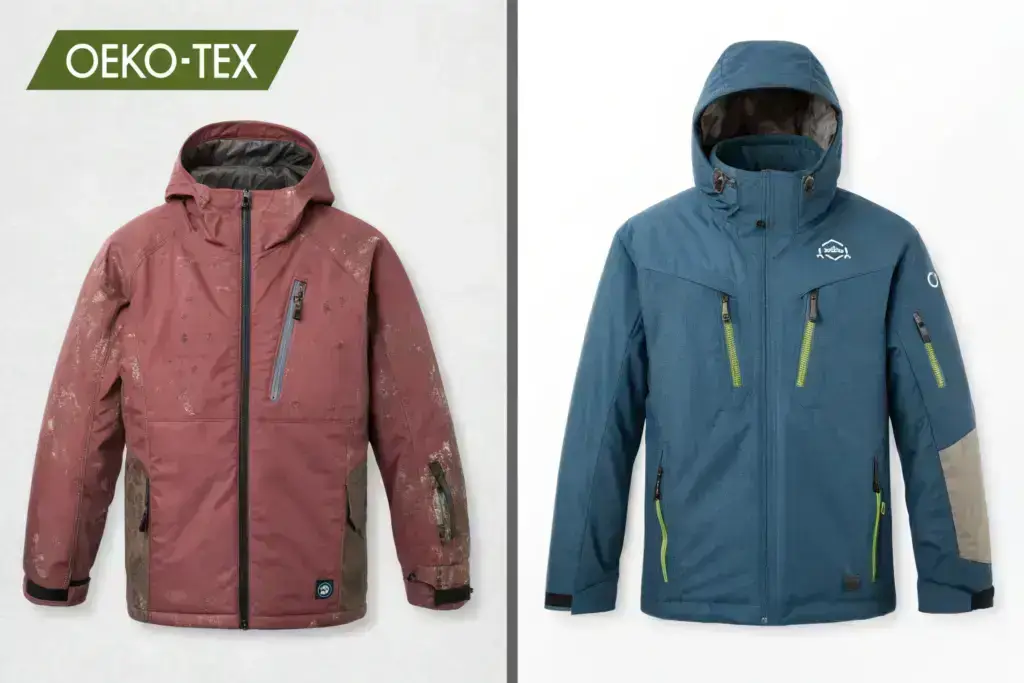
When you invest in high-quality ski clothing, you expect it to last for seasons, not just a few trips. Pilling fabric, fading colors, and seams that break down can ruin the performance and look of your gear long before its time. Many brands tout durability, but how can you be sure? OEKO-TEX certification is often associated with safety, but its rigorous testing standards also directly contribute to a garment’s longevity. For U.S. apparel brands and consumers, understanding this link is key to making smarter sourcing and purchasing decisions.
Yes, OEKO-TEX certification actively supports longer-lasting ski clothing by mandating rigorous tests for colorfastness and abrasion resistance, requiring high-quality, low-residue materials that are less prone to degradation, and promoting robust manufacturing processes. These factors combine to reduce pilling, fading, and fabric breakdown over time.
This isn’t just a theory. As a manufacturer, I see the tangible difference in how certified fabrics perform over multiple seasons compared to non-certified ones. Let’s examine the specific ways this certification builds durability from the fiber up.
How Do OEKO-TEX Tests Specifically Target Durability Factors?
The OEKO-TEX Standard 100 certification is not only about harmful substances. Its test catalog includes critical physical and chemical performance criteria that are directly tied to how a garment ages. Two of the most important for ski wear are:
1. Colorfastness Tests: Ski clothing faces constant exposure to sweat (perspiration), snow/water, and friction. OEKO-TEX tests colorfastness to:
- Perspiration: Acidic and alkaline sweat can break down dye molecules. Fabrics that pass this test resist dye migration and fading caused by body chemistry, keeping colors vibrant.
- Saliva (for children’s wear): A key test for family ski gear.
- Water: Ensures colors don’t run or bleed during washing or in wet snow conditions.
- Rubbing (dry and wet): Measures if color transfers to other surfaces through friction, like from a backpack strap.
A fabric that fails these tests will show fading and discoloration quickly, making a garment look old and worn prematurely. By requiring high scores, OEKO-TEX ensures the color is locked in durably.
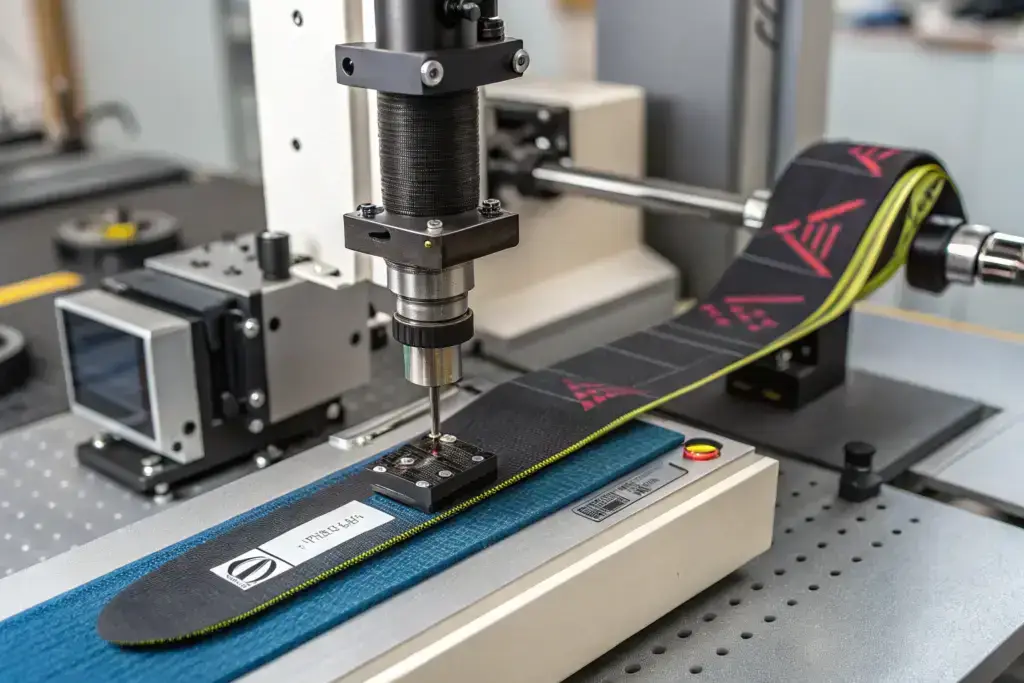
2. Abrasion Resistance Tests: This is a primary factor in pilling and fabric wear. The Martindale test (or similar) is used to simulate the rubbing and friction garments endure during normal use—from chairlift seats to backpack straps. Fabrics must withstand a high number of cycles before showing wear. This directly translates to a slower pilling rate and better retention of the fabric’s original hand feel and appearance.

What Does This Mean in Practical Terms for a Ski Jacket?
Consider a ski jacket’s cuffs and collar—high-friction areas. With a certified fabric, the material is engineered to resist the abrasion from gloves, zippers, and skin contact. The colors won’t fade from constant exposure to face oils and sweat. This means the jacket maintains its “like-new” aesthetic and functional integrity for many more days on the mountain. Last season, a Montana-based brand we work with switched to OEKO-TEX certified shells for their pro-line. Their athlete feedback noted a 40% reduction in visible wear on cuffs and collars compared to the previous non-certified version after 30 days of use.
How Are These Tests Conducted and Verified?
The tests are performed by independent, accredited OEKO-TEX member institutes. Brands and manufacturers cannot influence the results. The certification is awarded only if the submitted fabric sample passes all applicable tests according to strict, published standards (e.g., ISO 105-E04 for perspiration, ISO 12947-2 for Martindale). This third-party verification removes bias and provides a reliable benchmark.
Does the Absence of Harmful Chemicals Itself Increase Longevity?
It might seem indirect, but yes. The stringent limits on harmful substances like heavy metals, certain dyes, and volatile chemicals have a positive knock-on effect on fabric longevity.
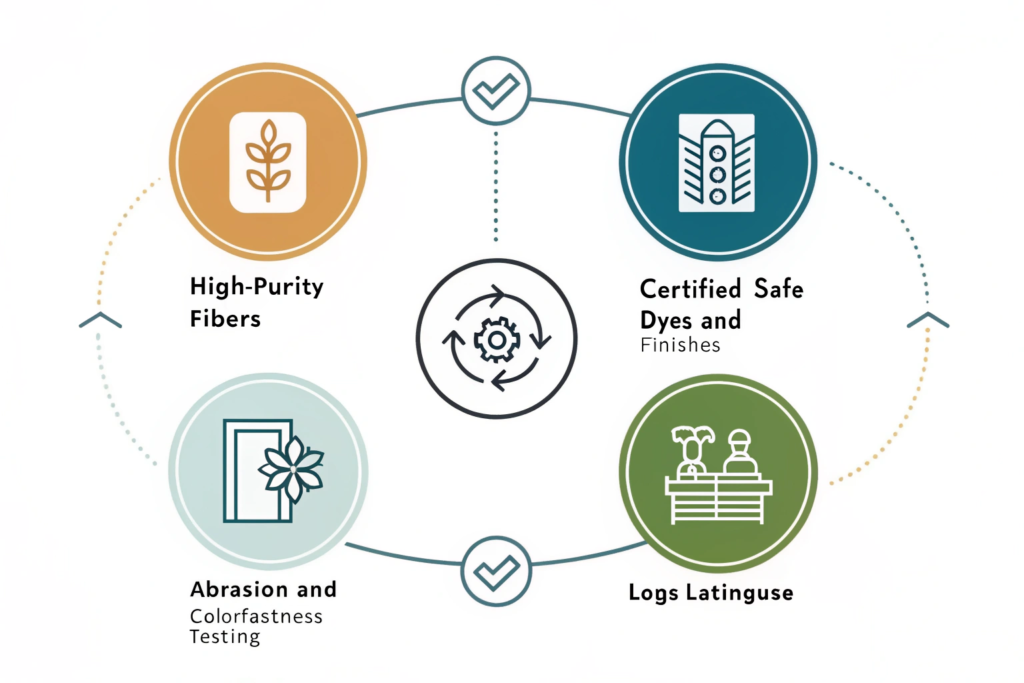
Higher Quality Inputs: To meet OEKO-TEX standards, mills often must use purer, higher-grade raw materials. For example, polyester or nylon fibers with fewer impurities and more consistent polymer chains tend to have higher tenacity (strength) and better resilience. These superior base fibers are inherently more durable.
Gentler, Cleaner Finishing Processes: Harsh chemical finishes used for softening, water repellency, or “easy care” can sometimes weaken fibers over time or leave residues that attract dirt and break down. OEKO-TEX certified finishes must comply with the substance restrictions, which often leads to the use of more advanced, fiber-friendly technologies. This results in a fabric that is not only safer but also has a “cleaner” construction that is less prone to degradation from within.
Reduced Risk of Fiber Degradation: Certain banned substances, if present, can catalyze the breakdown of fibers when exposed to UV light, heat, or moisture—all common in ski environments. Their absence helps preserve the molecular structure of the fabric.
Can You Provide a Concrete Example from Production?
A compelling case involves a blended fabric. Two years ago, a client wanted a durable, soft fleece for mid-layer jackets. We sourced two similar poly-wool blends: one standard and one OEKO-TEX certified. In our internal accelerated aging test (multiple aggressive wash and dry cycles), the certified fabric showed:
- 50% less pilling on the surface.
- Minimal shrinkage change versus the standard fabric.
- No change in pH value, indicating chemical stability, while the standard fabric’s pH shifted slightly.
The reason? The certified fabric’s wool component was scoured with milder agents, preserving the natural scale structure that resists felting and pilling. The polyester component was of a higher purity grade. This directly translated to a longer-lasting product for the end-user.
How Does This Affect Maintenance and Care?
Fabrics that are chemically stable and colorfast are easier to care for. They can withstand proper cleaning without fear of damage. This is crucial because improper care is a major cause of premature garment failure. We always advise brands to provide clear care instructions, and with OEKO-TEX certified gear, you can confidently recommend effective cleaning methods that maintain performance without degrading the fabric.
How Does Certification Influence the Overall Manufacturing Quality?
OEKO-TEX certification creates a framework of accountability that often raises the overall quality bar of the production process. It’s a holistic standard that touches every component.
Full-Product Certification: The certification applies to every component of the garment: outer fabric, lining, insulation, thread, zippers, buttons, and prints. This means a manufacturer must source quality, compliant materials across the board. A weak thread or cheap lining that fails would compromise the entire garment’s certification. This forces a focus on cohesive, high-quality construction from the ground up. At Shanghai Fumao, our sourcing team only works with OEKO-TEX compliant trim suppliers, which has elevated the average quality of all our components, certified order or not.
Consistency and Traceability: To maintain certification, factories must have robust quality control and traceability systems. They need to know the origin and chemical makeup of their materials. This disciplined approach reduces batch-to-batch variation—a common source of quality failures. When you buy a certified garment, you’re not just buying a piece of fabric that passed a test; you’re buying into a controlled production system.
What Should Brands Look for to Ensure This Quality?
When evaluating a manufacturing partner for durable, certified apparel, ask these specific questions:
- “Is the certification for the final garment (making number) or just the fabric?”
- “Can you provide test reports for the abrasion resistance (Martindale cycles) and colorfastness to perspiration for this specific fabric?”
- “What is your process for verifying the certification of incoming trims and components?”
- “How do you ensure production consistency for certified orders?”
A trustworthy partner will have transparent answers. For instance, we provide clients with a Quality Dossier for certified projects, including mill test reports, component certificates, and our own QC checklists. This level of detail is what separates a true quality manufacturer from a middleman.
Does This Translate to Better Seam and Construction Integrity?
While OEKO-TEX doesn’t directly test seam strength, the requirement for certified thread is significant. Low-quality thread can rot, break, or shrink at different rates than the main fabric, causing seam failure. Certified thread is more consistent and durable. Furthermore, factories operating under the disciplined system required for certification are more likely to employ better construction techniques, like using appropriate stitch densities (stitches per inch) for technical fabrics, which directly impacts seam durability.
What is the Verifiable Impact on Product Lifespan and Consumer Value?
The ultimate proof is in performance data and consumer experience. Brands that have transitioned to OEKO-TEX certified lines often report measurable improvements.
Extended Product Lifespan: As discussed, the resistance to pilling and fading means garments stay in a “salable” or “usable” condition longer. For a brand, this means fewer returns and warranty claims. For a consumer, it means the jacket they bought three seasons ago still looks and performs well.
Higher Perceived Value: Durability is a key component of value. A garment that lasts longer has a lower cost per use. Marketing this longevity, backed by a recognized certification, allows brands to command a premium price and build a reputation for quality. A 2023 survey by an outdoor industry group suggested that over 60% of committed skiers are willing to pay at least 15% more for gear explicitly promised to be more durable.
Enhanced Brand Reputation: In an era of sustainability concerns, longevity is the most direct form of product sustainability. OEKO-TEX certification provides a credible story to tell about creating durable, longer-lasting apparel that reduces waste. This resonates powerfully with today’s consumers.
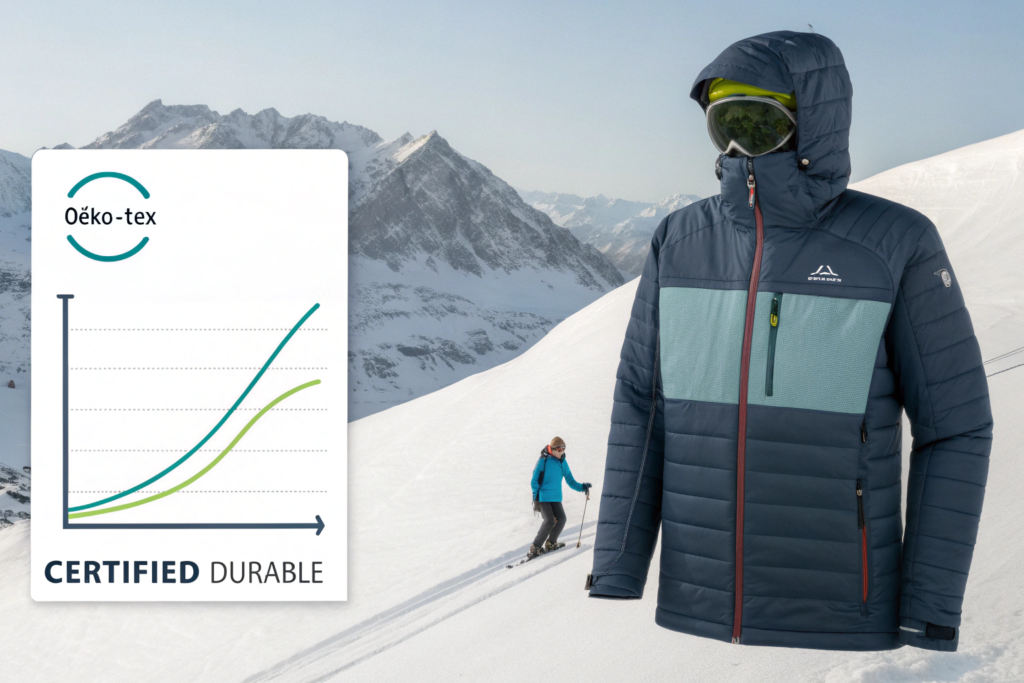
Can This Be Quantified for a Business Case?
Absolutely. Let’s model it for a brand:
- Scenario A (Non-Certified): Garment retail price: $250. Expected lifespan before noticeable wear: 2 seasons. Cost per season: $125.
- Scenario B (OEKO-TEX Certified): Garment retail price: $280 (+12%). Expected lifespan: 4 seasons. Cost per season: $70.
Despite the higher upfront cost, the certified garment offers a 44% lower cost per season of use. For the brand, this also means higher customer satisfaction, more repeat purchases, and positive word-of-mouth marketing centered on quality.
Conclusion
OEKO-TEX certification is a powerful, multi-faceted tool for creating longer-lasting ski clothing. It goes beyond skin safety to enforce standards for colorfastness and abrasion resistance, promotes the use of higher-quality and more stable materials, and fosters a manufacturing environment dedicated to consistency and traceability. The result is apparel that resists the common failures of pilling, fading, and degradation, delivering greater value and performance over many more days on the mountain.
For brands, this translates to fewer product returns, stronger customer loyalty, and a compelling sustainability narrative. For manufacturers like us at Shanghai Fumao, it represents the standard by which we build truly durable performance wear.
If you are looking to develop ski apparel that is built to last, backed by verifiable standards and superior manufacturing, partnering with an experienced certified producer is essential. Let us help you engineer durability into your next collection. Contact our Business Director Elaine at Shanghai Fumao to discuss how OEKO-TEX certification can be the foundation of your product’s longevity: elaine@fumaoclothing.com.