You know OEKO-TEX certification is non-negotiable for your next apparel line. The safety, compliance, and trust it delivers are critical. But when you log into a massive B2B platform like Alibaba, Global Sources, or Made-in-China, you're faced with thousands of supplier listings. Many claim to be "OEKO-TEX certified" in their titles or descriptions. How can you efficiently and effectively separate legitimate, reliable partners from those making empty claims? The process requires a strategic, verification-focused approach, not just keyword searching.
To find genuine OEKO-TEX certified suppliers on B2B platforms, you must move beyond platform search filters and employ a proactive verification protocol that includes checking official OEKO-TEX databases, requesting specific certificate details, and using targeted communication to audit their supply chain control and expertise. The goal is not just to find a supplier with a certificate, but to find a manufacturing partner who understands and integrates the standard into their operations.
What Are the First-Step Verification Tactics on a Platform Listing?
Your initial screening happens on the platform itself. A supplier's profile is their digital storefront, and a serious certified manufacturer will present their credentials clearly. Look for more than just the words "OEKO-TEX Certified" in a product title.
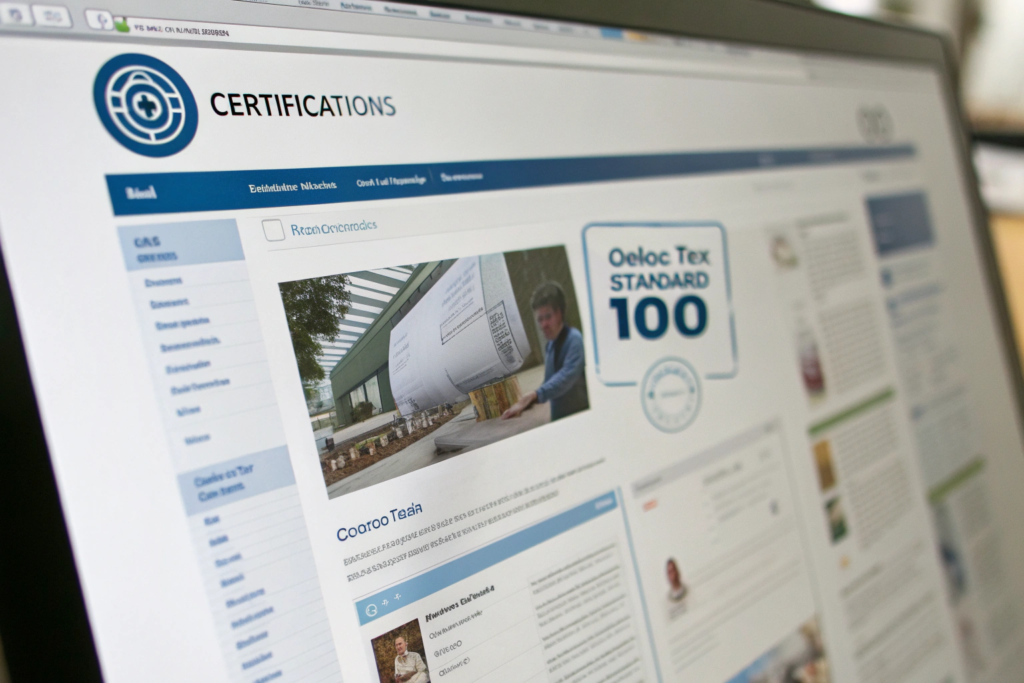
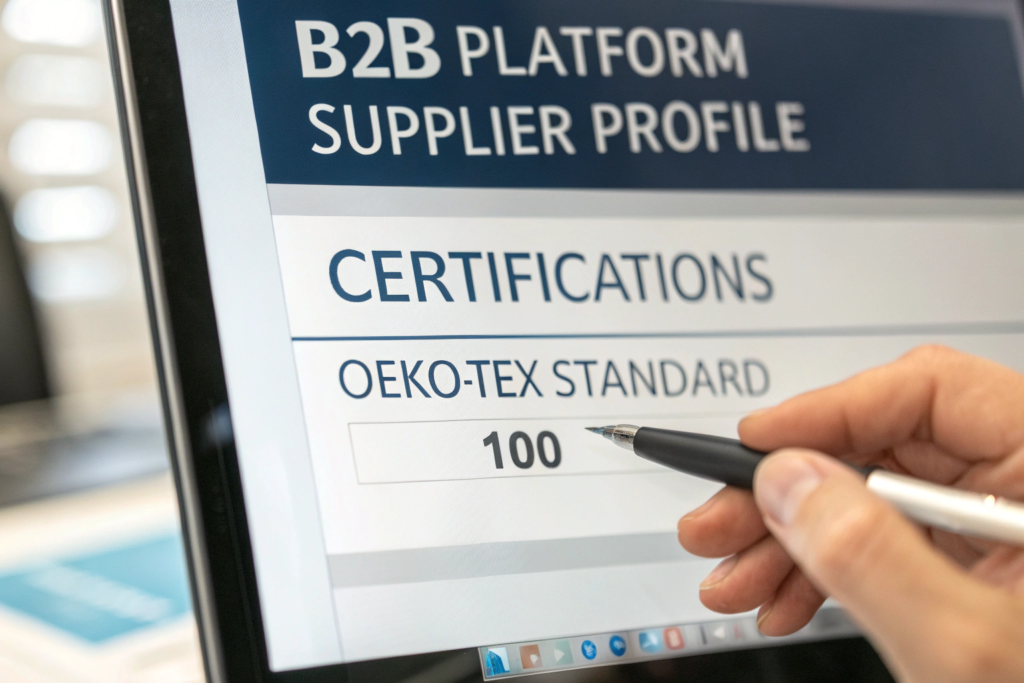
First, examine the "Certifications" section of the supplier's company profile page. Reputable platforms allow suppliers to upload images of their certificates. Don't just glance at a thumbnail. Click to enlarge the image. You are looking for the official OEKO-TEX Standard 100 certificate. Key details to check include the certificate number, the certified company name (it must match the supplier's legal name), the issue date, and the scope (what products or materials are covered). A certificate that expired two years ago is a major red flag. Next, look for a dedicated "Product Gallery" or "Certifications" gallery. Suppliers who are seriously invested in compliance often have clear, high-resolution photos of their certificates and may even showcase testing reports.
Why Is a Generic "Certificate" Image Not Enough?
Many suppliers upload a generic, stock-looking "CE" or "Test Report" image, or a blurred photo that obscures details. This is a common tactic to pass platform filters without providing real proof. In our own verification for Shanghai Fumao, we ensure our profile features our current, clear OEKO-TEX certificate with visible details. A supplier unwilling to show a clear certificate is likely not legitimate. Treat any obscured or generic certification image with immediate skepticism and move to the next listing.
How Can You Use Platform Filters Intelligently?
Most B2B platforms have a "Certification" filter, but it is often self-reported and not verified by the platform. Use it as a broad starting point to narrow the field, but never as a final confirmation. After applying the filter, your job switches from "searching" to "auditing." The filter gives you a candidate pool; your verification process selects the true partners from it.
How to Conduct Off-Platform Verification Using OEKO-TEX Databases?
This is the most critical step that most buyers skip. Any legitimate supplier with an OEKO-TEX Standard 100 certificate is listed in the official, publicly accessible OEKO-TEX certification database. This is your single source of truth.
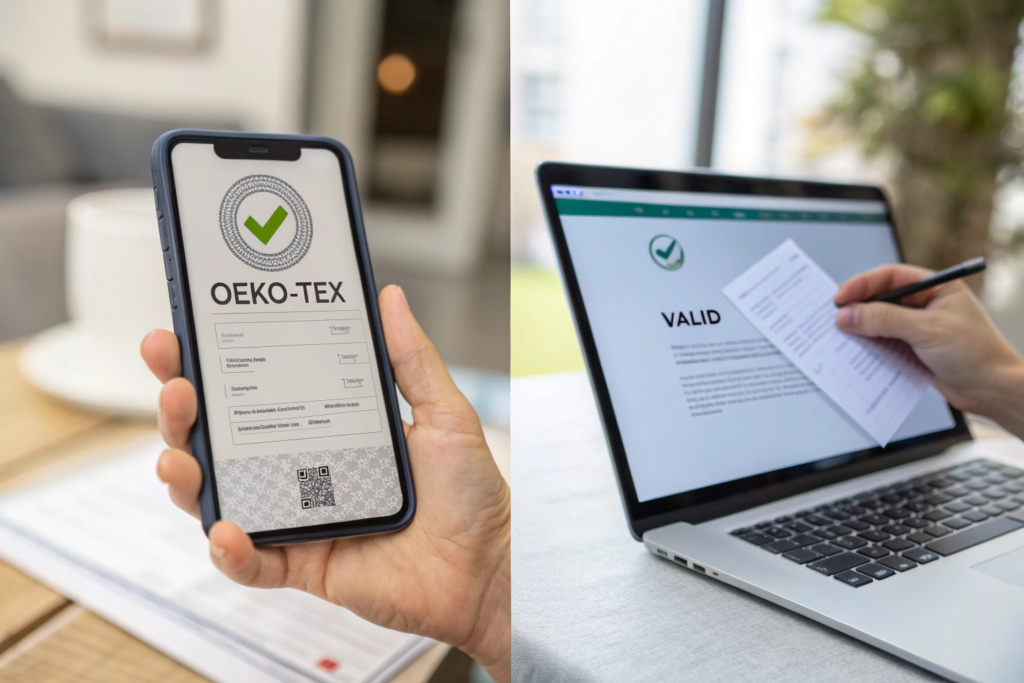
Once you have a certificate number and company name from a supplier's profile, go directly to the OEKO-TEX website. Use their "Check Your Label" or "Certified Companies" database. Enter the certificate number. The database will confirm if the certificate is valid, the name of the certified company, and what is covered (e.g., "Fabrics for garment production"). The information must match exactly. We had an experience last year where a potential client sent us a certificate from a "trading company" that claimed to be a factory. Our database check showed the certificate was issued to a completely different entity—a fabric mill they were brokering for. This revealed they were not a manufacturer and had no direct control over the certified material's application. This off-platform check takes two minutes but prevents months of future problems.
What Specific Mismatches Should Trigger a Red Flag?
- Company Name Mismatch: The database lists "Shanghai ABC Textile Co., Ltd." but the platform seller is "ABC Garment Export." They may be related, but you must investigate the relationship.
- Scope Mismatch: The certificate covers "Polyester Fabrics," but you need to produce finished knitwear. The certificate does not apply to the final garment manufacturing process.
- Expired or Revoked Status: The database shows the certificate is no longer valid. This is an instant disqualifier.
Why Should You Ask for a "Test Report" in Addition to the Certificate?
The certificate is a license. The test report is the underlying proof. Politely ask the shortlisted supplier: "Can you share the OEKO-TEX test report for the specific material you propose for my product?" A confident, certified supplier like us at Shanghai Fumao can provide this. It shows the actual test data and parameters. A supplier who hesitates or says it's "not available" may be using a certificate from their fabric mill and may not have direct access or understanding of the testing, indicating weaker supply chain control.
What Questions to Ask Suppliers to Gauge Their Real Expertise?
Finding a certificate is one thing. Finding a partner who knows how to use it is another. Your communication with the supplier should shift from "if" they are certified to "how" they implement it. Their answers will separate order-takers from true partners.
Initiate a conversation and ask targeted questions:
- "For my ski jacket order, which components will be OEKO-TEX certified? Can you provide certificate numbers for the shell fabric, membrane, insulation, and zippers separately?" This tests their understanding of component-level certification and supply chain management.
- "How do you verify that the certified fabric batch you receive from the mill matches the batch used in my production?" A good answer involves lot tracking, warehouse management, and verifying mill test reports against delivery. A vague answer is a risk.
- "What happens if a pre-shipment lab test we commission fails an OEKO-TEX parameter? What is your liability and process?" This question addresses accountability. A professional supplier will have a clear protocol, often involving replacing materials at their cost.
How to Assess Their Integration into Quality Control?
Ask them to describe their incoming quality control (IQC) process for certified materials. Do they simply check the mill's certificate, or do they perform their own spot tests? At our factory, we cross-reference every fabric roll's certification with the mill's report and maintain a physical sample library for reference. This level of detail in their answer indicates a mature quality system, not just a paperwork exercise. It shows they treat the certification as an active quality management tool.
Why Is Visiting Their "Certified Product" Listings on the Platform Important?
Check the specific products they have listed as "OEKO-TEX Certified." Are they basic fabrics, or do they include finished garments similar to what you need (e.g., "OEKO-TEX Certified Ski Jacket")? A supplier listing certified finished goods demonstrates they have navigated the certification process for complex assemblies, which involves coordinating multiple certified components—a much higher level of expertise than a fabric trader.

How to Structure Your Sourcing Process for Maximum Safety?
Efficient sourcing on B2B platforms is a funnel. You start wide and narrow down with successive layers of verification. Here is a practical workflow:
Phase 1: Platform Sourcing & Initial Contact
- Use "OEKO-TEX" filter + your product keyword (e.g., "ski jacket").
- Shortlist 10-15 suppliers with seemingly complete profiles.
- Send an initial inquiry stating your product needs and explicitly requiring OEKO-TEX certification. Ask them to confirm and provide their certificate number upfront.
Phase 2: Documentary Verification
- For respondents, request clear images of their OEKO-TEX Standard 100 certificate and a test report.
- Immediately verify all details in the official OEKO-TEX online database.
- Eliminate any supplier with mismatches, expired certs, or who cannot provide documents.
Phase 3: Technical & Capability Audit
- With the remaining 3-5 suppliers, initiate a detailed conversation/video call.
- Ask the probing questions about component certification and batch control.
- Request a sample made with the proposed certified materials. The cost of a sample is a small price for due diligence.
- Assess their communication, professionalism, and understanding of your needs.
Phase 4: Final Verification & Order
- Before final contract signing, consider commissioning a third-party lab test on the supplier's sample or initial production batch. This is your final safety check.
- Ensure the purchase contract specifies OEKO-TEX certification as a condition of final payment and includes relevant liability clauses.
Following this structured process transforms you from a passive browser into an active, diligent buyer. It leverages the platform's reach while instituting your own rigorous checks to mitigate the platform's inherent lack of verification.
Conclusion
Finding a genuinely OEKO-TEX certified supplier on a B2B platform is less about searching and more about systematic verification. The platform is merely the introduction service. The real work happens in the official databases, the detailed questions you ask, and the samples you test. By adopting a detective's mindset—trusting only verified evidence—you protect your brand from the significant risks of fraudulent or superficial certification claims.
This process demands time and diligence, but it is the essential foundation for a safe, compliant, and successful product line. Alternatively, you can partner with a manufacturer like Shanghai Fumao, where OEKO-TEX certification is integrated into our core process and transparently verifiable, allowing you to shortcut the verification maze and focus on design and sales. Ready to streamline your search for certified manufacturing? Contact our Business Director, Elaine, at elaine@fumaoclothing.com to discuss your project with a verified partner from the start.