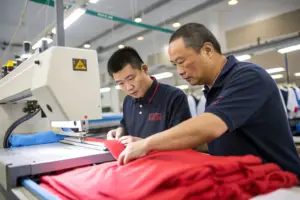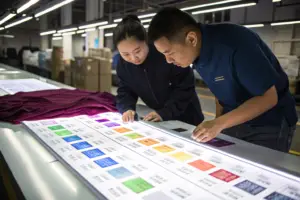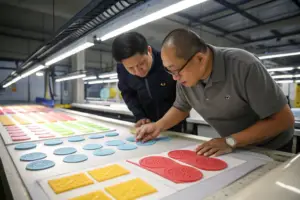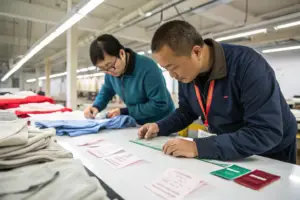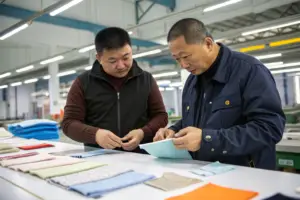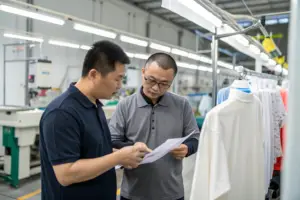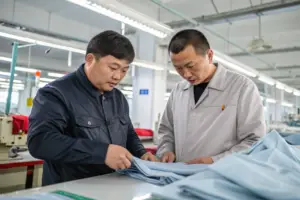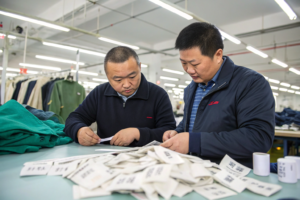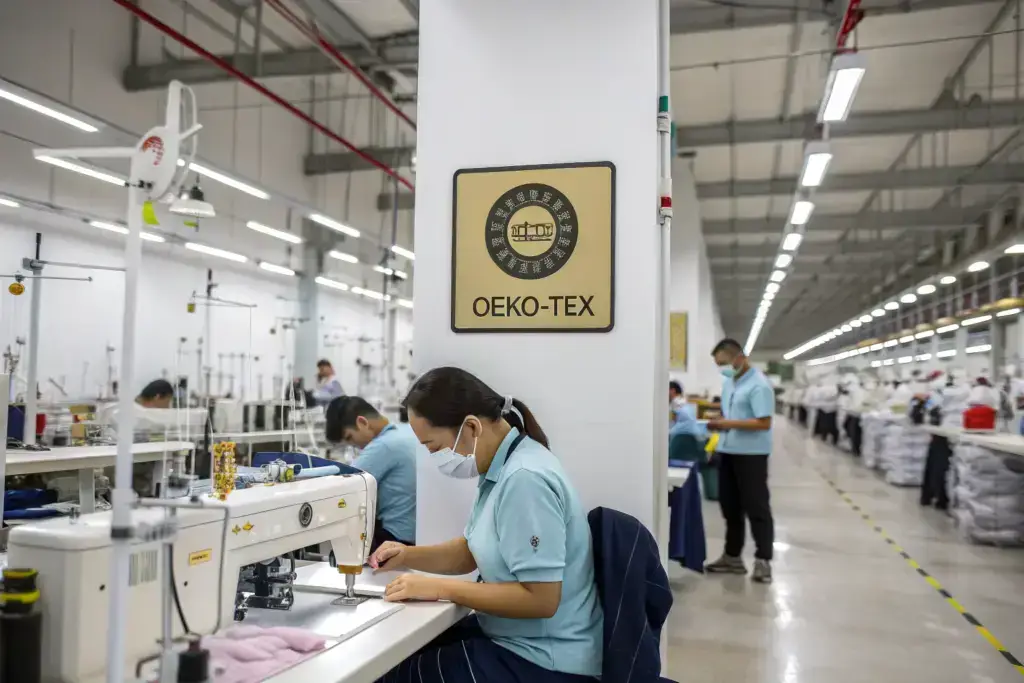
As a factory owner watching the industry shift, I can tell you this trend isn't about following a fad. Factories, especially competitive ones in Asia, are making strategic, calculated investments in OEKO-TEX certification for golf wear. It’s a direct response to changing market demands and a move to secure long-term survival and profitability. If you're a brand wondering why your suppliers are suddenly pushing certifications, here's the view from our side of the production line.
Factories are investing in OEKO-TEX primarily because it has shifted from a "nice-to-have" to a fundamental "cost of doing business" with serious Western brands, particularly in the premium golf wear segment. It is a strategic investment that reduces commercial friction, opens doors to higher-value clients, and future-proofs their operations against tightening global regulations. For a factory, certification is no longer an expense; it's a ticket to the main stage.
Five years ago, perhaps 1 in 10 inquiries mentioned OEKO-TEX. Today, for golf apparel projects targeting North America and Europe, it's over half. Last quarter, we decided to get our finishing unit STeP certified. A client we'd been courting for two years, a major golf brand, finally gave us their development order the week after we received the certificate. Their sourcing director said plainly, "This shows you're serious about systems, not just output."
Is OEKO-TEX Becoming a De Facto Market Access Requirement?
For export-focused factories, market access is everything. The question is no longer just about quality and price, but about proving responsible and safe production at an institutional level. Certification is becoming the baseline language for that proof.
Yes, for mid-to-high-end golf wear exports to markets like the EU, USA, and Canada, OEKO-TEX STANDARD 100 is increasingly a de facto minimum requirement for brands to even consider a factory. It acts as a pre-qualification filter, separating contract manufacturers from strategic supply chain partners. Without it, factories find themselves locked out of the most lucrative and stable business relationships.
We see this in our own sales pipeline. Inquiries that come via platforms like Alibaba often focus on price first. But the serious, high-volume inquiries that come from direct brand websites or referrals almost always ask about certifications upfront. They need the paperwork to satisfy their own compliance departments. For a factory, investing in certification is essentially investing in a more qualified and valuable sales lead stream. It's about accessing buyers who prioritize sustainable sourcing and have longer-term horizons.

How does certification impact a factory's negotiation power?
With certification, a factory moves the conversation away from competing solely on the thinnest margin. They can negotiate on value: guaranteed compliance, reduced risk for the brand, and the brand's own time savings. This allows for healthier pricing that supports better wages, reinvestment in equipment, and quality control. A certified factory isn't just a vendor; it's a risk-mitigation partner for the brand. This is a fundamental shift in the buyer-supplier relationship.
What is the risk of NOT investing for a factory?
The risk is obsolescence. Factories that don't certify are increasingly relegated to the volatile, low-margin, spot-order market. They are more vulnerable to order cancellations if a brand's compliance policy changes suddenly. They miss out on multi-year framework agreements. In essence, they are betting against the clear trend of supply chain transparency and consumer demand for safer products. It's a risky long-term strategy.
Does Certification Improve Factory Efficiency and Profitability?
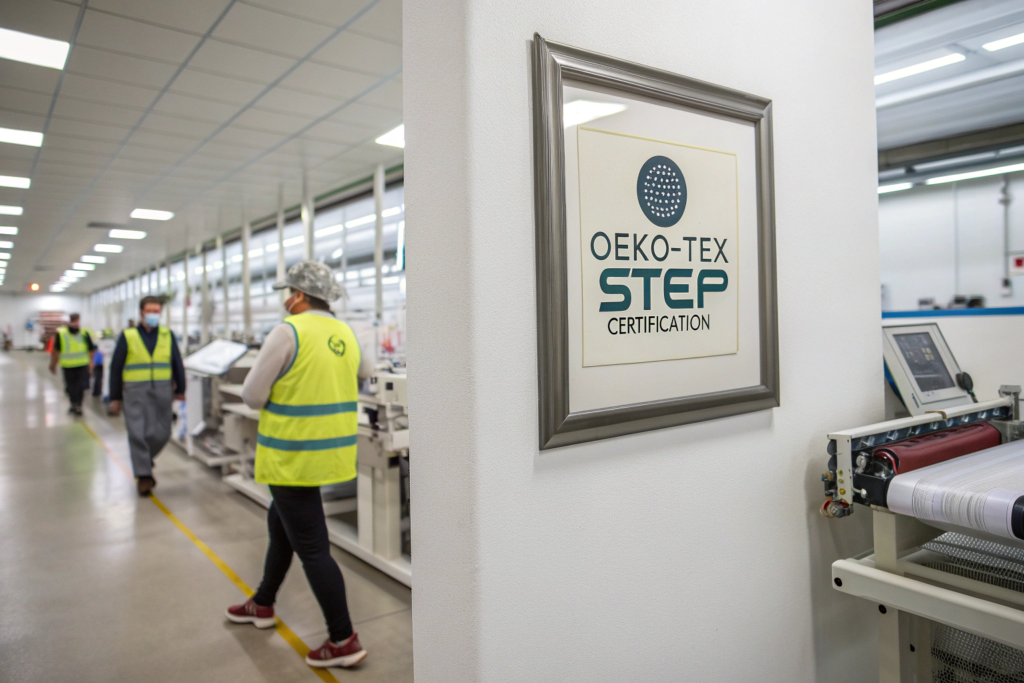
This is a crucial internal driver that brands often don't see. The investment in OEKO-TEX, particularly the STeP standard, forces a factory to systemize its operations, which directly leads to internal cost savings and quality improvements.
Absolutely. While there is an upfront cost, OEKO-TEX STeP certification drives profitability by reducing waste, optimizing chemical and energy use, minimizing rework, and attracting more efficient, longer-term clients. It transforms a factory from a chaotic workshop into a managed system. The savings from reduced material waste and energy consumption alone can pay for the certification audit over time.
After achieving STeP certification, our factory had to implement precise chemical inventory management. We discovered we were over-ordering and improperly storing certain dyes, leading to spoilage and inconsistent batches. By fixing this, we reduced our chemical costs by 8% annually. Furthermore, the rigorous production process controls required reduced our defect rate in golf polo finishing by nearly 15%, because problems were caught and solved at the source, not at final inspection.
How does chemical management under STeP reduce costs?
STeP requires meticulous tracking of all chemical inputs, proper storage, and training for safe handling. This eliminates:
- Over-purchasing: Accurate usage data prevents buying excess chemicals that expire.
- Waste: Proper dosing and mixing procedures minimize spillage and batch failure.
- Safety Incidents: Reducing accidents lowers insurance costs and production downtime.
This systematic approach is a core part of lean manufacturing principles, applied specifically to chemical and environmental management.
Does certification lead to better workforce stability?
Yes. STeP certification includes modules on worker health, safety, and social responsibility. Factories that invest in better working conditions, training, and fair wages experience lower turnover. For skill-intensive work like constructing technical golf apparel, retaining experienced operators is critical for maintaining quality and efficiency. Lower turnover means less time and money spent on constant retraining, leading to a more stable, productive, and profitable operation. A partner like Shanghai Fumao understands that a respected workforce is the foundation of quality.
How Does Certification Future-Proof a Factory Against Regulations?
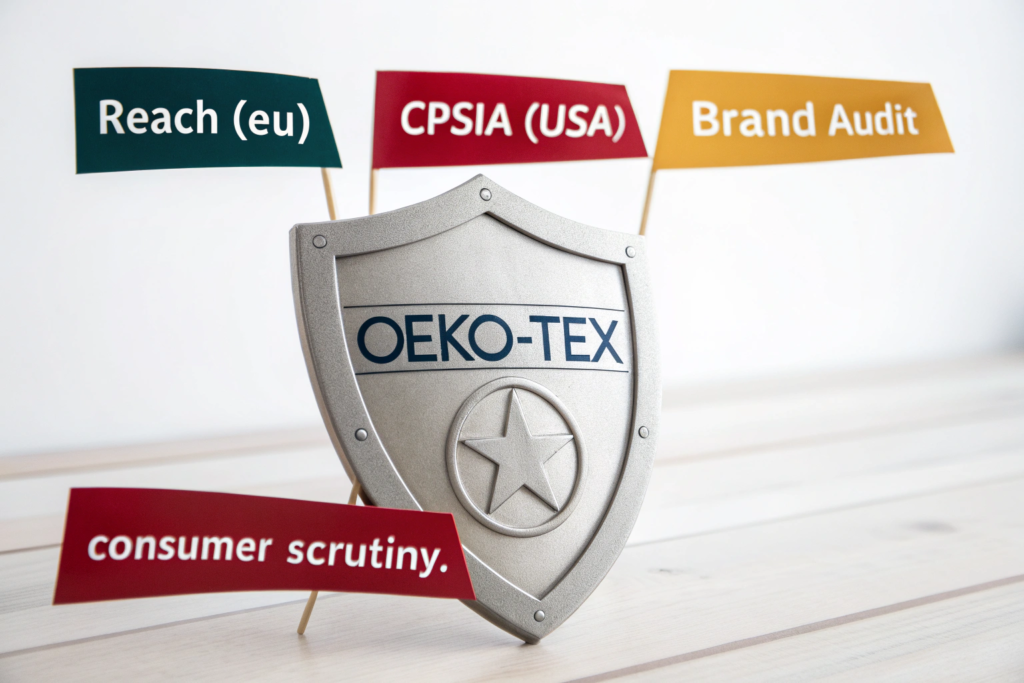
Global chemical regulations are a moving target. For factories exporting worldwide, staying ahead of REACH in the EU, CPSIA in the USA, and various other national standards is a monumental and costly task. OEKO-TEX provides a strategic shield.
Investing in OEKO-TEX future-proofs a factory by adopting one of the world's most stringent and frequently updated standards. It acts as a compliance umbrella, ensuring that products meeting OEKO-TEX requirements will also meet or exceed the vast majority of national regulatory limits, reducing the complexity and cost of managing multiple compliance regimes. This is a huge operational advantage.
We have a client who sells the same golf shirt model in the US, EU, and Japan. Instead of asking us to navigate three different sets of chemical compliance paperwork, they simply require OEKO-TEX STANDARD 100. This simplifies our production planning, documentation, and testing protocols immensely. When California's Proposition 65 updated its list, our OEKO-TEX compliant fabrics were already safe, requiring no urgent reformulation or costly last-minute testing. This reliability is what brands pay for.
Can certification simplify a factory's auditing process?
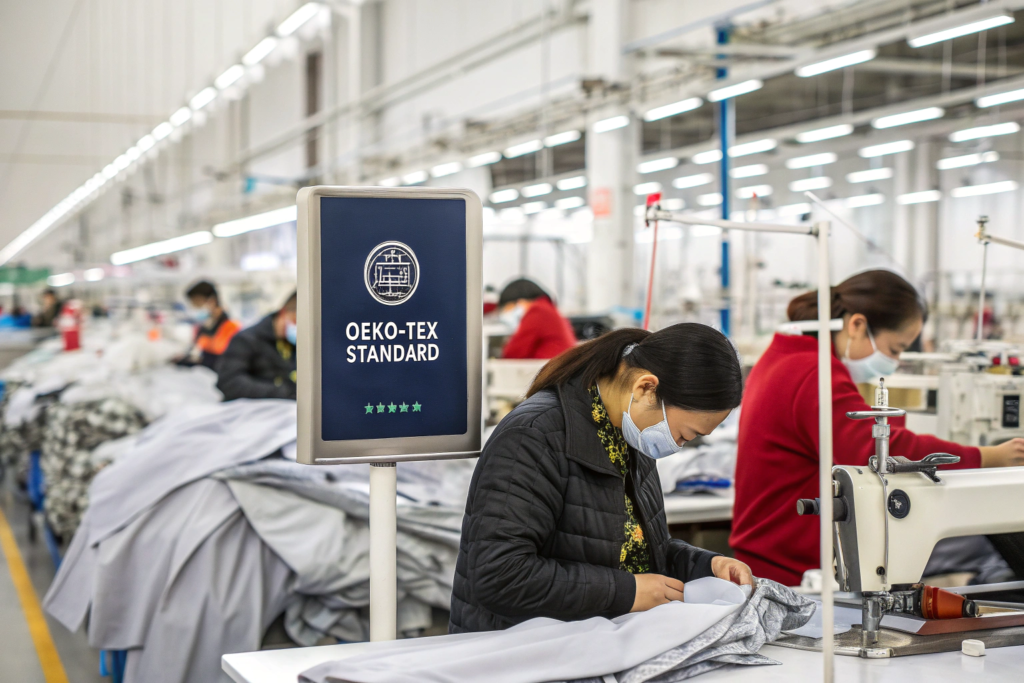
Yes. Major brands conduct their own social and environmental audits (like SMETA, BSCI). A factory with OEKO-TEX STeP certification already has a robust management system in place covering environment, chemical management, and social criteria. This makes passing brand-specific audits significantly easier and less disruptive, as much of the required documentation and process proof is already organized. It turns a stressful, reactive audit into a demonstration of an existing system.
How does it protect against "greenwashing" accusations?
As brands face more scrutiny, they push that due diligence requirement down the supply chain. A factory that can provide verifiable, third-party OEKO-TEX certification protects its brand clients from accidental greenwashing. This makes the factory a lower-risk partner. In an era of increased corporate sustainability reporting, factories that provide audited data become invaluable.
What Competitive Advantage Does Certification Create Among Factories?
In a crowded manufacturing landscape, differentiation is survival. When ten factories can all sew a golf polo to a similar standard, certification becomes a key differentiator that signals maturity, reliability, and strategic alignment with Western business values.
OEKO-TEX certification provides a decisive competitive advantage by elevating a factory's brand from a commodity producer to a solutions provider. It allows them to compete on value, reliability, and partnership rather than just on price, attracting better clients and achieving higher capacity utilization. It's a signal of long-term commitment to the industry.
We compete with factories in Vietnam and India. When a US brand was evaluating us against another short-listed factory, both with similar quoted prices, the deciding factor was our integrated OEKO-TEX and STeP certification. The brand's VP of Supply Chain stated, "Your certification shows you have the systems to scale with us consistently and manage the complexities of our sustainability roadmap." We won a three-year master agreement. The other factory, equally capable in sewing, was seen as a higher operational risk.
How does this affect a factory's marketing and sales outreach?
Certification provides powerful, credible content. Factories can lead their sales conversations with it, use the logos on their website and marketing materials, and get listed in OEKO-TEX buyer directories. It transforms their digital marketing from talking about "good quality" to demonstrating "independently verified responsible production." This attracts a different caliber of client.
Does it help in attracting and retaining skilled talent?
Increasingly, yes. A new generation of managers and technicians wants to work for modern, responsible employers. A factory with international certifications signals professional management, care for employee welfare, and a forward-thinking approach. This helps in recruiting better quality line supervisors, quality managers, and merchandisers who are essential for producing complex technical apparel like high-end golf wear.
Conclusion
The surge in factory investment in OEKO-TEX for golf wear exports is a rational response to a transformed global marketplace. It is driven by the hard realities of market access, the internal efficiencies it unlocks, the need for regulatory future-proofing, and the intense competition for high-value brand partnerships. For factories, it is a strategic pivot from being a low-cost operator to becoming a credible, reliable, and integrated extension of their clients' brands.
For you, the brand owner, this trend is beneficial. It means you have a growing pool of capable, systemized manufacturing partners who can truly share the burden of compliance and risk management. Your job is to identify which of these certified partners also aligns with your quality, communication, and values.
If you are seeking a factory that has made this strategic investment not as a marketing checkbox, but as the core of its operational philosophy, we invite you to evaluate Shanghai Fumao. Our commitment to OEKO-TEX standards is about building a reliable, efficient, and future-ready foundation to support your brand's growth in the competitive golf apparel market. Let's discuss how a certified partnership can work for you. Contact Business Director Elaine at elaine@fumaoclothing.com.