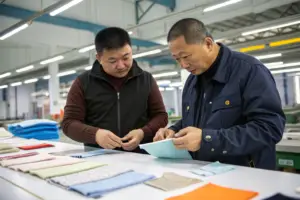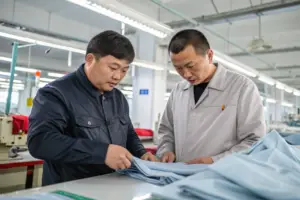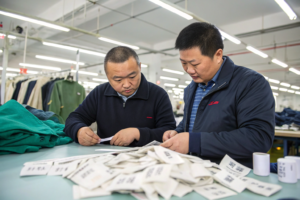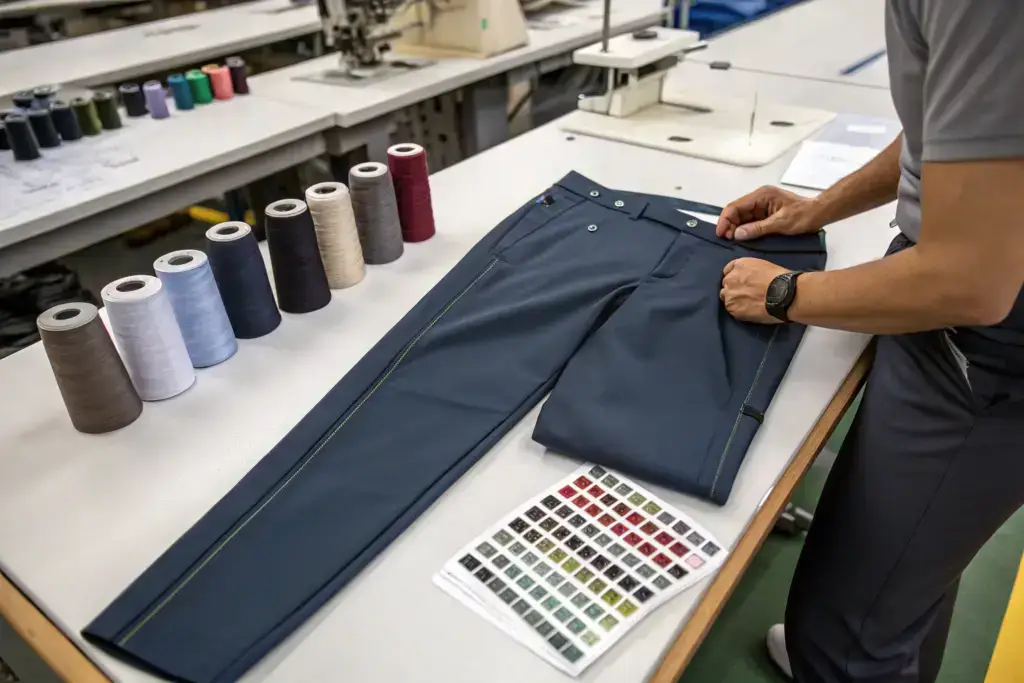
This is a practical question we get from brands designing high-performance golf wear. You want pants that offer freedom of movement with stretch, but you also need the assurance they are safe and certified. Is it possible to have both, or do the chemicals needed for elasticity compromise certification? From our production floor, I can tell you the answer is clear, but the path requires a specific approach.
Yes, stretch fabrics used in golf pants can absolutely achieve OEKO-TEX STANDARD 100 certification. The certification does not ban stretch materials or technologies like spandex (elastane); instead, it rigorously tests the specific chemicals and dyes used in their production and finishing to ensure they are free from harmful levels of regulated substances. The challenge isn't the stretch fiber itself, but managing the entire chemical input process around it.
We produce thousands of certified stretch golf pants annually. The key is starting with the right materials and a controlled manufacturing process. Last year, a client switched to us after their previous supplier failed certification due to high levels of organotin compounds found in the antibacterial finish applied to their stretch fabric. We resourced a compliant fabric and used an approved finishing alternative, securing the certification and their product launch on schedule.
What Makes Stretch Fabric Certification Complex?
Stretch adds a layer of complexity to the certification process, but it's a complexity that can be expertly managed. The issue isn't the elastane yarn itself, but everything that touches it during the fabric creation and garment manufacturing stages.
The complexity arises from the additional chemical processing often involved in creating, dyeing, and finishing performance stretch fabrics. These processes—such as dyeing synthetic blends, applying durable press (DP) or water-repellent finishes, and using softening agents—introduce more chemical variables that must each fall under the strict OEKO-TEX limits. A supplier without a systematic chemical management program will struggle.
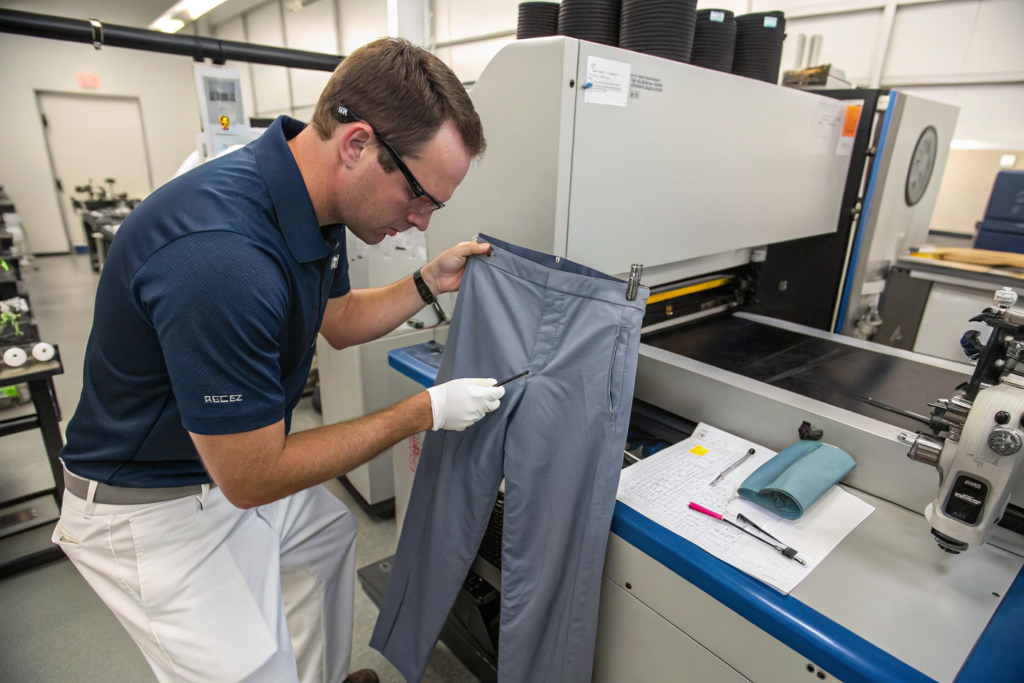
For example, achieving a four-way stretch in a golf pant often involves a fabric blend like polyester/spandex. The dyeing process for this blend must be carefully controlled to ensure full colorfastness without using restricted carriers or dispersants. In our facility, we maintain a restricted substances list (RSL) that is even stricter than the OEKO-TEX standard. We pre-test all incoming stretch fabrics and chemical auxiliaries in our lab before they enter production, which is why partners like Shanghai Fumao can guarantee compliance.
Why are blended fabrics a focal point for testing?
Polyester/Spandex or Nylon/Spandex blends are standard for golf pants. The certification requires testing of each component: the base yarn and the elastane. More importantly, it tests for substances that can migrate from one fiber to another during high-temperature processing or from chemical residues left on the elastane itself. This makes comprehensive chemical management in textiles non-negotiable for the factory.
How do functional finishes impact the certification process?
Stretch golf pants often feature functional finishes like moisture-wicking, odor control, or UV protection. Each finish is a chemical formulation. To be certified, these finishes must be applied using OEKO-TEX approved chemicals and at approved facilities. The final garment is then tested for any substance the finish could introduce. It's a chain of custody that must be transparent from chemical supplier to finished pant.
| Stage in Pant Production | Potential Compliance Risk with Stretch Fabric | Proactive Solution for Certification |
|---|---|---|
| Fabric Sourcing | Elastane yarn or base fabric dyed with non-compliant chemicals. | Source from OEKO-TEX certified fabric mills or perform rigorous inbound lab testing. |
| Garment Dyeing/Finishing | Use of restricted catalysts, softeners, or water repellents. | Use only pre-approved chemical auxiliaries from vetted suppliers with SDS. |
| Quality Control | Inconsistent application leading to uneven chemical residues. | Implement Statistical Process Control (SPC) in finishing departments. |
| Final Product | Migration of substances from accessories (like elastic waistbands). | Certify the complete final product (garment), not just the fabric. |
How to Source Pre-Certified Stretch Fabrics?
The most reliable way to ensure your golf pants are certifiable is to start with the right materials. Sourcing fabrics that already carry OEKO-TEX STANDARD 100 certification for their material class dramatically simplifies the process and reduces risk.
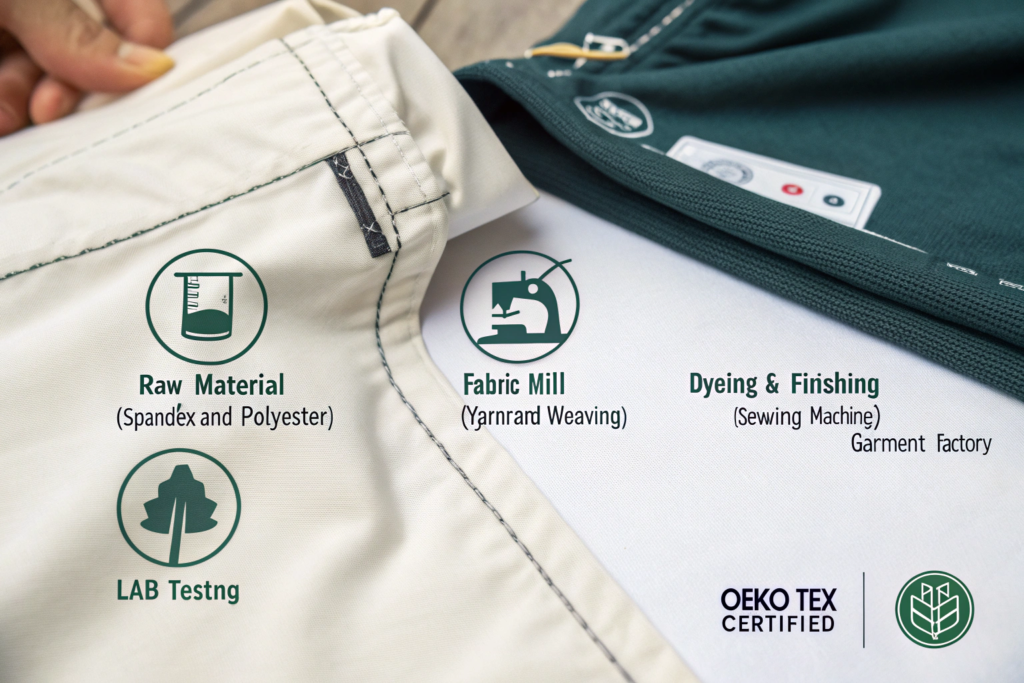
Sourcing pre-certified stretch fabrics involves partnering with reputable mills that provide valid OEKO-TEX certificates for their fabric products (Article Class I, II, or III). You must then ensure your garment manufacturing processes, including cutting, sewing, and any additional finishing, do not introduce any non-compliant substances that would invalidate the starting certification. The final garment must still be certified as a whole product.
We maintain a curated list of trusted, certified fabric mills. For a recent client's golf pant line, we provided three pre-certified stretch fabric options with different weights and stretch properties (2-way vs 4-way), complete with their mill certificates and our own verification test reports. This allowed the client to make a design choice without worrying about compliance bottlenecks. This integrated sourcing is a core part of our full-package manufacturing service.
What questions should you ask your fabric supplier?
Don't just ask for a certificate. Ask specific questions: "Is this certificate for the greige fabric or the finished, dyed fabric?" "What is the article class (I, II, III) on the certificate?" "Can you provide the test report for the specific substance limits?" Also, verify the certificate's validity in the OEKO-TEX database. A transparent supplier will have this information ready.
What if my desired fabric isn't pre-certified?
This is common with unique or custom-developed fabrics. In this case, your garment manufacturer must take the lead. The process involves:
- Pre-Testing: The manufacturer should send the fabric to an approved lab for a pre-screening test against the OEKO-TEX standard.
- Chemical Audit: Review all chemicals planned for dyeing and finishing.
- Pilot Production: Make a small batch of pants and submit them for official certification.
We executed this exact process for a brand that wanted a unique recycled polyester stretch fabric with a specific sheen. Our in-house lab pre-screened it, we adjusted the softening agent, and the official sample passed on the first try, saving the client months of uncertainty.
Does the Manufacturing Process Itself Need Certification?
This is a critical distinction many brands miss. Having certified fabric is a great start, but it does not automatically mean your finished golf pants are certified. The manufacturing process itself can introduce contaminants or use non-compliant accessories.
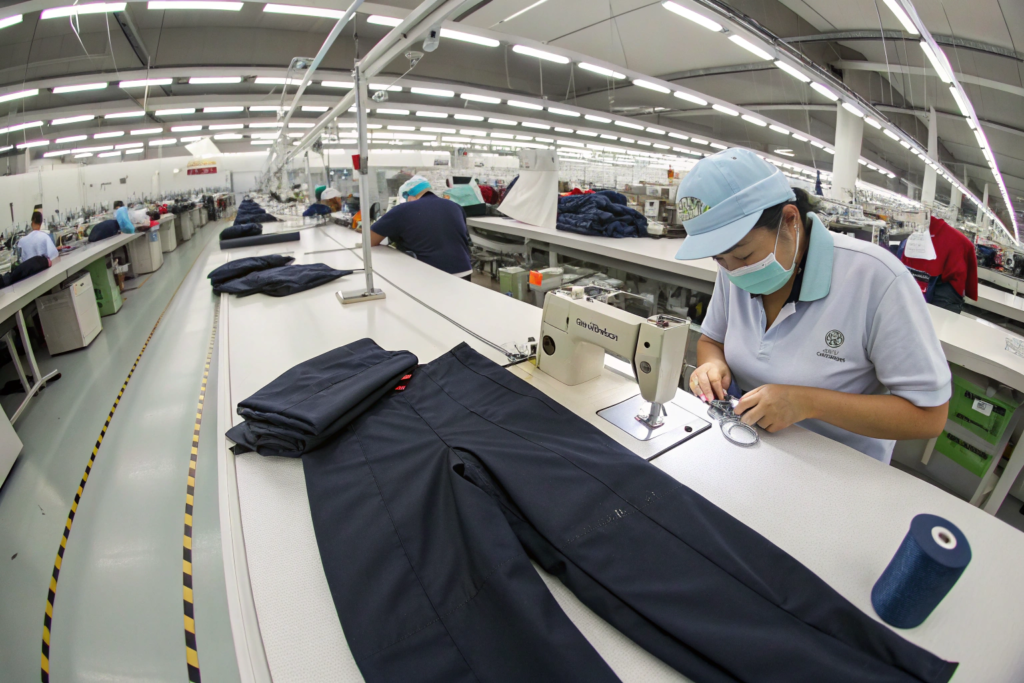
Yes, the final, sewn garment must hold its own OEKO-TEX STANDARD 100 certification. This is because sewing threads, interlinings, buttons, zippers, elastic waistbands, and even labels are all tested as part of the final product. Furthermore, processes like printing, embroidery, or additional washing in the factory must use compliant chemicals. Certification is awarded to the finished, ready-to-sell article.
We learned this the hard way years ago with a client. We used a certified fabric, but the sewing thread we sourced from a new supplier contained a non-compliant dye. The entire batch of pants failed the final product test. Since then, our system mandates that every single component, down to the care label, must come with a supplier declaration of conformity, and we batch-test accessories. This diligence is what makes a factory a true partner in compliance.

Why are accessories like threads and elastics so important?
These components are in direct and prolonged contact with the skin. A non-compliant elastic waistband or thread can leach substances, especially when the garment is worn during physical activity and exposed to sweat. OEKO-TEX tests for this. Your manufacturer must have a controlled supplier qualification process for all trim and accessory vendors.
How does factory environment (STeP) support product certification?
While OEKO-TEX STeP is a separate certification for sustainable production, a factory holding STeP certification is inherently better positioned to achieve STANDARD 100. Why? Because STeP requires rigorous chemical management, proper storage, handling, and training—all of which prevent cross-contamination and ensure the processes that could affect final product safety are under control. It's a systems-based approach that guarantees consistency.
What Are the Real Costs and Timelines for Certification?
Understanding the investment is crucial for planning your collection. The cost and time for certifying stretch golf pants are higher than for basic garments, but they are predictable and manageable with an experienced partner.
The real costs include laboratory testing fees (which vary by number of substances tested and articles), the OEKO-TEX license fee for using the label, and the internal costs of compliant materials and processes. The timeline typically spans 4-8 weeks from sample submission to certificate issuance, depending on fabric complexity and laboratory workload. Rushing or cutting corners is the most expensive path.
For a new style of golf pant, we typically budget for a pre-screening test (1-2 weeks, lower cost) followed by the official certification application if the pre-screen passes. Last quarter, we managed the certification for a line of 4 different golf pant styles for a single brand. By grouping similar fabrics and components under one application, we optimized the cost and secured all certificates within 6 weeks, ensuring their catalog photoshoot could proceed on time.
Can you certify a "family" of similar products to save cost?
Yes. OEKO-TEX allows for "article grouping." If your golf pants use the same base fabric, same accessories (zipper, button, thread type), and only differ in color or size, they can often be grouped under one certificate. This requires strategic planning with your manufacturer during the development phase to maximize efficiency. An expert partner like Shanghai Fumao will guide you on this.
What happens if a product fails the test?
Failure is costly and delays launches. If a failure occurs, the lab report will indicate which substance exceeded the limit. The manufacturer must then investigate the source (e.g., a specific dye, a finishing agent), find a compliant alternative, and resubmit samples—incurring new testing fees and time. This is why the pre-screening and in-house QC labs are so vital; they catch issues before the official, costly submission. Investing in a manufacturer with strong quality assurance protocols upfront is the best insurance.
Conclusion
Achieving OEKO-TEX certification for stretch golf pants is not only possible but is a standard practice for manufacturers committed to safety and quality. The path to certification hinges on three pillars: sourcing compliant materials, controlling every chemical input during manufacturing, and certifying the final assembled garment. While it introduces complexity and requires investment, the return in consumer trust, brand protection, and market access is undeniable.
For brand owners, the key is choosing a manufacturing partner who treats certification as an integral part of their production system, not as an afterthought. This partner should have the technical expertise, chemical management protocols, and transparent processes to guide you efficiently from design to certified delivery.
If you are developing a high-performance golf pant line and need a partner who can navigate the intricacies of stretch fabric certification with proven expertise, let's connect. At Shanghai Fumao, our integrated approach from fabric sourcing to final lab testing ensures your innovative designs meet the highest safety standards without compromise. Bring your vision to us, and we'll handle the complex chemistry of compliance. Contact our Business Director Elaine to start your certified collection: elaine@fumaoclothing.com.