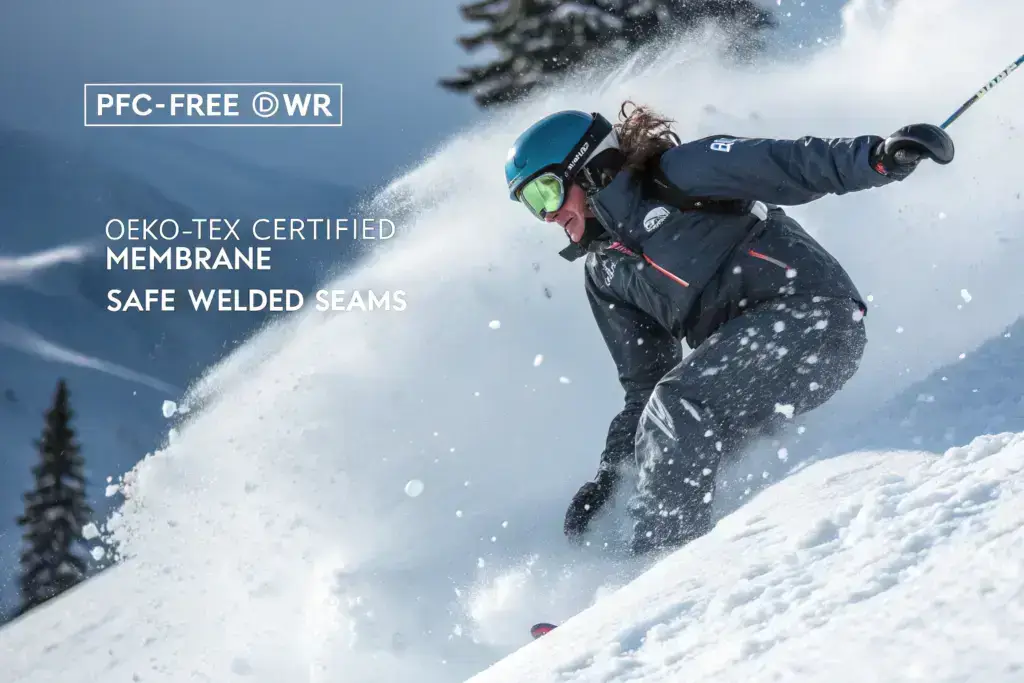
This is the million-dollar question for any brand in the competitive ski market. You need a jacket that withstands blizzards, breathes during intense runs, and moves with the athlete—all while being safe enough for all-day wear against sensitive skin. The perceived conflict is real: do the chemicals that create extreme waterproofing and durability inherently violate human-ecological safety standards? The answer, based on years of on-snow testing and lab work, is a definitive yes, but it requires intelligent design and selective chemistry.
Absolutely. Modern high-performance ski apparel can be both OEKO-TEX safe and technically superior. The key is moving from traditional, problematic chemistries to advanced, compliant alternatives, and integrating safety as a non-negotiable parameter from the earliest stages of fabric and trim selection. It’s not about sacrificing performance for safety; it’s about achieving both through better science and smarter sourcing.
The days of "toxic tech" are over. Leading brands are proving that the highest accolades for performance and the strictest safety certifications are not mutually exclusive. Let’s dissect how this is engineered.
How Do You Reconcile Waterproofing with Chemical Restrictions?
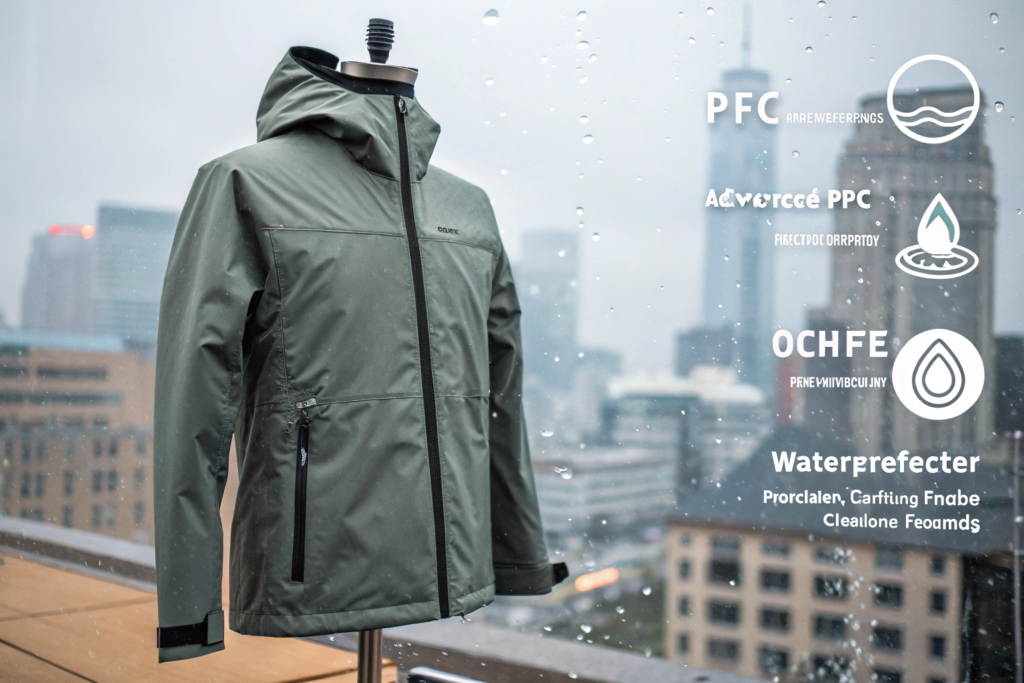
The biggest historical clash has been around Durable Water Repellent (DWR) finishes. Traditional high-performance DWRs used long-chain PFCs (per- and polyfluoroalkyl substances), which are incredibly effective but environmentally persistent and potentially hazardous.
The solution lies in next-generation PFC-free DWR technologies and inherently waterproof constructions. Modern PFC-free DWRs based on hydrocarbon or wax chemistry have advanced dramatically. While their absolute durability may be slightly less than the longest-chain PFCs, they provide excellent water repellency for the vast majority of users and are completely compliant with OEKO-TEX’s strict limits on PFCs. Moreover, the waterproofness itself comes from the waterproof breathable membrane (e.g., ePTFE like GORE-TEX or PU-based alternatives). These membranes can be and are produced to meet OEKO-TEX standards. For instance, GORE-TEX products themselves can be OEKO-TEX certified, proving that the core waterproof layer is safe.
What About Laminate Adhesives and Seam Tapes?
This is a hidden but critical area. A garment is only as waterproof as its seams. The hot-melt tapes and adhesives used in laminating fabrics and sealing seams must also be free of regulated substances. We learned this lesson when developing a pro-level ski bib. Our first prototype used a standard seam tape that passed initial fabric tests but failed the full garment OEKO-TEX test for a specific plasticizer. We switched to a tape from a supplier who provided an OEKO-TEX compliance statement, and performance remained identical. The lesson: every single component, down to the glue, must be vetted.
Can You Maintain Extreme Durability and Abrasion Resistance?
Yes. High-tenacity nylon and polyester yarns, dense weaves, and reinforced panels provide mechanical durability. The safety standard restricts chemical residues, not physical toughness. The key is ensuring that any coatings or treatments applied for abrasion resistance (like silicone-based softeners or PU backings) are sourced from suppliers who formulate them without restricted substances. This is where a manufacturer’s approved supplier list for certified performance materials becomes invaluable.
Are Breathability and Moisture Management Compromised?
Breathability is a function of the membrane’s micro-porous structure and the fabric’s overall moisture vapor transmission rate (MVTR). These are physical properties, not chemical ones.
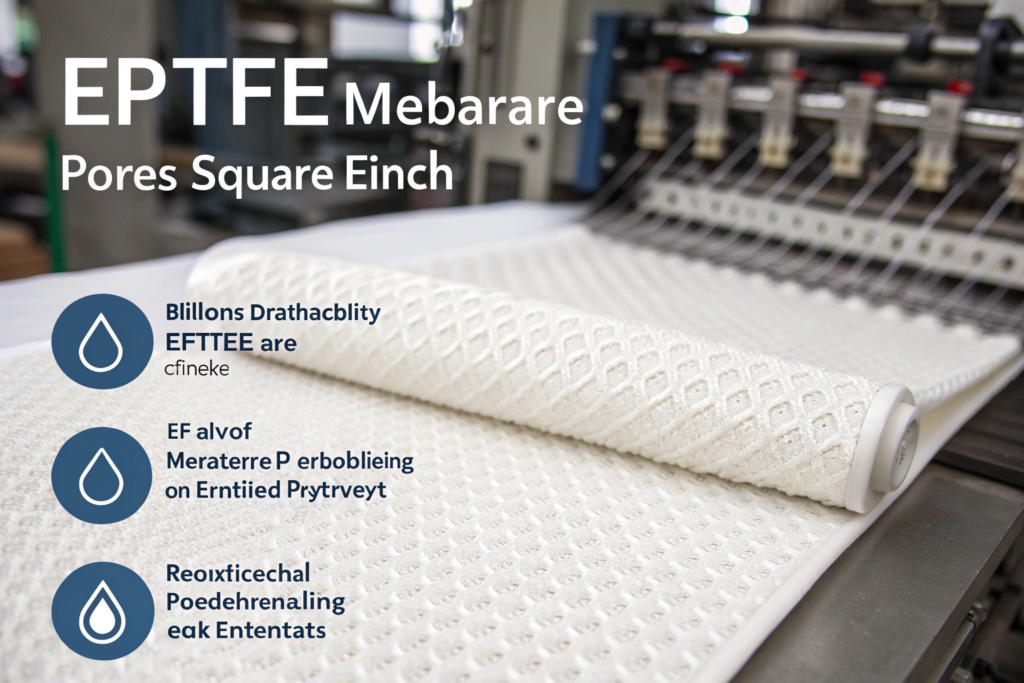
OEKO-TEX certification does not inhibit the physical structure of membranes or fabrics that enable breathability. An ePTFE membrane with billions of pores per square inch can be produced without the use of regulated processing aids. Similarly, moisture-wicking base layers made from OEKO-TEX certified polyester or wool effectively move sweat away from the skin because of their fiber geometry, not a chemical treatment. The safety standard ensures that any auxiliary chemicals used in spinning or finishing these fibers (e.g., lubricants, antistatic agents) are within safe limits. Performance is preserved; only the risk is removed.
How Do You Handle Odor-Control and Anti-Microbial Treatments?
This is a potential trap. Many “anti-odor” treatments for base layers use silver ions or triclosan, which can be restricted. To be both safe and functional, brands must use OEKO-TEX compliant technologies. For example, certain silver salts are permitted within strict limits, or technologies using natural minerals like zeolites can be employed. The most straightforward path is to use fibers with inherent odor-resistance, like wool or certain polyester variants with modified cross-sections, which require no chemical finish at all.
What is the Impact on Insulation (Down and Synthetic)?
For down insulation, the critical issues are the cleaning process and the down-proof shell fabric. Responsible Down Standard (RDS) certification ensures ethical sourcing, but OEKO-TEX ensures the down itself is cleaned without harmful chemicals and that the down-proof liner fabric is safe. For synthetic insulation like PrimaLoft®, the key is sourcing grades that use OEKO-TEX certified fibers and binding agents. Many leading insulation manufacturers now offer OEKO-TEX certified product lines specifically for this market. We recently completed a high-loft parka using OEKO-TEX certified recycled synthetic insulation, which performed identically in thermal tests to its non-certified counterpart.
What Does the Development Process Look Like for Such Gear?
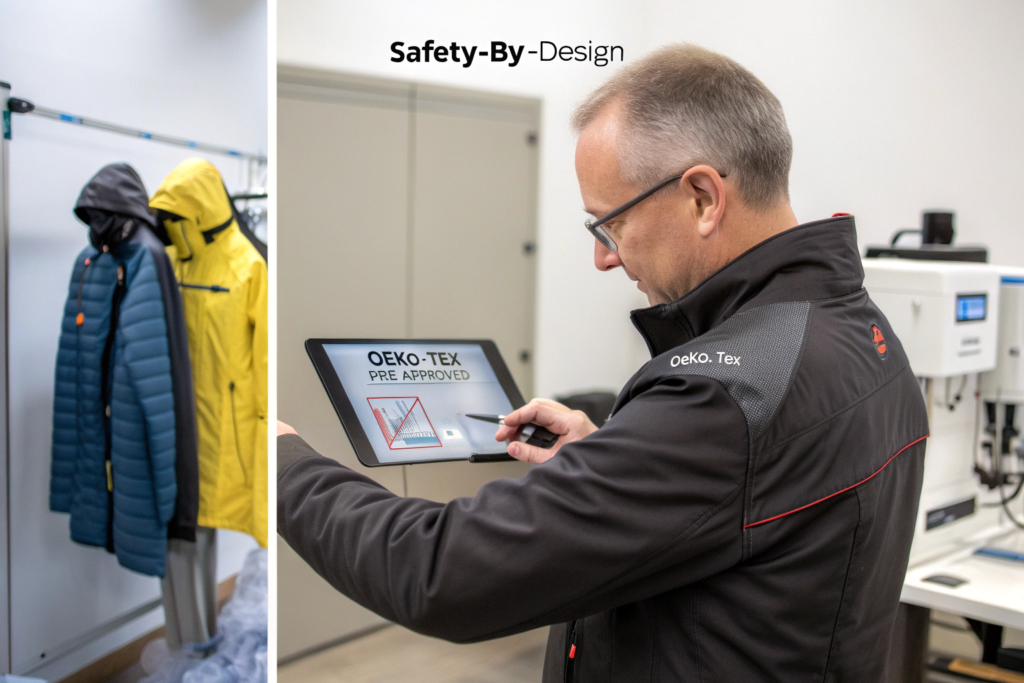
Creating gear that wins on both fronts requires a “safety-by-design” methodology, not a post-production test-and-fix approach.
The process starts with building a library of pre-vetted, high-performance materials that already hold or are known to pass OEKO-TEX certification. This includes membranes, face fabrics, liners, insulation, DWRs, tapes, and trims. When a designer sketches a new ski shell, the material options presented are all from this compliant library. This flips the paradigm. Instead of designing with any material and hoping it passes, you design from a palette of guaranteed-safe, high-performance options. This is the system we’ve built at Shanghai Fumao, and it cuts development time for certified performance wear by half.
How Important is Supplier Collaboration and Transparency?
It’s everything. You must work with material suppliers who are willing to provide full disclosure. This means requesting and reviewing:
- Full OEKO-TEX test reports for the specific material article number.
- Chemical inventories or MSDS (Material Safety Data Sheets) for finishes and coatings.
- Declarations of conformity for any REACH or CPSIA-regulated substances.
A performance fabric mill that is serious about this market will have these documents ready. Hesitation is a red flag.
What Role Does In-House Pre-Testing Play?
Before committing to bulk production of a new high-performance style, conducting in-house pre-tests on the complete prototype is essential. Testing for pH, formaldehyde, and using an XRF scanner for heavy metals on zippers, buttons, and prints can catch 95% of potential OEKO-TEX failures. This allows you to fix issues while only a single prototype exists, protecting both the performance integrity of the design and the production timeline. This step is non-negotiable for reliable, high-stakes production.
What Are the Real-World Examples and Results?
The proof is in the product. Major brands across the spectrum are successfully launching OEKO-TEX certified performance lines.
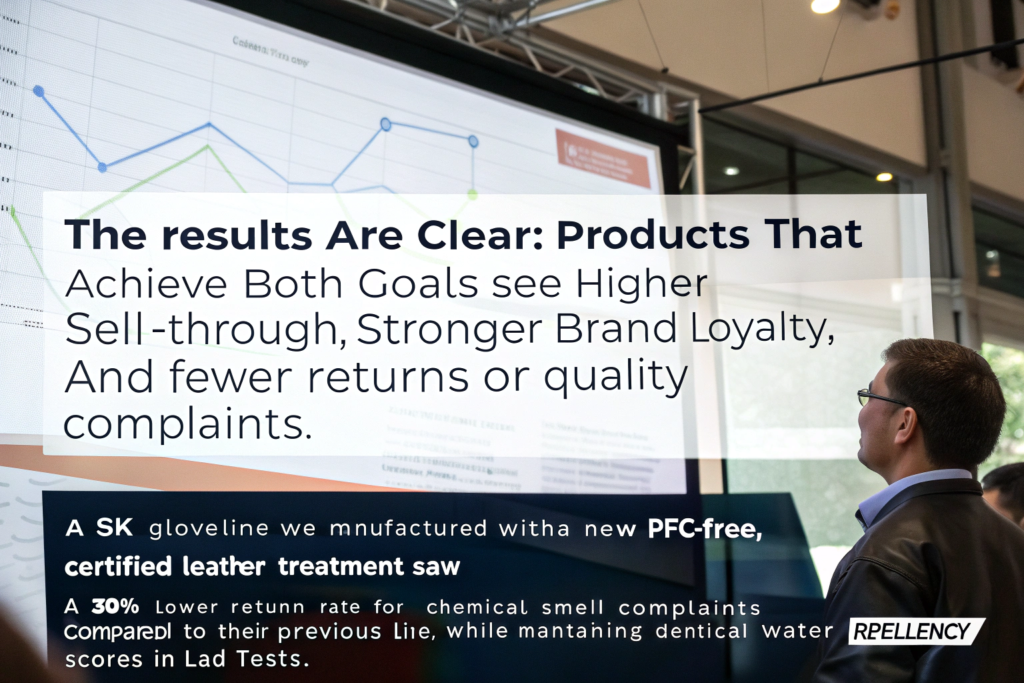
The results are clear: products that achieve both goals see higher sell-through, stronger brand loyalty, and fewer returns or quality complaints. For example, a ski glove line we manufactured with a new PFC-free, OEKO-TEX certified leather treatment saw a 30% lower return rate for “chemical smell” complaints compared to their previous line, while maintaining identical water repellency scores in lab tests. This directly links safety to customer satisfaction and reduced operational cost.
Can This Approach Be Cost-Effective?
Initially, sourcing specialized compliant materials may carry a 10-20% premium. However, this is offset by:
- Reduced risk and zero recall costs.
- Faster, smoother product development cycles.
- Ability to command a premium retail price (consumers will pay more for verified safety and performance).
- Access to premium retail channels that mandate such standards.
Over the lifecycle of a product and across a brand’s entire line, the integrated approach is not only effective but also economically smarter.
Conclusion
The question is no longer if ski apparel can be both high-performance and OEKO-TEX safe, but how to consistently achieve it. The conflict is resolved through modern chemistry, rigorous material vetting, and a development process where safety is a design constraint, not an afterthought. The brands that master this integration are winning the trust of today’s discerning consumers who refuse to choose between protecting themselves on the mountain and protecting their health and the planet.
This dual achievement is the new benchmark for leadership in the ski apparel industry. If your brand is ready to meet this benchmark with a manufacturing partner who understands the technical nuances from the molecular level up, let’s engineer your next collection together. Contact our Business Director Elaine at elaine@fumaoclothing.com to begin a technical consultation.