In the world of apparel sourcing, the initial price tag is often the loudest voice in the room. When comparing factories, a cheaper offer without OEKO-TEX can seem like an easy way to boost margins. Yet, seasoned buyers—the ones who build durable, reputable brands—consistently choose the certified, often slightly higher-priced option. This isn't dogma; it's a calculated business decision rooted in risk management, brand equity, and total cost of ownership.
Smart buyers prioritize OEKO-TEX because it provides a globally recognized, third-party verification system that efficiently mitigates catastrophic risks—legal, financial, and reputational—that far outweigh the small per-unit cost savings of uncertified production. It’s not an expense; it’s insurance and a market-access tool bundled into one. They understand that in global manufacturing, what you don't know can and will hurt you.
Let’s dissect the strategic calculus behind this choice, moving beyond surface-level cost to the core value drivers that define smart sourcing.
How Does OEKO-TEX Mitigate Unacceptable Business Risks?
The primary job of a smart buyer is to protect the company. Uncertified production introduces a portfolio of unquantified, unmanaged risks that OEKO-TEX systematically reduces.
OEKO-TEX transfers the complex, technical risk of chemical safety from your internal team (which likely lacks a toxicology lab) to an accredited, independent third party with global legal standing. Consider the liability: if a child gets a rash from your uncertified kids' ski bib, and you have no independent proof of safety, your brand is defenseless. A buyer we worked with at a growing outdoor brand shared a horror story: a competitor saved $1.50 per unit on uncertified fleece, only to face a six-figure recall when a European retailer's random test found elevated levels of phthalates. The savings were obliterated 100 times over. OEKO-TEX Standard 100 specifically tests for such substances, providing a due diligence shield.
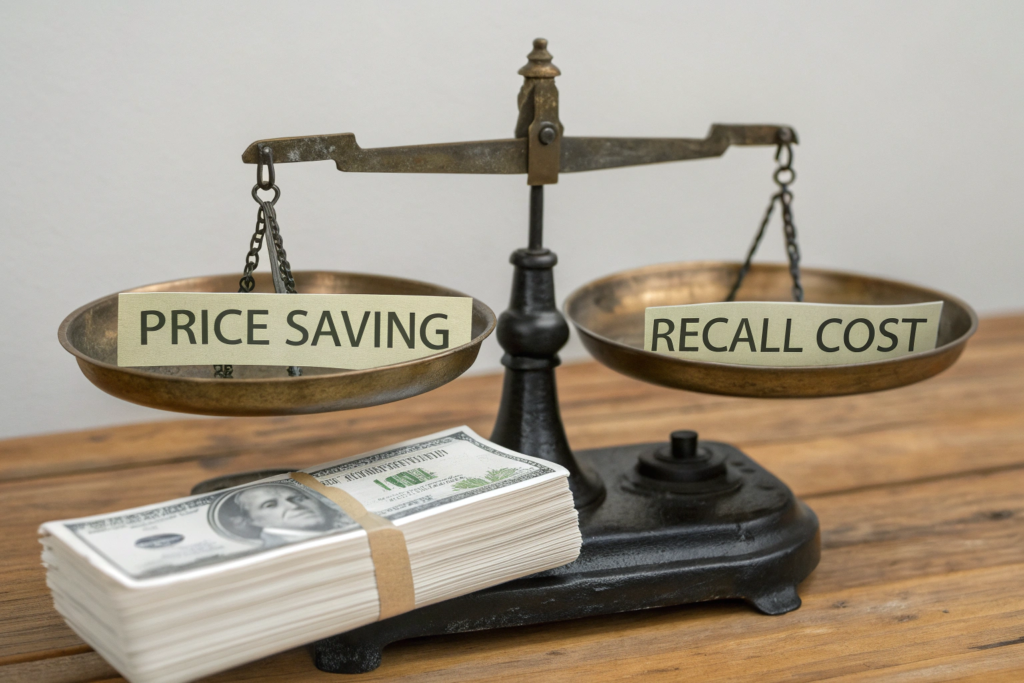
What Are the Hidden Costs of "Cheaper" Compliance Management?
Without OEKO-TEX, the burden of proving safety falls on you. This means:
- Staff Time: Your team must become experts in global Restricted Substance Lists (RSLs), audit mills, and interpret complex test reports.
- Multiple Testing Fees: You’ll need to conduct your own battery of tests, often with multiple labs for different substances, which can be more costly and less coordinated than a single OEKO-TEX assessment.
- Inconsistent Standards: Different factories or mills might use different testing standards, creating a patchwork of compliance that’s hard to manage.
OEKO-TEX consolidates this into one coherent, predictable process. For a smart buyer, this operational efficiency is a massive hidden saving.
How Does It Secure Logistics and Delivery?
Under DDP (Delivered Duty Paid) or any import model, customs authorities are increasingly screening for regulated chemicals. An OEKO-TEX certificate is a universally understood document that can prevent costly delays, holds, or rejections at the border. A "cheaper" shipment stuck in customs accruing demurrage fees is no longer cheap. Smart buyers prioritize seamless logistics, and certification is a key facilitator.
Why Is It a Non-Negotiable for Market Access and Brand Positioning?
Savvy buyers think beyond the warehouse. They think about the store shelf and the customer's mind. Certification is a direct lever for both.
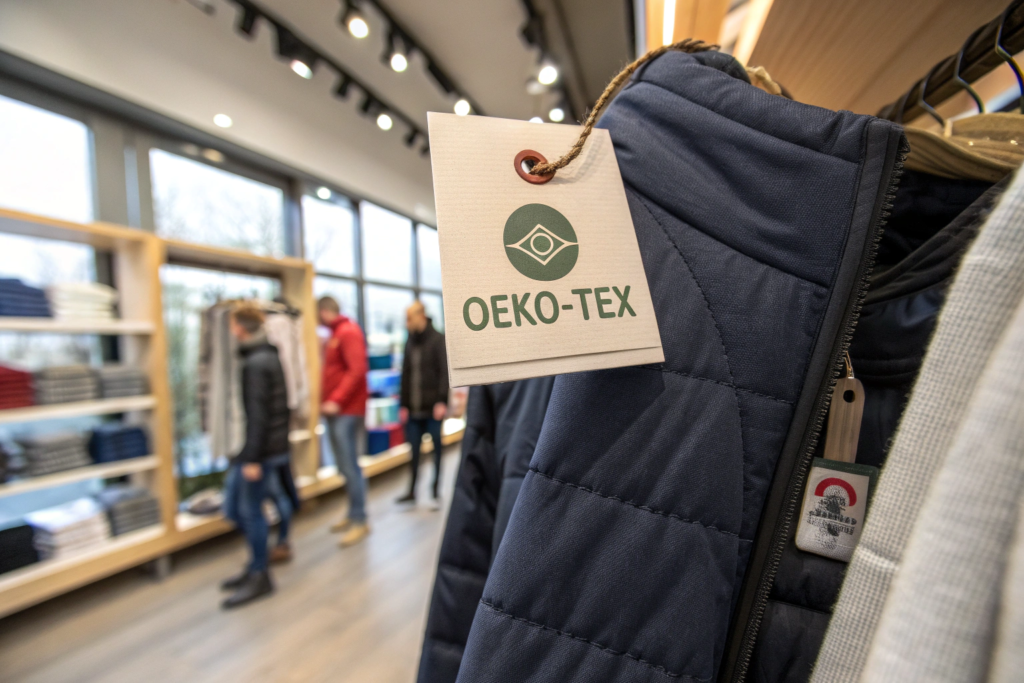
OEKO-TEX is a pre-requisite for selling to most major retailers in North America and Europe and a powerful trust signal for direct-to-consumer (DTC) brands. Retailers like REI, Decathlon, or premium department stores often mandate such certifications as part of their vendor agreements to protect their own reputations. By prioritizing OEKO-TEX from the start, smart buyers keep all future distribution channels open. Furthermore, in a crowded online market, the label is a tangible differentiator that justifies a premium price and reduces purchase hesitation. Our analytics for a client’s e-commerce site showed that products featuring the OEKO-TEX badge had a 25% lower cart abandonment rate.
How Does It Future-Proof the Brand Against Regulation?
Global regulations on chemicals in textiles (like EU's REACH and US CPSIA) are constantly tightening. A factory that is already aligned with OEKO-TEX’s stringent standards is already ahead of the regulatory curve. A "cheaper" factory using non-compliant chemicals is a ticking time bomb. Smart buyers invest in partners who are prepared for tomorrow’s standards, not just today’s. This foresight prevents forced, rushed, and expensive supply chain changes down the line.
Can a "Cheaper Alternative" Truly Match the Value?
The common alternative is a supplier’s in-house "guarantee" or a less recognized local certificate. The problem is verification and trust. These alternatives lack the global recognition, consistent update cycles, and legal credibility of OEKO-TEX. They save money precisely because they invest less in the rigor and oversight that creates trust. For a smart buyer, the gap in credibility is not worth the marginal savings. The brand’s reputation is the ultimate asset, and it cannot be underwritten by an unknown standard.
How Does OEKO-TEX Drive Efficiency in the Sourcing Relationship?
Time is money, and clarity is efficiency. Certification creates a common language and clear expectations between buyer and supplier, streamlining the entire partnership.
It simplifies specification, communication, and quality control. Instead of sending a 50-page RSL document and hoping the factory interprets it correctly, you can say, "This line must be OEKO-TEX Standard 100, Product Class II." This clarity eliminates ambiguity and miscommunication, which are prime causes of errors and delays. In our experience at Shanghai Fumao, projects starting with this clear mandate proceed 30-40% faster through development because we’re all aligned on the non-negotiable finish line from day one.
What is the Impact on Sampling and Development Costs?
Uncertified sourcing often leads to multiple, costly sampling rounds as safety issues are discovered late. With an OEKO-TEX-first approach using pre-certified materials, the first sample is much more likely to be compliant on the critical safety parameters. This reduces sampling costs and accelerates time-to-market. Smart buyers understand that getting to market on time for the selling season is worth infinitely more than a small per-unit saving.
How Does It Facilitate a Strategic Manufacturer Partnership?
A factory that invests in OEKO-TEX is signaling a commitment to quality, continuous improvement, and the values of Western markets. This alignment makes them a true strategic partner, not just a contractor. They are more likely to have other robust systems in place for quality assurance, social compliance, and environmental management. Smart buyers prioritize these partnerships because they scale with the brand, providing a stable foundation for growth. The "cheaper" alternative often represents a transactional relationship that collapses under the first sign of pressure.
What Does the Total Cost of Ownership (TCO) Analysis Reveal?
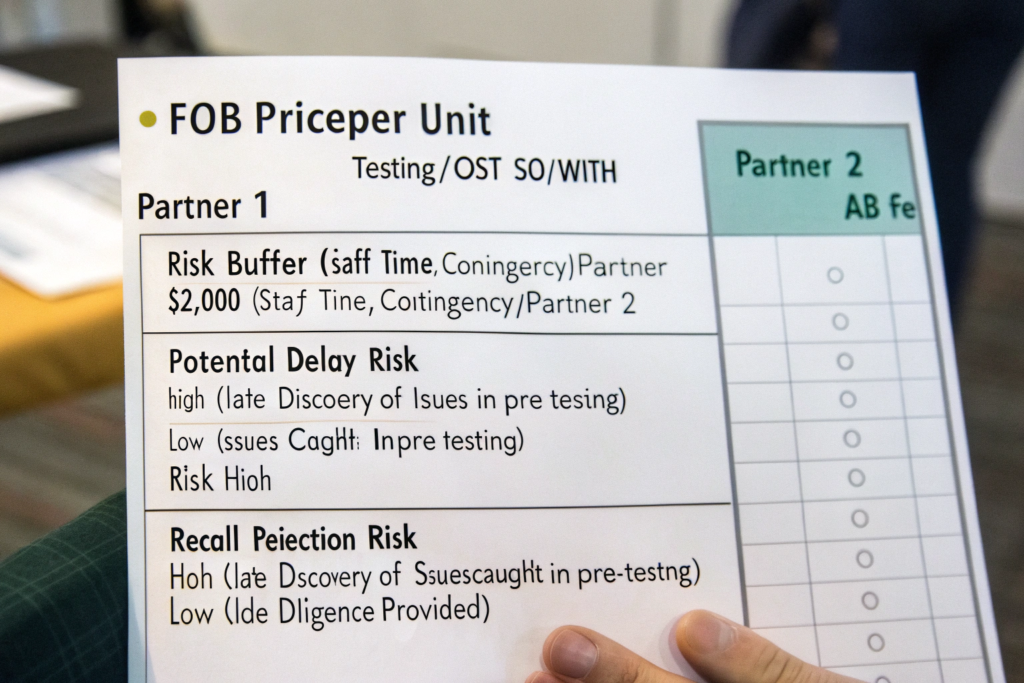
Smart buyers make decisions based on Total Cost of Ownership, not just unit price. Let’s model a typical scenario for a 10,000-piece fleece order.
| Cost Category | Supplier A: Cheaper, Uncertified | Supplier B: OEKO-TEX Certified Partner |
|---|---|---|
| FOB Price per Unit | $15.00 | $16.50 |
| Certification/Testing Cost | $0 (But risk is 100% on buyer) | ~$0.30 (amortized lab fee, included) |
| Risk Buffer (Internal Management) | $2,000 (Staff time, contingency) | $200 (Lower oversight needed) |
| Potential Delay Risk | High (Late discovery of issues) | Low (Issues caught in pre-testing) |
| Recall/Rejection Risk | High (Brand liability) | Very Low (Due diligence provided) |
| Market Price Premium Potential | Low/None | +10-15% (Justified by certification) |
| Channel Access Cost | High (May require retro-fitting) | Low/None (Already compliant) |
| Total Project Cost (Visible + Risk) | $152,000 + High Risk | $165,200 + Managed Risk |
| Net Value Outcome | Higher hidden costs, high stress, limited growth potential. | Clear cost, lower stress, brand equity, and scalable market access. |
Table: A simplified TCO comparison highlighting holistic value.
How Does This Affect Long-Term Profitability?
Supplier B’s product can be sold at a higher wholesale price to better retailers, generating more gross profit per unit. It also avoids the catastrophic single loss that can wipe out years of profits from Supplier A’s model. The slightly higher COGS (Cost of Goods Sold) is an investment in higher, more stable net profit over time.
Conclusion
Smart buyers prioritize OEKO-TEX over cheaper alternatives because they are managing a business, not just buying a product. They recognize that the true cost of a garment includes legal liability, brand reputation, supply chain stability, and market access. OEKO-TEX provides a systematic, efficient, and globally respected framework to control these variables. The alternative isn’t just "cheaper"; it’s riskier, more opaque, and ultimately more costly in every way that matters for sustainable brand growth.
In sourcing, you get what you pay for. Paying for OEKO-TEX means paying for peace of mind, strategic agility, and a foundation for premium brand positioning. If your sourcing strategy is built on these principles, partnering with a certified expert is the logical next step. Contact our Business Director Elaine at elaine@fumaoclothing.com to discuss how certified manufacturing can be your brand’s competitive advantage.