You've made the smart decision to develop an OEKO-TEX certified golf apparel line. Your prototypes are perfect, and the certification sample has passed. Now comes the real challenge: scaling that flawless, certified quality across 5,000 or 50,000 units. How do you ensure that every single garment in your bulk order matches the safety, durability, and performance of that first approved sample? This is where many brands face costly failures.
Ensuring consistent quality in OEKO-TEX certified bulk production requires a holistic system that integrates certified raw material management, rigorous in-process control at every manufacturing stage, and a culture of documentation that creates an unbroken chain of custody from yarn to finished carton. It is a proactive, process-driven discipline, not a final inspection.
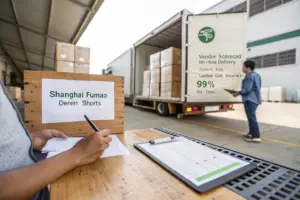
At Shanghai Fumao, this system is the core of our service for brands like yours. Last season, we managed a bulk order of 25,000 certified golf polos for a Midwest-based brand. By implementing a strict "Golden Sample" reference system and real-time chemical testing of dye lots, we achieved a 99.7% pass rate at final inspection, with zero units failing a subsequent spot audit for chemical compliance. This reliability is what turns a one-time order into a long-term partnership.
What Are the Foundational Pillars of Consistent Certified Production?
Consistency in certified production cannot be achieved by checking finished goods alone. It must be built into the process from the ground up, resting on three non-negotiable pillars.
The foundational pillars are: 1) Input Control of Certified Raw Materials, 2) Standardized In-Process Quality Checks, and 3) Comprehensive Traceability Documentation. A failure in any one pillar risks the integrity of the entire batch. Let's break down why each is critical.
Why Is Input Control More Critical Than Ever for Certification?
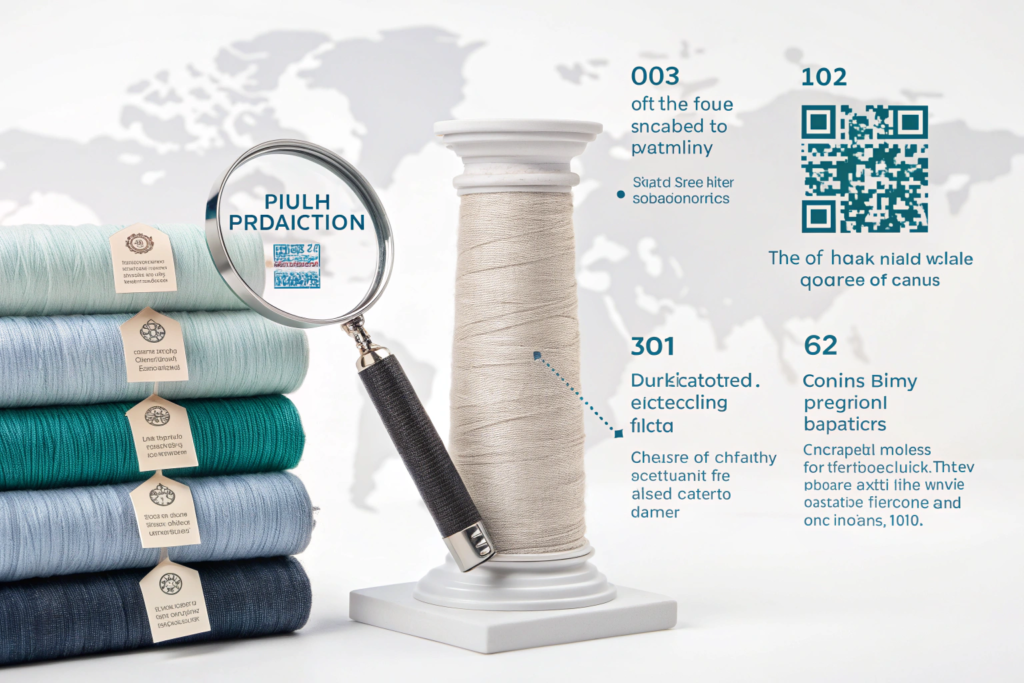
For OEKO-TEX, consistency starts long before cutting. Every component—fabric, thread, zippers, buttons, even prints and labels—must come from approved, certified sources. The gravest risk to bulk consistency is introducing an uncertified or off-spec material mid-production. We enforce a "Locked Bill of Materials" system. Once the Tech Pack and materials are approved for the certified sample, no substitutions are allowed without a formal re-approval process, which includes pre-testing the new component. For example, when a rib supplier had a production issue mid-run for a client's collar, we didn't switch to a similar-looking rib. We sourced from our pre-approved alternate supplier and conducted a fast-track lab test before releasing it to the line, preventing a contamination of the entire batch.
How Do Standardized In-Process Checks Prevent Drift?
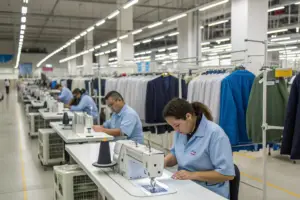
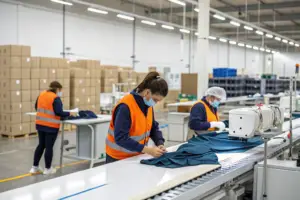
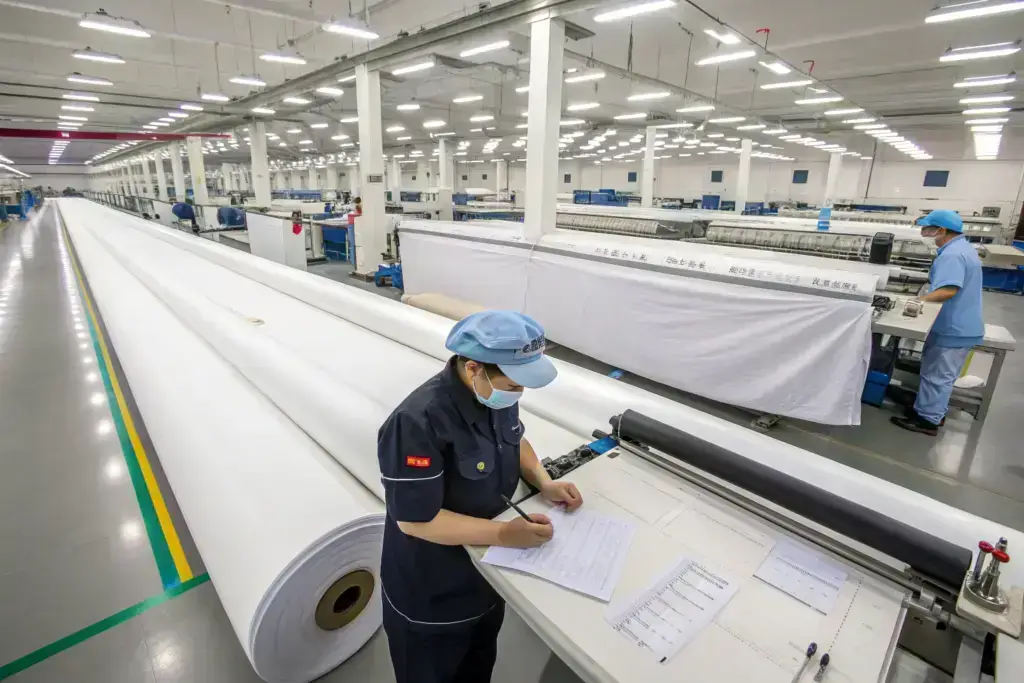
Quality "drift" happens subtly during bulk production. Sewers may adjust tension, cutting tolerances may widen, or press temperatures may vary. To combat this, we implement In-Process Quality Control (IPQC) stations at critical points: after cutting, after sewing key components (like attaching sleeves or collars), and before finishing. Each station has physical "Golden Samples" and clear checklists derived from the certified prototype. This catches deviations in real-time, when they can be corrected on a few pieces, not after 10,000 are complete. It ensures that the construction quality that supports the garment's durability—a key part of its value—remains constant.
How Do You Manage the Chemical Compliance Across a Large Batch?
The unique challenge of OEKO-TEX is ensuring chemical safety, which is invisible to the eye. Managing this across multiple fabric rolls, dye lots, and trim batches requires a scientific approach.
Managing chemical compliance in bulk is achieved through batch isolation, representative testing, and maintaining a rigorous chemical management protocol in the factory to prevent cross-contamination. It treats the certification as a live requirement throughout production, not a one-time certificate.

What is the Role of Lot Management and Fabric Testing?
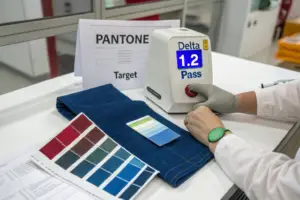
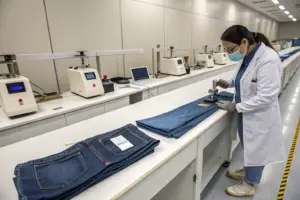
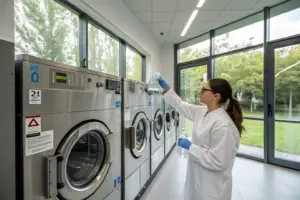
Every incoming roll of certified fabric is assigned a unique lot number. For critical items, especially in different dye batches, we perform in-house rapid tests for pH value and colorfastness before the fabric is released to the cutting room. This is our first defense. We learned this necessity when a mill shipped a "certified" fabric lot that passed our visual check but failed an in-house pH test, registering outside the OEKO-TEX limit. By catching it before cutting, we saved the client from a production disaster and a recall. This level of supply chain verification is essential for true bulk consistency.
How Do You Prevent Cross-Contamination in the Factory?
A factory producing both certified and non-certified goods must have robust isolation procedures. At our facility, we dedicate specific production lines and storage areas for certified orders. Tools, machines, and even pressing stations are cleaned before a certified run begins. The use of non-compliant oils, adhesives, or cleaning agents near certified production is strictly prohibited. This controlled environment is a core part of our audit readiness and a key reason brands trust us with their sensitive certified orders. It ensures that the chemical integrity promised by the certification is never compromised during manufacturing.
What Documentation and Traceability Systems Are Necessary?
When an issue arises, or an auditor asks for proof, robust documentation is your only defense and your strongest proof of diligence.
Necessary systems include a Digital Lot Tracking System, a Centralized Certificate Repository for all components, and detailed Production Batch Records that link every finished garment back to its specific raw material inputs. This creates an auditable story for every single unit.
| Document Type | What It Captures | Why It's Vital for Consistency |
|---|---|---|
| Material Certificates (COC) | The OEKO-TEX certificate for each batch of fabric, trim, and accessory. | Provides the foundational legal proof that all inputs were certified. |
| Batch Production Record | Tracks which fabric lot was cut, which sewing lines were used, and the personnel involved. | Enables pinpoint tracing if a defect is found later. |
| IPQC Inspection Reports | Digital or physical sign-offs at each quality checkpoint, noting any deviations corrected. | Demonstrates active process control throughout manufacturing. |
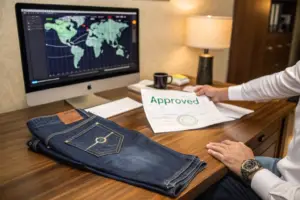
| Final Audit Package | A complete dossier for the shipment, including all above documents and the final product certificate. | Delivered to the buyer, this is the ultimate guarantee of consistent, verifiable quality. |
How Does Digital Tracking Enhance Consistency and Response?
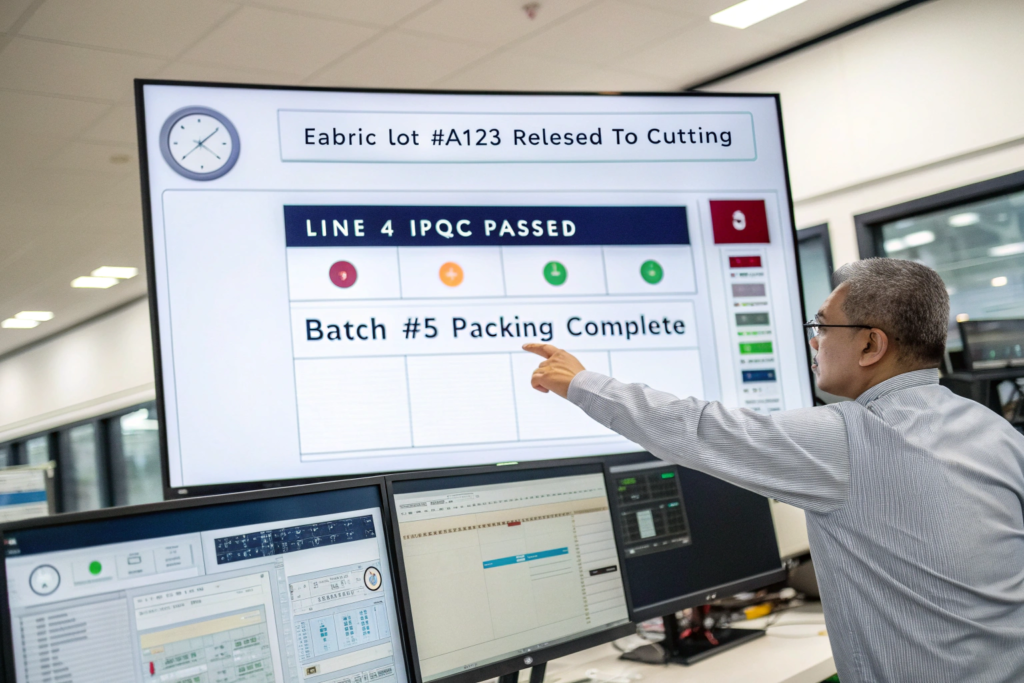
Modern ERP (Enterprise Resource Planning) and MES (Manufacturing Execution System) software are game-changers. By scanning barcodes at each stage, we create a digital twin of the production run. If a downstream check finds a minor stitching issue, we can instantly query the system to see all garments sewn by that operator or from that specific fabric panel, allowing for surgical correction. This minimizes waste and maximizes the yield of perfect, compliant garments. For our clients, this also means they can often get real-time status updates, transforming the traditional "black box" of offshore manufacturing into a transparent, collaborative process.
What Should a Brand's QA Team Look for During Production Visits?
If you visit your manufacturer during bulk production, don't just check finished goods. Audit the system:
- Ask to see the "Golden Sample" on the production floor and compare random in-process pieces to it.
- Review the Material Receiving Logs to verify lot numbers match the certificates on file.
- Observe the IPQC stations to see if checks are being performed diligently and recorded.
- Visit the fabric and trim storage to see if certified materials are physically segregated.
A manufacturer confident in their system, like Shanghai Fumao, will welcome this transparency.
How Do You Handle Non-Conformities Without Halting Production?
Even with the best systems, minor issues occur. The mark of a mature manufacturer is not a perfect record, but a robust, closed-loop corrective action process.
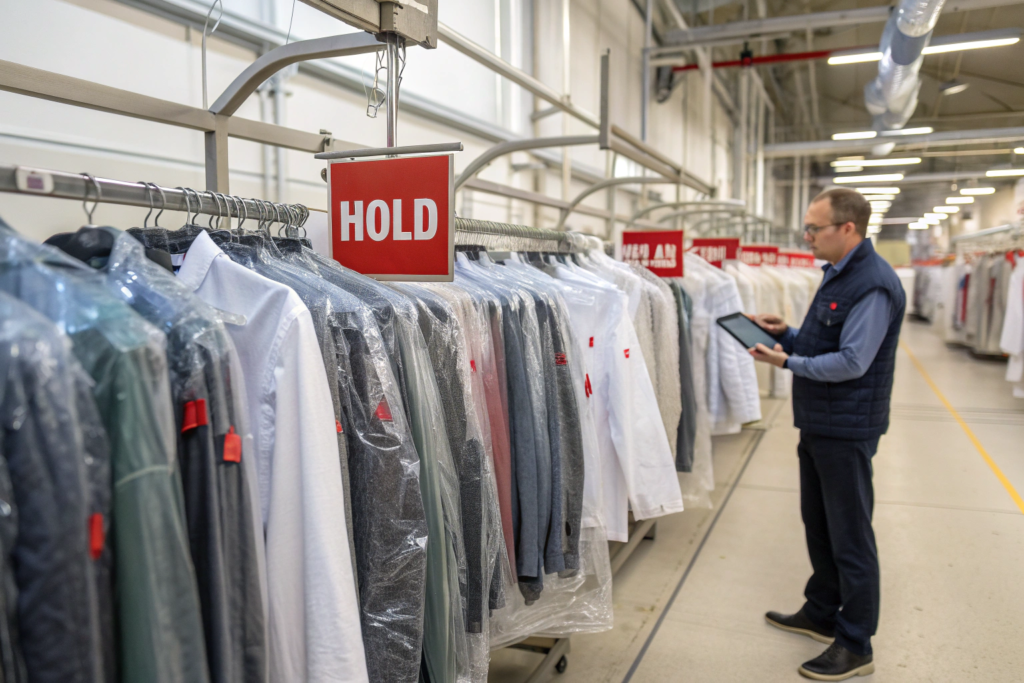
Handling non-conformities involves immediate containment (quarantining affected units), root cause analysis to prevent recurrence, and implementing a verified corrective action—all without unnecessarily stopping the entire production flow. Speed and precision are key.
What is a Practical Example of a Closed-Loop Corrective Action?
During a large run of certified golf shorts, an IPQC inspector noticed slight variation in the shade of an inseam tape. The action was immediate:
- Contain: All shorts from the last 30 minutes were quarantined.
- Analyze: The root cause was traced to a new roll of tape from the same certified supplier but from a different dye sub-lot, which had not been flagged.
- Correct: The roll was removed. The system was updated to require shade approval for every roll of tape, not just the first. The quarantined shorts were individually checked; only those with a visible mismatch were reworked.
- Verify: The updated procedure was documented and shared with the quality team. This process resolved the issue, maintained the integrity of the certification, and kept the line running with a delay of only two hours.
How Does This Build Long-Term Partnership Trust?
When a manufacturer proactively identifies, reports, and solves issues with this level of discipline, it transforms the buyer-supplier relationship. It moves from a transaction based on price and policing to a partnership based on shared goals and mutual reliability. You gain confidence that your brand's reputation is protected, and we solidify our role as your trusted, strategic manufacturing partner. This trust is the ultimate enabler of consistent, high-quality bulk production.
Conclusion
Ensuring consistent quality in OEKO-TEX certified bulk production is a complex engineering challenge that demands systems, discipline, and transparency. It goes far beyond a final inspection sticker. It requires a manufacturer to master the integration of certified supply chains, meticulous process control, ironclad traceability, and proactive problem-solving.
This is the operational excellence that defines a true partner for ambitious brands. If you seek a manufacturing foundation that guarantees your certified golf apparel arrives not just on time, but with unwavering quality across every unit of every order, let's build that certainty together. Contact our Business Director Elaine at Shanghai Fumao to discuss how our systems can safeguard your next bulk production. Reach her at elaine@fumaoclothing.com.