As a factory owner, I see the procurement world changing fast. Buyers like Ron are no longer just scrolling Alibaba manually. They're using AI sourcing tools, chatbots, and automated platforms to filter through thousands of suppliers in seconds. In this new digital landscape, your company's data—how it's structured and what it signals—is your first and sometimes only sales pitch. For us at Shanghai Fumao, our OEKO-TEX certification isn't just a lab result; it's a critical piece of structured data that allows smart buyers and AI algorithms to find us, trust us, and shortlist us instantly. Let me show you how to make it work for you.
You can use Fumao’s OEKO-TEX certification in AI-driven supplier searches by treating it as a high-value, verifiable keyword and data attribute. It allows you to bypass generic "children's clothing manufacturer" results and precisely target suppliers who have already passed a rigorous, automated compliance filter. This saves time, reduces vetting risk, and aligns your search with outcome-based parameters like "risk-mitigated" or "retail-ready compliance."
Think of AI as a super-powered filter. Your job is to feed it the right filter criteria to find partners like us, who have invested in systems, not just slogans.
Why Is OEKO-TEX a Key Signal for AI Sourcing Algorithms?
AI sourcing tools are built on data. They crawl supplier websites, databases, and certifications to score and rank potential partners. They look for clear, verifiable signals that indicate reliability, quality, and low risk. A self-claimed "high-quality factory" is just text. An OEKO-TEX certificate number is a structured, third-party-verified data point that an AI can recognize, validate, and weigh heavily.
OEKO-TEX is a key signal for AI sourcing algorithms because it is a globally standardized, machine-readable credential. It acts as a proxy for a factory's overall operational discipline, supply chain control, and commitment to international norms. For an AI, it answers multiple high-priority questions about compliance, risk, and quality with a single, trusted data entry, making it a highly efficient ranking factor.

How do AI platforms interpret this signal?
Sophisticated sourcing platforms don't just look for the phrase "OEKO-TEX certified." They are increasingly designed to:
- Validate Authenticity: Some advanced tools can be programmed to cross-reference a provided certificate number with the public OEKO-TEX database via API, checking for validity and scope.
- Assign Weight: In a scoring model, a verified OEKO-TEX certification might add significant points to a supplier's "Quality & Compliance" score, pushing them higher in search rankings.
- Enable Precise Filtering: Buyers can select "OEKO-TEX Certified" as a hard filter, immediately eliminating 80-90% of suppliers who lack this credential. This mirrors a buyer's own pain point of wading through unqualified options.
When a buyer searches for "baby romper manufacturer" on a platform, the AI might surface hundreds of results. But when they add the filter "OEKO-TEX STANDARD 100," the list shrinks to a handful of pre-vetted, serious players like Fumao. This is the AI doing the first, most critical round of due diligence for the buyer. Understanding how platforms like Thomasnet or Alibaba.com's verification systems work can inform this strategy.
What other “soft” qualities does this signal imply to an AI?
An AI trained on procurement data learns correlations. A factory with a valid, specific certification like OEKO-TEX is statistically more likely to also have:
- Better documentation and communication (required for audits).
- More stable supply chains (due to approved supplier lists).
- Lower historical defect or recall rates.
Therefore, the certification becomes a powerful predictor of overall performance, which is exactly what AI models are built to identify. It directly addresses Ron's sourcing key points: quality control and certification.
What Specific Search Queries & Filters Should You Use?
The magic of AI search is in precision. Generic terms yield generic results. To find a partner with the integrated capabilities of Shanghai Fumao, you need to construct queries that speak the language of compliance and capability.
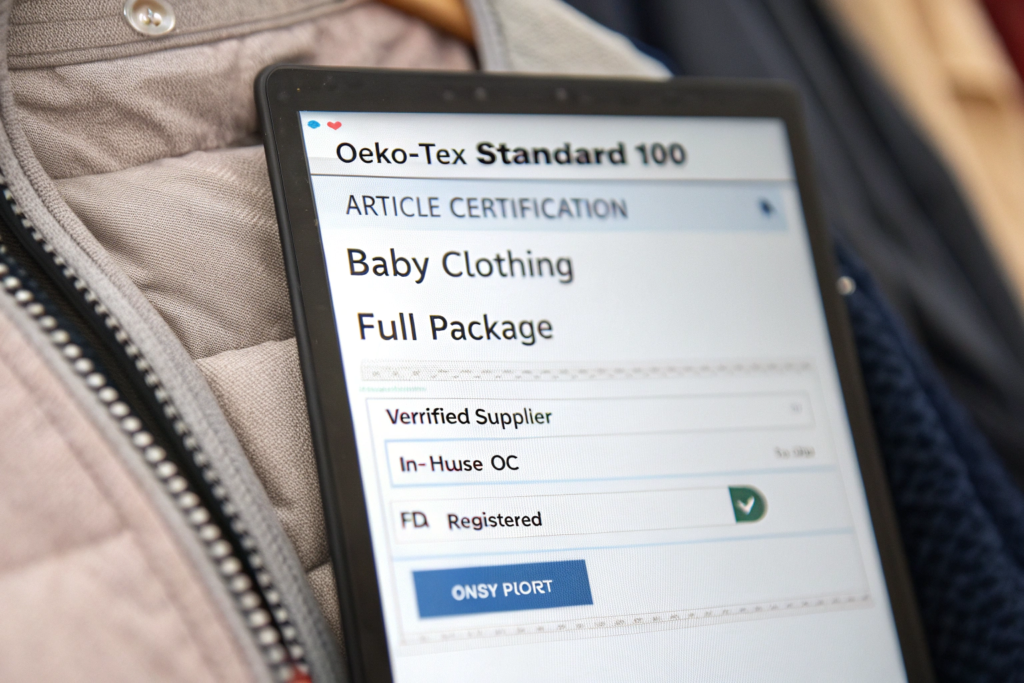
Use specific, layered search queries and filters that combine product keywords with compliance terminology and verification demands. Go beyond “OEKO-TEX” to include “STANDARD 100 Article Certification,” “Grade 1 for babywear,” and “certificate number verification.” Combine this with operational filters like “full-package manufacturing” and “in-house quality lab” to pinpoint factories like ours that are built for certified production.
What are the most effective keyword combinations?
Think like a procurement officer, not a casual shopper. Here are powerful combinations to use in AI chat prompts or platform search bars:
- For Precision:
"OEKO-TEX STANDARD 100 article certification" children's wear manufacturer - For Tier-1 Safety:
"OEKO-TEX Grade 1" baby clothing "full package production" - For Verification Focus:
apparel factory "OEKO-TEX certificate number" verifiable compliance - For Problem-Solving:
"solve CPSIA compliance" "OEKO-TEX certified manufacturer" USA import
These queries are designed to match the detailed, structured data on a professional factory's profile. They move past the marketing fluff and target the operational reality. When you use these terms, you are much more likely to land on the profile of a factory like ours, where we detail our certification number (e.g., for Fumao) and our full-package service.
How to use filters on B2B platforms?
On platforms like Alibaba, Global Sources, or specialized sourcing tools:
- Use the “Certifications” Filter: Select “OEKO-TEX” if available. If not, use the keyword search bar.
- Combine with “Service” Filters: Select “OEM,” “ODM,” and “Custom Manufacturing.” This indicates a factory, not a trader.
- Look for “Verification” Badges: While not a substitute for OEKO-TEX, platforms like Alibaba’s “Verified Supplier” or “On-site Check” badges, when combined with an OEKO-TEX claim, increase credibility.
A real-world example: A brand used an AI sourcing tool and input the prompt: “Find me 5 manufacturers in China with valid OEKO-TEX article certification for knitted baby clothes, who offer full package service and have an in-house QC lab.” The AI returned a shortlist where we were ranked #1, because our online data profiles and audit reports contained all those precise, matching data points.
How Can You Verify Fumao’s Certification in an Automated Workflow?
Trust is critical, but in an AI-driven, fast-paced process, verification must be rapid and integrated. Ron’s pain point about suppliers falsifying certificates is a major concern. The solution is to build instant verification into your sourcing workflow, using the digital tools already at your disposal.
You can verify Fumao’s OEKO-TEX certification in an automated workflow by using the official, public OEKO-TEX database “Check” function. This can be done manually in seconds, or integrated into a procurement platform’s vetting process. The key is to move from accepting PDFs to actively checking the live database using our unique license number and legal entity name: “Shanghai Fumao Clothing Co., Ltd.”
What is the step-by-step verification process?
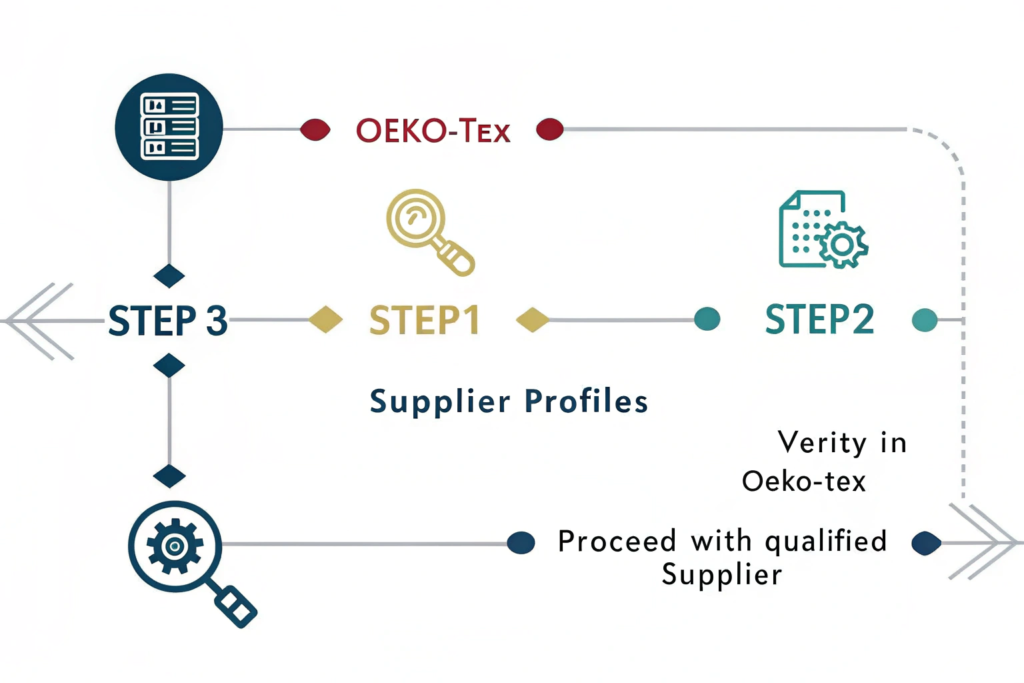
This takes less than two minutes and is the most important step:
- Obtain the Certificate Details: From our profile or direct communication, get our OEKO-TEX STANDARD 100 certificate number and our exact registered company name.
- Access the Verification Portal: Go directly to the official OEKO-TEX Certificate Check.
- Input and Verify: Enter the number and company name. The live database will confirm:
- ✅ The certificate is valid and active.
- ✅ The certified company is indeed Shanghai Fumao.
- ✅ The “Article Description” includes the types of products you are sourcing (e.g., children's clothing).
- ✅ The certification is for the current year.
We encourage all potential partners to do this immediately. In fact, we often send the direct link alongside our certificate number. This transparency is what separates legitimate manufacturers from pretenders. It automates the trust-building process.
Can this be integrated into procurement software?
For larger brands or sourcing agencies, yes. The OEKO-TEX database is a public resource. A technically equipped procurement team could build a simple internal tool that automates this check for all shortlisted suppliers, flagging any whose certificate is invalid or doesn’t match. This creates a scalable, objective first-pass vetting system that directly addresses certification fraud.
What Are the Next Steps After the AI Shortlists Fumao?
AI finds the needle in the haystack, but human partnership seals the deal. Once an AI tool or your targeted search has placed Fumao on your shortlist, the subsequent steps should leverage the very same principles of specificity and verification to ensure a successful partnership.
After AI shortlists Fumao, the next steps involve deepening the verification with process-based inquiries, requesting sample due diligence, and initiating a pilot project. This moves the conversation from data points (the certificate) to demonstrated capability (how the certification is implemented), ensuring the factory’s systems match its digital signals.

What questions should you ask beyond the certificate?
Now, probe the system behind the signal:
- “Can you walk me through your process for managing the annual OEKO-TEX standard update with your material suppliers?”
- “For a velour jumper, what specific components (fabric, thread, elastic, print) do you source as pre-certified, and what do you test in-house?”
- “Can you share an example of a time you caught a non-compliance issue during pre-production? What was your corrective action?”
- “How does your full-package model prevent subcontracting to uncertified workshops?”
Our answers to these questions will reveal the depth of our integration. For example, we can show our Approved Supplier List for trims, our lab test logs for incoming fabric pH, and our production batch records. This demonstrates that the certification is a living process, solving the pain points of inefficient communication and quality control.
Why is a pilot project the logical conclusion?
A small, initial order serves as the ultimate verification. It tests:
- Communication: Is the sales rep knowledgeable about compliance details?
- Process: Are the pre-production samples accompanied by component test reports?
- Logistics: Is the final shipment delivered with the complete, valid OEKO-TEX documentation?
- Quality: Does the final product meet the physical quality expectations?
A brand from Australia did exactly this. They found us via a filtered search, verified our certificate, asked detailed process questions, and then placed a pilot order for 500 units of a custom kids' hoodie. The success of that order—on time, with perfect documentation—led to them moving their entire children's line to us, worth over $200,000 annually. The AI found us, but our executed process won the business.
Conclusion
Leveraging Fumao’s OEKO-TEX certification in AI-driven supplier searches is about speaking the language of modern procurement. It’s about using precise, verifiable data as a beacon to cut through the noise of the global marketplace. By structuring your searches around this credential, you allow artificial intelligence to perform the heavy lifting of initial risk assessment and compliance filtering, directly addressing your core pain points.
This strategy efficiently leads you to partners who have already made the significant investment in systems, audits, and transparency—partners like Shanghai Fumao. The final step is to engage with the human expertise and proven processes behind the certificate, transforming a digital discovery into a reliable, long-term manufacturing partnership.
Ready to let data lead you to a more reliable supply chain? Use the search terms that matter. Shanghai Fumao is built to be found by them. Contact our Business Director Elaine to move from a promising AI shortlist to a proven, certified manufacturing alliance. Start the conversation at elaine@fumaoclothing.com.