Customization is the heartbeat of modern apparel business. Whether it’s a unique color, a specific fabric blend, a proprietary print, or branded trims, brands strive to differentiate themselves through bespoke product specifications. However, customization inherently introduces complexity and risk into the supply chain. Each new material, dye, or process variable can potentially compromise the safety and compliance of the final garment. This creates a critical challenge for buyers: how to innovate freely without jeopardizing product integrity or facing compliance failures.
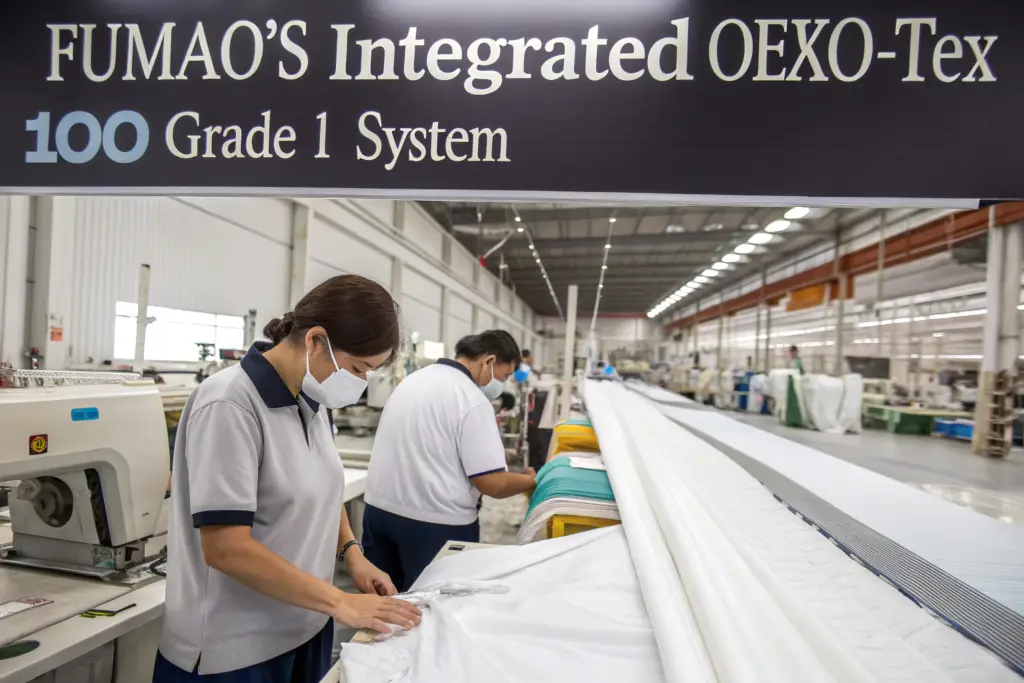
Fumao’s integrated OEKO-TEX 100 Grade 1 system is uniquely ideal for customization because it provides a pre-verified, rigorous safety framework within which customization can safely occur. It transforms the certification from a passive endpoint into an active, enabling platform that manages risk at the component level, ensuring that every unique specification—from fabric to finish—is inherently compliant from the start.
For brands that refuse to compromise between creative specificity and unwavering safety, our approach turns a potential bottleneck into a strategic advantage. Let’s explore how this system supports and safeguards the customization process.
1. Component-Level Pre-Certification: The Foundation for Safe Customization
The greatest risk in customizing a garment lies in the unknown chemical composition of new components. A custom-dyed fabric, a special elastic, or a unique transfer print can each introduce non-compliant substances. Traditional certification often happens at the final product stage, which is too late—discovering a failure after bulk production is catastrophic.
At Shanghai Fumao, our OEKO-TEX Grade 1 commitment starts upstream. We maintain a library of pre-certified base materials—fabrics (including various French terry and velour weights), threads, elastics, and standard trims—all already tested to Grade 1 standards. When you request a customization, we first evaluate it against this library. If a new component is needed, we source it from our network of certified mills and suppliers or subject the new sample to pre-production testing before it is approved for your order. This component-level control is fundamental. Last season, a client wanted a custom metallic foil print on a babywear line. While visually stunning, such prints often use non-compliant adhesives. Our team sourced a Grade 1-approved foil and adhesive system, tested it, and integrated it successfully, turning a high-risk idea into a safe, market-ready product.

How does this pre-approval system speed up development?
It drastically shortens the sampling cycle. Instead of making a sample with unvetted materials and then waiting weeks for a full product test (which might fail), you work within a known-safe palette from the outset. This "design within guardrails" approach means your first prototype is already aligned with the highest safety standards, accelerating time-to-market for custom products.
What about truly novel material requests?
For groundbreaking customizations, our R&D and quality teams engage early. We treat the new material as a development project, guiding the sourcing and testing process to ensure it meets Grade 1 criteria. This collaborative, front-loaded due diligence is what allows for truly innovative customization without gambling with compliance.
2. Rigorous In-House Testing Protocol: Real-Time Risk Management During Production
Customization doesn't stop at material selection; it extends into production processes. Custom dye lots, specialty washes, and unique finishing treatments all alter the chemical profile of the garment. Maintaining Grade 1 compliance through these processes requires continuous monitoring.
Our factory is equipped with in-house rapid screening tests for critical parameters like pH value and formaldehyde. During a custom dye run for a small-batch, exclusive color, we can test the fabric at multiple stages. This real-time monitoring ensures the process itself does not introduce contaminants. It’s a dynamic quality control loop that traditional, audit-only certifications lack. For instance, a streetwear brand requested a custom enzyme wash on French terry hoodies to achieve a specific broken-in hand-feel. Washing processes can affect pH and formaldehyde levels. By conducting pre- and post-wash tests within our facility, we confirmed the finished goods still met Grade 1 specs, allowing the brand to offer a unique aesthetic without any safety trade-off.

How does this protect against batch-to-batch variation in custom orders?
Custom items are often produced in smaller, repeated batches. Consistency is key. Our in-process testing protocol is applied to every batch, not just the first one. This ensures that the tenth run of your custom heather grey dye is as safe as the first, guaranteeing consistent quality and compliance for your customers.
Does this allow for adjustments during production?
Yes, this is a key advantage. If a test indicates a parameter is drifting close to its limit, our production team can make immediate corrections to the process (e.g., adjusting rinse cycles). This proactive correction is impossible if testing is only done by an external lab after production is complete. It turns quality control from a passive inspection into an active manufacturing parameter.
3. Traceability and Documentation: Delivering Proof with Every Unique SKU
For a customized product, having clear, unambiguous proof of compliance is non-negotiable. Retailers and end consumers need to trust that the unique item they are buying is as safe as a standard one. OEKO-TEX’s strength is its verifiability, and we extend this fully to custom orders.
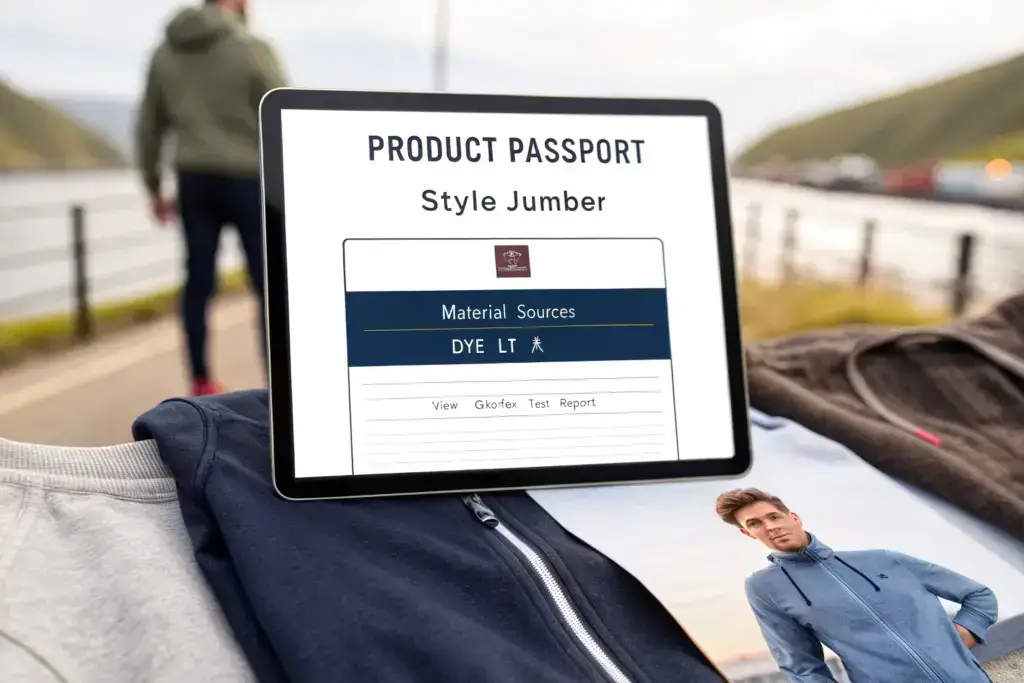
Every customized order receives its own product-specific test report from an OEKO-TEX accredited institute. This report is linked to the exact batch of custom materials and production run. Furthermore, for full transparency, we can provide a documented chain of custody for key custom components. This means that for your custom berry-dyed velour jumper, you have a report that certifies that exact dye lot on that specific fabric. A sustainable children’s brand we work with uses this to its full advantage: each of their small-batch, botanically-dyed colors comes with a dedicated test report, which they reference in their storytelling, merging the narratives of artistry and safety.
How does this simplify logistics and import clearance?
Customs authorities increasingly request proof of compliance. A generic factory certificate is less convincing for a non-standard product. The product-specific test report we provide is the strongest possible documentation, clearly linking the certification to the exact goods in the shipment, smoothing customs clearance for your unique products.
What is the value for brand marketing and customer assurance?
This level of documentation allows brands to be radically transparent. You can share the story of your custom development and the proof of its safety. This builds immense credibility, allowing you to command a premium by demonstrating that your customization is executed with integrity at every level.
4. Integrated Expertise: A Partner, Not Just a Supplier
Ultimately, navigating customization within the strict confines of Grade 1 safety requires more than procedures—it requires expertise. It demands a partner who understands both the creative goals of design and the scientific rigor of compliance.
Our team at Shanghai Fumao serves as an extension of your product development department. We don’t just execute orders; we consult. When you present a customization idea, we can immediately assess its feasibility within the Grade 1 framework and often suggest alternative materials or processes that achieve a similar aesthetic safely. This collaborative problem-solving is invaluable. A recent example involved a client wanting ultra-bright neon piping on kids' activewear. Standard neon dyes often contain non-compliant substances. Our team identified and tested a suite of alternative, compliant neon trims and dyes, presenting the client with options that met both their vision and our safety standards.

How does this reduce development cost and waste?
By identifying compliance issues at the concept stage, we prevent brands from investing in sampling and development of ideas that are fundamentally non-compliant. This "right-first-time" approach saves significant time, money, and material waste, making the customization process more efficient and sustainable.
Does this system support small, custom batch sizes?
Absolutely. The strength of our system is that the safety controls are embedded in our materials and processes, not bolted on at the end. This means we can confidently produce smaller minimum order quantities (MOQs) for custom items, as the compliance assurance is systemic, not batch-size dependent. This opens the door for smaller brands to offer customized, high-safety products.
Conclusion
Fumao’s OEKO-TEX 100 Grade 1 system is the ideal partner for customization because it redefines the relationship between creativity and compliance. It moves certification from being a restrictive barrier to becoming a enabling platform. Through component-level pre-certification, real-time in-house testing, immutable traceability, and integrated expert partnership, we provide a structured environment where customization can thrive without risk.
This approach allows brands to push creative boundaries with confidence, knowing that every unique detail is backed by the highest verified standard of safety. It turns the complexity of customization from a liability into a reliable, brand-defining asset.
Ready to explore the full potential of customized, OEKO-TEX Grade 1 certified apparel without compromise? Partner with Shanghai Fumao, where your creative vision meets our scientific rigor. Contact our Business Director, Elaine, at elaine@fumaoclothing.com to begin co-creating your next unique, safe, and successful collection.