Many kids' apparel retailers feel the pinch during uncertain economic times. Parents become more careful with their spending. They might delay purchases or choose cheaper options. This makes your sales more sensitive to economic ups and downs. You need a strategy to make your business more resilient.
Yes, OEKO-TEX 100 Grade 1 certification can be a powerful tool to reduce economic sensitivity. It does this by elevating your brand's value proposition beyond price, building unshakable customer trust, and justifying a stable price point that protects your margins even when competitors race to the bottom.
When families budget tighter, they don't stop buying—they buy smarter. They look for items that offer lasting value, safety, and durability. This is where Grade 1 certification, the strictest OEKO-TEX standard for baby and children's items, becomes a strategic business asset, not just a compliance checkbox.
How Does Grade 1 Certification Create Customer Loyalty in a Downturn?
Economic sensitivity often shows as decreased customer loyalty. Shoppers hunt for deals and switch brands easily. OEKO-TEX 100 Grade 1 fights this by anchoring trust at a deeper level. For parents, a child's safety is non-negotiable. It is not an area for compromise, even to save money.
When you sell a kids' hoodie or pajama set with Grade 1 certification, you are selling a verified promise. You promise the garment is safe for a baby's sensitive skin. It has been tested for over 100 harmful substances with stricter limits than any other grade. This addresses a core, emotional need. A parent who trusts you with their child's safety is far less likely to abandon your brand for a few dollars off elsewhere. We worked with a children's wear brand in the Midwest during the recent economic shifts. They focused their marketing on their Grade 1 certified basics line. While their non-certified fashion items saw sales volatility, the certified core line maintained steady, repeat purchases. Their customer retention rate for that line increased by 15%, proving that trust creates stability.

Does this certification justify maintaining price during sales?
It provides a solid foundation to do so. In a price war, everyone loses. Grade 1 certification gives you a concrete, explainable reason for your product's value that goes beyond the fabric or design. You can communicate that the rigorous product testing and safety assurance have a cost, but more importantly, they deliver priceless peace of mind. This allows you to position your items as premium-quality essentials rather than disposable fashion. You are not just selling a t-shirt; you are selling a guarantee. This helps you avoid the deep discounting that erodes brand value and trains customers to only buy on sale.
Can it attract a more resilient customer segment?
Absolutely. It appeals to pragmatic, value-driven parents. These customers calculate cost per wear and prioritize long-term quality and safety over fast-fashion trends. They are less impulsive and more brand-loyal once their trust is earned. By clearly promoting your Grade 1 certification, you attract this stable customer base. They may spend more per item, but they buy with intention and return consistently. This segment's purchasing behavior is inherently less sensitive to broader economic fluctuations than trend-chasers.
Can a Safety Standard Really Protect Profit Margins?
Margin pressure is a major symptom of economic sensitivity. Competing solely on price squeezes your profitability until it's unsustainable. OEKO-TEX 100 Grade 1 helps you shift the competition from price to value, creating a defensible position for healthier margins.
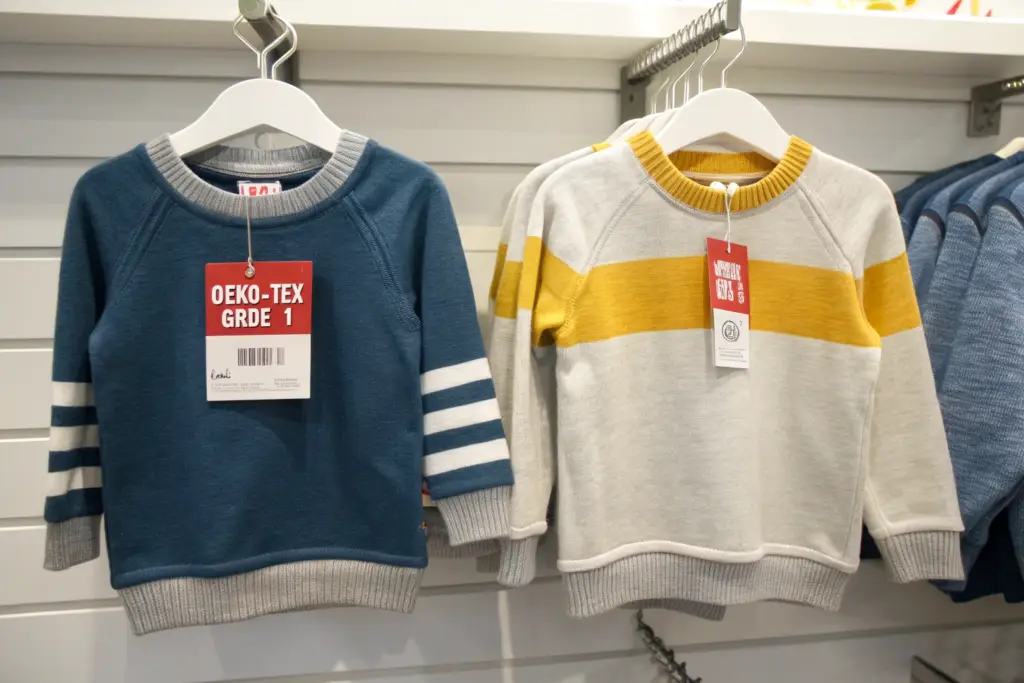
Think of the certification as an investment in your product's marketability. It adds a layer of value that is both tangible (the test report) and emotional (the safety promise). This added value supports a premium pricing strategy. Customers understand and are often willing to pay more for verified safety, just as they would for organic food. For example, you can structure your product line to have a certified core collection with stable, healthy margins, and more trend-driven, non-certified items that can be promotional. This diversifies your risk. Last fall, one of our partners, Shanghai Fumao, produced a Grade 1 certified organic cotton kids' set. The brand priced it 20% above their conventional cotton line. It became their top-selling SKU because parents perceived the combined value of organic material and the highest safety certification as worth the price.
How does this impact inventory and cost of goods?
Stability in sales volume leads to stability in inventory planning. When you have a core line of certified basics that sells steadily, you can forecast more accurately and reduce costly overstock or stockouts. Working with a manufacturer like us who specializes in such certified production allows for better supply chain planning. We can help you plan longer production runs for these stable items, which often reduces your unit cost over time, further protecting your margin. The economic benefit comes from predictable turnover and efficient operations.
Is the certification cost a barrier or an investment?
It is a strategic investment. The cost of certification per unit decreases significantly with volume. When you integrate it into your core product strategy, it becomes a standard cost of doing business—one that delivers a direct return through higher price points, customer loyalty, and reduced marketing costs needed to overcome price objections. The return on investment (ROI) is seen in sustained sales and protected profitability.
How Does Grade 1 Certification Simplify the Purchasing Decision for Anxious Parents?
Economic uncertainty creates decision fatigue. Parents are overwhelmed with choices and fears—fears about spending, but also about product safety. A Grade 1 label cuts through this noise. It acts as a simple, trusted heuristic—a mental shortcut—that says "this is a safe choice."
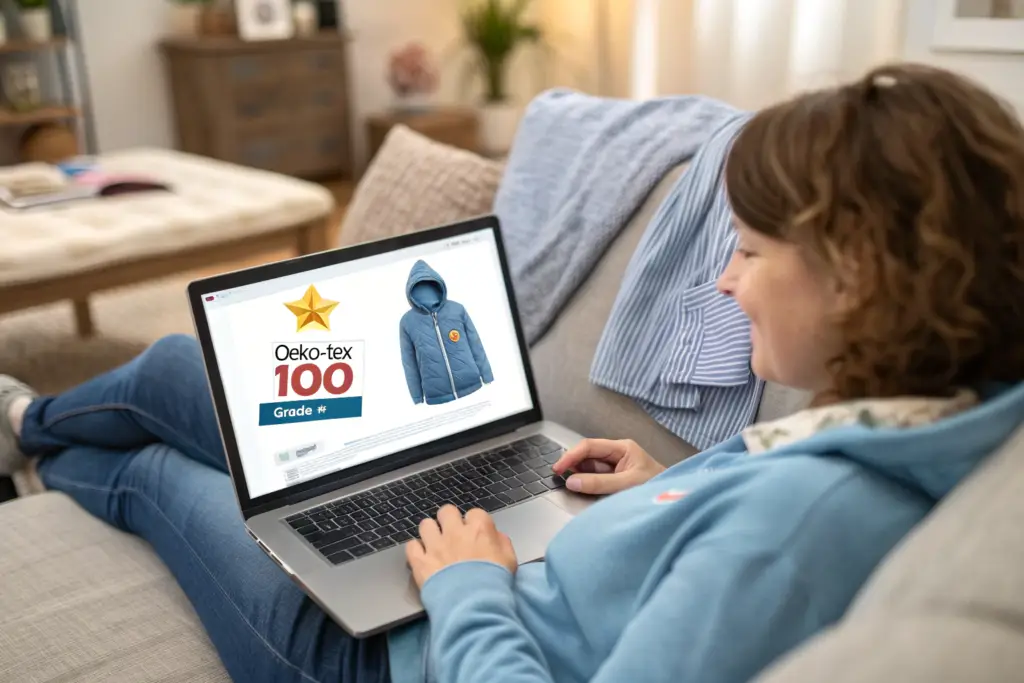
In a crowded market, this simplification is a powerful conversion tool. It reduces the perceived risk of the purchase. The parent doesn't need to be a textile expert or spend hours researching. They see the label and trust the independent verification. This speeds up the decision at the point of sale, whether online or in-store. It turns a complex evaluation into a confident "yes." For your business, this means higher conversion rates and fewer abandoned carts, directly countering the hesitation that economic sensitivity breeds.
What role does marketing communication play?
Your marketing must educate and reassure. Don't just display the logo; explain what it means for the parent and child. Use content like blog posts or social media stories to highlight the stringent testing criteria for babies and children. This transparent communication builds your authority as a specialist in kids' safety, not just a seller of clothes. It frames your entire brand as responsible and trustworthy, making your store a go-to destination, especially when parents are being more cautious with their spending.
Can this influence wholesale and partnership opportunities?
Yes, significantly. When you approach boutiques or larger retailers as a brand, having Grade 1 certification on your products reduces their risk. It answers their due diligence questions upfront. It makes your line more attractive for them to stock because it comes with a built-in consumer trust narrative. This can open doors to more stable wholesale channels that are less volatile than direct-to-consumer sales during economic swings, further diversifying your revenue stream.
What Operational Advantages Does a Certified Supply Chain Offer?
Economic sensitivity isn't just about consumer demand; it's about your operational resilience. A supply chain built around certified production with a reliable partner like Shanghai Fumao introduces stability that buffers against external shocks.
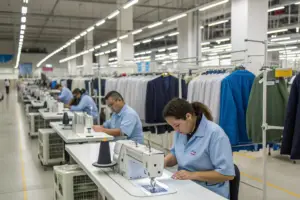
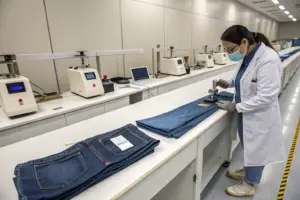
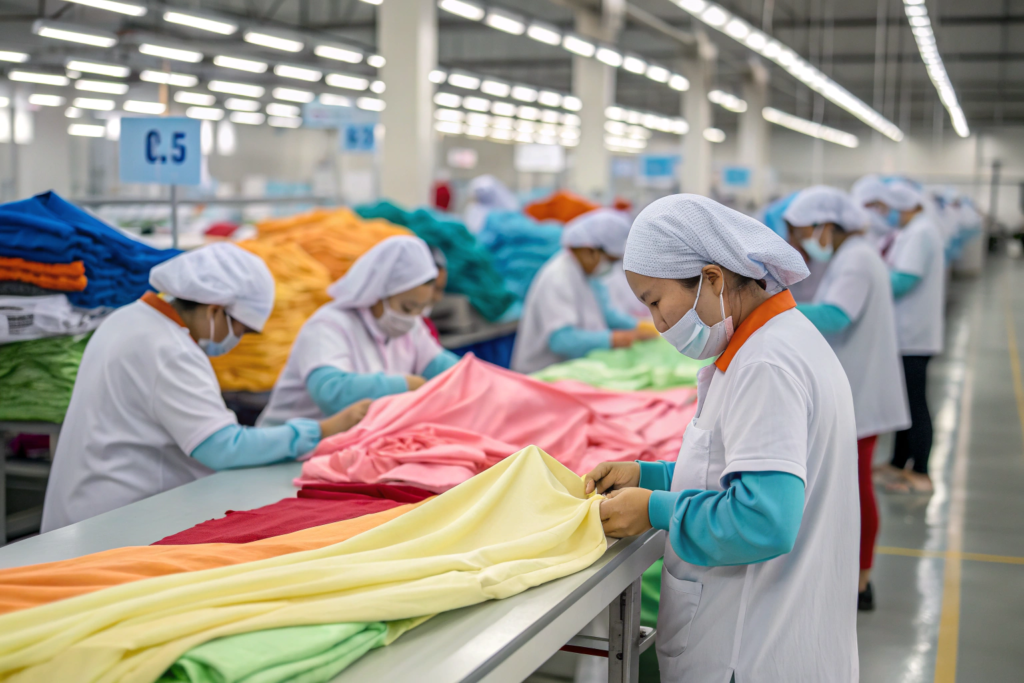
When you commit to OEKO-TEX Grade 1 production, you are partnering with a manufacturer that must have controlled, transparent, and auditable processes. This level of organization translates into fewer production errors, consistent quality, and more reliable lead times—all factors that save you money and stress. For instance, because our factory is audited and equipped to handle certified fabrics and dyes, the risk of a failed quality inspection or a rejected shipment due to safety issues is nearly eliminated. This prevents one of the costliest disruptions: a delayed or recalled order that misses the selling season.
How does this affect long-term planning with a manufacturer?
It fosters a deeper, strategic partnership. At Shanghai Fumao, when we develop a Grade 1 certified line with a brand, we work from the fabric mill onward. This integrated control allows for better raw material sourcing and production scheduling. We can help you plan collections further in advance with confidence, securing better prices and production slots. This forward visibility is crucial for managing cash flow and inventory in an unpredictable economy. You're not reacting to crises; you're executing a planned strategy.
Does it mitigate risks beyond product safety?
It does. The discipline required for certification often spills over into overall operational excellence. It encourages better documentation, clearer communication protocols, and a culture of compliance. These practices reduce misunderstandings, delays, and errors across all your orders, not just the certified ones. This creates a more efficient and less stressful business foundation, making your entire operation less sensitive to operational disruptions that can be magnified during economic stress.
Conclusion
OEKO-TEX 100 Grade 1 certification is far more than a label for baby clothes. It is a strategic business tool for reducing economic sensitivity in kids' apparel sales. It stabilizes demand by building unwavering customer trust around the non-negotiable value of safety. It protects profit margins by enabling a value-based premium and fostering operational efficiency. It simplifies the purchasing decision for cautious parents, boosting conversion rates. Finally, it forces a more resilient and reliable supply chain.
In an economic climate where consumers are selective, trust becomes your most valuable currency. Grade 1 certification is a direct investment in minting that currency. It allows your brand to stand on the solid ground of verified quality and responsibility, making it less vulnerable to the winds of price competition and economic fear.
If you are ready to build a more resilient kids' apparel line that can withstand economic fluctuations and earn lifelong customer trust, partnering with an expert manufacturer is key. Let Shanghai Fumao be your guide in developing a successful OEKO-TEX 100 Grade 1 certified collection. For a consultation on how to integrate this strategy into your next line, please contact our Business Director, Elaine, at elaine@fumaoclothing.com. We are here to help you create products that are not only safe for children but also safe for your business's future.