If you're sourcing corduroy vests for the U.S. market, you know the fabric's appeal—its unique texture, warmth, and vintage charm. But as a brand owner or buyer, you also know its hidden complexities: the dyeing processes, the backing adhesives, and the pile construction that can harbor restricted substances. Simply having an OEKO-TEX® certificate is not enough. The real question is: what’s behind that certificate? At Shanghai Fumao, we've learned that trust isn't issued by a testing institute; it's built through a transparent, systematic, and verifiable production chain. For corduroy, a material with more chemical touchpoints than a basic cotton tee, this systematic approach is non-negotiable.
Fumao’s OEKO-TEX® STANDARD 100 Class 1 certification is trustworthy for corduroy vest production because it is embedded in a controlled, fully documented, and traceable manufacturing ecosystem—not just a final product test. Our trustworthiness stems from three pillars: 1) Vertical Control from certified fabric mill to finished garment, 2) Material Segregation and Lot-Tracking specific to corduroy’s production needs, and 3) Transparent Audit Readiness that allows clients to verify every claim. For a complex item like a corduroy vest, this depth of control is what prevents failures and ensures consistent safety.
We’ve seen the fallout when certification is treated as a mere stamp. Last year, a U.S. brand partner came to us after a failed retail audit; their previous supplier’s corduroy bibs had a passing final test, but the specific dye lot used in production was uncertified, leading to a costly recall. Their pain point wasn't a lack of a certificate—it was a lack of a trustworthy system behind it. Let's dissect what makes our system different and how it directly benefits your corduroy product line.
How Does Fumao Ensure OEKO-TEX Compliance From Fabric Mill to Finished Vest?
OEKO-TEX® compliance for a finished garment requires every component to be certified. For a corduroy vest, this includes the corduroy fabric itself, the lining, the interlining, the threads, the buttons or snaps, and even the care labels. A single uncertified component—like a polyfill batting or a decorative plastic toggle—can invalidate the entire certification. Our trustworthiness starts with extending our control vertically upstream.
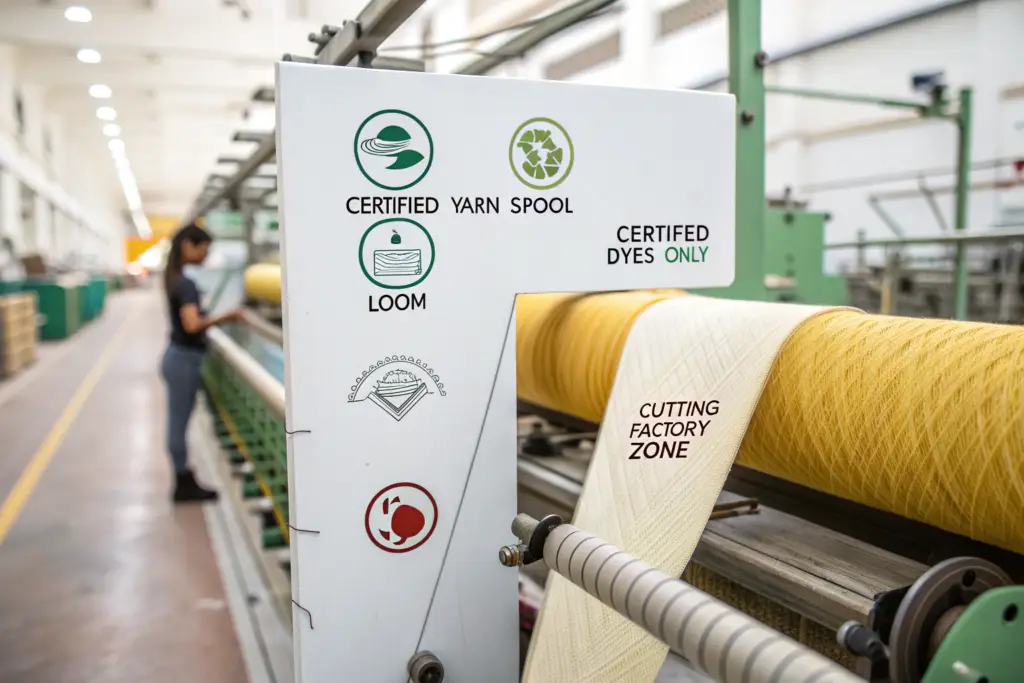
We ensure compliance by partnering exclusively with fabric mills that are themselves OEKO-TEX® certified for their production and can provide valid, batch-specific certification for the corduroy fabric they supply to us. We do not accept "equivalent" statements or general certificates. For every order, we demand and file the mill's certificate that matches the batch number on the fabric roll delivered to our factory. This is our first checkpoint. In 2023, we rejected three shipments of corduroy from a new mill because their provided certificate number did not match the batch dye lot, a discrepancy our system caught immediately.
What Specific Controls Are in Place for Corduroy Fabric Receiving and Storage?
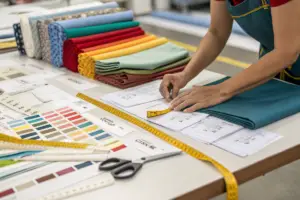
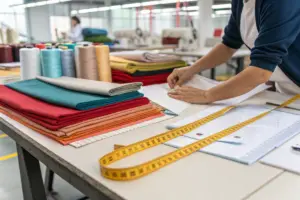
Corduroy requires meticulous handling. Upon arrival at our Shanghai Fumao facility, the process is rigorous:
- Physical Lot Check: We verify the roll's batch number against the supplier's OEKO-TEX® certificate.
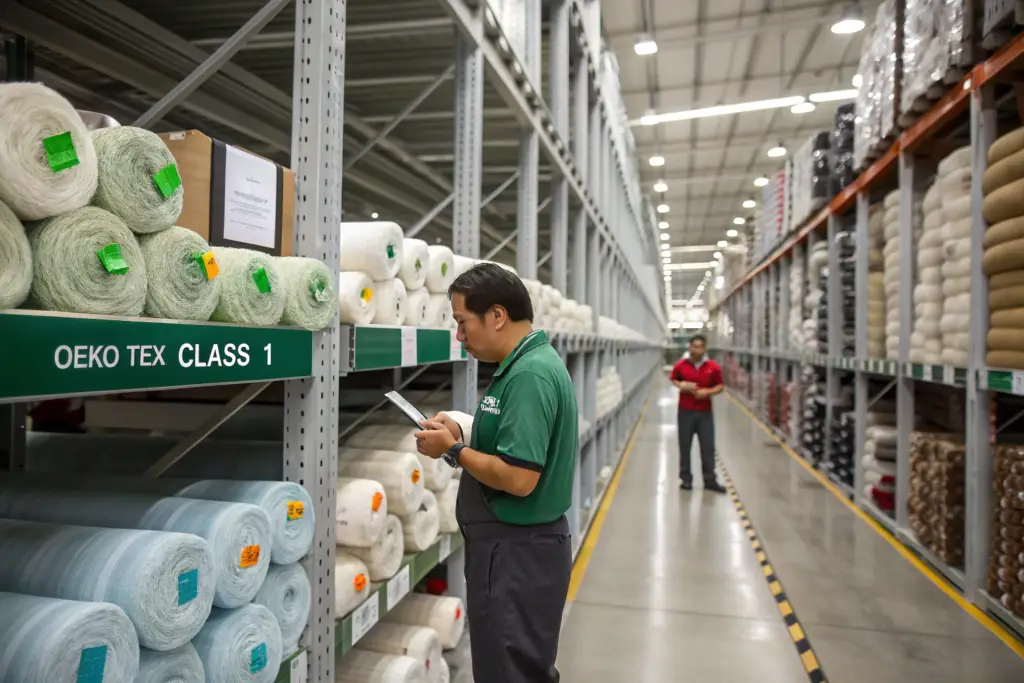
- Quarantine & Labeling: Certified fabric is moved to a designated "OEKO-TEX Raw Material Zone" marked with bright, color-coded labels. It is physically separated from any non-certified fabrics to prevent cross-contamination.
- Database Logging: The fabric details (mill name, certificate ID, batch #, arrival date) are logged in our digital tracking system. This creates a digital thread for traceability.
This system means we can tell you, in real-time, which certificate covers the fabric used for your specific vest order.
How Is Compliance Maintained During the Complex Cutting and Sewing Stages?
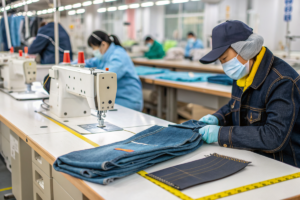
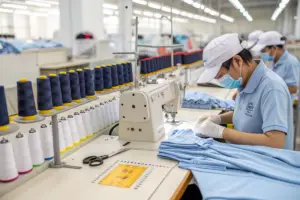
Cutting and sewing introduce risks of contamination from machinery, other fabrics, or auxiliary materials. Our controls include:
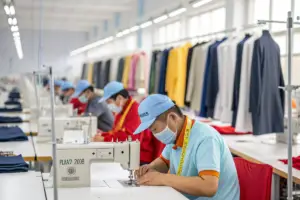
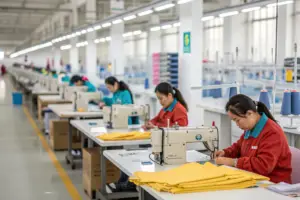
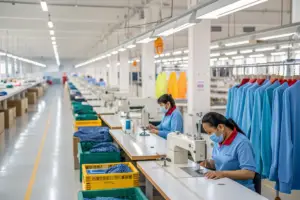
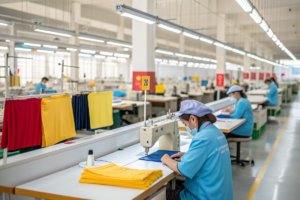
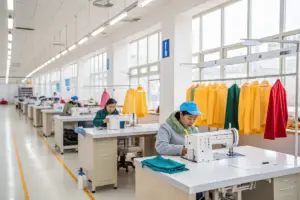
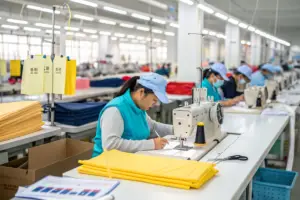
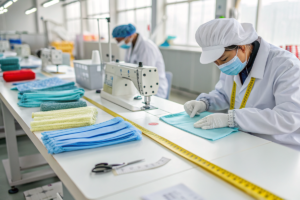
- Dedicated Production Lines: We run OEKO-TEX® Class 1 orders, like baby corduroy vests, on designated lines that are thoroughly cleaned before production runs.
- Certified Component Kits: All secondary materials (threads from A&E, linings, etc.) are pre-assembled into kits from certified suppliers. These kits are issued to the sewing line alongside the certified corduroy fabric.
- Process Audits: Our internal quality team conducts daily checks, verifying that only certified materials from the approved kits are being used on the line.
Why Is Material Segregation Critical for Corduroy Products, and How Is It Done?
Material segregation is the physical embodiment of our commitment. It’s the most visible way we prevent the #1 cause of certification failure: cross-contamination. Corduroy is particularly susceptible because its textured pile can trap dust and particles from other fabrics if stored improperly.
Segregation is critical because OEKO-TEX® is a product certification, not a factory certification. If a single thread from a non-certified black dress contaminates a batch of light-pink corduroy vests during production, the entire batch is compromised. Our system is designed to make such mix-ups physically impossible. We treat certified corduroy not just as a different material, but as a product on a completely separate quality track.
Can You Provide a Concrete Example of the Segregation Protocol?
Let's walk through a real scenario from our production of a lined corduroy puffer vest for a U.S. brand:
- Storage: The certified corduroy fabric and certified nylon lining are stored in Warehouse Zone A. Non-certified fabrics are in Zone B, a separate room.
- Cutting: The cutting table is designated for certified orders only. Before the corduroy is laid out, the table is cleaned with approved agents. The cut pieces are placed in labeled bins that travel together to the sewing line.
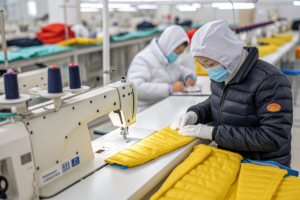
- Sewing & Filling: The sewing line is cleared of all previous project materials. The certified thread spools are installed. The certified down-alternative filling is brought in sealed bags. The bins from cutting are the only fabric introduced.
- Packaging: Finished vests are packaged in polybags from a certified supplier, in a separate packing area.
This end-to-end separation is documented in our SOPs and is a focal point during our annual OEKO-TEX® audit.
What Technology Supports This Traceability?
We use a barcode-based tracking system. Each batch of certified fabric and components receives a unique barcode. As the batch moves through cutting, sewing, and packing, the barcode is scanned at each station. This digital thread allows us to generate a production report for any order, proving which certified material batch was used where and when. For clients, this is a powerful due-diligence tool that goes far beyond a static certificate.
What Does "Audit-Readiness" Mean, and How Can a Buyer Verify Claims?
"Audit-ready" means that at any moment, without prior notice, we can present a complete, organized dossier for any OEKO-TEX® certified order we are producing or have produced. It means our system is living and compliant every day, not just in the weeks before the annual external audit. For a buyer, this is the ultimate assurance that our certification is operational, not just theoretical.
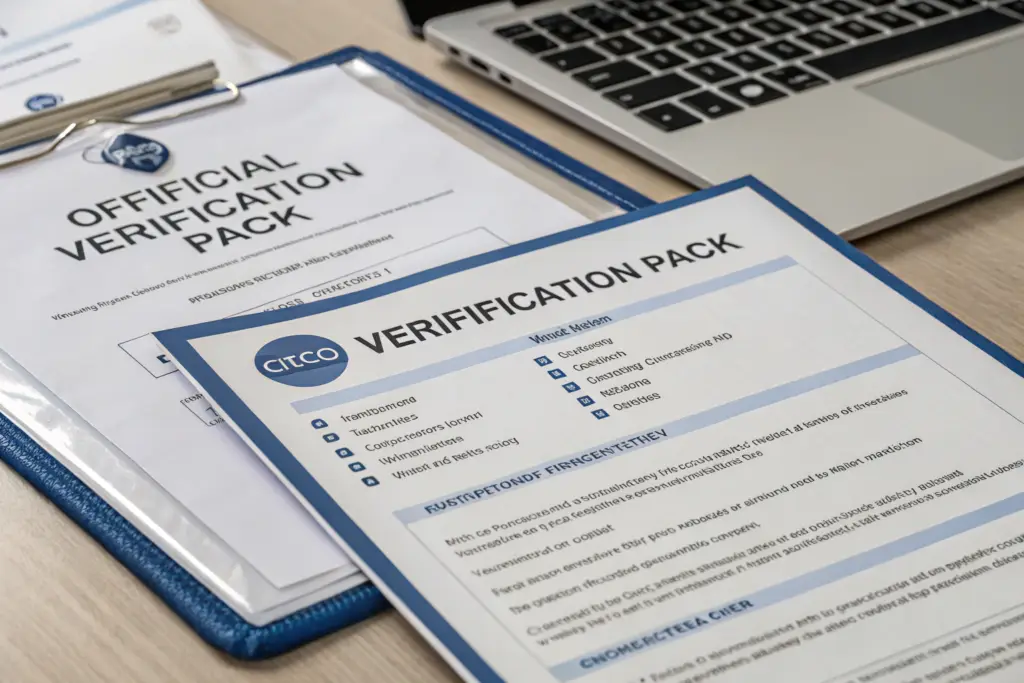
For you, audit-readiness translates to verifiability. You are not taking our word for it; you are welcome to verify it. We encourage this. We provide clients with a "Verification Pack" for their orders, which includes: 1) The official OEKO-TEX® certificate for the finished product style, 2) Copies of all component certificates (fabric, lining, etc.), 3) Lot numbers linking those certificates to your purchase order, and 4) Guidance on how to search the public OEKO-TEX® database. This transparency directly addresses the pain point of suppliers falsifying documents.
How Can a Buyer Practically Verify Fumao's OEKO-TEX Status?
We recommend a three-step verification process that any buyer can perform:
- Database Check: Use the certificate number we provide to search the official OEKO-TEX® certificate database. Confirm it's valid, lists the correct product (e.g., "Children's Corduroy Vest"), and shows Shanghai Fumao as the certificate holder.
- Component Cross-Reference: Check that the component certificate IDs (for the corduroy fabric from, say, a mill like Foshan Textile) listed on our main certificate are also valid in the database. This checks the chain of custody.
- On-Site or Virtual Audit: Visit our facility or request a live video tour. Ask to see the segregated storage, the dedicated lines, and the physical certificate files for your order. A trustworthy supplier will have nothing to hide.
What Was the Outcome of Your Last External OEKO-TEX Audit?
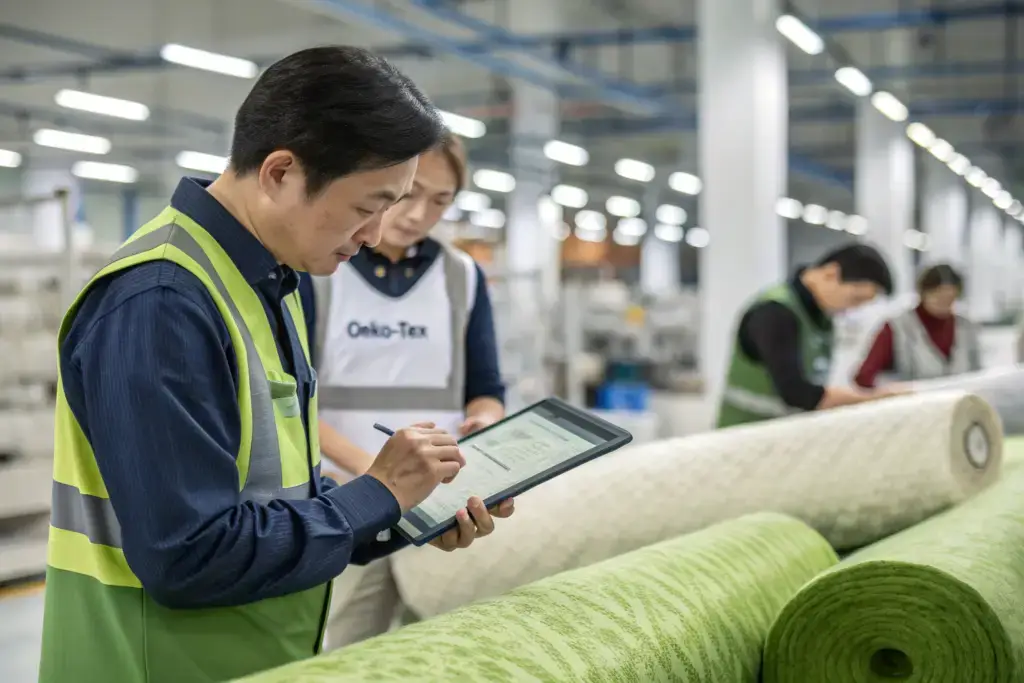
Our most recent surveillance audit was in Q1 2024. The auditor spent significant time in our corduroy vest production zone, reviewing:
- Material intake logs against certificates.
- Storage segregation practices.
- Training records for operators working on certified lines.
The audit resulted in zero non-conformities, and our certification was renewed seamlessly. We share a summary of this audit report with serious potential clients as a matter of course.
How Does This Rigorous System Benefit Your Corduroy Vest Business?
The benefit is de-risking your entire supply chain. Our rigorous system isn't an internal cost—it's an external guarantee that protects your brand's reputation, finances, and market access.
The direct benefits are: 1) Elimination of Recall Risk from certification fraud or error, 2) Streamlined Retailer Compliance for major U.S. chains that require verified safety documentation, and 3) A Powerful Marketing Story you can tell with confidence. When you claim your vests are OEKO-TEX® Class 1 certified, you know the claim is unassailable because of the system behind it. A client from Texas recently used our documentation to pass a stringent vendor onboarding process with a major department store, a deal they had previously lost due to inadequate proof of compliance.
How Does This Impact Speed-to-Market and Operational Efficiency?
Paradoxically, a rigorous system increases speed. How?
- No Quality Surprises: Because every step is controlled, we avoid last-minute failures that delay shipments.
- Faster Client Audits: When your team or your retailer's compliance officer audits us, we can provide requested documents in hours, not days. This speeds up approval cycles.
- Efficient Scaling: Once your first order is qualified through our system, re-orders follow the same pre-verified pathway, ensuring consistency and reliability.
Can This Approach Justify a Premium Price Point?
Absolutely. In the contemporary market, especially for children's wear, safety is a premium feature. The cost of our system is an investment in brand equity. It allows you to move beyond competing on price alone and instead compete on verifiable quality and trust—a much stronger position. Retailers and end consumers are increasingly willing to pay for this assurance, as it aligns with the broader trends of conscious consumerism and supply chain transparency.
Conclusion
In the world of apparel manufacturing, and particularly with a complex fabric like corduroy, trust in an OEKO-TEX® certification cannot be assumed—it must be engineered and proven. Shanghai Fumao has built that trust not on a single document, but on an interconnected system of vertical control, physical segregation, digital traceability, and unwavering transparency. This system transforms a compliance requirement into a tangible competitive advantage for your brand.
Choosing a manufacturing partner for your corduroy vests is about more than finding someone who can sew. It's about finding a partner whose operational integrity matches your brand's promise of safety. It's about ensuring that the story you tell your customers is rooted in a verifiable, audit-ready reality.
If your brand values deep, system-level trust and seeks a manufacturing partner whose OEKO-TEX® status is as robust as your corduroy vests are charming, let's connect. We at Shanghai Fumao invite you to verify our claims for yourself. To schedule a virtual audit of our facilities or to request a sample of our OEKO-TEX® Class 1 certified corduroy, please reach out to our Business Director, Elaine. She can provide the concrete evidence and peace of mind you need. Contact her at elaine@fumaoclothing.com to begin a partnership built on proven trust.