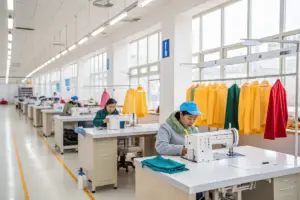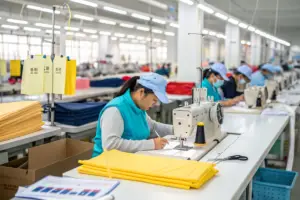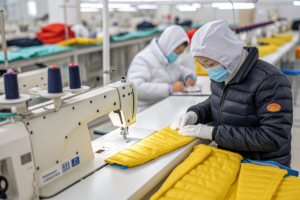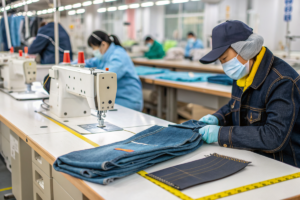
You've finalized a killer ski jacket or pant design. The materials are high-performance, the construction is innovative, and it looks fantastic. Now, to meet market demand and buyer requirements, you need the OEKO-TEX STANDARD 100 label. But how do you actually get it? The process isn't a simple form submission; it's a collaborative, strategic journey with your manufacturer that begins in the design phase, not after production.
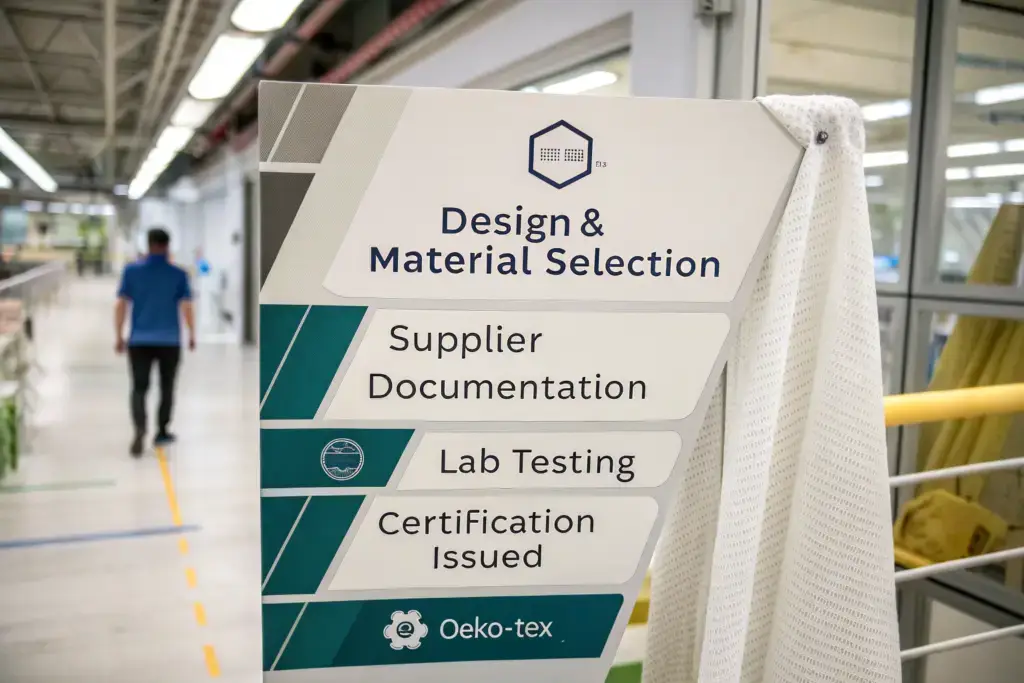
The process for getting your ski design OEKO-TEX certified is a multi-stage partnership with your manufacturer, involving: 1) Pre-certification material selection and vetting, 2) Compiling a comprehensive component dossier, 3) Submitting samples to an accredited OEKO-TEX institute for testing, and 4) Upon passing, receiving a certificate valid for that specific product and production site. Crucially, the manufacturer, not the brand, is typically the certificate holder and applicant.
For a brand owner, understanding this process is key to managing timelines, costs, and ensuring your manufacturer is set up for success. It turns certification from a mysterious hurdle into a planned milestone in your product development calendar.
What are the critical pre-certification steps with your manufacturer?
The most important work happens before any sample is sent to a lab. Failure here is the main cause of delays and extra costs. This phase is about proactive prevention.
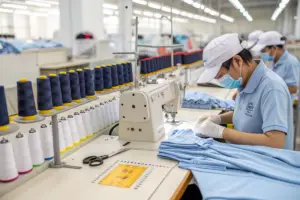
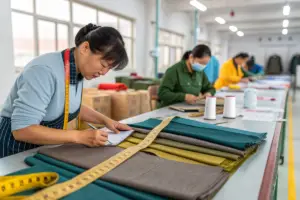
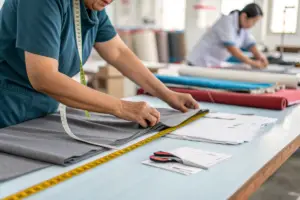
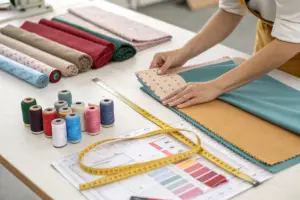
Your first step is to integrate OEKO-TEX compliance into your material sourcing brief. Tell your manufacturer from the outset: "All materials for this ski line must be OEKO-TEX certifiable." A proficient manufacturer like Shanghai Fumao will then work from its library of pre-vetted, compliant fabrics and components. For a new design, this means they will source potential materials only from mills and trim suppliers who can provide valid OEKO-TEX compliance documentation for their products. This is non-negotiable. You cannot certify a finished garment if its shell fabric, membrane, insulation, zippers, threads, and even prints are not themselves compliant.
How do you build the technical dossier for submission?
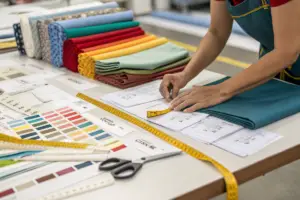
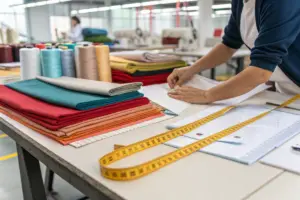
Your manufacturer compiles what's called a "Declared Composition" list. This is a detailed bill of materials (BOM) on steroids. For every single component, they must gather:
- The material's generic name and composition (e.g., 100% Polyester, 80% Nylon/20% Spandex).
- The weight in grams per square meter.
- The color(s).
- The supplier's name and their OEKO-TEX certificate number (if the component is pre-certified) or a statement of compliance.
This dossier proves that every element in your design comes from a controlled, compliant supply chain. At Fumao, we manage this documentation digitally for our clients, creating a transparent and audit-ready trail from the very first sample.
Why is a pre-test or risk assessment advisable?
Before the formal (and paid) application, a savvy manufacturer will conduct an internal risk assessment. This may involve sending material swatches to a third-party lab for a preliminary screening against key OEKO-TEX parameters. This "pre-test" identifies potential fail points—like a zipper with high nickel content or a dye batch with restricted amines—early on, when changes are still cheap and easy. We factored this into the timeline for a client's complex 3-layer ski shell, catching an issue with a bonding adhesive. We switched to a compliant alternative during prototyping, avoiding a failed certification attempt that would have delayed the launch by 8 weeks.
What happens during the official application and testing phase?
Once the dossier is complete and a pre-test suggests a high chance of success, your manufacturer submits the official application to an accredited OEKO-TEX testing institute (like Hohenstein, TESTEX, or others).
The manufacturer will send representative samples of the finished garment to the institute. It is critical that these samples are made from the exact materials and using the exact processes intended for bulk production. The institute then conducts a battery of chemical tests, extracting and analyzing for over 100 regulated and non-regulated harmful substances. The tests are comprehensive, covering pesticides, heavy metals, allergenic dyes, chlorinated phenols, and more.

How long does testing take, and what are the costs?
The timeline typically ranges from 4 to 8 weeks from sample submission to certificate issuance, depending on the institute's workload and the product's complexity. Costs are not trivial; they are based on the number of articles, color variations, and components. A complex ski jacket with multiple materials and colors will cost more to certify than a simple base layer. Your manufacturer should provide a clear cost estimate for the certification as part of your full-package manufacturing quote. This avoids surprises and allows you to factor it into your competitive pricing model.
What if the product fails?
Failure is costly and delays your timeline. The institute will issue a report detailing the non-compliant substance(s). Your manufacturer must then trace the problem to the specific component (e.g., "the red dye on the lining fabric contains excessive cadmium"), work with the supplier to rectify it, and resubmit samples for re-testing. This is why the pre-certification vetting and pre-testing are so valuable—they dramatically reduce this risk. A strong supplier agreement with your manufacturer should outline responsibilities and costs in the event of a failure, protecting your project.
What happens after certification is granted?
Congratulations, you pass! The institute issues an OEKO-TEX STANDARD 100 certificate. This certificate is specific to the product, the listed components, the manufacturing facility, and the brand (or applicant). It is valid for one year and can be renewed.
However, the certificate for the prototype is only half the battle. The real challenge is ensuring that every single garment produced thereafter is identical to the certified sample. This is where your manufacturer's quality control systems are paramount.
How is batch-to-batch compliance maintained?
Your manufacturer must have a system for material traceability. They must ensure that every bulk order of fabric, every zipper reel, and every spool of thread comes with a supplier certificate matching the lot used in the certified sample. They must segregate certified materials in the warehouse and prevent cross-contamination on the production line. At Fumao, our STeP-certified facility has integrated chemical management and QC protocols that are designed for this exact purpose, providing our clients with reliable delivery of consistently compliant goods.
What is your role as the brand owner?
As the brand, you are typically listed on the certificate as the "Holder" or "Client," while the manufacturer is the "Applicant." You receive a license to use the OEKO-TEX label on the certified product. You must ensure the label is used correctly according to OEKO-TEX guidelines (e.g., the correct label type, placement). Your manufacturer should supply you with the correct labels and usage guidelines. This partnership ensures the integrity of the claim from factory to consumer.
Conclusion
Getting your ski design OEKO-TEX certified is a detailed, sequential process that thrives on early planning, transparent collaboration with your manufacturer, and rigorous documentation. It is not a last-minute stamp of approval but a designed-in characteristic of your product.
The smoothest path to certification is choosing a manufacturing partner who treats compliance as an integral part of their product development and production system, not as an external add-on. Their expertise in navigating material vetting, dossier compilation, and lab communication is your greatest asset.
Ready to navigate the certification process with a partner who manages the complexity for you? Shanghai Fumao has a proven track record of efficiently guiding brands through OEKO-TEX certification for technical skiwear. Let's get your design certified and to market with confidence. Contact our Business Director Elaine: elaine@fumaoclothing.com.