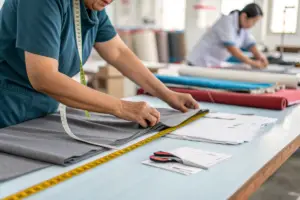
If you're a uniform supplier or a brand selling into the resort market, you've likely noticed a new line in RFPs: "OEKO-TEX certification preferred or required." This isn't a random trend. For ski resorts, staff uniforms are a massive investment and a 24/7 brand billboard. The shift toward requiring OEKO-TEX is a calculated business decision driven by liability, branding, and operational realities, not just environmental goodwill.
More ski resorts are requiring OEKO-TEX for staff uniforms primarily to mitigate employer liability, protect their brand reputation, and ensure employee welfare and performance. In an environment of intense physical activity and public visibility, uniforms free from harmful substances reduce the risk of skin irritation or allergic reactions among staff, prevent potential legal claims, and align the resort's operational practices with its public sustainability marketing.
Think of it from the resort manager's perspective: a uniform is worn for 8-10 hours in demanding conditions—sweat, friction, and varying temperatures. A non-compliant uniform causing rashes or illness is a worker's compensation headache, a staffing nightmare, and a PR disaster waiting to happen. OEKO-TEX is their preventative risk management.
How does OEKO-TEX protect resorts from liability and staff issues?
Ski resorts operate in a high-liability environment. Adding uniform-related health issues to their risk profile is unacceptable. OEKO-TEX certification provides a verifiable, third-party defense.
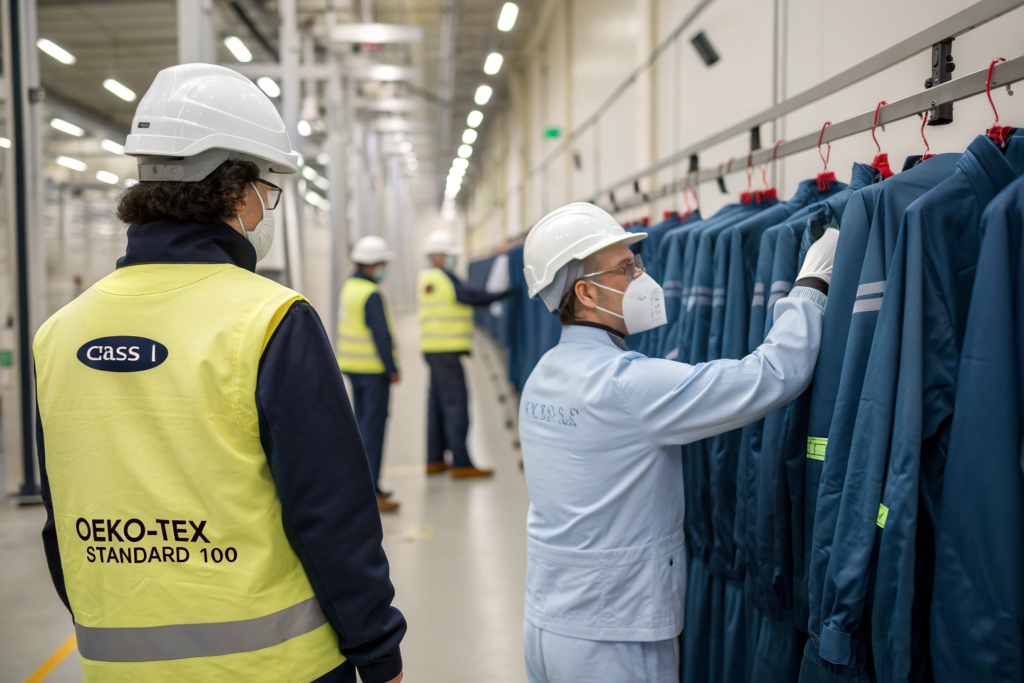
The core issue is prolonged skin contact under strenuous activity. Staff uniforms—especially base layers, neck gaiters, and helmet liners—are in direct, occlusive contact with skin. Sweat can increase the leaching of harmful residues from dyes or finishes. Resorts are increasingly aware of this and mandate OEKO-TEX STANDARD 100, Class I (the strictest grade for baby products) for any inner layers. This is not an extravagance; it's a duty of care. By specifying this, resorts transfer the burden of chemical safety proof to the uniform supplier. It creates an auditable trail: if a health issue arises, the resort can point to the certification as evidence of due diligence. For a uniform manufacturer, this means your supplier agreement must explicitly guarantee this level of compliance. At Shanghai Fumao, our contracts for resort wear include full indemnity clauses tied to our certification, which became a key winning point in a bid for a major Canadian resort's uniform overhaul last season.
What are the direct performance benefits for staff?
A comfortable, safe uniform is a productivity tool. Staff who are not distracted by itching, rashes, or discomfort are more engaged and provide better guest service. OEKO-TEX testing includes parameters like pH balance and colorfastness to perspiration. A skin-neutral pH prevents irritation, and perspiration-fast dyes ensure colors don't run into sweat, which is both a safety and appearance issue. This focus on performance wear functionality ensures the uniform supports the employee's job, directly impacting the resort's operational efficiency and guest satisfaction scores—a tangible ROI on the uniform investment.
How does it streamline procurement and inventory management?
Resorts often order hundreds of uniforms. Sourcing from an OEKO-TEX certified supplier simplifies procurement. The certification acts as a pre-qualification filter, ensuring all potential suppliers meet a high, consistent baseline for material safety. It removes guesswork and the need for resorts to conduct their own complex chemical testing. Furthermore, because OEKO-TEX certified fabrics often come from mills with better quality control, the uniforms themselves tend to be more durable and colorfast, lasting longer and maintaining a professional appearance throughout their lifecycle. This reduces replacement frequency and total cost of ownership, addressing a key operational pain point.
How do certified uniforms amplify a resort's brand and sustainability narrative?
Modern ski resorts market an experience rooted in pristine nature and wellness. There is a glaring hypocrisy if their marketing touts environmental stewardship while their staff are wearing uniforms potentially made with environmentally damaging chemicals.
OEKO-TEX, particularly the STeP certification for the manufacturing facility, allows resorts to tell a cohesive story. They can communicate that every aspect of their operation, down to the staff's clothing, aligns with values of safety and responsibility. This is powerful for guest relations, corporate partnerships, and attracting a values-driven workforce. A resort can authentically say, "We care for our team and our environment, from the slopes to the seams." For a brand, supplying uniforms to such a resort elevates your own brand identity as a responsible partner.

Why is this important for guest perception and marketing?
Guests interact with staff constantly. A uniform is a tactile touchpoint. Savvy consumers notice details and may inquire about sustainability practices. Staff trained to mention, "Our uniforms are OEKO-TEX certified for your safety and the environment's," turn a functional garment into a brand advocacy tool. This micro-communication is incredibly effective. It also provides rich content for the resort's social media and website—behind-the-scenes features on "Our Green Commitment" can highlight uniform certification as a tangible example.
Does it influence B2B relationships and event hosting?
Increasingly, large corporations choose resorts for retreats and events based on ESG (Environmental, Social, and Governance) criteria. A resort's ability to demonstrate sustainable procurement, including uniforms, can be a deciding factor in securing lucrative corporate contracts. It shows a systemic commitment to responsible operations that goes beyond mere carbon offsetting. This expands the business case for certified uniforms from internal risk management to external revenue generation.
What should a uniform supplier emphasize in their proposal?
To win in this evolving market, your proposal must speak the resort's language of risk, branding, and value—not just technical specifications.
Lead with liability mitigation. Structure a proposal section titled "Protecting Your Team and Your Brand." Detail how your OEKO-TEX certification, especially for direct-skin layers, fulfills their duty of care. Include copies of certificates and explain your quality control processes that ensure batch-to-batch compliance. Highlight the durability and performance benefits that reduce long-term costs. At Shanghai Fumao, we include a "Total Cost of Ownership" analysis in our bids, showing how our certified, durable uniforms offer better value over 3 years compared to cheaper, non-certified alternatives that may fade, pill, or need replacing sooner.
How to address the cost concern proactively?
Resort procurement officers are budget-conscious. Anticipate the price question by contextualizing it. "While our uniforms have a slightly higher initial cost due to OEKO-TEX certified materials and construction, they deliver value by: 1) Reducing your risk of worker health incidents, 2) Enhancing your brand's sustainability narrative for marketing, and 3) Offering superior durability for lower long-term replacement costs." Provide case studies or testimonials if possible. This demonstrates you understand their business holistically.
Why is offering customization within the standard a key advantage?
Resorts need customizable logos, colors, and functional designs. Your edge is offering full customization within the framework of OEKO-TEX certification. Assure them that their unique design will be executed with certified fabrics and threads, and that any embroidered or printed logos will use compliant inks and processes. This turns a potential constraint into a showcase of your technical and product development expertise. It proves you can deliver brand-specific solutions without compromising on the core safety standard they require.
Conclusion
The move by ski resorts to require OEKO-TEX for staff uniforms is a clear signal of the market maturing. It represents a convergence of operational pragmatism, legal prudence, and brand strategy. For suppliers, this is not a hurdle but a significant opportunity to differentiate and add value.
By positioning yourself as a partner who understands and provides solutions for this trifecta of needs—liability protection, staff performance, and brand enhancement—you move beyond being a commodity uniform provider to becoming a strategic vendor integral to the resort's operational success and brand integrity.
Shanghai Fumao is precisely this kind of partner. We combine OEKO-TEX certified manufacturing with deep expertise in durable, high-performance uniform programs. Let us help you craft a winning proposal that meets the new standard of care on the slopes. Contact our Business Director Elaine to outfit your team with confidence: elaine@fumaoclothing.com.