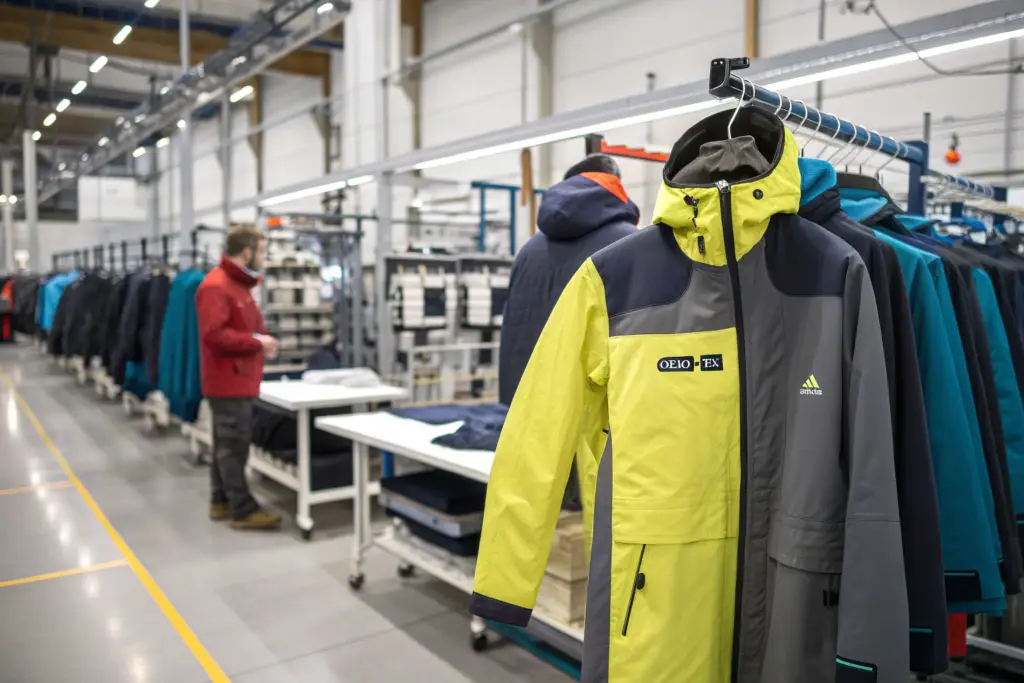
As a brand owner sourcing skiwear, you face a constant tension: the market demands competitive prices, but consumers increasingly demand verified safety and sustainability through standards like OEKO-TEX. The surface-level answer seems to be "you get what you pay for." But is it truly impossible to find a manufacturer who delivers both genuine value and genuine certification? The reality is more nuanced.
Yes, a manufacturer can offer both cost-effective and OEKO-TEX certified skiwear, but only if "cheap" is redefined as optimized value, not rock-bottom price. This balance is achieved through strategic efficiencies in sourcing, production scale, vertical integration, and design simplification—not by compromising on the integrity of the certification or material quality. True value combines a fair price with guaranteed safety and reliability.
The critical warning is this: if a price seems too good to be true for a certified product, it likely is. The risk often involves certificate falsification, using certified fabric for samples but uncertified for bulk, or sourcing from non-compliant sub-suppliers. Your due diligence must shift from just auditing price to auditing the manufacturer's system for delivering certified quality at scale.
Where can a certified manufacturer legitimately cut costs?
Achieving a lower cost structure for certified goods isn't about cutting corners on the standard itself. It's about eliminating waste and inefficiency elsewhere in the process. A sophisticated manufacturer focuses on cost drivers that don't affect chemical safety or performance.
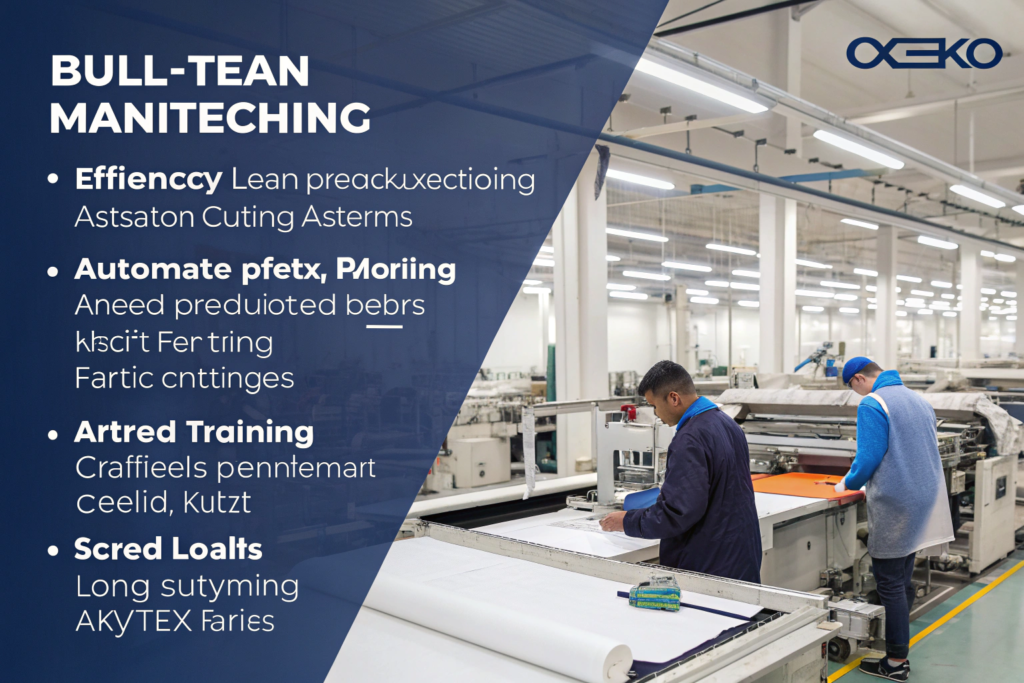
Key areas include lean manufacturing to reduce fabric waste, investing in automated cutting for precision, optimizing marker making, and maintaining high worker efficiency through training. Bulk sourcing of OEKO-TEX certified fabrics and components from long-term partner mills also drives down material costs significantly. At Shanghai Fumao, our full-package manufacturing model allows us to aggregate fabric orders across multiple clients, securing better rates from certified mills—savings we pass on. For example, by standardizing the certified waterproof membranes we use across several ski jacket lines, we achieved a 15% cost reduction for a client in 2023 without changing the certified material specs.
Can design choices influence the final cost of certified skiwear?
Absolutely. Design complexity is a major cost driver. A ski jacket with multiple material panels, many zippers, and complex quilting patterns requires more labor, more cutting, and more certified components (each zipper, cord, and laminate must be certified). Simplifying the design—without sacrificing style or function—can substantially reduce cost. We often guide clients in product development to achieve their aesthetic with fewer seam lines or by using the same certified fabric for the shell and hood, which simplifies sourcing and cuts waste. This "design for efficiency" is a collaborative process that protects the OEKO-TEX integrity while managing cost.
How does vertical integration create cost advantages?
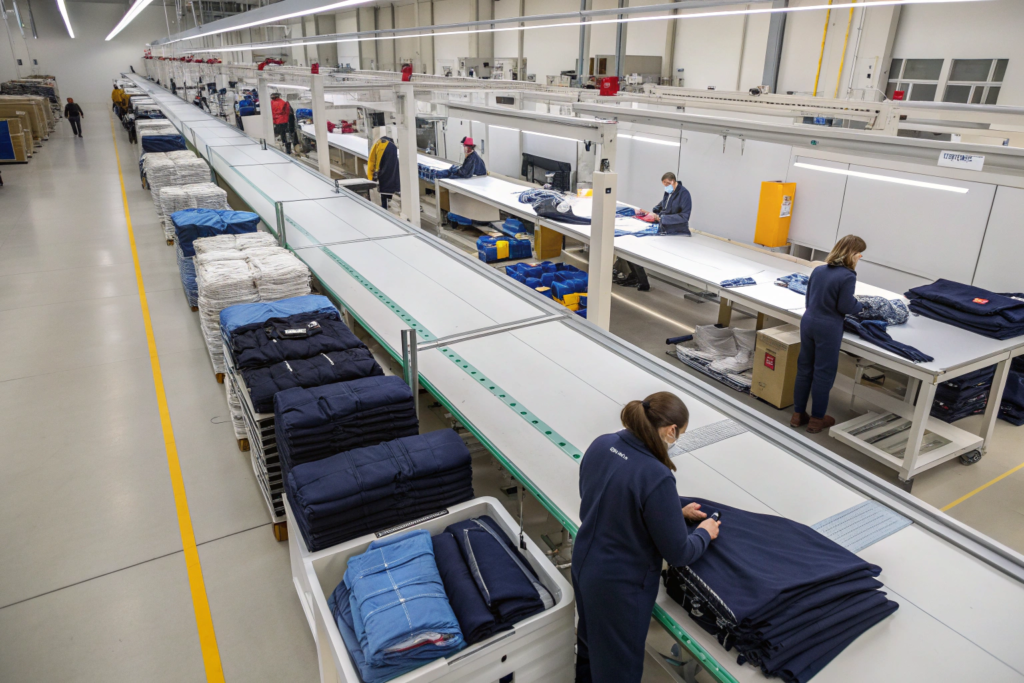
A manufacturer with control over more stages of production—like in-house fabric sourcing, cutting, sewing, and finishing—has greater ability to manage and optimize costs. It removes the markups of multiple subcontractors. If that vertically integrated facility also holds OEKO-TEX STeP certification, it guarantees that the entire production environment meets high environmental and chemical management standards. This control is how we ensure reliable delivery and cost predictability. There are no hidden fees or last-minute surprises from external suppliers, which directly addresses a major pain point for brand owners.
An unrealistically low quote for OEKO-TEX certified skiwear is a major red flag. The certification process, the compliant materials, and the responsible manufacturing all have inherent, verifiable costs. A price that ignores these likely indicates a compromise.
Common risks include: "Certificate Fishing," where a supplier uses a generic certificate from a mill that doesn't match the specific fabric lot in your order; "Component Substitution," using certified main fabric but uncertified, cheaper linings, zippers, or DWR coatings; and "Process Contamination," where certified fabric is cut and sewn in a facility that also processes non-certified, dyed goods, leading to cross-contamination. Any of these voids the certification's validity and exposes your brand to immense risk.
How can you verify the authenticity of the certification and costs?
Your supplier agreement must require a valid, transaction-specific OEKO-TEX certificate for the exact product. You must verify this certificate number on the official OEKO-TEX database. Go further: ask for test reports from an accredited lab for the specific batch of material. For cost verification, request a transparent bill of materials (BOM) breakdown. A credible manufacturer will show the cost of the certified fabric, trims, labor, and overhead. This transparency shows there are no hidden, uncertified components pulling the price down. We provide this level of breakdown to all our clients, turning the cost conversation into one about value and trust.
What questions should you ask to uncover cost-cutting risks?
- "Can you provide the OEKO-TEX STeP certificate for this production facility?"
- "For this quote, which specific mill is supplying the certified shell fabric? Can we have their contact and certificate for the lot?"
- "Are all components—including the laminated membrane, insulation, zippers, and threads—sourced from OEKO-TEX compliant suppliers with documentation?"
- "How do you prevent cross-contamination with non-certified products in your factory?"
A trustworthy manufacturer will answer these readily. Hesitation or vague answers are clear warning signs.
How does a value-oriented partnership actually work?
The goal is to partner with a manufacturer who views OEKO-TEX certification not as a luxury upsell, but as a baseline for responsible production. Their entire system is built to deliver it efficiently. This partnership is strategic, moving beyond transactional purchasing.
This involves early collaboration. Share your cost targets and performance requirements during the product development phase, not after the design is finalized. A value-oriented partner will then work with you to select the most cost-effective certified materials and construction methods to meet that target. They act as an extension of your sourcing team, leveraging their network and expertise. For instance, we helped a startup brand launch a competitively priced, certified ski pant line by recommending a slightly heavier but equally performing certified fabric from a mill we had a volume agreement with, saving 12% on material costs compared to their initial spec.

What is the role of order volume in achieving value?
Volume matters significantly. Larger orders allow the manufacturer to purchase certified fabrics and components at much better rates, amortize fixed costs (like setting up production lines), and achieve higher labor efficiency. If you're a smaller brand, partnering with a manufacturer that aggregates orders from multiple smaller clients (like a full-package manufacturing hub) can give you access to these volume-based cost advantages without requiring massive minimum order quantities from you alone.
Can logistics and payment terms affect the final landed cost?
Yes. A manufacturer offering DDP (Delivered Duty Paid) services can often secure better freight rates due to their shipping volume, reducing your overall landed cost. Similarly, clear and secure payment methods that build trust can reduce transactional friction and cost. The key is to view the manufacturer as a logistics partner, not just a production unit. Their ability to efficiently handle export & logistics is a core part of delivering certified value to your warehouse door.
Conclusion
The question isn't whether skiwear can be both cheap and OEKO-TEX certified. The right question is: how can it be competitively priced and authentically certified? The answer lies in partnering with a manufacturer whose operational excellence and strategic sourcing are built around the certification, not in spite of it.
This requires a shift in focus from hunting for the lowest quote to evaluating the manufacturer's integrated system for quality, transparency, and efficiency. The true cost savings come from reliability, not risk.
If you seek a partner who understands this balance and can deliver genuine OEKO-TEX certified skiwear at a truly competitive price, Shanghai Fumao is built for this challenge. Our vertically integrated, STeP-certified facility and strategic sourcing networks are designed to optimize value without compromise. Let's discuss how to bring your high-quality, certified line to market. Contact our Business Director Elaine: elaine@fumaoclothing.com.