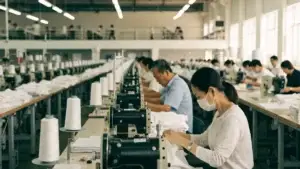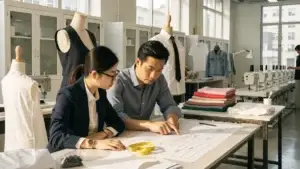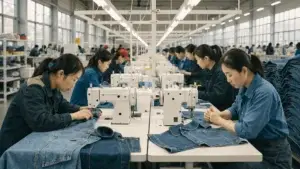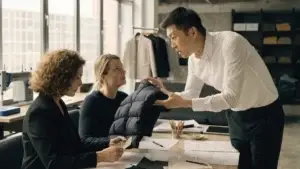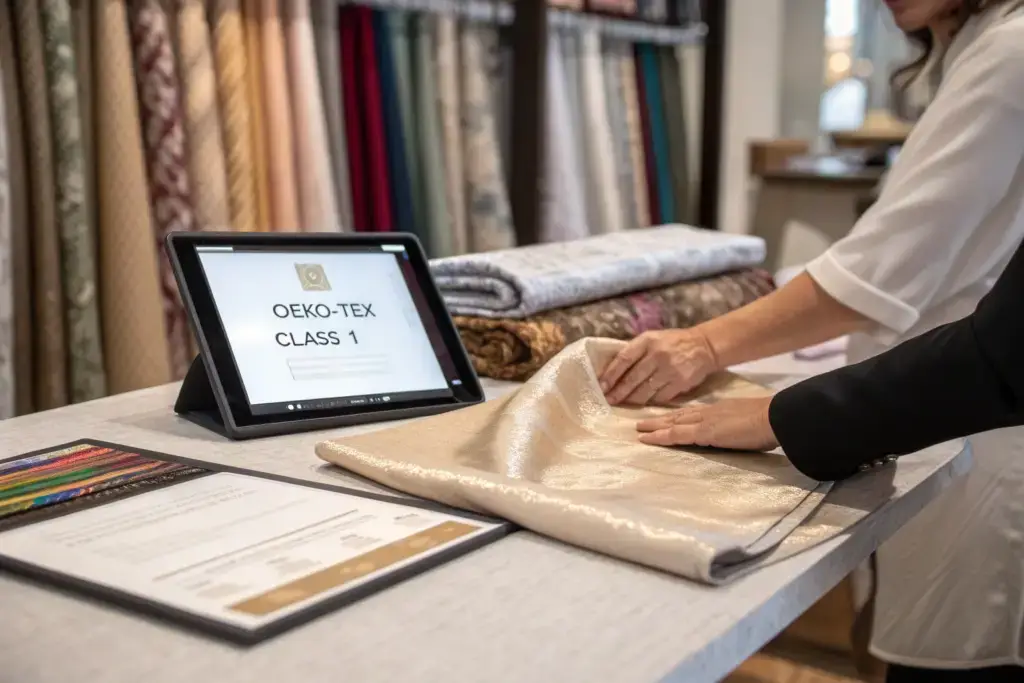
You are sourcing high-end fabrics for your next luxury children's collection: silky cupro, soft-washed linens, premium organic cotton jerseys, or delicate wool blends. The hand-feel, drape, and aesthetic are paramount. Traditionally, procurement decisions at this level were driven by aesthetics, brand reputation of the mill, and cost per meter. But a fundamental shift is occurring. Now, the most forward-thinking brands and manufacturers are asking a new, non-negotiable question first: "Is it available in OEKO-TEX® Class 1?" This isn't a secondary filter; it's becoming the primary gatekeeper for fabric selection, fundamentally reshaping procurement strategies.
For a manufacturer like Shanghai Fumao, OEKO-TEX® Class 1 certification is the new benchmark for luxury. It signals that a mill has mastered not only the artistry of creating beautiful textiles but also the science of doing so within the strictest safety parameters for babies and children. When we procure for our partners, this certification is the foundation of our approved supplier list. It influences decisions by de-risking the supply chain, future-proofing against regulatory shifts, and aligning with the values of the high-end consumer who demands both opulence and purity. The decision is no longer just about the fabric's face value, but about its verified integrity from molecule to final garment.
Let's dissect how this standard actively redirects procurement flows, budgets, and relationships within the high-end textile sector.
Why is Class 1 becoming a prerequisite, not a preference, for luxury mills?
High-end fabric mills are in the business of trust. Their clients are prestigious fashion houses and responsible brands. The reputational risk of supplying a beautiful fabric that later causes a safety issue for a child is catastrophic. Therefore, leading mills are proactively obtaining OEKO-TEX® Class 1 certification for their core lines as a competitive necessity. It demonstrates technical prowess and commitment to responsible production, which are now part of the luxury lexicon.
This shifts the procurement dynamic. Instead of a brand asking "Can you get this certified?" the question becomes "Which of your already-Class-1-certified fabrics fits our vision?" This flips the script. It means brands and manufacturers like us are increasingly funneling their business toward mills that have made the upfront investment in certification. For example, when we sought a source for a GOTS organic cotton with a specific low-impact dye palette for a luxury infantwear line, we shortlisted only mills that held both GOTS and OEKO-TEX® Class 1 certifications. This immediately narrowed the field to the most technically advanced suppliers.

How does this affect pricing and value perception?
There is a cost associated with the rigorous testing and process controls required for Class 1. This is often reflected in a premium on the fabric cost per meter. However, in high-end procurement, this is increasingly framed not as an added cost, but as an integral part of the fabric's value. It's akin to the difference between a generic "wool" and "Zegna wool." The certification becomes part of the fabric's provenance and story, justifying its position in a luxury tier and supporting the final product's premium price point.
What happens to mills that don't certify?
They risk being excluded from an entire segment of the market. As more brands like those we partner with at Shanghai Fumao mandate Class 1 for their children's lines, non-compliant mills find their addressable market shrinking, especially among the most desirable, high-margin clients. This market pressure is accelerating industry-wide adoption at the luxury level.
How does it streamline and de-risk the sourcing process?
Procuring high-end fabrics is inherently complex and risky. Lead times are long, minimum order quantities (MOQs) are high, and quality deviations are costly. Adding the variable of post-procurement safety testing is a major bottleneck. Fabric might arrive at the garment factory, only to be held for weeks awaiting third-party lab results, potentially failing and derailing an entire production schedule.
OEKO-TEX® Class 1 certification, when valid and verified upfront, eliminates this bottleneck. The safety assurance is built into the material before it is even ordered. This allows our procurement and production planning teams at Shanghai Fumao to work with certainty. We can confidently schedule fabric arrival, cutting, and sewing, knowing the compliance box is checked. This reliability is a core component of our full-package manufacturing service, translating directly into on-time delivery for our brand partners.
What specific procurement checks does it enable?
Our process involves a rigorous verification protocol:
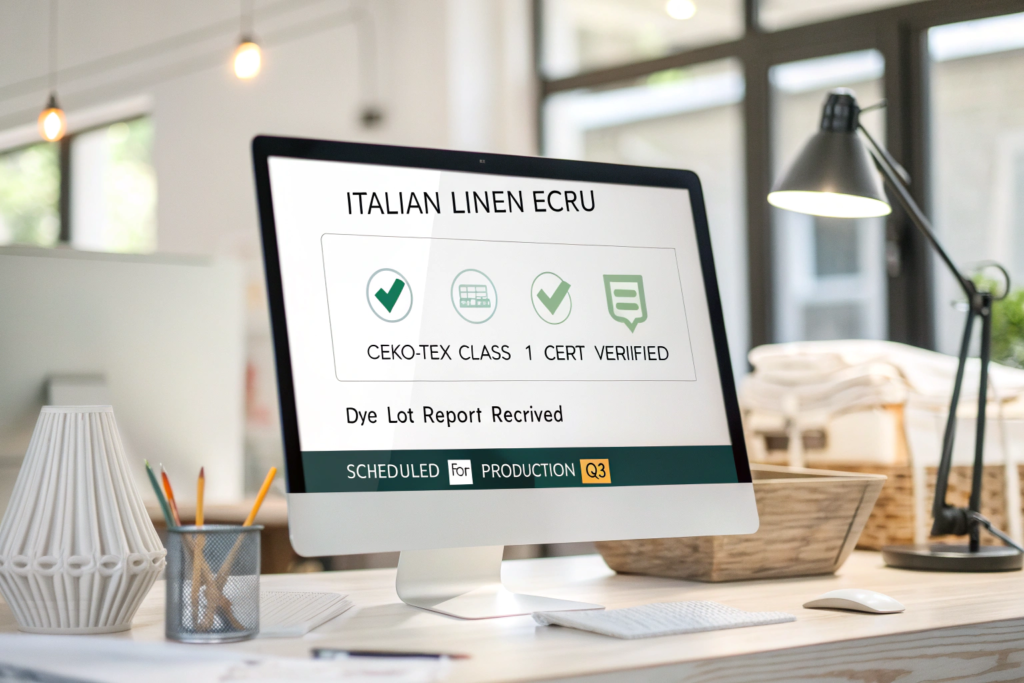
- Certificate Authentication: We use the OEKO-TEX® online database to verify the authenticity and scope of the mill's certificate. Is it current? Does it cover the exact article (e.g., "100% Mulberry Silk Twill 19 momme") and the specific dyeing process?
- Batch Specificity: We require and file the test report for the specific dye lot of the fabric we are purchasing. A generic annual certificate is not sufficient.
- Trim and Accessory Alignment: The Class 1 requirement forces holistic procurement. It's not just the main fabric; we must also source compatible, certified linings, interlinings, threads, and elastics from the start, creating a cohesive and compliant material package.
This systematic approach turns procurement from an art into a controlled science, significantly de-risking the entire production pipeline.
Does Class 1 certification drive innovation in high-end fabric development?
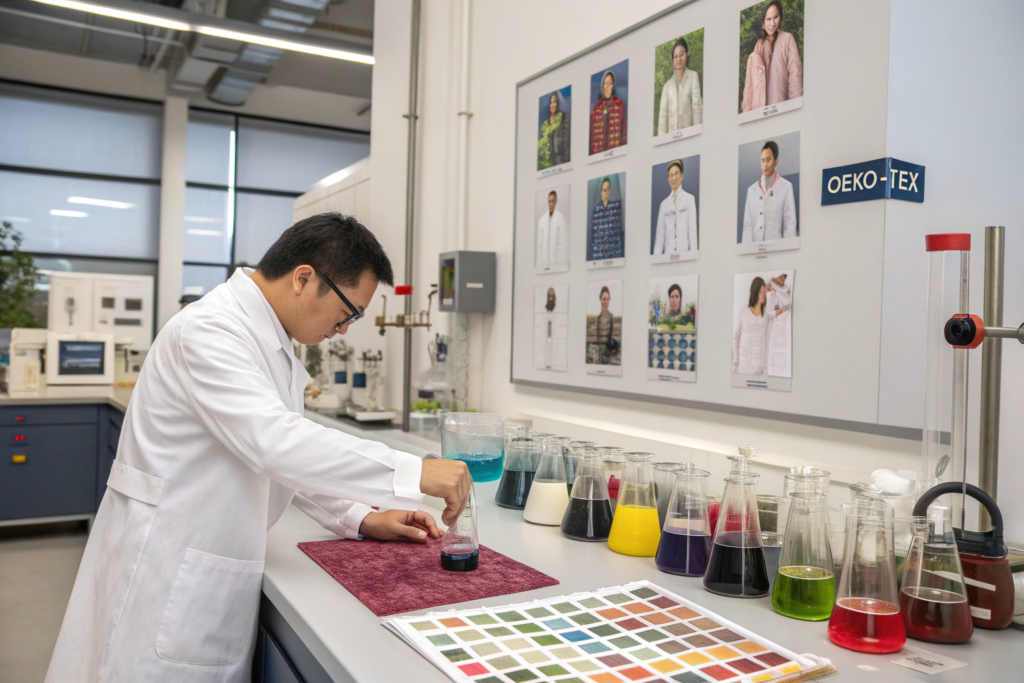
Paradoxically, the strict constraints of Class 1 are becoming a catalyst for innovation, not a limitation. Mills are challenged to achieve luxurious aesthetics—vibrant colors, deep blacks, specific sheens, advanced performance features—while staying within the stringent chemical limits. This pushes them to develop new, cleaner chemistry and processes.
For instance, achieving a rich, colorfast black on cotton without using certain restricted metal-complex dyes requires advanced dye technology. Developing a wrinkle-resistant linen finish without formaldehyde demands innovative bio-based softening agents. Mills that succeed in this are creating proprietary, next-generation fabrics that are both luxurious and inherently safe. When we procure these fabrics for a client, we are not just buying a material; we are buying into that R&D and innovation story, which becomes a powerful marketing asset for the final brand.
How does this influence seasonal development?
It encourages a "library" approach. Instead of chasing completely new, untested fabrics every season, smart procurement builds a curated library of trusted, Class 1 certified luxury fabrics. New seasonal developments then become variations on these proven platforms—new colors within a certified dye system, or new blends using certified base fibers. This makes development faster, safer, and more sustainable, while maintaining a high level of creativity and exclusivity.
Can it lead to exclusive fabric partnerships?
Yes. At Shanghai Fumao, we have developed exclusive arrangements with several high-end mills. We commit to significant volume across seasons for their Class 1 certified fabrics, and in return, they provide us with exclusive colorways or slight customizations (e.g., a specific weight or finish). This creates a competitive advantage for our brand partners, offering them fabrics that are not only safe and beautiful but also difficult for competitors to access.
How does it align with the values of the modern luxury consumer?
The definition of luxury is evolving. It is no longer solely about conspicuous consumption; it is increasingly about conscious consumption. The modern luxury parent seeks products that are exceptional in quality, design, and ethics. They are highly educated about supply chains and are intolerant of ambiguity regarding their children's safety.
OEKO-TEX® Class 1 provides a unambiguous answer to this demand. It is a third-party, science-backed credential that a brand can point to with confidence. For a high-end children's brand, marketing a dress made from "OEKO-TEX® Class 1 Certified French Linen" tells a complete story: it speaks to provenance (France), quality (linen), and responsible safety (Class 1). This trifecta aligns perfectly with the values-driven purchasing decisions of today's affluent customer.
What is the impact on brand equity and storytelling?
Procuring Class 1 fabrics transforms safety from a defensive claim ("free from...") into a positive brand attribute. The story becomes about "proactive care" and "investing in the best foundation." It allows brands to communicate a deeper level of sophistication—one that considers unseen details. This builds immense brand equity and trust, which are the cornerstones of loyalty in the luxury segment.
Does this influence retail relationships?
Luxury department stores and high-end boutiques are acutely aware of their own reputational risk. They are increasingly requiring evidence of product safety standards from their vendors. Presenting a collection built on pre-certified, Class 1 fabrics makes the brand an easier, safer partner for these retailers. It facilitates entry into prestigious sales channels and strengthens long-term partnerships.
Conclusion
OEKO-TEX® STANDARD 100 Class 1 is no longer a passive filter in high-end fabric procurement; it is an active, strategic force reshaping the landscape. It elevates procurement from a transactional search for beauty to a disciplined pursuit of verified integrity. It streamlines operations by de-risking the supply chain, fosters innovation under constraint, and most importantly, aligns the very essence of luxury with the imperative of safety.
For brands that wish to lead rather than follow, integrating Class 1 into the heart of their fabric procurement strategy is not an option—it is the new definition of luxury intelligence. It ensures that the first and most critical decision in the creation of a garment is also the one that guarantees its fundamental goodness.
Ready to build your luxury children's collection on a foundation of the world's safest and most beautiful fabrics? Partner with Shanghai Fumao. Our procurement network and expertise in OEKO-TEX® Class 1 certified high-end textiles are designed to bring your most exquisite visions to life with uncompromising safety. Contact our Business Director, Elaine, at elaine@fumaoclothing.com to curate your next collection.