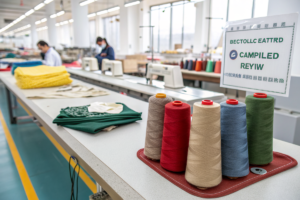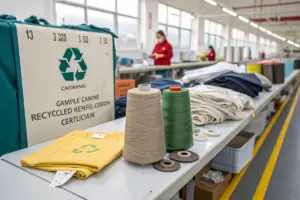
You're building a line of weekly pants—those go-to, everyday trousers for kids that get worn, washed, and worn again. They're not a fancy party item; they're a workhorse. So, why should a fundamental safety standard like OEKO-TEX® matter for something so basic? Isn't this overkill for simple cotton pants? This line of thinking is exactly where many brands make a critical mistake. The essential nature of daily basics is precisely why OEKO-TEX® certification is non-negotiable.
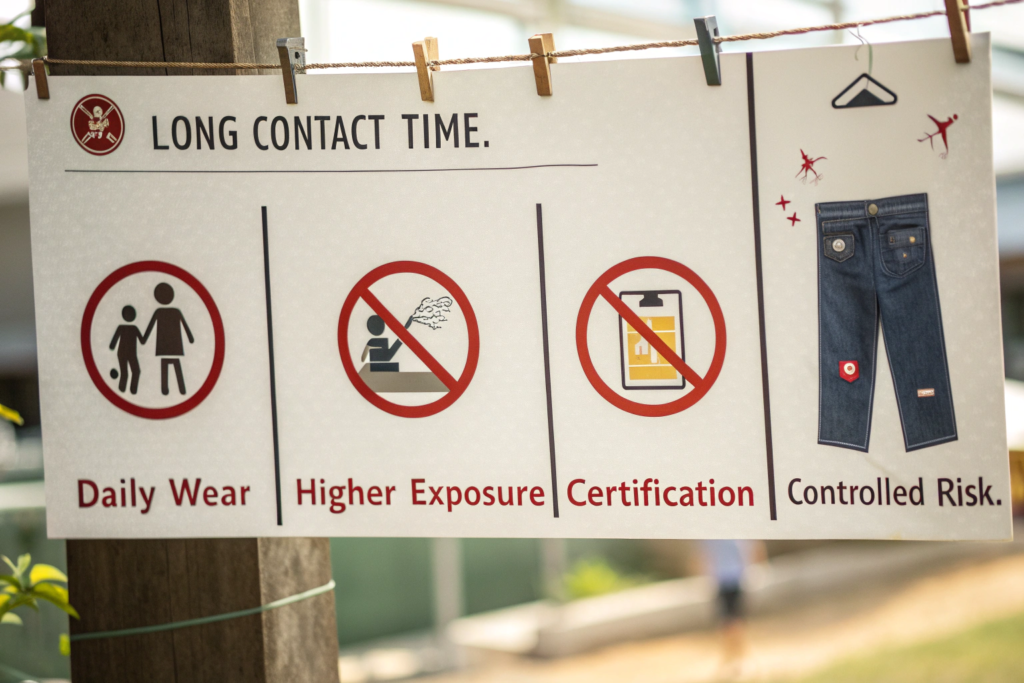
Weekly pants represent the highest level of risk exposure. A child wears them for 8-12 hours a day, several days a week. The fabric is in constant, intimate contact with skin over large areas of the body. It endures repeated friction from play, absorbs sweat, and goes through the chemical environment of frequent laundering. If there are harmful substances present—residual pesticides from non-organic cotton, allergenic dyes, heavy metals, or formaldehyde from anti-wrinkle finishes—the child is exposed to them consistently and repeatedly. For a parent, the safety of these daily staples is paramount. At Shanghai Fumao, we treat the production of certified basics not as a premium option, but as our standard operating procedure, because the duty of care is greatest for the items worn most often.
Let's move past the idea of certification as a luxury and examine why it is a fundamental requirement for responsible, high-volume basics manufacturing.
How does daily wear amplify the risk of non-certified fabrics?
The hazard of harmful substances in textiles is often a function of dosage and exposure time. A one-time, short-term wear of a fancy dress poses a relatively lower risk profile. In contrast, weekly pants are part of a child's long-term, chronic exposure environment. Residual chemicals can be absorbed through the skin gradually, or allergens can build up a sensitivity over time with repeated contact.
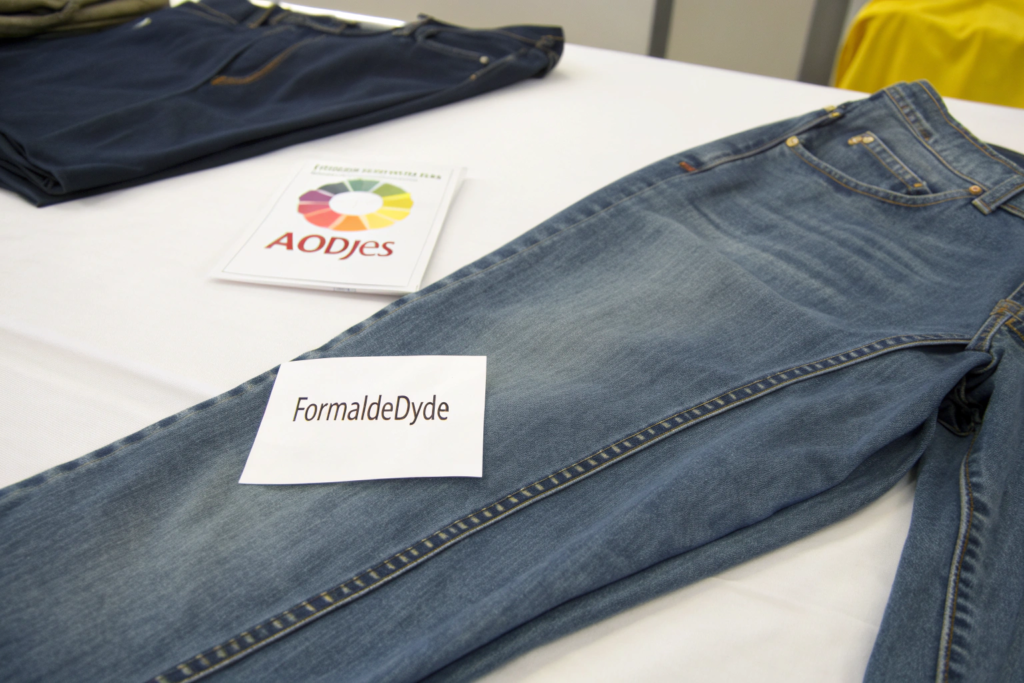
Consider azo dyes, which can break down into aromatic amines, some of which are carcinogenic. OEKO-TEX® STANDARD 100 bans the use of these specific dyes. In a non-certified pair of pants, these dyes might be present. With weekly wear and washing (which can cause dye migration), the risk of skin absorption or reaction increases significantly. Similarly, formaldehyde, used for crease resistance, can be released over time and is a known skin irritant and sensitizer. For a child wearing these pants daily, the cumulative effect is a real concern that certification systematically eliminates.
What about the impact of washing and friction?
Daily basics undergo aggressive wear and tear. The mechanical action of washing and drying, combined with the friction from play, can break down fabric finishes and cause micro-particles to be released. If the fabric contains non-compliant chemicals, this process can increase their bioavailability. OEKO-TEX® testing includes saliva and perspiration fastness tests, simulating what happens when fabric gets wet from play or washing. It ensures dyes and finishes do not migrate under these conditions, a critical test for a garment destined for daily, active use.
Can "basic" fabrics be surprisingly complex?
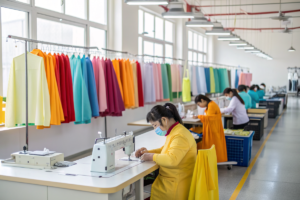
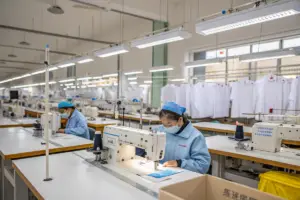
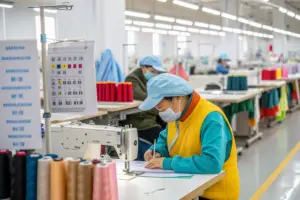
Absolutely. Even a "simple" cotton twill for pants involves spinning, weaving, dyeing, and finishing. Each stage introduces potential chemical inputs: spinning aids, sizing agents, dyes, softeners, and anti-shrink treatments. A manufacturer cutting costs might use cheaper, non-compliant auxiliaries at any point. Our full-package manufacturing model at Shanghai Fumao controls this chain by sourcing from pre-approved, certified fabric mills, turning a complex, hidden supply chain into a managed, transparent one for your basic series.
Why is certification a competitive advantage in the basics market?
The market for children's basics is saturated. Every retailer, from mass-market to premium, sells pants and t-shirts. Competing solely on price is a race to the bottom that squeezes quality and safety. OEKO-TEX® certification provides a clear, defensible point of differentiation that resonates with a growing segment of parents.
When two pairs of khaki pants look identical on a shelf—one priced at $14.99 and your certified pair at $19.99—you need a powerful "why." The certification is that "why." It allows you to communicate: "Ours are independently verified safe for all-day, everyday wear." This shifts the purchase decision from pure commodity comparison to a value-based choice about safety and trust. It defends your margin and builds a brand reputation for responsibility, which is far more valuable long-term than a slight price advantage.
How does this impact brand loyalty for replenishment items?
Basics are replenishment items. Parents buy them repeatedly as children grow. If they trust your brand for safety and quality in a weekly pant, they are highly likely to return to you for the next size up, and for other basics like t-shirts and pajamas. This creates a high customer lifetime value (LTV). Securing a customer at the basic level with a trusted certification like OEKO-TEX® is the most efficient way to build a loyal, recurring customer base for your entire brand.
Does it simplify retail partnership negotiations?
Yes. For retailers, especially larger chains, managing product safety liability is a major concern. When you present your basic line with OEKO-TEX® certification, you significantly reduce their perceived risk. It answers a key part of their vendor compliance checklist upfront, making your line easier and safer for them to onboard. This can be the deciding factor in winning shelf space over a non-certified competitor, even if your wholesale price is slightly higher. It demonstrates you are a professional, reliable partner who manages risk proactively.
How does Fumao's system ensure consistency for high-volume basics?
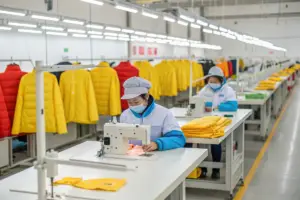
Producing a small batch of certified garments is one challenge. Producing 50,000 pairs of certified weekly pants, order after order, with unwavering consistency, is where true manufacturing expertise shines. Consistency is the bedrock of trust for a basic series. Parents must believe that the tenth pair they buy is as safe and high-quality as the first.
Our system at Shanghai Fumao is engineered for this scale and consistency through standardization:
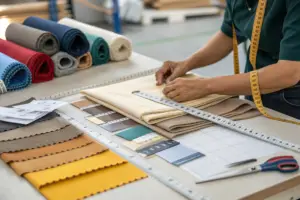
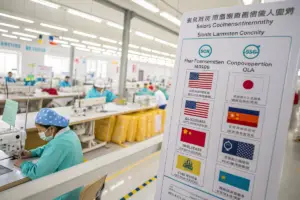
- Standardized Fabric Library: We maintain a core selection of OEKO-TEX® certified fabrics (like specific cotton twills, jerseys, and denims) that are always in production at our partner mills. This ensures color and quality consistency across seasons and orders.
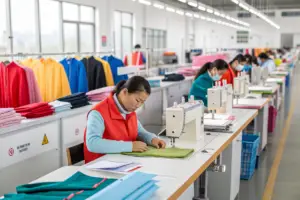
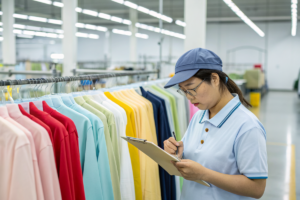
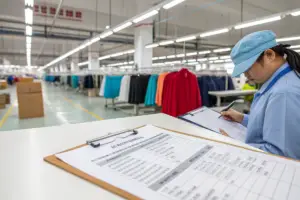
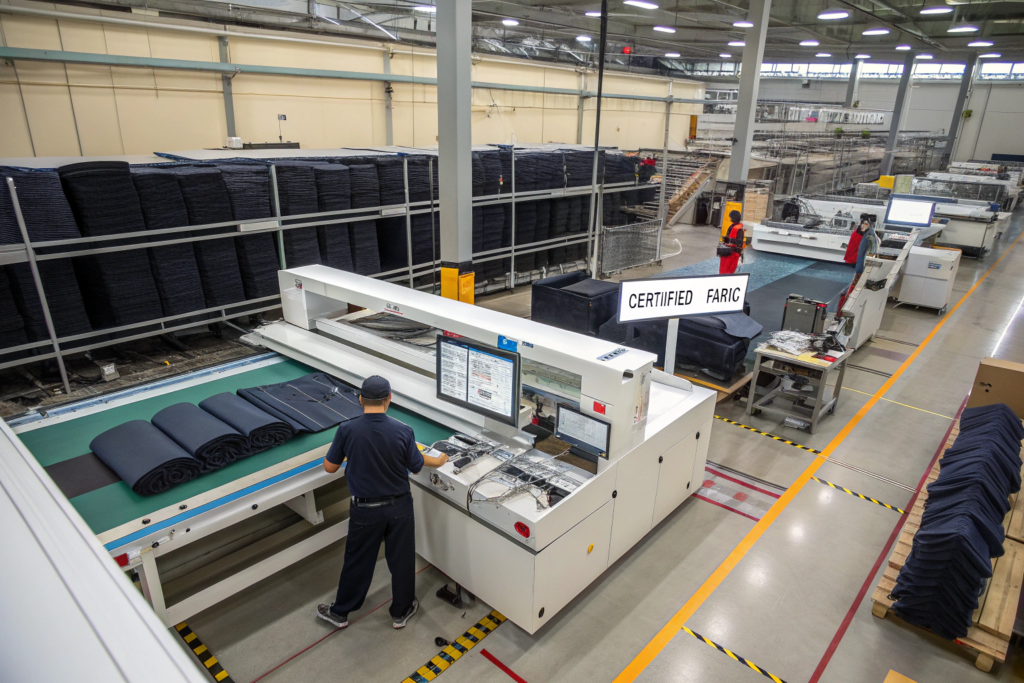
- Automated QC Checkpoints: For high-volume basics, we implement additional inline quality checks focused on compliance markers, not just construction. This includes spot-checking thread lots and verifying that all trims (like elastic waistbands) are from approved, certified batches.
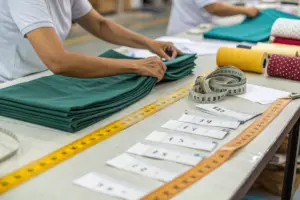
- Batch Traceability: Every production run of weekly pants is assigned a lot number. We can trace back which rolls of fabric and which batches of components were used, linking them directly to the relevant OEKO-TEX® certificates. This level of traceability is crucial for both internal quality control and for providing evidence to partners.

What is the cost impact of certification at scale?
Contrary to perception, certification at high volume can lead to economies of scale. By committing to large, ongoing purchases of certified base fabrics, we secure better pricing from our mill partners. This allows us to offer you, the brand, a competitive pricing structure that makes certified basics financially viable, even at competitive retail price points. The cost of certification is amortized over a large volume, making it a smart, scalable investment in your product integrity.
How does this prevent production delays?
Using a standardized, certified material ecosystem eliminates one of the biggest causes of delay: waiting for fabric test results or dealing with failed material shipments. Because our core fabrics are pre-certified and constantly replenished, production can be scheduled with high certainty. This reliability is a key component of our on-time delivery promise for your core inventory items.
Can marketing basic items as certified drive real sales growth?
Marketing certification for a "boring" item like pants requires a different strategy than for a flashy dress. The messaging must connect to the parent's daily reality and latent worries.
Effective angles include:
- The "Worry-Free Replenishment" Angle: "You buy these every few months. Now you can do it without a second thought. Our weekly pants are OEKO-TEX® certified, always." This positions certification as a subscription to peace of mind.
- The "Foundation of the Wardrobe" Angle: "Before the cute outfits, come the trusted basics. We build our foundation on safety." This elevates the basic item to a position of strategic importance.
- Highlighting Sensitive Skin: "Designed for sensitive skin, proven for everyday play." Use real parent testimonials about how their child with eczema or allergies fared in your certified pants versus others.
A client of ours, a DTC kids' basics brand, launched a "Certified Core" collection of pants and tees. They used simple, clean lifestyle photography focusing on active, happy kids and paired it with short video clips explaining the "why" of OEKO-TEX® in a 15-second format. This campaign led to a 40% increase in the average order value for their core bundle and established them as a authority in safe, everyday wear.
How to communicate this on the product page?
Don't bury the certification. Feature the OEKO-TEX® logo prominently near the price. Include a short, clear explainer: "Why This Matters for Daily Wear" with bullet points like "Tested for harmful substances," "Safe for sensitive skin," and "Independent, global standard." This provides immediate justification for the value you offer.
Conclusion
OEKO-TEX® certification is not just for premium or special occasion wear. In many ways, it is most essential for daily basic series like weekly pants. The combination of prolonged skin contact, high wash frequency, and the need for unwavering consistency makes these items the frontline of consumer safety. Certification is the most robust system to manage this risk, transforming a simple garment into a trusted, daily companion for a child's growth.
For brands, it moves basics from low-margin commodities to value-driven staples that build lasting customer loyalty and defend against competitive pressure. It simplifies retail relationships and enables efficient, high-volume production with guaranteed integrity.
In the foundational category of children's apparel, there should be no compromise. Safety must be the baseline, not the upgrade.
Ready to build a basics collection that parents can trust day in and day out? Partner with Shanghai Fumao. Our scalable, OEKO-TEX® certified manufacturing system is designed to produce your high-volume weekly essentials with consistent quality, safety, and reliability. Contact our Business Director, Elaine, at elaine@fumaoclothing.com to develop your foundational line.