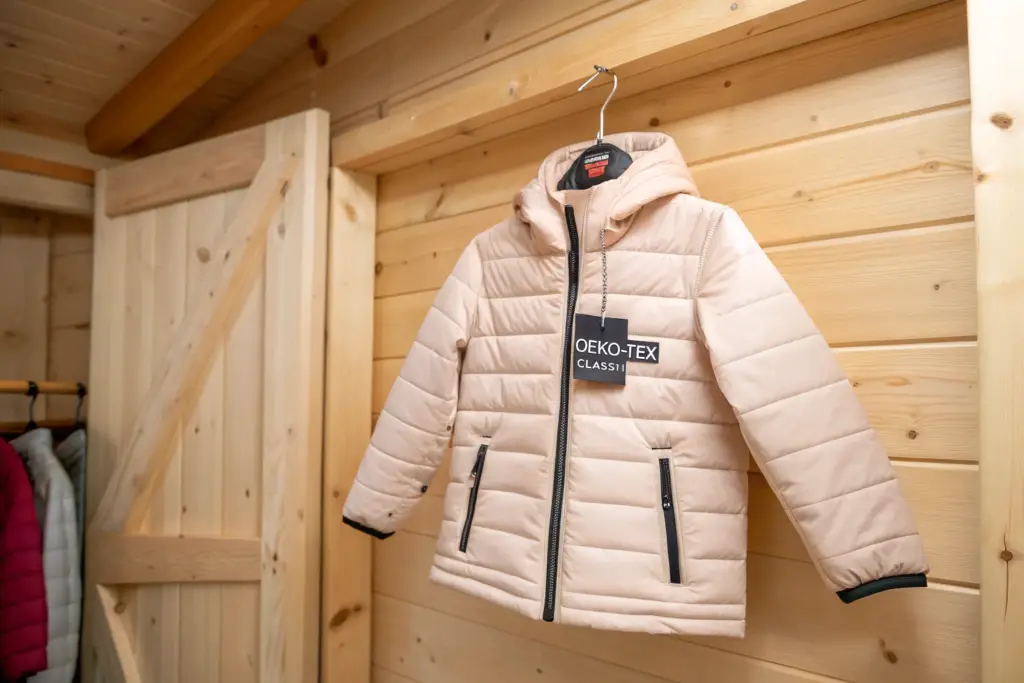
In the world of children's luxury wear—think exquisite ski suits, cashmere-blend knits, and technical yet beautiful outerwear—parents are no longer just buying a brand name or a look. They are investing in a promise: a promise of exceptional quality, of course, but increasingly, a promise of absolute safety and holistic responsibility. This is where the concept of "sustainable luxury" is born. And at its core, for any credible children's apparel brand, lies a non-negotiable foundation: OEKO-TEX certification, particularly Product Class I.
OEKO-TEX certification is the key to sustainable luxury in kids' wear because it provides the scientific, verifiable proof that marries the two pillars of the concept: uncompromising safety for the child (the "luxury" of peace of mind) and responsible, transparent manufacturing (the "sustainable" ethos). It transforms subjective claims of quality into objective, trusted assurances that align with the values of the discerning modern parent.
Without this certification, "sustainable luxury" risks being a marketing façade—beautiful packaging over an unverified product. Let's explore how OEKO-TEX unlocks the true meaning of luxury for the next generation.
How Does OEKO-TEX Define "Luxury" in the Context of Children's Safety?
Traditional luxury in apparel has been defined by rarity, brand heritage, and exquisite craftsmanship. For children's wear, a new, more profound definition of luxury is emerging: the luxury of guaranteed safety. This is the ultimate premium a parent seeks.
OEKO-TEX Class I certification represents this pinnacle. It is the strictest level of the standard, designed for babies and toddlers under 3. Its limits for harmful substances are up to 70% stricter than those for adult clothing. It mandates rigorous tests for saliva and perspiration fastness, simulating a child's natural behavior of chewing on their clothes. When a parent buys a Class I certified luxury ski suit, they aren't just buying a waterproof shell; they are buying the assurance that every thread, zipper, and printed detail has been scrutinized to be safe even if their child puts it in their mouth. This assurance is priceless. It elevates the product from a mere commodity to a trusted safeguard. At Shanghai Fumao, we produce luxury kids' ski wear for brands that understand this. One client's marketing line perfectly captures it: "Our luxury isn't just seen; it's felt in every safe breath your child takes."
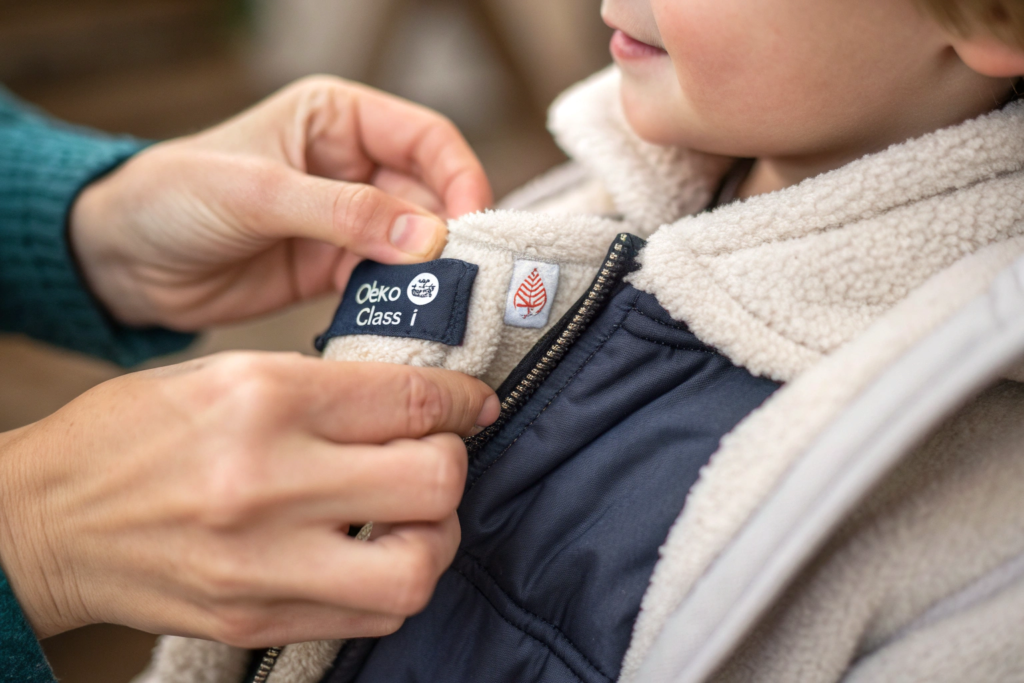
How does this align with the values of the modern luxury consumer?
Today's affluent parents are "Conscious Consumers." They are highly educated, research-driven, and value-driven. They distrust vague claims like "non-toxic" or "eco-friendly." They demand proof. The OEKO-TEX label is a globally recognized, third-party proof point. It allows a luxury brand to communicate, "We have invested in the highest independent verification because your child's well-being is worth more than a marketing budget." This transparency is the new currency of luxury.
Does OEKO-TEX enhance the perceived quality of materials?
Absolutely. The process of achieving certification often necessitates using higher-quality, purer raw materials from reputable mills. A fabric that can pass the stringent Class I chemical tests is typically a superior fabric—more consistent, better dyed, and more carefully produced. Thus, certification becomes a proxy for material excellence, aligning perfectly with the luxury expectation of the finest inputs.
How Does OEKO-TEX Enable a Authentic "Sustainable" Narrative?
"Sustainability" in luxury kids' wear cannot be just about using organic cotton. It must encompass the entire product lifecycle, starting with chemical stewardship. OEKO-TEX provides the framework for this critical, often invisible, aspect of sustainability.
True sustainability means ensuring that production does not pollute ecosystems or leave a toxic legacy. The OEKO-TEX STeP (Sustainable Textile Production) certification for manufacturing sites audits exactly this: chemical management, environmental performance, and social responsibility. When a luxury kids' brand sources from a factory like ours that holds both STANDARD 100 and STeP, it can tell a complete story: "Our garments are not only safe for your child to wear but were made in a facility that protects workers' health and minimizes environmental impact." This is holistic sustainability that goes beyond a single material attribute. It addresses the conscientious parent's concern about their purchase's broader footprint.
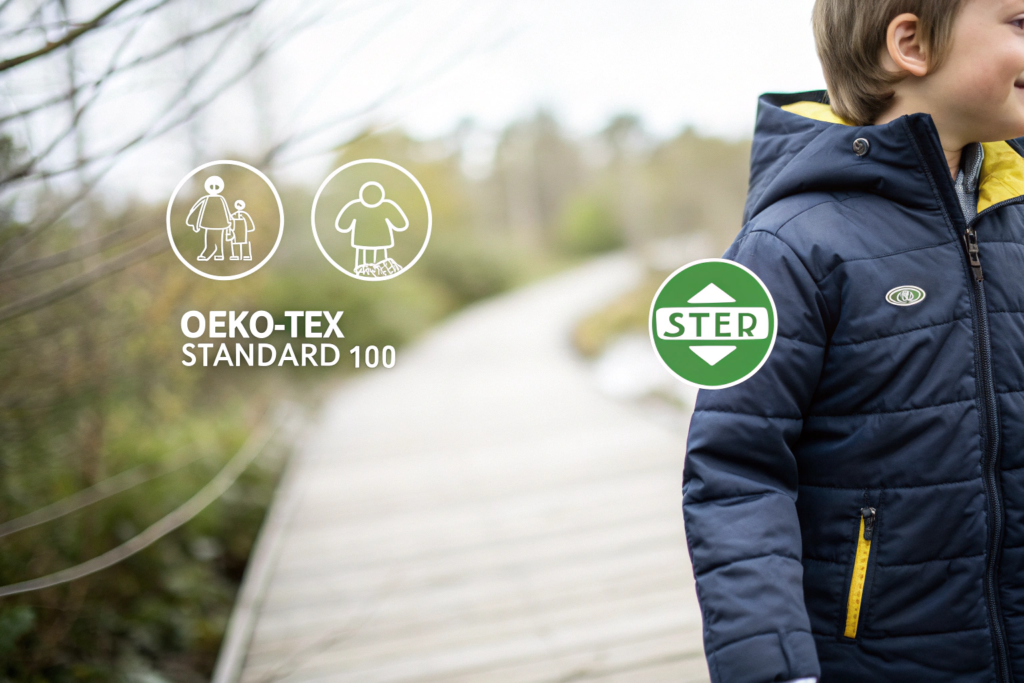
How does it support circular economy principles for luxury?
Luxury implies longevity—items are kept and passed down. For kids' wear, this often means hand-me-downs. OEKO-TEX certification ensures that the garment remains chemically safe throughout its extended life, even for the next child. Furthermore, by restricting harmful substances, it makes the garment a cleaner input for future recycling, supporting true circularity. A brand can claim, "This heirloom-quality piece is designed to be cherished by multiple children, safely and responsibly." This is a powerful narrative for durable, luxury items.
The luxury sector is particularly vulnerable to greenwashing claims. Using OEKO-TEX certification, a brand can anchor its sustainability claims in science and independent audit. It moves the conversation from subjective adjectives ("gentle," "pure") to verifiable facts ("tested for over 100 harmful substances," "manufactured in a STeP-certified facility"). This defensible positioning is crucial for maintaining brand integrity in a skeptical market.
What is the Strategic Business Advantage for Luxury Brands?
Incorporating OEKO-TEX is not just an ethical choice; it's a sharp business strategy that unlocks premium positioning, defends against risk, and builds unshakeable brand equity.
- Price Justification & Margin Protection: Luxury commands a premium. OEKO-TEX provides a concrete, valuable reason for that premium beyond design. The cost of certification and compliant materials is easily communicable as part of the value proposition, protecting healthy margins.
- Retailer Access & Preference: High-end boutiques and department stores are curating their assortments toward responsible brands. Having OEKO-TEX certification, especially Class I, makes a kids' wear line significantly more attractive to these retailers. It reduces their risk and aligns with their brand values.
- Crisis Resilience: In the event of a consumer complaint or a media inquiry about product safety, the OEKO-TEX certificate is a shield. It demonstrates due diligence and provides a legal and communicative defense, protecting the brand from scandal.
- Long-term Customer Loyalty: When parents trust a brand with their child's safety, that loyalty is profound. It leads to repeat purchases across product categories and age groups, and turns customers into brand advocates.
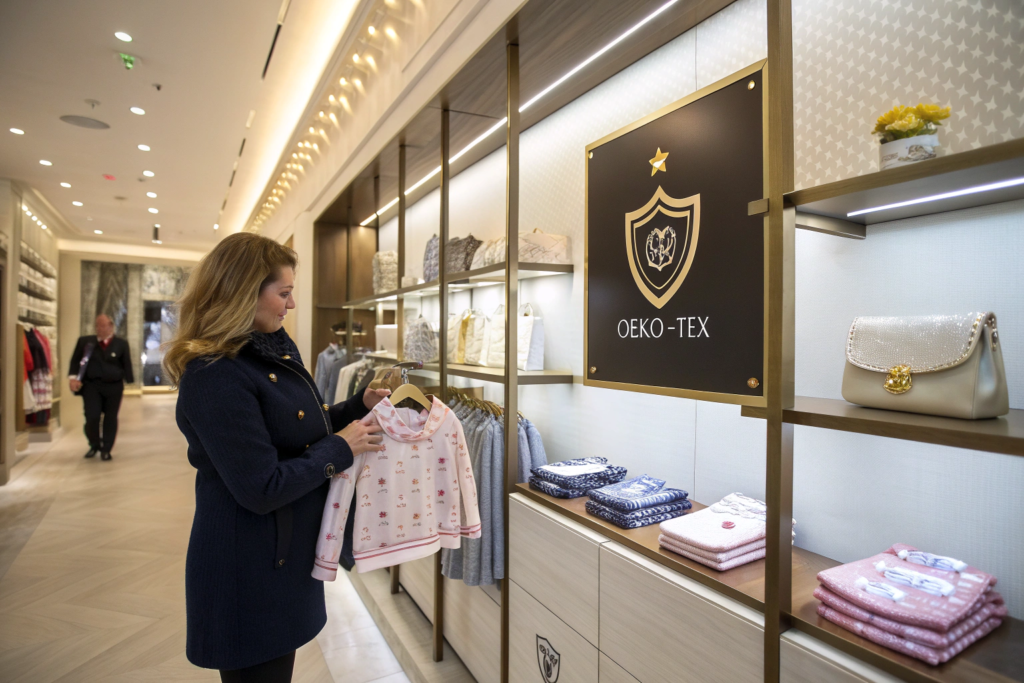
How does it impact brand storytelling and marketing?
The certification provides rich content. Brands can create campaigns around "The Science of Safe Play" or "Behind the Seams: Our Promise of Purity." They can showcase their factory partners (like Fumao) and the rigorous testing process. This authentic storytelling is far more engaging and credible than traditional luxury advertising focused solely on lifestyle imagery. It builds an emotional connection based on care and intelligence.
What Are the Practical Requirements for Delivering Certified Luxury?
Achieving this standard in luxury kids' wear requires a manufacturing partnership that understands both the nuances of high-end construction and the rigors of chemical compliance.
- Material Sourcing at the Luxury Level: It's not enough for fabric to be certified; it must also meet luxury tactile and aesthetic standards—fine wools, soft technical membranes, exquisite prints. A factory must have access to a network of mills that produce both OEKO-TEX Class I certified and premium-quality materials.
- Attention to Detail in Trims: Luxury is in the details: custom engraved buttons, delicate embroidery, specialty zippers. Each of these must be sourced in compliant versions. This is where a factory's sourcing expertise and material library are critical.
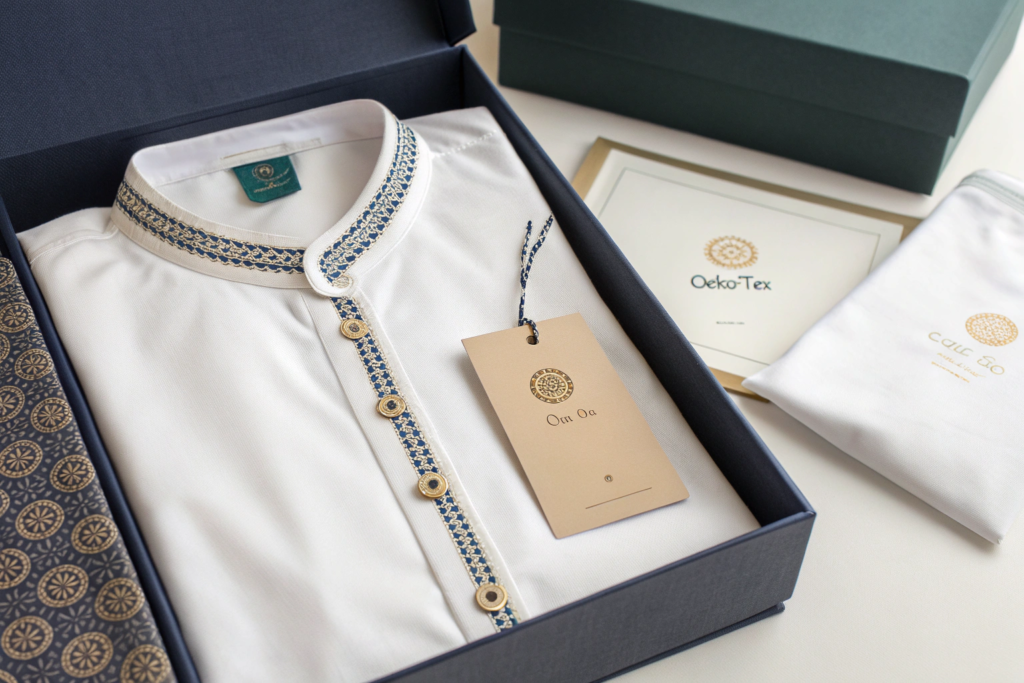
- Documentation as Part of the Unboxing: The luxury experience extends to packaging. Including a care card that explains the OEKO-TEX certification in simple, beautiful terms adds to the perceived value and educates the consumer, completing the brand experience.
Why is partnering with an expert manufacturer non-negotiable?
The complexity of merging luxury craftsmanship with scientific compliance is high. A manufacturer like Shanghai Fumao, which specializes in technical and high-quality apparel, has the systems in place: a curated library of certified luxury materials, an in-house lab for pre-screening, and a dedicated compliance team. We manage the entire certification process, allowing the brand to focus on design and marketing, confident that the product foundation is impeccably safe and sustainable.
Conclusion
OEKO-TEX certification is the indispensable key to sustainable luxury in kids' wear because it authentically bridges two imperatives: the demand for ultimate safety and the expectation of responsible excellence. It provides the verifiable trust that allows luxury to evolve from an aesthetic statement to a holistic commitment to the well-being of the child and the planet.
For brands aspiring to lead in this space, OEKO-TEX is not an option; it is the foundational standard upon which true luxury for the future is built. It enables powerful storytelling, justifies premium value, and, most importantly, delivers on the highest promise a brand can make to a parent: that their child is cherished and protected.
Build your legacy in children's luxury wear on a foundation of verified trust and responsibility. Partner with Shanghai Fumao to create OEKO-TEX Class I certified collections that define the new standard of sustainable luxury. Contact our Business Director, Elaine, to begin crafting your brand's most meaningful promise. Reach her at elaine@fumaoclothing.com.