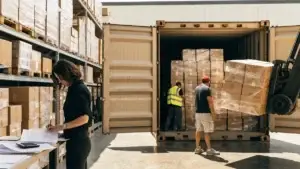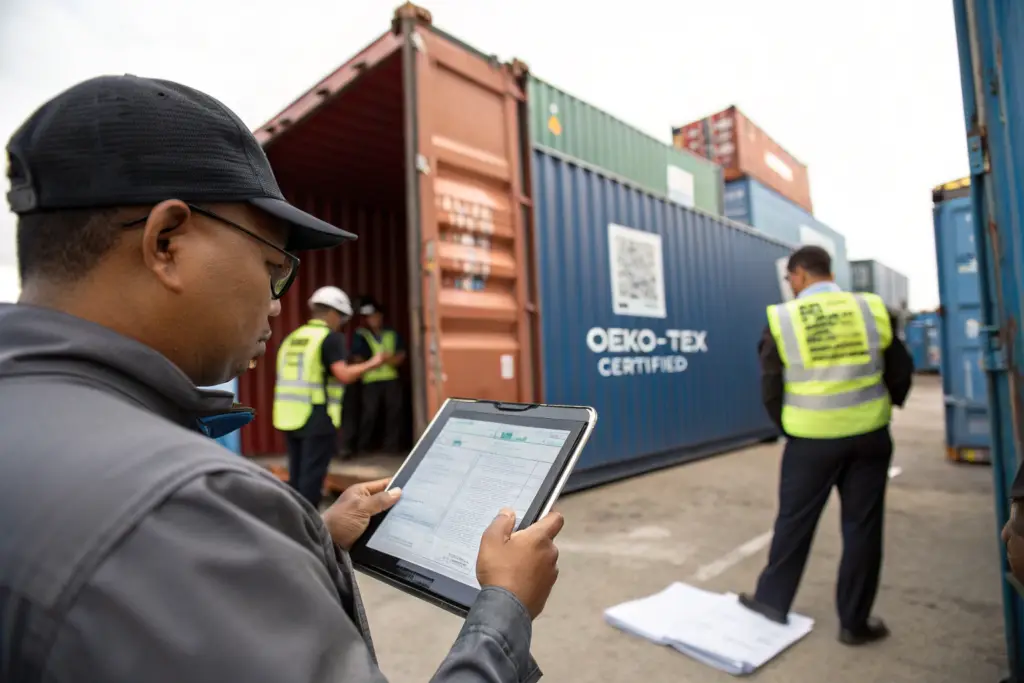
You've produced a perfect shipment of OEKO-TEX certified ski jackets. They're packed, loaded, and on their way to your customer in the U.S. or EU. Then, you get the dreaded notification: "Customs Hold." The shipment is stuck, accruing demurrage fees daily, and your customer is panicking about missing the season. Could your certification have prevented this? Absolutely. In today's complex regulatory landscape, OEKO-TEX certification is more than a marketing asset—it's a powerful logistical tool that can dramatically streamline customs clearance.
OEKO-TEX certification simplifies customs clearance by providing pre-verified, standardized documentation that satisfies an increasing number of regulatory requirements for chemical safety at borders. It acts as a universal "chemical passport" that reduces inspection risk, speeds up processing, and demonstrates due diligence, thereby minimizing delays and associated costs.
The connection isn't always obvious, but for customs authorities worldwide, a certified product represents lower risk and higher compliance. Let's break down exactly how this works at the port of entry.
What Specific Customs Regulations Does OEKO-TEX Align With?
Customs agencies are no longer just tax collectors; they are enforcement bodies for product safety, environmental, and consumer protection laws. OEKO-TEX certification aligns with many of these international and regional regulations, providing a single proof of compliance.
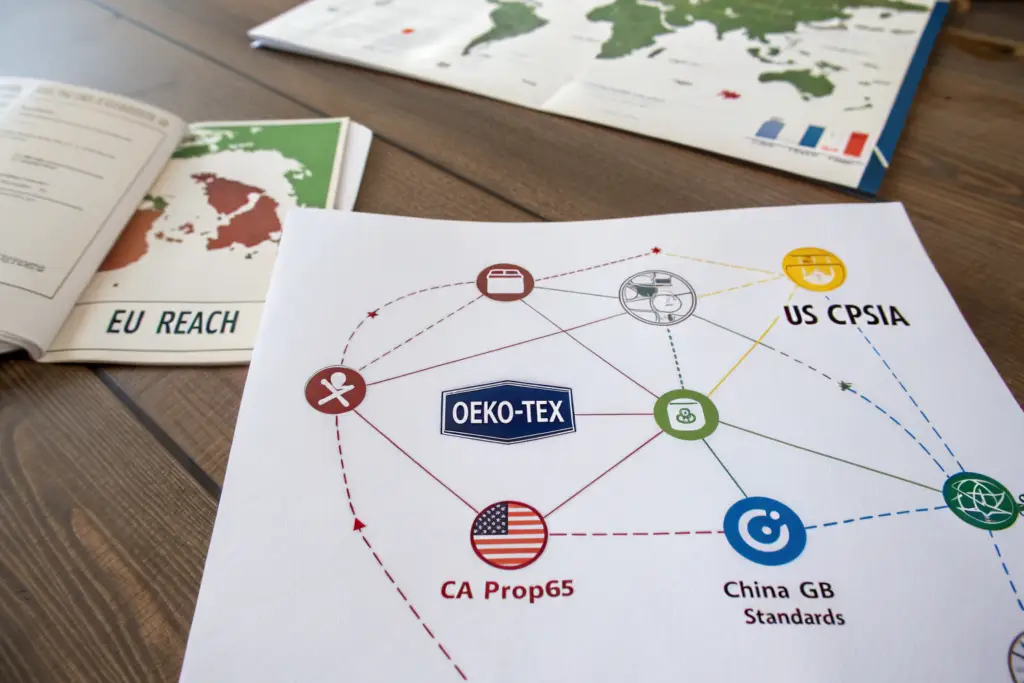
Key regulations where OEKO-TEX certification serves as strong supporting evidence include:
- EU REACH (Registration, Evaluation, Authorisation and Restriction of Chemicals): This is the cornerstone. OEKO-TEX STANDARD 100 incorporates many of REACH's restricted substances (SVHCs) into its testing. For apparel entering the EU, having an OEKO-TEX certificate is a clear indicator that the product has been screened for REACH-relevant chemicals.
- U.S. Consumer Product Safety Improvement Act (CPSIA): While focused on lead and phthalates in children's products, CPSIA's requirements are covered by OEKO-TEX Class I's stricter limits. For kids' ski wear, the certificate is excellent due diligence documentation.
- California Proposition 65: This law requires warnings for products containing chemicals known to cause cancer or reproductive toxicity. OEKO-TEX's prohibition or strict limitation of many Prop 65 listed substances (like certain phthalates, heavy metals) helps demonstrate efforts to comply.
- Various National "Standards of Care": Countries like Japan, South Korea, and China have their own textile safety standards (e.g., Japan's Law 112). OEKO-TEX is globally recognized and often exceeds these local requirements.
When a customs declaration lists an HS code for textile apparel, officers' risk assessment systems may flag it for chemical compliance review. Submitting the OEKO-TEX certificate and corresponding Transaction Certificate (TC) with your commercial invoice and packing list can satisfy this review instantly. At Shanghai Fumao, we include the TC reference number on the commercial invoice for every certified shipment. A client shipping to Germany last fall reported their freight forwarder's feedback: "The OEKO-TEX docs got the shipment through the 'REACH check' in minutes, while another brand's shipment without them was held for 5 days for manual review."
How does it help with the U.S. Customs and Border Protection (CBP)?
While CBP's primary focus is duties and trade agreements, it also enforces laws from other agencies like the Consumer Product Safety Commission (CPSC). If a shipment is suspected of violating safety standards, it can be detained. An OEKO-TEX certificate, particularly for children's wear, is a strong piece of evidence to show CPSC inspectors that the product meets safety limits, potentially preventing a lengthy detention.
What about the UKCA mark and UK customs post-Brexit?
The UK has largely retained REACH-like standards (UK REACH). OEKO-TEX certification remains highly relevant for demonstrating compliance for goods entering Great Britain, easing the transition through UK customs controls.
How Does the Documentation Process Work for Clearance?
The magic isn't in the certificate itself, but in how you use it. Proper documentation is key. The OEKO-TEX Transaction Certificate (TC) is the critical document for customs, not the main certificate.
Here’s the optimal workflow:
- Pre-Shipment: The factory (the certificate holder) generates a TC for the specific batch/lot being shipped. This TC is unique and references the main certificate, the product, the quantity, and your company as the buyer.
- Document Pack: The factory sends you (the exporter/brand) the TC, the commercial invoice, and the packing list. The commercial invoice should ideally reference the TC number (e.g., "OEKO-TEX TC #: XXXXXX").
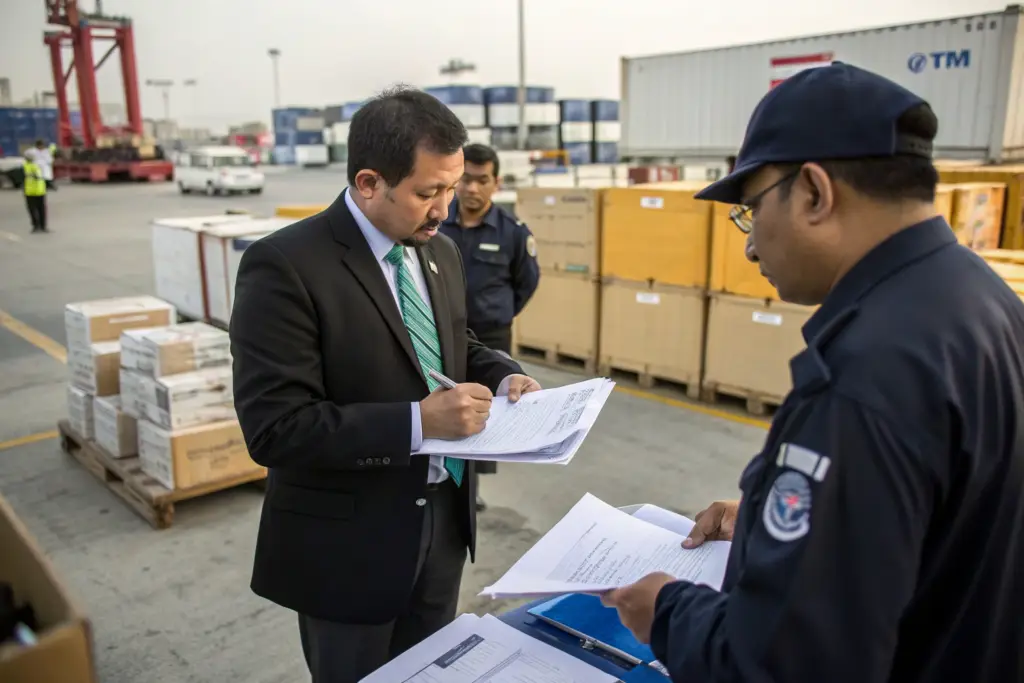
- Submission to Customs: Your freight forwarder or customs broker includes the TC as part of the import documentation package submitted electronically to the destination country's customs authority.
This package provides a complete, verifiable chain: Your declared product (on the invoice) is linked to a certified batch (on the TC), which is linked to a validated standard (the main certificate, verifiable online). This transparency is what customs authorities appreciate.

What makes the Transaction Certificate so powerful for customs?
A TC is batch-specific and time-bound. It proves that the actual goods in the shipment are certified, not just that the factory has a certificate for a similar product made months ago. This defeats the common risk of "bait-and-switch" where certified samples are shown but non-certified bulk is shipped. For a customs officer, the TC is tangible, current proof of compliance.
Can digital verification be used?
Yes. The OEKO-TEX Certification Check database is online. A savvy customs officer or broker can take the TC number or main certificate number and verify its authenticity in seconds. This digital verification layer adds another level of trust and speed to the process.
What Are the Tangible Benefits in Time and Cost Savings?
The simplification of customs clearance translates directly into hard financial savings and protected revenue. Delays at ports are incredibly expensive.
Time Savings:
- Reduced Inspection Rate: Certified shipments are a lower risk profile, so they are less likely to be selected for random or targeted physical inspection.
- Faster Release if Inspected: If selected, the provided OEKO-TEX documentation can quickly satisfy the chemical compliance part of the inspection, focusing any examination on other aspects (e.g., labeling, quantity).
- Predictable Lead Times: With lower risk of holds, your supply chain timeline becomes more reliable. This allows for tighter inventory planning and reduces the need for expensive air freight as a backup.
Cost Savings:
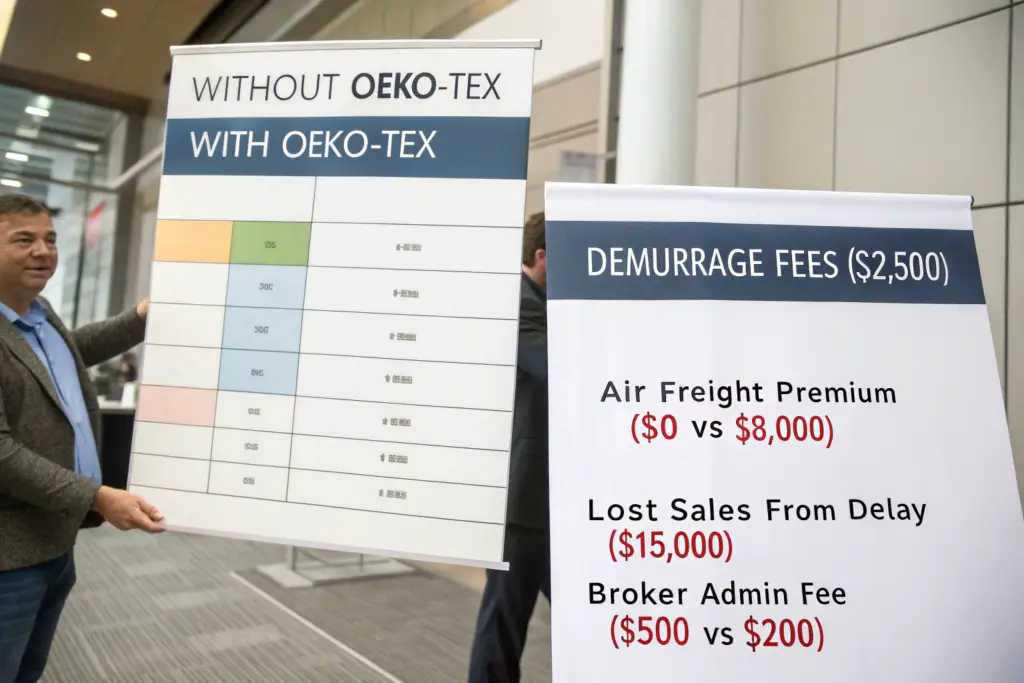
- Elimination of Demurrage & Detention Fees: These are daily fees charged by shipping lines and ports when a container is stuck. They can run hundreds of dollars per day. Avoiding a 3-5 day hold saves thousands.
- Lower Brokerage Fees: A straightforward, document-complete clearance requires less work from your customs broker, potentially keeping their fees in check.
- Avoidance of Testing & Destruction Costs: If a non-certified shipment is held and fails a spot test by authorities, the costs for official testing, potential destruction, and fines fall on the importer (you or your customer).
A practical example: A brand we work with consistently ships OEKO-TEX certified goods to the EU. Their average customs clearance time from arrival to release is 2 business days. A competitor without certification experiences an average of 5-7 days, with occasional 2-week holds for testing. Over a season with 10 shipments, this difference represents over a month of extra capital tied up in transit and thousands in saved fees and avoided air freight premiums.
How Does It Mitigate Risk in an Era of Increased Scrutiny?
Global supply chains are under a microscope. From forced labor due diligence (UFLPA in the U.S.) to carbon footprint and chemical pollution, authorities are integrating more non-tariff barriers. OEKO-TEX certification fits into a broader story of responsible and transparent sourcing.
While OEKO-TEX itself doesn't address labor, a factory capable of managing complex chemical compliance (like ours) typically has more robust management systems overall. This can be a positive signal during broader audits. Furthermore, customs agencies are increasingly using data analytics to target shipments. A history of clean, certified shipments builds a favorable "compliance score" for your importer of record, reducing future scrutiny.
What about the new EU "Due Diligence" directives?
The incoming EU Corporate Sustainability Due Diligence Directive (CSDDD) will require large companies to identify and mitigate environmental and human rights impacts in their chains. Chemical safety is a key environmental impact. Having OEKO-TEX certified products, and especially OEKO-TEX STeP certified manufacturing sites, provides auditable proof of proactive environmental management in the production phase. This makes compliance with such future directives significantly easier.
How does it protect against competitor or activist complaints?
In competitive markets, a complaint to customs about a competitor's non-compliant products can trigger an inspection. If your goods are certified and you have the TCs, such a complaint is easily deflected, turning a potential crisis into a demonstration of your robustness. This is a hidden but valuable form of risk mitigation.
What Practical Steps Should Brands Take to Leverage This?
To fully harness the customs benefits of OEKO-TEX, brands must be procedural and insistent with their supply chain.
- Mandate TCs in Your Supplier Agreement: Your contract must require the factory to provide a valid Transaction Certificate for every shipment of certified goods, at no extra cost.
- Integrate TC into Your Logistics Workflow: Train your logistics team or freight forwarder to always request and submit the OEKO-TEX TC for certified shipments. Make it a non-negotiable line item on the checklist.
- Verify Early, Verify Often: Don't wait for shipping. During production, confirm the factory is on track to generate the TCs. Verify the main certificate online at the start of the partnership.
- Educate Your Customer/Importer: If you sell DDP or your customer handles import, educate them on the value of the TC and provide it to them promptly. They need to give it to their broker.
- Choose a Logistically Experienced Factory: Partner with a factory like Shanghai Fumao that understands the end-to-end process—from certification management to export documentation. We see our role as ensuring your goods not only meet the standard but sail through logistics with the proof in hand.
By treating OEKO-TEX as an integral part of your trade compliance strategy, not just a marketing add-on, you unlock significant operational efficiency and build a more resilient, predictable supply chain.
Conclusion
OEKO-TEX certification is a potent tool for simplifying customs clearance. By aligning with global chemical regulations, providing batch-specific verifiable documentation (the Transaction Certificate), and signaling a low-risk, compliant supply chain, it directly reduces the likelihood of delays, avoids costly fees, and protects your seasonal timelines.
In an era where border controls are expanding beyond tariffs to encompass product safety and sustainability, this certification is no longer optional for efficient global trade—it's a strategic imperative. It turns a potential bottleneck into a smooth passage, ensuring your high-quality ski apparel reaches the slopes and your customers on time, every time.
Streamline your supply chain from the factory floor to the customer's door. Partner with a manufacturer who provides not just certification, but the seamless documentation and expertise to make it work for you at every border. At Shanghai Fumao, we build customs-ready compliance into every certified order. Contact our Business Director, Elaine, to ensure your next shipment is as swift as it is safe. Reach her at elaine@fumaoclothing.com.