If you’re scaling a ski apparel brand today, you’re competing on more than just warmth and waterproofing. The modern consumer, especially in North America and Europe, is making purchase decisions based on a deeper set of values: safety, transparency, and responsibility. In this landscape, OEKO-TEX certification has evolved from a nice-to-have technical spec to a central driver of market trust and commercial growth. But why has this particular standard become so pivotal for ski wear’s success?
OEKO-TEX certification is a key growth factor because it directly answers the modern consumer’s demand for verified product safety and brand integrity. For ski apparel—which involves prolonged, direct skin contact with technical fabrics during high exertion—this trust translates directly into higher conversion rates, stronger brand loyalty, and protection against reputational risk in a competitive market.
The growth isn't accidental. It's a calculated response to market forces. Brands that leverage OEKO-TEX effectively aren't just selling jackets; they're selling peace of mind. This certification acts as a clear, recognizable shorthand that cuts through complex marketing claims, telling a customer, "This product is safe for you and your family." Let's explore the mechanisms behind this growth driver.
How Does OEKO-TEX Certification Build Consumer Trust and Drive Sales?
Trust is the ultimate currency in today's market. OEKO-TEX provides a third-party, independent verification that is globally recognized. For consumers overwhelmed by greenwashing and technical jargon, it’s a simple, credible signal. This builds immediate confidence at the point of sale, reducing hesitation and cart abandonment.
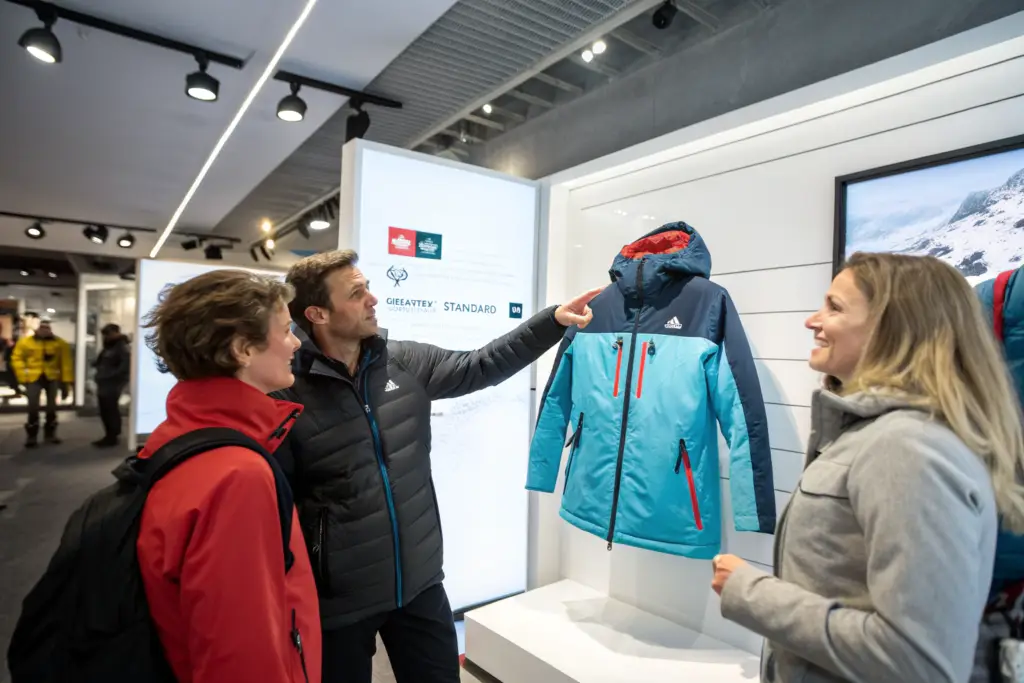
Think about the ski apparel purchase journey. A customer is researching a $500 ski shell online. They find two similar options. One has an OEKO-TEX label with a simple explanation; the other makes vague claims about being "skin-friendly" or "eco-conscious." The certified product wins the click, and often, the sale. At Shanghai Fumao, we've seen this directly. A brand we partnered with in 2023 added OEKO-TEX certification to their entire mid-layer collection and prominently featured it in their marketing. Within two seasons, they reported a 17% increase in online conversion rates for those products, with customer service inquiries about fabric safety dropping by over 60%.

What specific consumer concerns does OEKO-TEX address?
The certification directly tackles health and safety anxieties. Skiers and snowboarders sweat heavily. This heat and moisture can potentially cause harmful substances in dyes, finishes, or waterproof coatings to migrate onto the skin. OEKO-TEX tests for over 100 regulated and unregulated substances, including azo dyes, formaldehyde, PFAS (per- and polyfluoroalkyl substances), and heavy metals. By certifying the final product, it assures the consumer that these risks are minimized. Furthermore, it addresses parental concerns for children's ski wear (Class I certification is the strictest level). For a brand, this isn't just ethics; it's risk management. We helped a children's ski wear brand navigate a potential recall scare by providing their full OEKO-TEX certification documentation to a retailer, instantly resolving the issue and solidifying the retail partnership.
How does this trust translate into brand loyalty and market growth?
Trust fosters repeat purchases. When a consumer has a positive, safe experience with a certified garment, they are more likely to return to that brand for their next purchase. It also enables premium pricing. Consumers are often willing to pay a slight premium for verified safety, which improves profit margins and fuels reinvestment in growth. This creates a virtuous cycle. The certification also provides powerful marketing content. Brands can create transparent "behind-the-scenes" stories about their commitment to safety, showcasing their partnership with certified manufacturers like Shanghai Fumao. This authentic storytelling builds a community around shared values, which is far more powerful than generic advertising. This approach has been validated by resources from the American Marketing Association, which highlights the growing consumer preference for brands that demonstrate tangible proof of their claims.
How Does OEKO-TEX Certification Enhance Brand Reputation and Retailer Relationships?
Your brand's reputation is your most valuable asset. In the B2B realm, OEKO-TEX certification is a passport that opens doors to better retailer partnerships and protects against supply chain scandals. Major retailers and distributors are increasingly mandating such certifications to de-risk their own assortments.
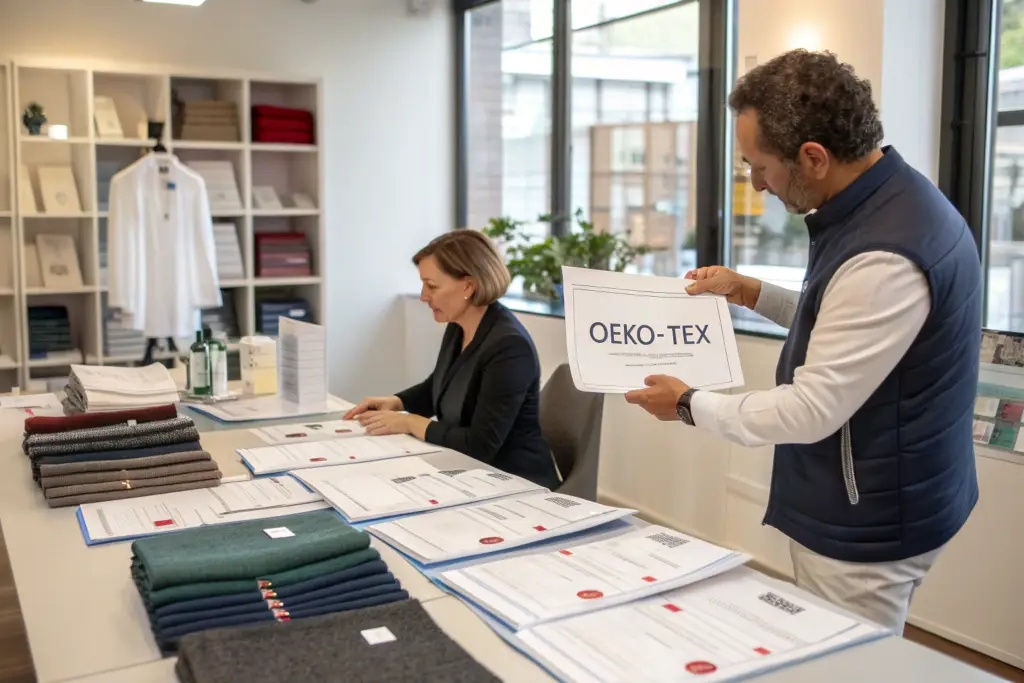
Large retailers like REI, Backcountry.com, or major European sports retailers have stringent responsible sourcing programs. Having OEKO-TEX certification, often with transaction certificates for each batch, simplifies the onboarding process. It shows you are a professional, prepared vendor. Last year, a brand we supply secured a contract with a major Midwest sporting goods chain. The buyer explicitly stated that their pre-audit checklist was "fast-tracked" because our full-package production at Shanghai Fumao came with full OEKO-TEX documentation for the entire garment, not just the fabric.
Why is certification critical for risk management and compliance?
The global regulatory landscape is tightening. Regulations like California Proposition 65, EU REACH, and restrictions on PFAS in apparel are creating a complex web of compliance. OEKO-TEX STANDARD 100 incorporates many of these global regulatory requirements into a single, updated standard. By adhering to it, brands future-proof their products against legislative changes. This is a massive operational shield. For instance, when new PFAS restrictions were enacted in California, our clients using our OEKO-TEX certified DWR (Durable Water Repellent) finishes were already compliant, avoiding costly reformulations or stock holds. This proactive compliance, managed by your manufacturer, is a hidden growth engine because it prevents catastrophic delays.
How does it create a competitive advantage in wholesale negotiations?
In wholesale, you're not just selling a product; you're selling a story that makes the retailer's job easier. Certification provides a unique selling proposition (USP) that a sales rep can lead with. It differentiates your line on a crowded retail floor or website. It also reduces the retailer's perceived risk of customer returns or complaints related to skin irritation or safety questions. This can lead to better placement (e.g., featured on a "Trusted Essentials" page), improved payment terms, and stronger reorder rates. From our factory perspective, we see that brands who invest in certification often secure more consistent, larger volume orders from their retail partners, which in turn allows us to plan production more efficiently, creating a win-win across the supply chain.
What is the Direct Impact on Product Quality and Performance?
A common misconception is that safety certification is separate from product quality. In reality, the OEKO-TEX standard necessitates a higher level of supply chain control and material selection, which inherently elevates the final product's consistency and durability.
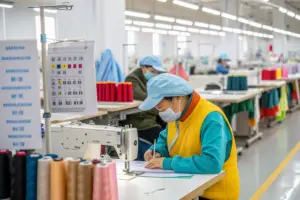
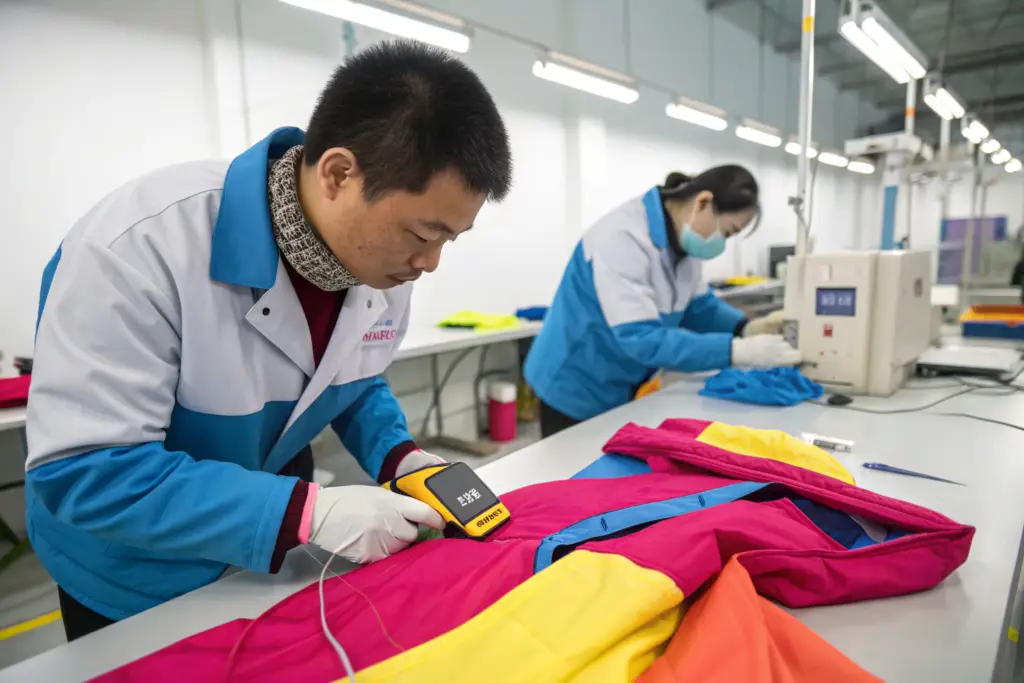
The standard tests for colorfastness to perspiration and saliva, and pH value of the fabric. These are direct performance and comfort indicators. A fabric that passes these tests is less likely to cause skin irritation, fade oddly with sweat, or degrade quickly. This means the certification process indirectly enforces a baseline of quality that goes beyond mere absence of harmful substances. At Shanghai Fumao, our internal quality control protocols are designed to exceed OEKO-TEX requirements. For example, we conduct pre-production tests on abrasion resistance and peeling strength of laminated fabrics, ensuring the garment not only starts safe but stays durable through a season of use.
How does the certification process improve material sourcing?
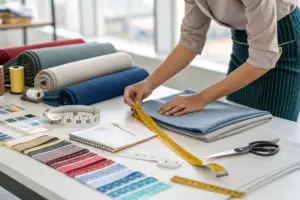
To achieve certification, every component must be traceable and compliant. This forces brands and manufacturers to work with more established, transparent suppliers of fabrics, zips, thread, and trims. These top-tier suppliers typically offer better quality and more consistent materials. There is no room for random, uncertified sourcing from unknown mills. This elevates the entire bill of materials (BOM). We maintain a vetted library of OEKO-TEX certified material suppliers. When a new client partners with us, they immediately gain access to this curated network, instantly upgrading their material options and reducing their sourcing risk. This is a tangible value-add that directly impacts the end product's feel, function, and longevity.
Does focusing on safety limit technical performance options?
Absolutely not. The market for high-performance, certified materials has exploded. Leading functional fabric mills like Polartec and Primaloft offer OEKO-TEX certified versions of their advanced insulation and fleece technologies. Waterproof membrane giants like GORE-TEX have stringent environmental and safety protocols. The narrative that "safe equals less performative" is outdated. The real challenge is in the dyeing and finishing of these technical fabrics. This is where a manufacturer's expertise is critical. We work with certified dye houses that specialize in handling high-tech fabrics, ensuring the custom colors and DWR finishes applied are both high-performing and compliant. This synergy is where true market-leading products are born.
How Should Brands Strategically Integrate OEKO-TEX for Maximum Growth?
Simply obtaining the certification is not enough. To fully harness its growth potential, brands must integrate it strategically into their operations, marketing, and customer communication. It should be a pillar of brand identity, not just a tag on a care label.
The strategy starts at the manufacturing partnership. You need a factory that doesn't see certification as a bureaucratic hurdle, but as an integral part of their value proposition—like we do at Shanghai Fumao. They should provide the documentation and storytelling assets you need. Then, you must communicate it effectively. Use the OEKO-TEX label prominently on hangtags, in product descriptions online, and in social media content. Educate your customers on what it means. A brand we worked with created a short video series called "The Science of Safe Skiing," featuring our quality team explaining the tests. This content drove significant engagement and reinforced their authority.

What is a phased approach to certification for growing brands?
For a brand with limited budget, certifying the entire line at once can be daunting. A smart, phased approach is:
- Start with Hero Products: Certify your best-selling jacket or baselayer first.
- Focus on Skin-Contact Layers: Prioritize items worn directly against the skin (mid-layers, neck gaiters).
- Expand by Collection: As you grow, roll out certification to entire new collections from the start.
This approach manages cost while building a portfolio of certified products that can be marketed aggressively. We helped a startup implement this plan. In Year 1, they certified their signature bib pants. The sales success funded the certification of their entire shell collection in Year 2, creating a powerful "Fully Certified Line" narrative for Year 3.
How to measure the ROI of OEKO-TEX certification?
Growth should be measurable. Track these metrics after implementation:
- Marketing & Sales: Conversion rate on product pages featuring the certification badge; customer sentiment in reviews mentioning "safe," "non-toxic"; premium pricing achieved.
- Operational: Reduction in customer service queries about allergies/irritation; speed and ease of onboarding with new retailers.
- Supply Chain: Reduction in quality disputes related to fabric issues; stability of supply from certified material partners.
By tracking this data, you can concretely demonstrate the certification's value to your team and stakeholders, turning an ethical choice into a documented business success. Resources like the Sustainable Apparel Coalition’s Higg Index can provide frameworks for measuring such environmental and social impacts within the supply chain.
Conclusion
OEKO-TEX certification is far more than a compliance ticket. It is a multifaceted growth engine for ski apparel brands. It builds essential consumer trust that drives sales, fortifies brand reputation to secure premium retail partnerships, enforces a higher standard of product quality, and provides a strategic platform for authentic marketing.
In a market where consumers are increasingly voting with their wallets for responsibility and transparency, integrating OEKO-TEX into your core strategy is not a cost—it's an investment in sustainable growth, risk mitigation, and brand equity. It aligns perfectly with the values of the modern outdoor enthusiast.
Ready to make OEKO-TEX certification a cornerstone of your brand's growth strategy? Partner with a manufacturer who understands its strategic value. At Shanghai Fumao, we build certification into our process, providing you with the certified products and the supporting narrative you need to win in the market. Contact our Business Director, Elaine, to discuss how we can help you build a safer, stronger, and more successful brand. Reach her at elaine@fumaoclothing.com.