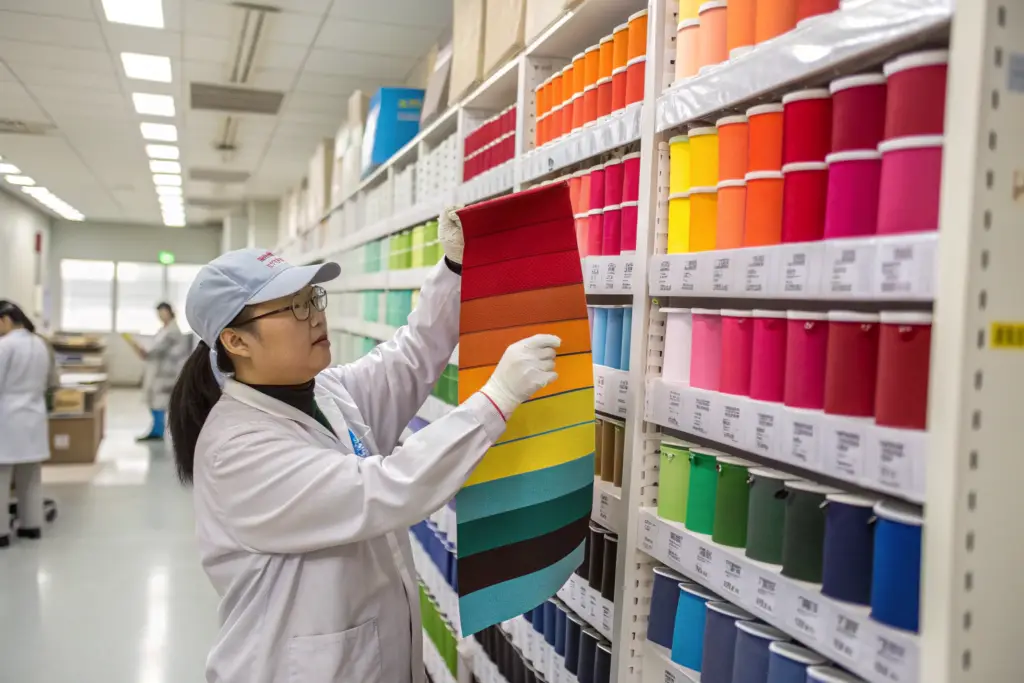
Every apparel brand faces this critical junction: you want a unique, on-brand custom color palette to make your skiwear line stand out, but you also need the trusted OEKO-TEX certification to assure safety and quality. The perceived conflict is real. Many brands worry that custom dyeing is a black box where safety compliance gets lost. The question isn't just if you can have both, but how to achieve them without compromising on either vision or integrity.
Yes, you absolutely can achieve both custom colors and OEKO-TEX certification. The key lies in partnering with a manufacturer that has established, controlled relationships with certified dye houses and a rigorous internal chemical management system. The process requires extra steps and planning, but it transforms a potential risk into a reliable, brand-defining advantage.
The challenge is not the possibility, but the process. Custom colors require bespoke dye formulations, and each chemical in that formulation must be screened against the OEKO-TEX STANDARD 100's extensive list of restricted substances. This is where an experienced partner makes all the difference.
What's the Real Process Behind OEKO-TEX Certified Custom Dyeing?
The process is far more scientific than simply picking a Pantone number. It’s a controlled workflow that starts with chemistry and ends with certification. Brands that try to manage this separately—sourcing custom-dyed fabric from one supplier and sending it to a factory—often face certification failures and delays. An integrated manufacturer controls this chain from lab to finished garment.
At Shanghai Fumao, we don't just receive dyed fabric; we collaborate with a select group of OEKO-TEX certified dye houses. We provide them with your Pantone reference, and their chemists formulate a dye recipe using pre-approved, certified colorants and auxiliaries. Last year, a startup brand from Oregon wanted a specific deep pine green that wasn't in any standard library. By working through our certified dye partner, we developed and certified the color in 22 days, compared to the industry average of 6-8 weeks when brands go it alone.
How do you ensure custom dye formulas are safe from the start?
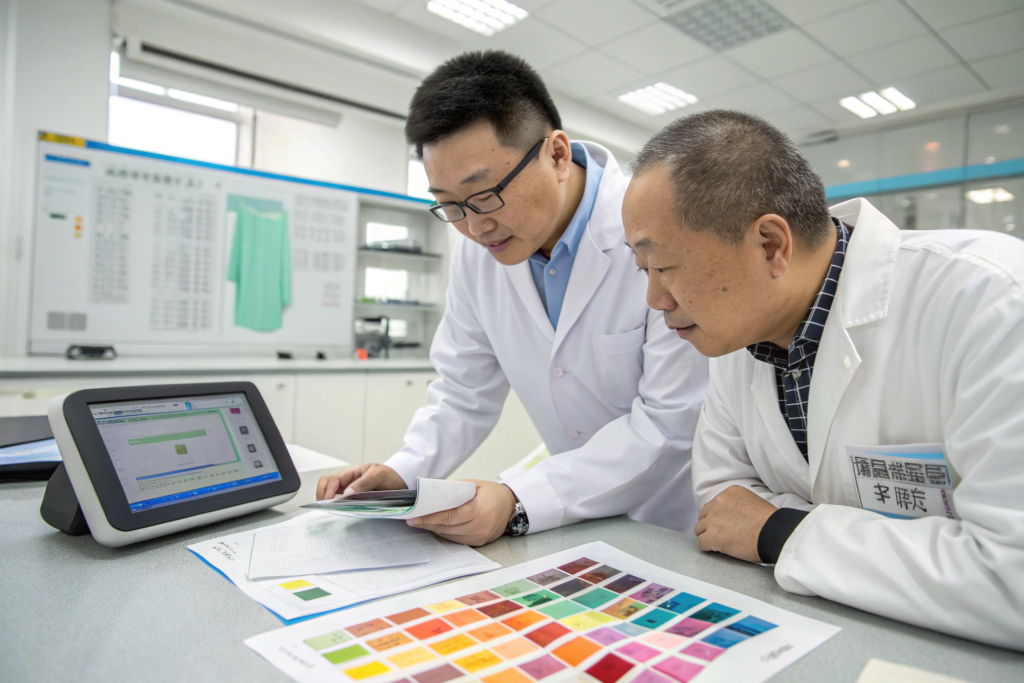
The foundation is chemical inventory management. Certified dye houses maintain an inventory of dyestuffs and chemicals that are pre-screened and compliant with OEKO-TEX requirements, as well as regulations like REACH. When a custom color is requested, chemists create the formula using only these approved raw materials. The new formula then undergoes lab-dip testing. The small sample is not only checked for color accuracy but is also sent for a preliminary chemical screening test at an accredited lab. This step is crucial. We once had a client who sourced a beautiful cobalt blue fabric externally. When we tested it, it failed for a restricted amine. By having our own controlled process, we avoid such costly surprises by ensuring safety is designed into the color, not inspected in afterward.
What documentation and tracing are required?
Full traceability is non-negotiable. For every custom color batch, you should receive a dye recipe certificate from the dye house, listing the compliant chemicals used. Furthermore, the finished fabric must come with a transaction certificate that links it back to the OEKO-TEX certification of the dyeing facility. At Shanghai Fumao, we file these documents in the technical dossier for your order. This dossier is your guarantee. During a recent audit for a major European retailer, we were able to present, within minutes, the complete chemical trail for a custom burgundy used in their 15,000-unit jacket order—from the dye house certificate to our own final product certification. This level of organization builds immense trust.
What are the Key Timeline and Cost Considerations?
Choosing custom colors with certification will impact both your schedule and budget. Understanding these impacts upfront allows for smart planning. The rule of thumb is to add 3-4 weeks to your development timeline and expect a 10-25% increase in fabric cost, depending on the complexity and minimum order quantity (MOQ) of the dye.
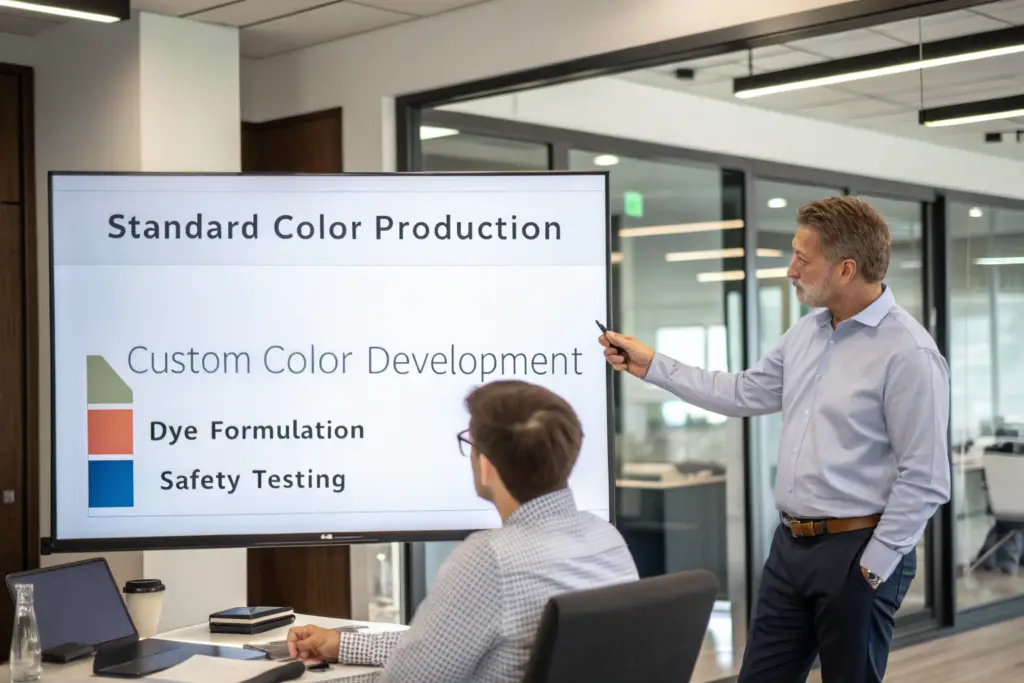
The added time is for the color development loop: lab dip creation, approval, and pre-certification testing. The cost increase covers the dye house's R&D work for a unique formula, the smaller batch sizes, and the additional lab testing fees. However, this investment secures a truly exclusive product. A Michigan-based brand we work with launched a line with three custom, certified colors. Their sell-through rate was 40% higher than their previous line using stock colors, justifying the initial development cost.
How does the development timeline break down?
Here is a typical added sequence for one custom color:
| Stage | Activity | Added Duration |
|---|---|---|
| 1. Formula Development | Dye house chemist creates match using approved chemicals. | 5-7 business days |
| 2. Lab Dip & Testing | First sample is made and sent for color accuracy & preliminary chemical screen. | 10-12 business days |
| 3. Approval & Bulk Trial | Brand approves lab dip; dye house runs a bulk trial lot. | 7-10 business days |
| 4. Final Certification | Sample from bulk trial is submitted for official OEKO-TEX certification. | (Can run concurrent with production) |
This process means you must finalize color choices very early. We advise clients to begin color development during the initial tech pack phase, long before pattern grading is complete. This parallel path prevents delays.
Can you reduce the cost impact of custom dyes?
Yes, through strategic planning. The most effective method is color rationalization. Work with your manufacturer to develop a custom color that can be used across multiple styles or seasons, thereby amortizing the development cost. Another way is to leverage family dyes. If you need a spectrum of colors (e.g., light, medium, and dark sage), a good dye house can often develop them from a related chemical base, reducing individual formulation costs. Also, discuss fabric MOQs upfront. Dye houses have minimum batch requirements. By consolidating your fabric order for a custom color into a single, larger batch, you get a better price per meter. For example, we helped a client combine their shell and lining fabric orders for a custom orange, meeting a higher MOQ tier and reducing the fabric cost premium by 15%.
What are the Most Common Pitfalls and How to Avoid Them?
The path to certified custom colors is filled with potential missteps that can derail timelines, blow budgets, or compromise certification. Most pitfalls stem from a lack of integrated control and unclear communication.
The biggest pitfall is assuming color approval equals safety approval. A lab dip may look perfect under your office lights but contain non-compliant chemicals. Another major issue is last-minute color changes after fabric has been ordered or even dyed. We enforce a strict "color lock" point in our timeline. Once fabric procurement begins, any change is treated as a new development cycle, with associated costs and delays. This protects the project.
How can poor communication with the dye house cause failures?
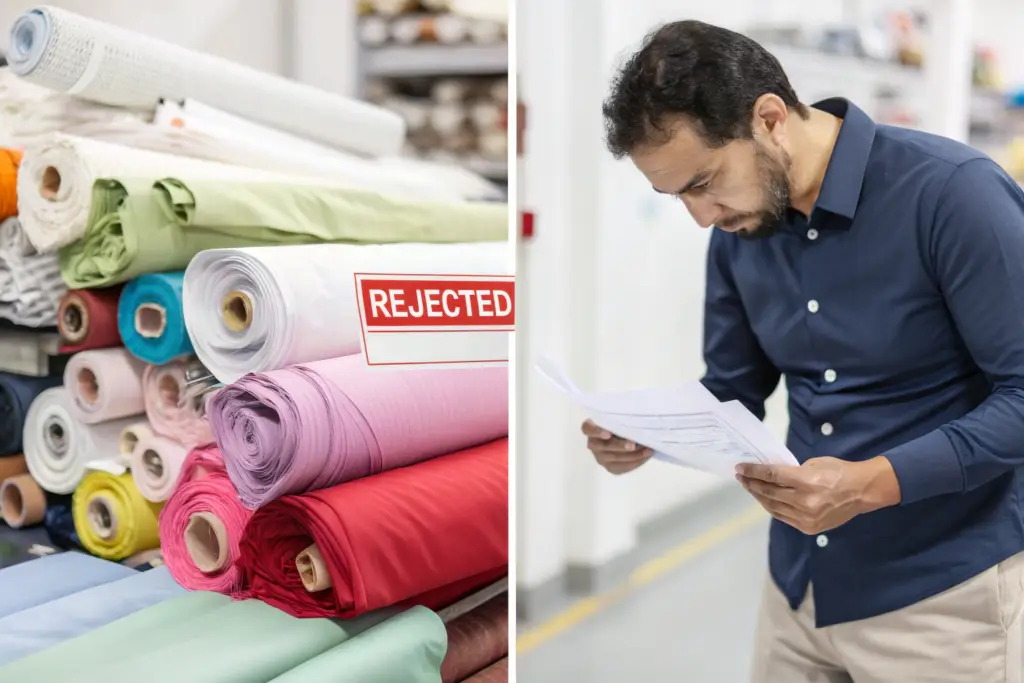
Communication chains that are too long risk errors. If a brand communicates color to a factory, who then emails a dye house, nuance is lost. The best practice is a triad sample approval system. The dye house produces the lab dip. Our quality control team at Shanghai Fumao first checks it under standard light against the Pantone and for obvious issues. Then, we ship it directly to you, the client, for final approval under your conditions. All feedback is channeled through our single point of contact. This eliminates the "he said, she said" problem. We encountered this with a client who previously worked with an agent. Their "ocean blue" arrived as teal because the Pantone number was mistranslated in a chain of three emails. Our system uses physical tagged samples at every step.
What certification risks hide in trims and accessories?
A custom-colored fabric can pass, but the matching zipper tape, thread, embroidery yarn, or laminated membrane can fail. Certification applies to every component. The pitfall is developing a color in fabric alone. The solution is a holistic color brief. When you initiate a custom color, specify all components that must match. We then task our material suppliers with developing matches using their own OEKO-TEX compliant materials. We coordinate this effort to ensure visual consistency and collective compliance. For a high-end ski glove line, we managed the simultaneous development of a custom red across four different material types: polyester shell fabric, thermoplastic rubber (TPR) logos, fleece lining, and sewing thread. Synchronizing this was complex but ensured the final product was cohesive and fully certified.
Why is Partnering with the Right Factory Non-Negotiable?
Achieving custom colors with OEKO-TEX certification is not a commodity service. It requires deep technical knowledge, established supply chain relationships, and a meticulous management style. The right factory doesn't just execute your orders; it guides you through the complexities and safeguards your brand's reputation.
An integrated manufacturer like Shanghai Fumao acts as the conductor of this orchestra. We manage the dyer, the lab, the trim suppliers, and the certification body, ensuring all play in harmony. Our value is in our established systems and proven track record. We have a dedicated chemical compliance officer on staff whose sole job is to stay updated on regulations like the Consumer Product Safety Commission (CPSC) requirements and manage our supplier compliance database. This proactive investment is what prevents problems.

What specific capabilities should you look for in a factory?
Ask these questions: Do they have a list of approved, certified dye houses they work with regularly? Can they provide previous case studies of successful custom color projects with certificates? Do they have in-house color measurement tools (like spectrophotometers) to objectively evaluate lab dips? Do they offer comprehensive testing coordination, handling the logistics of sending samples to the lab? At Shanghai Fumao, the answer to all is yes. For instance, our in-house lab uses a spectrophotometer to generate a delta-E report for every lab dip, giving us and our clients a numerical, objective measure of color accuracy beyond subjective eye judgment.
How does this partnership translate to long-term brand value?
This partnership goes beyond one order. It builds a library of your brand's proprietary, certified colors. Once developed and certified, these color formulas are stored securely. When you reorder next season, we can simply reactivate the formula and certification, eliminating the development time and cost. This turns a one-time investment into a permanent competitive asset. It also ensures consistency. Your signature "Blizzard Blue" will be identical in Season 3 as it was in Season 1, because the dye recipe and certified source are locked. This is the hallmark of a mature brand. We provide this asset management as part of our service for long-term partners, solidifying our role as their true manufacturing extension.
Conclusion
The marriage of custom colors and OEKO-TEX certification is not only possible but a powerful strategy for brands that want to differentiate themselves without compromising on safety or consumer trust. The journey demands careful planning, a clear understanding of added timelines and costs, and, most importantly, a manufacturing partner with the integrated expertise and controlled supply chain to execute it flawlessly.
By focusing on a controlled chemical process, comprehensive documentation, and synchronized development of all components, you can transform a potential sourcing headache into a key brand asset. Avoiding the common pitfalls comes down to choosing a partner with proven systems and transparent communication.
If you are ready to develop a unique, safe, and certified color palette for your next skiwear or activewear line, we have the expertise and systems to guide you. At Shanghai Fumao, we specialize in turning complex challenges into seamless, brand-elevating realities. Contact our Business Director, Elaine, to start a conversation about your vision. Reach her at elaine@fumaoclothing.com to explore how we can help you create colors that are as safe as they are stunning.