Picture this: a major retailer sends you an urgent email. A consumer watchdog group has published a report claiming your bestselling fleece jackets contain traces of a regulated chemical. The news is spreading on social media. Your phone starts ringing. This is not a hypothetical nightmare—it's a chemical scandal, and for apparel brands, it's one of the fastest ways to destroy hard-earned trust. So, how do you build a defense system? The answer lies in proactive, third-party certification.
Certification protects your brand from chemical scandals by providing independently verified, scientific proof of compliance before a crisis hits. It transforms your safety claims from marketing statements into defensible facts, creating a documented chain of due diligence that can isolate your brand from blame and limit financial and reputational damage. In short, it's your insurance policy against the unknown.
I've seen both sides of this. Early in my career at a U.S. importer, we faced a recall when a children's sleepwear batch failed for flame retardant chemicals. We had only the supplier's word on compliance. The legal and PR costs were catastrophic. Now, at Shanghai Fumao, our first conversation with brands like yours is about risk mitigation. We recently helped a startup activewear brand launch with OEKO-TEX certification from day one. Six months later, when a competitor faced a scandal over phthalates in similar products, our client was able to instantly share their certification with retailers, turning a potential industry-wide panic into a competitive advantage.
What is the First Line of Defense When a Scandal Breaks?
When news of a chemical issue hits, time is your enemy, and uncertainty is your biggest vulnerability. Your first line of defense is not a press statement—it's a pre-existing, irrefutable document from a globally recognized authority.
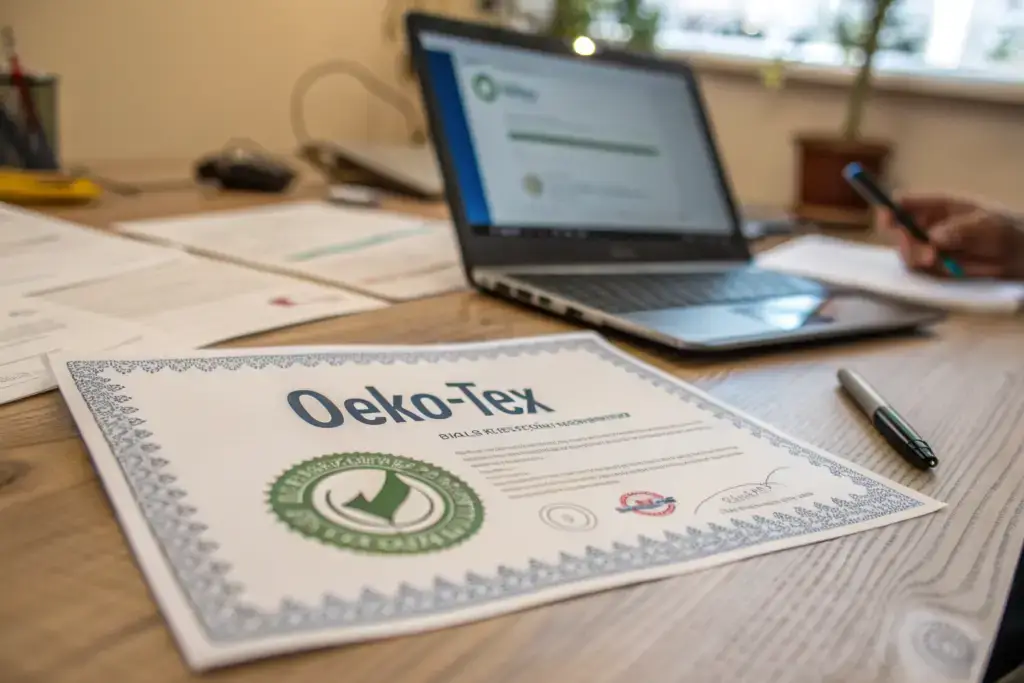
The first line of defense is the immediate public availability of your product's valid certification from a trusted third party like OEKO-TEX, GOTS, or Bluesign. This allows you to respond within hours—not days—with concrete evidence, shifting the narrative from "Are you guilty?" to "Here is the proof of our innocence." It provides the confidence to communicate decisively.
For instance, if a report alleges high levels of formaldehyde, a brand using an OEKO-TEX STANDARD 100 certified factory can immediately:
- Issue a statement referencing the specific certificate number.
- Provide a direct link to the official OEKO-TEX database showing the product's "valid" status.
- Explain that the product was tested against a limit far stricter than most national laws.
This response is factual, calm, and trust-building. Without certification, the response is delayed, internal testing must be rushed, and the public perceives defensiveness.
How Does This Work in a Real-World Scenario?
Let's break down the timeline:
| Scenario: Uncertified Product | Scenario: OEKO-TEX Certified Product |
|---|---|
| Day 1: Allegation surfaces. Brand scrambles to contact factory, request test reports. | Day 1: Allegation surfaces. Brand immediately publishes certification details and database link. |
| Day 2-4: Waiting for factory response. Internal panic grows. Media runs with story. | Day 2: Brand holds a press briefing, showcasing the certification process. Independent certifier may issue a supporting statement. |
| Day 5: Factory provides an old or questionable in-house report. Credibility is low. | Day 3: Story loses momentum as evidence is clear. Retailers and consumers are reassured. |
| Result: Prolonged crisis, lost sales, damaged trust. | Result: Contained issue, enhanced reputation for transparency. |
Why is the "Independent Third-Party" Element So Crucial?
Your own supplier's test report or your in-house QA statement lacks credibility in a crisis. It’s seen as self-serving. An audit by SGS, Bureau Veritas, or the OEKO-TEX consortium is impartial. Their reputation is on the line too, which gives your defense immense weight.
How Does Certification Build a Documented Chain of Due Diligence?
A scandal often leads to a legal question: "What did you do to prevent this?" Certification creates a paper trail that demonstrates proactive responsibility, potentially limiting liability.
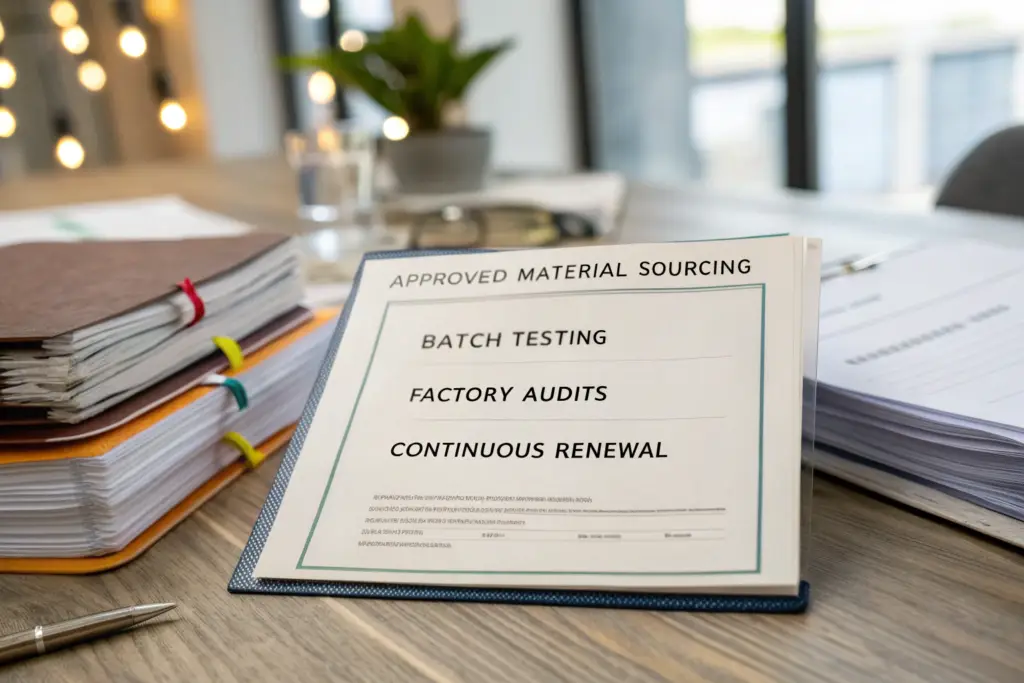
Certification builds a documented chain of due diligence by requiring and recording systematic processes: approved material sourcing, batch testing, factory audits, and continuous renewal. This archive proves you didn't just hope for compliance; you systematically enforced it. This can be the difference between a negligence ruling and a successful defense.
We implemented this for a client producing high-performance base layers. Beyond the final product certificate, we maintain, as part of our STeP certification, records for every roll of fabric received: the mill's own OEKO-TEX certificate, our incoming lab test results, and the dye lot numbers. When a component recall hit the industry due to a faulty elastic yarn, we traced our affected material batch in 2 hours, isolated only 200 garments, and provided the client with a full forensic report. Their liability was minimal. A non-certified competitor without such traceability had to recall their entire season's inventory.
What Key Documents Constitute This Protective Chain?
Your due diligence file should include:
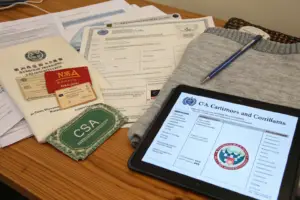
- Factory Certificates: Valid OEKO-TEX STeP (for the facility) and scope certificates for production.
- Material Certificates: OEKO-TEX STANDARD 100 certificates for every fabric, thread, and major component from suppliers.
- Test Reports: Periodic third-party lab testing reports on finished goods from labs like Intertek or TÜV.
- Audit Reports: Social and environmental audit summaries.
- Procedure Manuals: Evidence of training on chemical management and restricted substance lists (RSLs).
How Does This Protect Against "Falsified Certificate" Pain Points?
One of your stated pain points is suppliers falsifying documents. A robust due diligence process counters this:
- You always verify certificates in the official online database (not just accepting a PDF).
- You require consistency across the chain (e.g., the fabric cert number matches the supplier's name in the database).
- Your own random product testing validates the entire system.
This multi-layered verification makes fraud extremely difficult and easily detectable.
Can Certification Help You Recover Faster and Retain Retailer Trust?
The aftermath of a scandal can be more damaging than the event itself. Retailers may drop your line, and consumers may boycott. Certification provides the tools not just for defense, but for a faster, stronger recovery.
Yes, certification can dramatically accelerate recovery and retain retailer trust by providing a clear, credible corrective action plan rooted in an existing international standard. It shows partners you have a systemic solution, not just a one-time fix, making you a lower-risk partner for the future. Retailers need to protect themselves too, and they prefer brands with verifiable safeguards.
A practical case: A mid-sized brand we work with had a retailer audit that raised a potential concern about alkylphenol ethoxylates (APEOs) in prints. Because we operate under OEKO-TEX STeP, which mandates a chemical management system, we could immediately show the retailer:
- Our banned substance list that included APEOs.
- The lab test reports from our approved printing subcontractor.
- Our procedure for auditing material safety data sheets (MSDS) from chemical suppliers.
The retailer's concern was resolved within a day, and their confidence in the brand's supply chain management increased. The brand retained its valuable shelf space.
What Does the "Recovery Roadmap" Look Like?
With a certification framework, your recovery process is structured:
- Isolation: Use traceability systems to identify the exact contaminated batch.
- Root Cause Analysis: Follow certified procedures to find the failure point (e.g., unapproved dye from a sub-supplier).
- Corrective Action: Implement a standard-enforced fix (e.g., removing that supplier from the approved list, retraining staff).
- Verification: Submit proof of correction and new test reports from the certifying body.
- Communication: Transparently share steps 1-4 with retailers and customers.
How Does This Affect Long-Term Retailer Relationships?
Major retailers like REI, Nordstrom, or specialty boutiques are increasingly mandated to conduct supplier due diligence. Walking into a meeting with a portfolio of certifications and a transparent factory partner like Shanghai Fumao makes their compliance job easier. It positions you as a solution, not a problem, paving the way for expanded business.
How Does a Certified Factory Partner Act as Your Risk Management Extension?
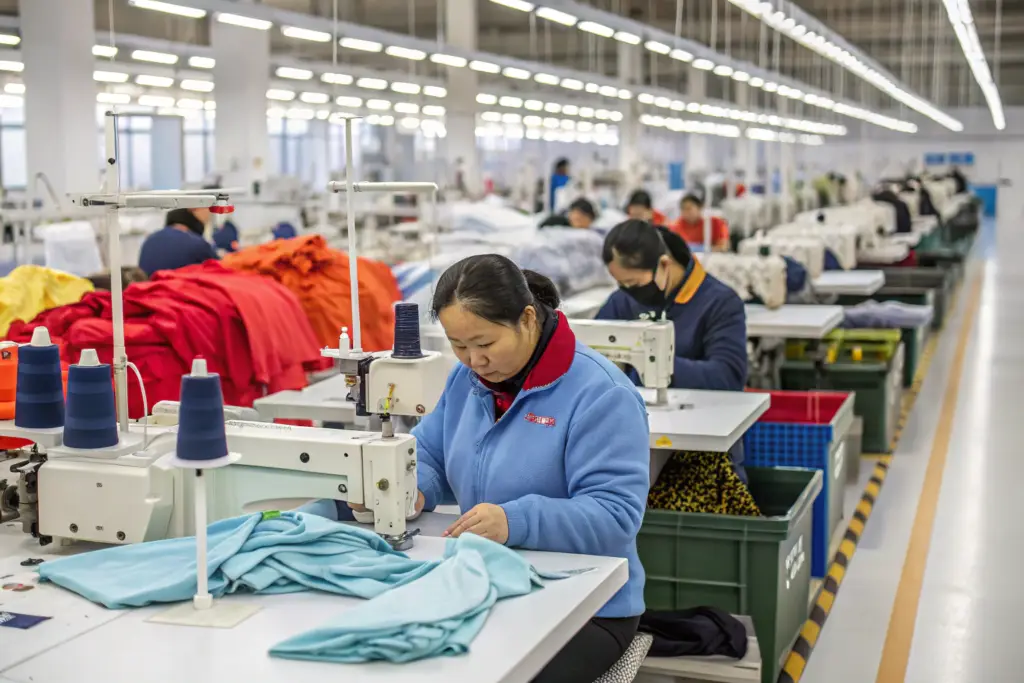
Your ideal supplier shouldn't just follow orders; they should anticipate and manage risks on your behalf. A certified factory has the systems, mindset, and obligation to act as your frontline risk management team.
A certified factory partner acts as your risk management extension by internally enforcing the strict standards you require, constantly monitoring regulatory changes, and proactively addressing issues before they reach your production line. They transform your compliance requirements from a static list into a dynamic, operational reality. This is the essence of a true partnership.
Here’s how this played out for a client: The EU was about to tighten its limits on a specific azo dye. Because our OEKO-TEX STANDARD 100 certification is updated annually with the latest regulatory and scientific findings, our testing protocols were already aligned with the upcoming law a full year in advance. We notified all our clients using similar dyes, including this brand, and helped them reformulate their color palette before any production was at risk. For them, it was a non-event. Their competitors without certified partners faced last-minute chaos and potential order cancellations.
What Proactive Services Should You Expect?
- Regulatory Alerts: Updates on changes to AFIRM RSL, California Proposition 65, or EU REACH.
- Pre-emptive Testing: Screening new material innovations or trims from unvetted sources before you commit.
- Supply Chain Vetting: Conducting audits or certificate checks on their own sub-suppliers (mills, dyers) on your behalf.
- Crisis Simulation: Having clear internal protocols for containment, testing, and communication if a failure is detected.
Why is This the Ultimate Solution to "Inefficient Communication"?
Your pain point about inefficient sales rep communication often stems from reps lacking technical, compliance knowledge. A certified factory embeds this knowledge into its systems. Your primary contact isn't just a salesperson; they are supported by a quality and compliance department that speaks the technical language of certification. This leads to faster, more accurate, and more trustworthy communication, directly addressing your frustration.
Conclusion
In the modern apparel industry, a chemical scandal is not a question of "if" but "when." The brands that survive and thrive are those that have moved from reactive hope to proactive, verified protection. Certification is not merely a cost or a label; it is the infrastructure of your brand's defense. It provides the instant evidence to blunt an attack, the documented diligence to satisfy legal scrutiny, and the trusted partner network to recover and rebuild.
For a brand owner focused on quality and competitive pricing, investing in certified manufacturing is the strategic choice that safeguards everything else. It allows you to focus on growth, knowing your reputation is secured by independent science and systematic rigor.
Don't wait for a crisis to reveal the weaknesses in your supply chain. Proactively build your defense with a partner whose systems are your shield. At Shanghai Fumao, our OEKO-TEX certified processes are designed to protect your brand as fiercely as you do. Let us show you how a true partnership can turn risk management into a competitive advantage. Contact our Business Director Elaine to audit our safeguards. Email: elaine@fumaoclothing.com.