You’re developing a new line of high-performance ski jackets and pants. Sustainability is a key selling point, so you’ve sourced innovative recycled polyester and nylon fabrics. But now you’re wondering: does our usual OEKO-TEX certification for safety still apply to these recycled materials? This is a critical question, because the “green” story falls apart if the product contains hidden harmful substances. Let’s get straight to the point.
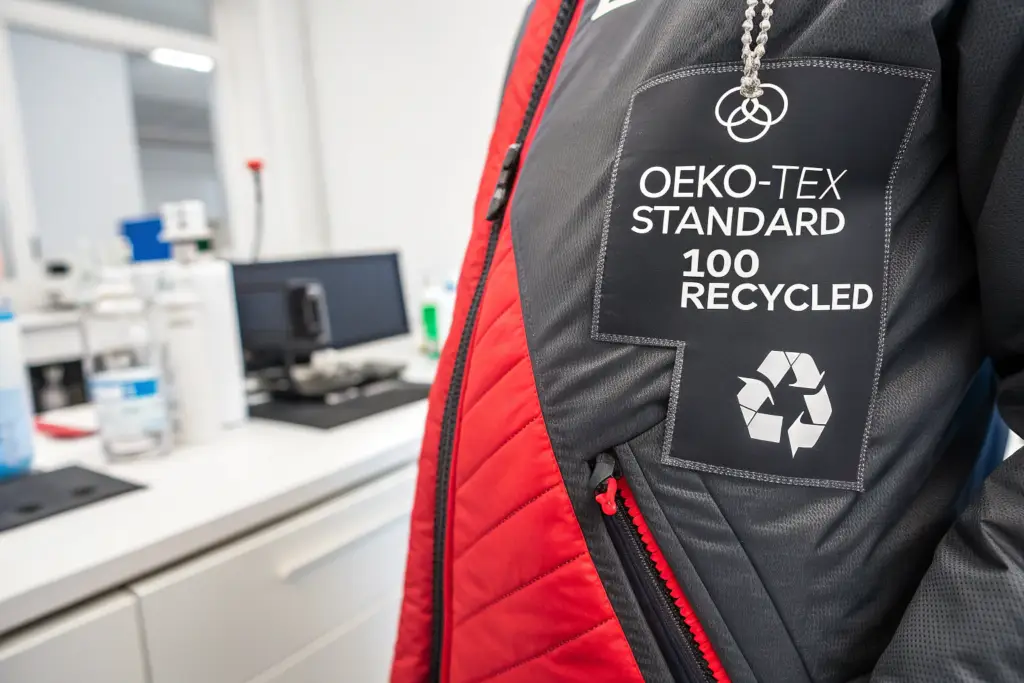
Yes, recycled fabrics used in ski apparel can and should be covered by OEKO-TEX certification, but the path to compliance is more complex. The OEKO-TEX STANDARD 100 certification tests the final product for harmful substances regardless of the material’s origin. However, the recycled content itself may require additional verification under the RECYCLED MATERIALS label or other standards to make credible recycled content claims. The key is understanding that product safety and recycled content are two separate claims, both needing proof.
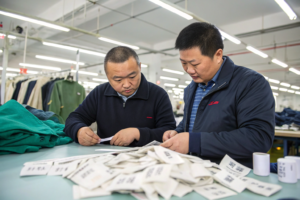
I faced this confusion head-on with a client last winter. A Colorado-based brand was launching a sustainable ski wear collection using post-consumer recycled (PCR) nylon. They assumed their fabric mill’s general OEKO-TEX certificate was enough. During our pre-production meeting at Shanghai Fumao, we pressed for details and discovered the certificate was for the mill’s base virgin nylon, not the specific recycled line. We helped them navigate testing the new recycled fabric blend, securing a STANDARD 100 certificate specific to their product, which became a cornerstone of their marketing.
How Does OEKO-TEX STANDARD 100 Apply to Recycled Materials?
The core principle of OEKO-TEX STANDARD 100 is product human-ecological safety. It doesn’t matter if a fiber is virgin, recycled, organic, or synthetic. The standard looks at the final product you are selling.
OEKO-TEX STANDARD 100 applies to all textiles, including those made from recycled fabrics. The certification process tests the finished article for a defined list of harmful substances. If recycled materials introduce contaminants—such as heavy metals from old dyes or restricted chemicals from previous product lives—the product will fail the STANDARD 100 test. Therefore, certification for recycled fabrics is not automatic; it is essential.
This is a major risk point. The recycling process, especially for post-consumer waste like plastic bottles or discarded fishing nets, must effectively purify the material. A few years ago, we worked with a fabric mill that sourced recycled polyester from uncertified origins. Our routine third-party lab testing for a client’s ski jacket shell revealed elevated levels of antimony, a catalyst often used in virgin PET production that can carry over. The batch failed. Because we had already factored certification into our timeline, we could switch to a certified recycled source with the mill and still meet the delivery deadline for the U.S. brand, avoiding a costly miss of the winter season.

What Specific Risks Do Recycled Fabrics Pose in Testing?
Recycled feedstocks are less controlled than virgin materials. STANDARD 100 testing becomes your crucial safety net for:
- Chemical Residues: Legacy substances from previous uses (e.g., flame retardants, dyes, coatings).
- Heavy Metals: Sources like pigments from printed original products or metal components.
- Contaminants: Microbial contamination or unintended material mixing during collection and sorting.
A fabric or component holding a valid STANDARD 100 certificate has already passed this gauntlet, giving you confidence.
How Should You Structure Your Supply Chain for Compliance?
The safest approach is to build a “certified chain.” Source recycled fabrics and components (zips, membranes, laminates) that themselves hold OEKO-TEX STANDARD 100 certificates. Then, ensure your final garment factory’s certification scope includes the assembly of ski apparel using those materials. This layered approach minimizes risk. At our factory, we maintain a pre-approved list of OEKO-TEX compliant suppliers for materials like recycled PrimaLoft® insulation and waterproof membranes, streamlining the process for our clients.
What is the OEKO-TEX RECYCLED MATERIALS Label, and Do You Need It?
You see the STANDARD 100 label for safety. But how do you credibly claim “made with recycled materials”? This is where the OEKO-TEX RECYCLED MATERIALS label enters. It’s a separate certification specifically for verifying recycled content.
The OEKO-TEX RECYCLED MATERIALS label is a separate certification that verifies and quantifies the recycled content in a textile product through a transparent chain of custody. It is not a safety test. You need it if you want to make a specific, verifiable claim about the percentage of recycled material in your ski apparel, going beyond a general marketing statement. STANDARD 100 proves it’s safe; RECYCLED MATERIALS proves it’s recycled.
Think of it this way: A ski jacket can be STANDARD 100 certified but made of 100% virgin material. Conversely, a jacket could have recycled content but fail STANDARD 100 if it’s contaminated. The most powerful product story uses both labels. For a client creating a premium, eco-conscious ski line, we facilitated the certification for both. The RECYCLED MATERIALS label required documentation from the fiber recycler, through the yarn spinner, to the fabric mill, and finally to us, the garment maker. This transparent supply chain documentation was arduous but became a key part of their sales pitch to high-end retailers.

How Does the RECYCLED MATERIALS Certification Process Work?
The certification follows the material with a chain of custody model. Each company in the supply chain—from recycler to finished garment manufacturer—must be certified. They must document:
- The quantity of certified recycled material received.
- The quantity passed on to the next stage (allowing for normal process loss).
- The final product’s exact recycled content percentage.
This system prevents “double counting” and greenwashing, giving your claim solid credibility.
Can You Use Other Recycled Content Certifications?
Yes. The Global Recycled Standard (GRS) is another major, widely recognized certification. It also includes environmental and social criteria. Many brands use GRS to cover recycled content and then pair it with OEKO-TEX STANDARD 100 for safety. The choice depends on your brand’s alignment with each standard’s requirements and your target market’s recognition. For the U.S. market, where OEKO-TEX is highly trusted for safety, combining STANDARD 100 with GRS for recycled content is a very strong strategy.
Does Using Recycled Fabrics Impact Performance or Durability Testing?
Ski apparel isn’t just about being green; it’s about surviving extreme conditions. Your customers need waterproof, breathable, durable gear. A legitimate concern is whether recycled materials compromise these core performance attributes.
Using certified recycled fabrics does not inherently impact performance or durability if the materials are engineered to meet the same technical specifications as their virgin counterparts. However, this must be validated through rigorous performance testing specific to ski apparel, which is separate from OEKO-TEX’s chemical safety testing. You cannot assume performance; you must test it.
We learned this through a collaborative project. A brand wanted to switch its entire shell fabric line to a new recycled nylon. While it had STANDARD 100, we insisted on running a full battery of performance tests before bulk production. We tested hydrostatic head (waterproofing), MVTR (breathability), tear strength, and abrasion resistance against the existing virgin fabric benchmark. The results showed the recycled fabric met all key thresholds. This data allowed the brand to market the line as “High-Performance & Recycled” with complete confidence. Without this step, they risked field failures and returns.
What Key Performance Tests Are Non-Negotiable for Ski Apparel?
Regardless of material origin, your ski apparel must pass:
- Water Resistance: Tested via AATCC 22 (spray) or ISO 4920 (hydrostatic head).
- Breathability: Measured via RET or MVTR (e.g., ISO 11092).
- Durability: Abrasion resistance (Martindale test), tear strength (Elmendorf test), and seam strength.
- Cold Weather Flexibility: Ensuring fabrics and laminates don’t become brittle at low temperatures.
These tests are your functional quality assurance, parallel to your chemical safety assurance from OEKO-TEX.
How Do You Ensure Consistent Quality with Recycled Feedstocks?
The variability of recycled feedstock is a known challenge. Partner with suppliers who practice “upcycling” — turning waste into high-quality, consistent fibers suitable for technical apparel. Ask them for:
- Technical Data Sheets (TDS) for each batch of recycled fabric.
- Batch-to-batch test reports for key performance indicators.
- Evidence of their own quality management systems (e.g., ISO 9001).
A reliable factory like Shanghai Fumao will have a strict fabric approval process that includes both lab performance tests and physical garment prototyping (like wearing the sample in a freezer room) to catch any issues.
How to Communicate “Safe & Sustainable” Credentials to Ski Consumers?
You’ve done the hard work: sourced certified recycled fabrics, passed OEKO-TEX safety tests, and validated performance. Now, you must communicate this complex story simply and trustworthily to the end consumer. Transparency is your most powerful tool.
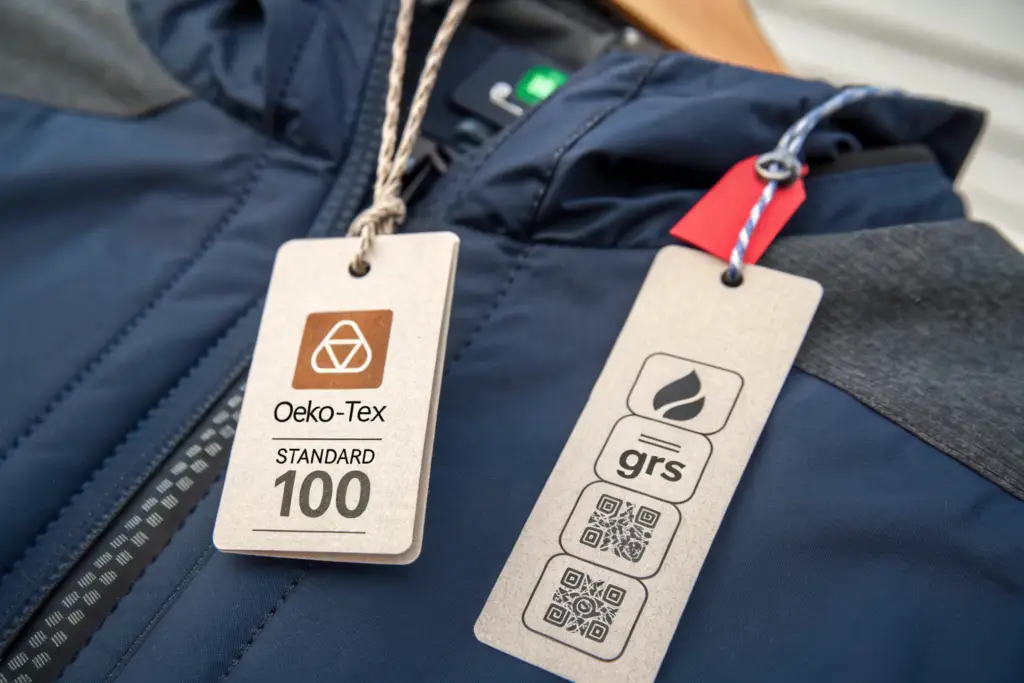
Communicate “Safe & Sustainable” credentials by using the specific OEKO-TEX labels on your hangtags and linking them to clear, educational content online. Combine STANDARD 100 (safety) with RECYCLED MATERIALS or GRS (recycled content) labels, and use QR codes or simple icons to explain what each means for the skier. Avoid vague terms like “eco-friendly”; use the certified labels as your proof points.
For our client’s ski wear line, we helped design a two-part hangtag. One side had the bold OEKO-TEX STANDARD 100 logo with the text “Tested for Harmful Substances.” The other side featured the GRS logo with “Made with 100% Recycled Nylon Shell.” A tiny QR code linked to a brand page that explained their sustainability journey, including their partnership with a certified factory like ours. This multi-layered approach built immense trust.
What is the Most Effective Way to Use Labels and QR Codes?
- Be Specific: Don’t just say “OEKO-TEX Certified.” Say “OEKO-TEX STANDARD 100 Certified for Product Safety.”
- Show the Percentage: If using RECYCLED MATERIALS or GRS, state the exact recycled content percentage (e.g., “Shell: 100% Recycled Nylon”).
- Educate with QR Codes: Link to a short video or page explaining why these certifications matter for both the consumer’s health and the environment.
How Can Your Factory Partner Support Your Marketing Story?
A true manufacturing partner is a source of verifiable content. We provide our brand partners with:
- High-resolution images of our certifications and factory processes.
- Case study snippets (with permission) about overcoming challenges like ensuring recycled fabric performance.
- Transparency in our own supply chain, showing we source from certified material suppliers.
This allows you to tell an authentic, end-to-end story. When you partner with Shanghai Fumao, you’re not just buying manufacturing; you’re buying a verified narrative you can share with your customers.
Conclusion
The intersection of recycled fabrics and OEKO-TEX certification in ski apparel is where sustainability meets rigorous safety and performance standards. The answer is clear: recycled fabrics must be covered by OEKO-TEX STANDARD 100 to ensure they are free from harmful substances. To credibly claim recycled content, pair it with the OEKO-TEX RECYCLED MATERIALS label or the Global Recycled Standard. However, certifications are just the baseline. For ski apparel, relentless performance testing is equally non-negotiable.
Navigating this landscape requires a factory partner that understands both the technical demands of high-performance sportswear and the intricate documentation trails of sustainability certifications. It’s a complex puzzle, but solving it delivers a product that is truly responsible, high-performing, and market-ready.
Developing a ski apparel line that is both high-performance and genuinely sustainable requires a specialized manufacturing partner. At Shanghai Fumao, we combine technical expertise in activewear with deep experience in guiding brands through OEKO-TEX and recycled material certifications. Let us help you build a collection that performs on the slopes and in the market. Contact our Business Director Elaine to start the conversation. Email: elaine@fumaoclothing.com.