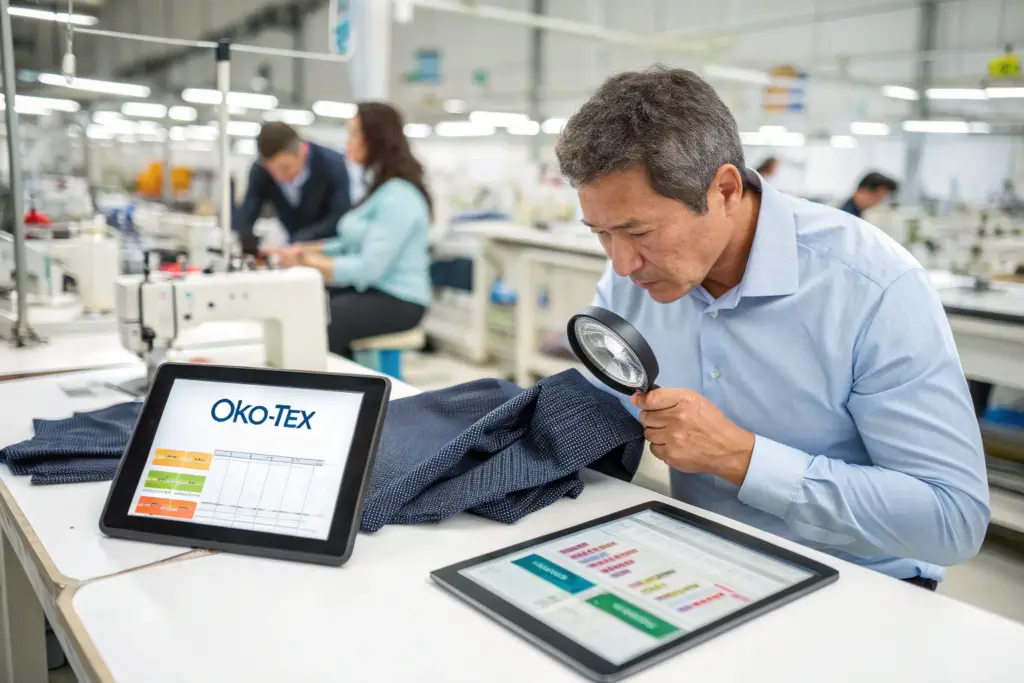
In today’s market, simply making a “green” claim isn’t enough. Savvy U.S. brand owners and buyers, like many of my clients, demand proof. They need verifiable credentials to communicate value to their customers and protect their brand reputation. One of the most common and trusted proofs we discuss is the OEKO-TEX® certification. But what does it really allow you to say about your products? Let’s cut through the confusion.
An OEKO-TEX certification is an independent verification that a textile product has been tested for harmful substances, allowing brands to legitimately claim their items are safe for human health and produced with responsible chemical management. However, it's crucial to understand which specific OEKO-TEX label you have, as claims about organic fibers, recycled content, or environmental impact require additional, specific certifications like STANDARD 100, MADE IN GREEN, or ORGANIC COTTON.
For brand owners sourcing from China, Vietnam, or India, certifications are your safety net. They mitigate risk. I’ve seen too many partnerships sour because a supplier presented a generic “OEKO-TEX” certificate that didn’t match the product shipped, leading to costly disputes. Understanding the details empowers you to source confidently and market accurately. Let’s break down what each label means for your sustainability story.
What is the Difference Between OEKO-TEX STANDARD 100 and MADE IN GREEN?
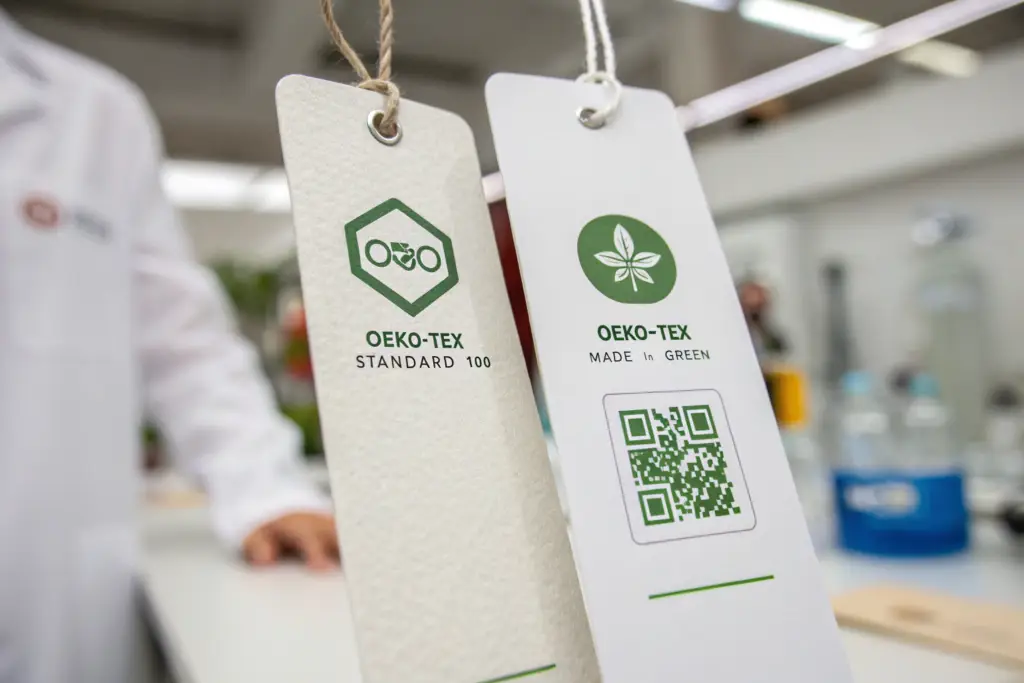
You see both labels on hangtags, but using them interchangeably is a major mistake. Each answers a different customer question. STANDARD 100 is about product safety: “Is this item free from harmful chemicals for me and my family?” MADE IN GREEN goes further, addressing production ethics: “Was this made in safe, environmentally friendly, and socially responsible workplaces?”
The core difference is scope. OEKO-TEX STANDARD 100 certifies the final product’s human-ecological safety. OEKO-TEX MADE IN GREEN certifies the product's safety (it must first pass STANDARD 100 or LEATHER STANDARD) AND traces its production through environmentally and socially responsible facilities. Think of STANDARD 100 as a product test and MADE IN GREEN as a product passport.
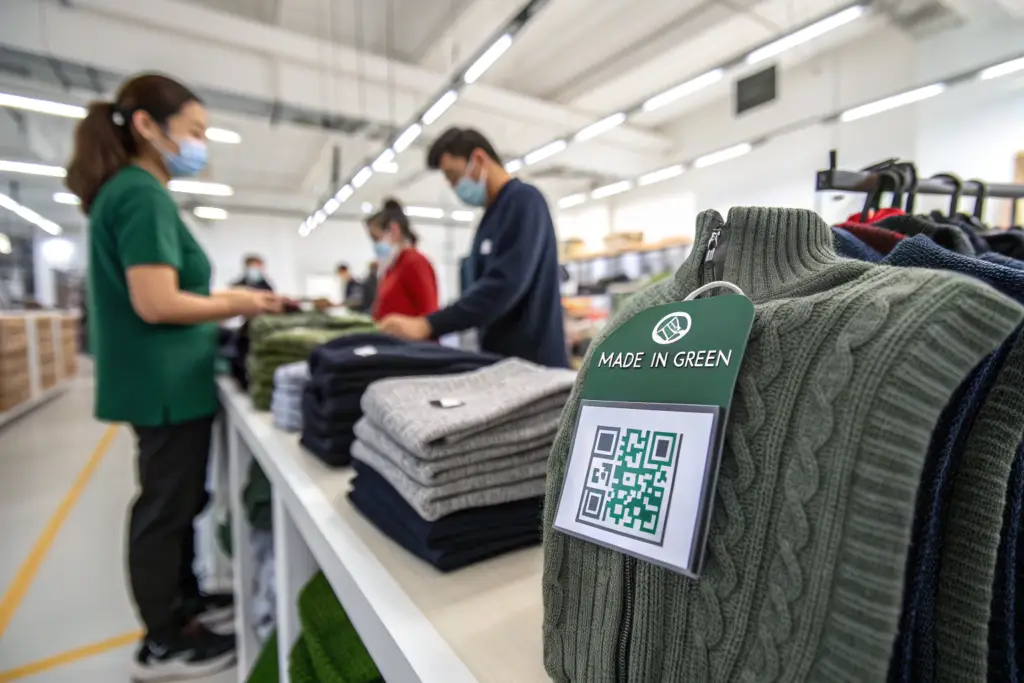
For you, the buyer, this impacts both sourcing and marketing. Last year, an outdoor apparel brand from Colorado partnered with us at Shanghai Fumao for a knitwear line. They initially requested only STANDARD 100. However, during our development call, their marketing team realized their end-consumers were deeply interested in supply chain transparency. We guided them to upgrade to MADE IN GREEN for their flagship products. This allowed them to use a unique QR code on the label, telling a powerful story about responsible manufacturing in our Shanghai facility. Their customer engagement on those items increased significantly.
What Specific Claims Can You Make with STANDARD 100?
STANDARD 100 is your foundation for product safety claims. It is one of the most recognized textile testing certifications globally. With it, you can confidently state that every component of your product—fabric, thread, buttons, zippers—has been tested against a comprehensive list of over 1,000 regulated and unregulated harmful substances. The claims are clear: “This product is harmless to human health.” You can communicate that it is safe for skin contact, even for babies' clothing and sensitive skin apparel. It’s a powerful claim for trust, especially in markets like North America and Europe where consumer awareness is high. It directly addresses a core pain point for buyers: verifying that a supplier’s quality control includes stringent chemical management.
How Does MADE IN GREEN Enhance Your Brand Story?
MADE IN GREEN is your tool for holistic sustainability storytelling. It builds upon safety by adding traceability and ethical production claims. With this label, you can claim your product was “manufactured in environmentally friendly facilities under safe and socially responsible working conditions.” The traceable transparent supply chain is its key feature. Each product gets a unique ID/QR code. Scanning it shows consumers the production stages and countries of manufacture. This directly combats “greenwashing” by providing proof. For a brand owner, this is invaluable. It turns a simple garment into a narrative about your brand’s values. When you source from a factory like ours that holds MADE IN GREEN, you’re not just buying a product; you’re buying a verifiable story you can share with your distributors and end-customers.
Can OEKO-TEX Certification Help Ensure On-Time Delivery?
At first glance, a sustainability label and shipping schedules seem unrelated. But in my 15 years running Shanghai Fumao, I’ve seen a direct correlation. Robust certification processes create a more predictable and reliable production flow, which is crucial for hitting your key selling seasons.
Yes, a factory’s commitment to maintaining OEKO-TEX certifications, especially MADE IN GREEN, often indicates advanced process management and planning, which reduces the risk of delays caused by quality rejections or audit failures. The discipline required for consistent certification fosters overall operational excellence.
Consider the common pain point: a shipment is delayed because final inspection failed a safety or quality test. This often happens when chemical management is an afterthought. In a certified factory, responsible chemical management is integrated from the start. Raw material sourcing is stricter. In-process checks are systematic. For example, we once onboarded a new fabric mill for a client’s activewear line. Because our MADE IN GREEN certification requires approved suppliers, we audited the mill’s own chemical inventory and management first. This upfront work prevented a potential issue with non-compliant dyes that would have caused a two-week delay later. This proactive approach is what keeps deadlines secure.
How Do Certified Factories Mitigate Supply Chain Risks?
Certifications enforce a documented, traceable system. This systemization directly reduces risks that cause delays.
- Pre-approved Raw Materials: Factories use an OEKO-TEX compliant supplier list, minimizing the chance of last-minute material rejections.
- Batch Testing Protocols: Regular testing throughout production catches issues early, not at the final inspection.
- Audit-Ready Organization: A factory that is always prepared for a surprise audit has its house in order, meaning better management of production timelines.
This table shows how certification requirements translate to operational stability:
| Certification Requirement | Operational Impact | Benefit for Your Delivery |
|---|---|---|
| Documented Chemical Inventory | Strict control over all inputs | No delays from contaminated/banned substances |
| Supplier Code of Conduct | Vetted and reliable material partners | Consistent material quality and flow |
| Environmental Process Checks | Optimized resource use (water, energy) | Fewer production stoppages from regulatory issues |
| Traceability Systems | Real-time tracking of order progress | Accurate updates and predictable completion dates |
What Should You Ask Your Supplier About Their Certificates?
Don’t just accept a certificate PDF. Verify it. Ask these questions to gauge their reliability:
- “Can you provide the official OEKO-TEX public database link for this certificate?” (All valid certificates are listed online).
- “Is this certification for the specific product category I am ordering?” (A certificate for woven shirts does not cover knit sweaters).
- “When is the next audit, and how do you prepare for it?” This reveals if certification is a core practice or just a purchased document.
A supplier with nothing to hide, like our team at Shanghai Fumao, will provide this transparency instantly. It’s the best way to ensure they aren’t one of those who occasionally falsify documents—a real pain point you’ve highlighted.
Is OEKO-TEX STeP the Same as a Factory Audit?
Many buyers request a “factory audit,” and often receive a generic social compliance report. OEKO-TEX STeP (Sustainable Textile & Leather Production) is far more comprehensive. It’s not just an audit; it’s a benchmarking system for the entire manufacturing facility’s sustainable performance.
No, OEKO-TEX STeP is not a simple audit. It is a modular certification system that assesses, scores, and benchmarks a factory’s environmental and social performance across six key areas, providing a clear path for continuous improvement. While an audit is a snapshot, STeP is a longitudinal management tool.
For a brand owner, partnering with a STeP-certified factory means aligning with a facility committed to measurable progress. Three years ago, we invested in achieving STeP certification for our Shanghai facility. The process forced us to quantify everything from wastewater treatment efficiency to employee training hours. The result wasn’t just a certificate; it was a more efficient, safer, and more attractive factory to global brands. A sportswear client from the Midwest specifically chose us over another vendor because our public STeP scorecard showed superior performance in chemical management and energy efficiency, which aligned with their corporate sustainability goals.
How Does STeP Certification Benefit Your Sourcing Decision?
Choosing a STeP-certified factory de-risks your sourcing in several ways:
- Beyond Labor Checks: It evaluates environmental impact, chemical management, quality management, and health & safety, not just working hours.
- Data-Driven Comparison: The public online platform allows you to compare different factories' performance with objective scores. You can see if a supplier is truly leading or just meeting minimums.
- Future-Proofing: Facilities focused on improving their STeP score are proactively adapting to stricter global regulations, protecting you from future compliance shocks.
What Do the STeP Module Scores Actually Tell You?
The STeP assessment results are transparent. When evaluating a supplier like us, you can look up their profile and see scores (from 1 to 5) in each module. For instance, a high score in “Chemical Management” indicates they have a robust system to ensure your products meet restricted substance lists (RSLs) like the AFIRM RSL. A high score in “Environmental Performance” means they are actively reducing their footprint, which can be part of your own brand’s Scope 3 emissions reporting. This level of detail moves the conversation from “Are you certified?” to “How good are you, and where are you improving?” It turns certification from a cost into a strategic sourcing advantage.
How to Verify an OEKO-TEX Certificate from Your Supplier?
Trust, but verify. This is the golden rule when dealing with certifications from overseas suppliers. An invalid or misapplied certificate is worse than none at all—it exposes your brand to legal and reputational risk.
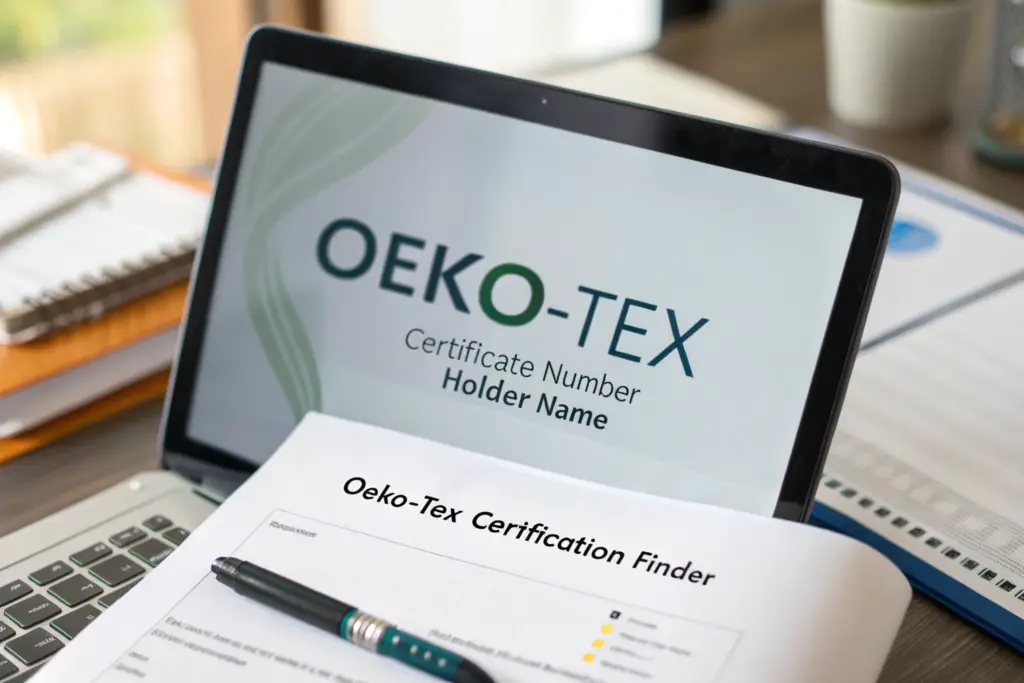
You must verify every OEKO-TEX certificate through the official OEKO-TEX certification finder or buyer’s database using the certificate number and holder name. Cross-check the product description, validity date, and issuing institute to ensure it matches your exact order. This simple 5-minute step can prevent monumental losses.
I recall a prospective client who came to us after a bad experience. Their previous supplier in South Asia had provided an OEKO-TEX certificate for “woven shirts.” When the client’s own lab tested the shipped polyester blend activewear, it failed for phthalates. The supplier’s certificate was genuine but for a completely different product category. The client faced a total loss. We showed them how to use the official database, and now it’s the first step in their supplier qualification process. At Shanghai Fumao, we proactively send our clients the direct links to our valid certificates for their peace of mind.
What Are the Key Details to Check in the Database?
When you look up a certificate, go beyond the “valid” status. Scrutinize:
- Certificate Holder: Is it the actual factory producing your goods, or a trading company? The latter adds risk.
- Product Class: OEKO-TEX has four product classes (I for babies, IV for home textiles). Is the class appropriate for your product’s use?
- Article Description: Does it broadly cover “knitted jackets” or is it oddly specific? Ensure it encompasses your item.
- Validity Period: Certificates are valid for one year. Is it current for your production period?
Why is Third-Party Lab Testing Still Recommended?
Even with a valid OEKO-TEX certificate, conducting your own third-party lab testing on random shipment samples is a best practice. Why? The OEKO-TEX certificate is based on testing a representative sample provided by the factory. Your independent test acts as a final checkpoint, ensuring the mass-produced goods consistently meet the standard. It’s the ultimate layer of quality assurance and due diligence. For high-volume orders, this small additional cost is insignificant compared to the risk of a product recall. We encourage our clients to do this and can even facilitate the sampling process for their chosen lab.
Conclusion
Navigating OEKO-TEX certifications is about moving from vague “eco-friendly” claims to precise, defensible marketing language. STANDARD 100 lets you claim product safety. MADE IN GREEN lets you tell a story of ethical, transparent production. STeP reveals the sustainable competency of your manufacturing partner. Understanding these differences is a powerful tool for U.S. brand owners. It allows you to source smarter, mitigate risks like delays and non-compliance, and build a brand that today’s consumers trust.
Ultimately, these certifications are not just badges for your hangtag; they are indicators of a supplier’s professionalism, transparency, and commitment to partnership. They separate the true manufacturers from the mere middlemen. If your goal is to build a reliable, high-quality apparel line with verifiable sustainability credentials, you need a partner who understands this landscape deeply and operates with integrity at every step.
Ready to partner with a factory that makes certification and transparency a cornerstone of its service? Let Shanghai Fumao be your trusted manufacturing extension. We combine rigorous OEKO-TEX certified processes with relentless commitment to on-time delivery and clear communication. Contact our Business Director Elaine today to discuss how we can bring your next collection to life with confidence. Email: elaine@fumaoclothing.com.