As an apparel company owner, you are constantly balancing immediate costs against future gains. Decisions about certifications like OEKO-TEX Standard 100 are often evaluated through a short-term lens: "What is the price premium per unit?" This is a critical question, but it misses the larger picture. The true value of OEKO-TEX is not found on a single cost sheet; it is woven into the long-term fabric of your business's resilience, reputation, and growth trajectory. Choosing to build your brand on a foundation of independently verified safety is a strategic investment that pays compounding dividends over years, not just seasons.
For apparel company owners, the long-term benefits of OEKO-TEX certification are transformative. It systematically de-risks the business against regulatory shifts and consumer backlash, builds an unassailable brand reputation that commands customer loyalty and premium pricing, and creates a streamlined, trustworthy supply chain that fuels sustainable growth and exit strategy value. It moves your company from competing on price to competing on verifiable trust.
Having partnered with hundreds of brand owners, I've seen those who invest in this foundation sleep better at night. Their businesses are more stable, their customer relationships are stronger, and their companies are more valuable. Let's break down the multi-year payoff of this commitment.
How does it build an unshakeable brand reputation and customer loyalty?
In the digital age, a reputation can be built over years and damaged in minutes. Consumers have long memories for scandals and deep appreciation for consistent integrity. OEKO-TEX certification provides a continuous, third-party narrative of your commitment to safety and responsibility.
This isn't theoretical. Consider a brand we've worked with since its launch five years ago. From day one, their knitwear was produced at Shanghai Fumao under OEKO-TEX Standard 100. They consistently communicated this in their storytelling. Today, they are not known as "that cute knitwear brand." They are known as "the trusted, safe knitwear brand for families." When a competitor faced a social media crisis over dye allergies, our client's sales spiked by 15% without any promotion. Their long-established certification acted as a shield and a magnet. Their customer retention rate is over 45%, significantly above industry averages, because they've given customers a substantive, non-negotiable reason to stay.
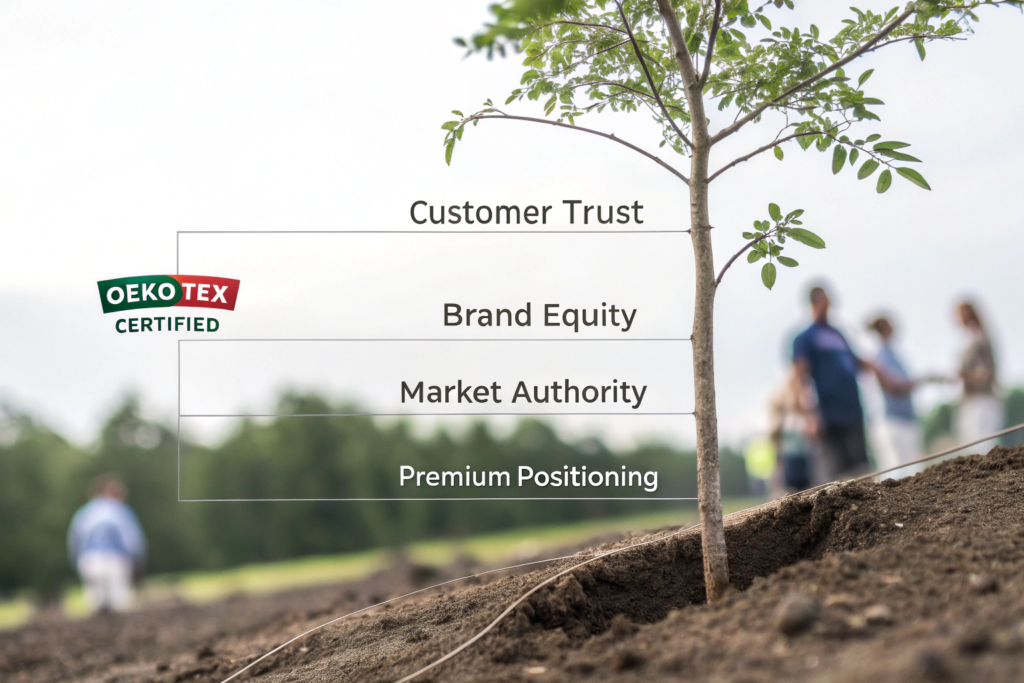
What is the lifetime value (LTV) of a "trust-driven" customer?
A customer who chooses you for verified safety is less price-sensitive, more loyal, and more likely to advocate. They have a higher LTV. Over 5-10 years, the cumulative revenue from this loyal cohort far outweighs the initial certification costs amortized across thousands of units. This aligns with business models discussed by platforms like Shopify Plus for scaling DTC brands.
How does it future-proof marketing claims?
Marketing trends change, but the fundamental human desire for safety is constant. Building your brand equity on this timeless pillar, backed by proof, ensures your core message never becomes obsolete or vulnerable to accusations of greenwashing.
How does it create a streamlined and defensible supply chain?
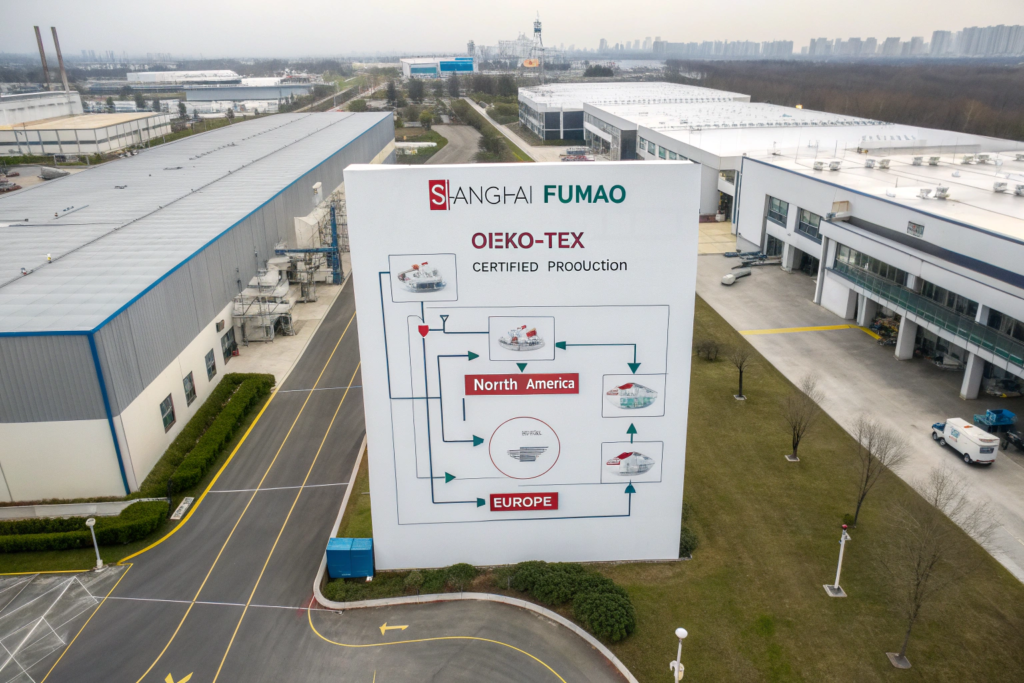
Supply chain complexity is a major long-term drag on growth and profitability. Disputes over quality, delayed shipments due to failed tests, and the constant threat of supplier non-compliance are massive distractions. OEKO-TEX certification, when implemented with a partner like Shanghai Fumao, systemically simplifies and secures this chain.
The long-term benefit is operational excellence. You are not managing a different quality crisis with every order. You have a standardized, repeatable benchmark. For one of our clients, a growing outdoor apparel brand, this meant they could scale from 5 to 50 SKUs without having to expand their quality control team proportionally. The OEKO-TEX framework we provided served as the universal quality language. Over three years, they reduced production-related delays by an estimated 70%, translating into more reliable inventory and happier retail partners.
What is the cost of not having a standardized system?
The hidden costs are immense: staff time spent firefighting, lost sales from missed delivery windows, inventory write-offs from failed inspections, and management bandwidth diverted from growth to crisis control. Over a decade, these hidden costs can dwarf any perceived savings from avoiding certification.
How does it improve relationships with downstream partners?
Major retailers and marketplaces (from Nordstrom to Amazon) are tightening their compliance requirements. Having OEKO-TEX certification pre-answers 80% of their vendor questionnaire, making you a "low-hassle," preferred supplier. This long-term access to premium channels is a huge competitive advantage. The American Apparel & Footwear Association (AAFA) regularly updates on these evolving retailer standards.
How does it mitigate long-term regulatory and financial risk?
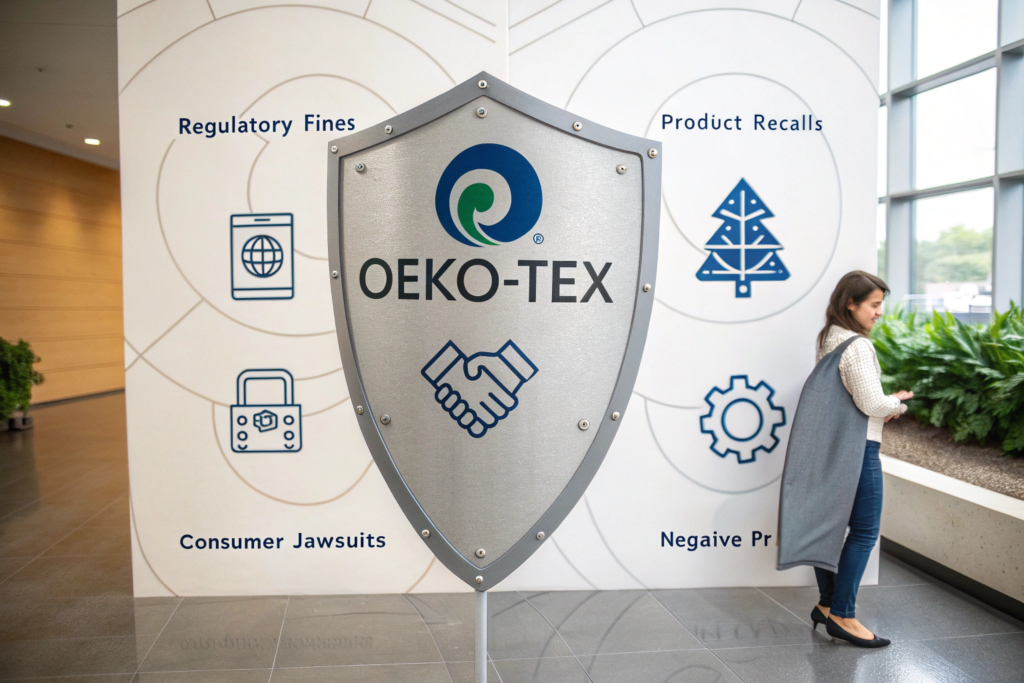
The regulatory landscape is a tightening net. Laws like REACH in the EU, Prop 65 in California, and similar regulations globally are expanding in scope and enforcement. For a business owner, non-compliance is not an option; it can mean crippling fines, forced recalls, and irreversible brand damage.
OEKO-TEX certification is proactive risk management. Its standard is updated annually to stay ahead of new scientific findings and regulatory limits. By building your production on this moving target, you are effectively future-proofing your products against new laws. I know an owner who, five years ago, invested in OEKO-TEX for his children's sleepwear line. Last year, when a new regulation on specific flame-retardant chemicals was enacted, his products were already compliant because the standard had been updated. His competitors faced a six-month scramble and costly reformulation; he faced zero disruption. This is the power of a long-term, systematic approach.
What is the financial impact of a single major recall?
For a small-to-mid-sized brand, a recall can be an existential threat. The direct costs (logistics, refunds, destruction) combined with the loss of consumer trust and retailer goodwill can erase years of profit. OEKO-TEX certification drastically reduces the statistical probability of this catastrophic event, protecting the owner's life's work and financial stability.
How does it affect insurance and financing?
A business with demonstrable risk management protocols (like internationally recognized certifications) may benefit from more favorable business insurance premiums and be viewed more favorably by lenders or investors seeking stable, responsible companies. It becomes an asset on your business's balance sheet.
How does it enhance business valuation and exit strategy?
Every business owner should build with an end in mind, whether that's selling the company, passing it on, or attracting investment. Acquirers and investors pay for predictable future cash flows, strong brands, and de-risked operations. OEKO-TEX certification directly contributes to all three.
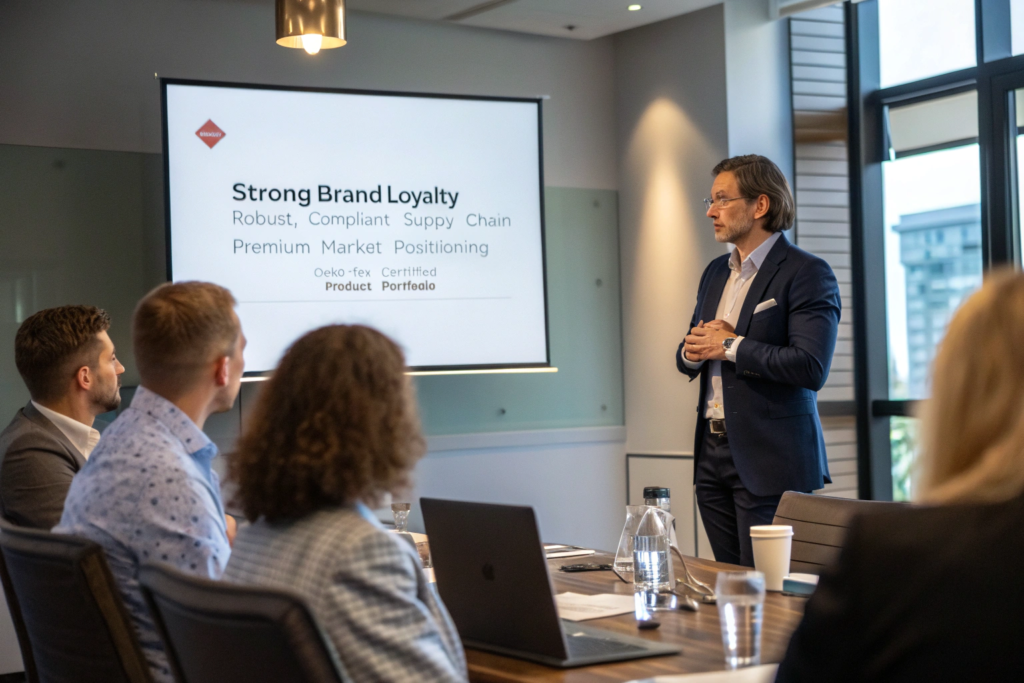
A brand built on verifiable trust is a more defensible and valuable asset. It has a "moat" that competitors without certification cannot easily cross. When valuation multiples are applied to your earnings, a stronger, more resilient brand with loyal customers and a secure supply chain commands a higher multiple. An investor we spoke with recently said they automatically apply a "sustainability and compliance discount" to brands that lack third-party verification, as they represent a higher future liability.
What do acquirers look for?
They look for headaches they won't inherit. A history of OEKO-TEX certification demonstrates that you have systematically managed one of the biggest headaches in apparel: product safety and compliance. This makes your company a more attractive, "cleaner" acquisition target.
Can it open doors to strategic partnerships or investment earlier?
Absolutely. Impact investors and venture capital firms focused on sustainable consumer brands actively seek out companies with credible certifications. OEKO-TEX can be a key criterion that gets you in the door for funding rounds that fuel accelerated growth. Publications like Business of Fashion often analyze investment trends in sustainable fashion.
Conclusion
For the apparel company owner, OEKO-TEX certification is a paradigm shift from a cost-centric to an equity-centric view of the business. The long-term benefits are clear: it cultivates a priceless reputation of trust that drives loyalty and premium pricing. It engineers a supply chain that runs on predictability rather than panic. It erects a defensive wall against escalating regulatory and financial risks. And ultimately, it builds a more valuable, sellable company.
This is not a decision about your next collection; it's a decision about the next decade of your business. It's the choice to build something lasting, resilient, and worthy of your effort.
If you are building an apparel company meant to last and grow in value, partnering with a manufacturer that embodies this long-term philosophy is critical. Shanghai Fumao is more than a production partner; we are architects of secure, certified supply chains that underpin enduring brand success. Let's build the foundation for your company's future. Contact our Business Director Elaine to begin the strategic conversation: elaine@fumaoclothing.com.