Producing a velour back tie romper presents a unique challenge for brands committed to safety. Velour is a plush, textured fabric, often made from cotton or polyester, and its luxurious feel makes it perfect for premium babywear and loungewear. However, its texture and common manufacturing processes introduce specific risks for chemical residues and quality inconsistencies. For a brand, claiming OEKO-TEX compliance is a promise that extends from the spool of yarn to the store shelf. Ensuring this compliance isn't just about picking a certified fabric; it's about managing an entire certified production ecosystem. At Shanghai Fumao, we treat OEKO-TEX compliance as an integrated, step-by-step process, not a final checkpoint.
Ensuring OEKO-TEX compliance in velour romper production requires a holistic, documented control system that covers every component and process stage. It begins with sourcing pre-certified velour fabrics and trims, extends to segregated manufacturing in a certified facility using approved auxiliaries, and is validated through final product testing by an accredited lab. The key is proactive, traceable management at every step, not reactive testing.
Many brands assume that buying OEKO-TEX certified fabric is enough. This is a dangerous oversight. We've seen orders fail final product certification because of non-compliant thread, printing ink, or even care labels. Let's walk through the critical, actionable steps to guarantee compliance from concept to delivery.
What are the critical raw material checks for velour?
The foundation of compliance is the raw material. For a velour back tie romper, this includes not just the main velour fabric, but at least 5-7 other components. Each one is a potential point of failure.
At Fumao, our procurement starts with a certified-only shortlist. For velour, we prioritize suppliers whose certification (like OEKO-TEX STeP for sustainable production) covers the specific dyeing and finishing processes that create the pile. In 2023, a children's brand client sourced a beautiful polyester velour that was certified. However, the client's design used a non-certified, contrasting cotton rib knit for the neckline and cuffs. This single oversight would have invalidated the entire garment's compliance. We caught it during our Material Review Board and sourced a certified rib knit, preventing a costly last-minute scramble.
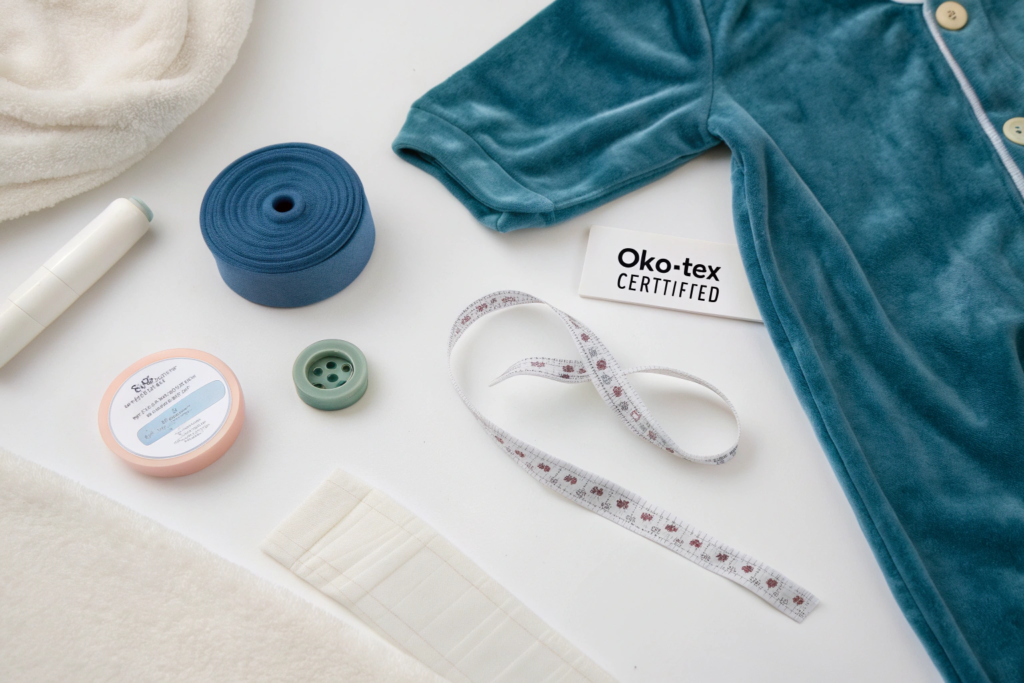
Which components must be certified?
- Main Fabric: Velour (both face and back).
- Secondary Fabrics: Any ribbing, interlacing, or lining.
- Sewing Thread: Often overlooked, but critical.
- Trims: Elastic, ribbons (like back ties), drawcords.
- Labels: Care labels, size tags, brand labels.
- Hardware: Snap buttons, any metal or plastic parts.
- Decoration: Printing inks, embroidery threads, appliqués.
How do you verify supplier certificates?
Never accept a PDF at face value. We use the OEKO-TEX online certificate verification system. We input the supplier's certificate number to check its validity, scope (exact product article), and expiration date. This is a non-negotiable step that protects our clients. The International Oeko-Tex Association provides this public database for a reason.
How does manufacturing process segregation guarantee purity?
Bringing certified materials into a non-certified factory environment contaminates the effort. Cross-contamination is a real risk—from residual chemicals on machines to using non-compliant cleaning agents or lubricants.
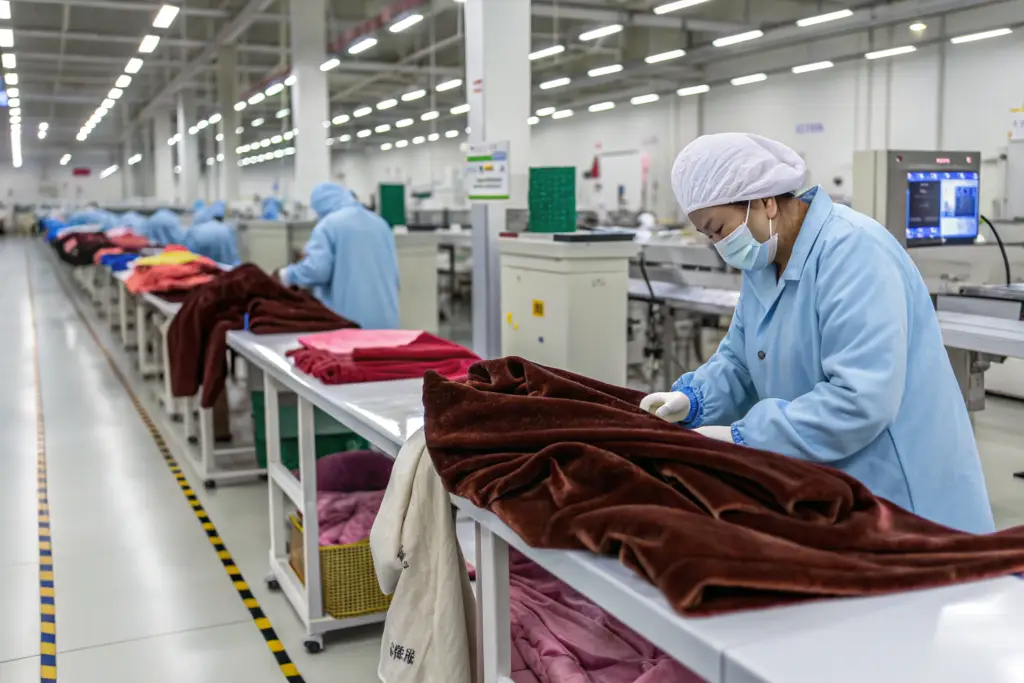
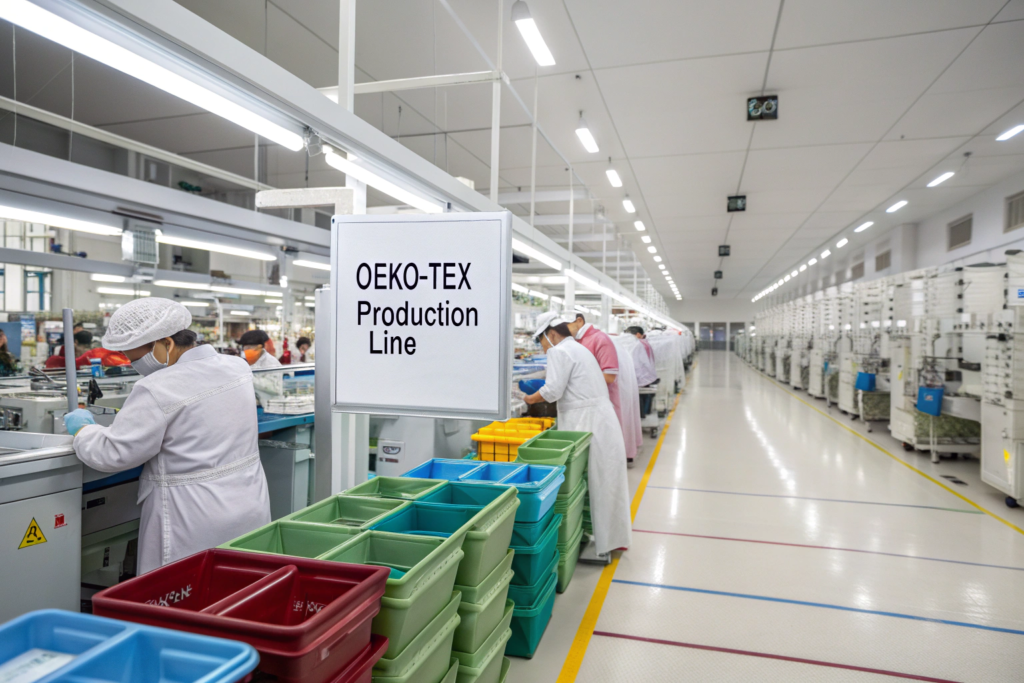
Our factory operates dedicated OEKO-TEX production lines. This means:
- Dedicated Machines: Specific sewing and cutting equipment is reserved for certified orders.
- Separated Storage: Certified fabrics and components are stored in a designated, marked area.
- Approved Auxiliaries: We use only OEKO-TEX approved cleaning agents, machine oils, and pattern-making materials in this zone.
- Trained Staff: Operators understand the protocols to prevent mix-ups.
A practical example: Velour is prone to shedding and lint. If a machine used for a non-certified order (which might have used silicone-based softeners) is immediately used for a certified velour order, cross-contamination can occur. Our segregated line eliminates this risk. For a Los Angeles-based luxury baby brand, this systemic approach was the deciding factor in choosing Shanghai Fumao over a cheaper alternative. They needed ironclad assurance that their high-margin velour rompers would not be compromised at the assembly stage.
What is the role of in-process quality control (IPQC)?
IPQC inspectors on the certified line have a specific checklist beyond stitching quality. They monitor:
- Material verification at the batch level.
- Correct usage of certified components.
- Cleanliness of the workstations.
This creates a real-time audit trail. Organizations like the American Apparel & Footwear Association (AAFA) provide guidelines on building robust QC systems that support compliance.
Why is documentation crucial?
Every step must be traceable. Our system logs which certified fabric roll was used for which cutting lot, which goes to which sewing batch. If a question arises post-production, we can trace it back to the source in minutes, not days.
What are the final validation steps before shipment?
Final product validation is the last line of defense. It confirms that the integrated system—materials + process—has worked. This is not the same as testing the fabric alone.
The final validation is two-fold:
- In-House Audit: We conduct a pre-shipment audit against the OEKO-TEX standard checklist. We verify all component certificates are valid and match the garment article. We check for correct label application.
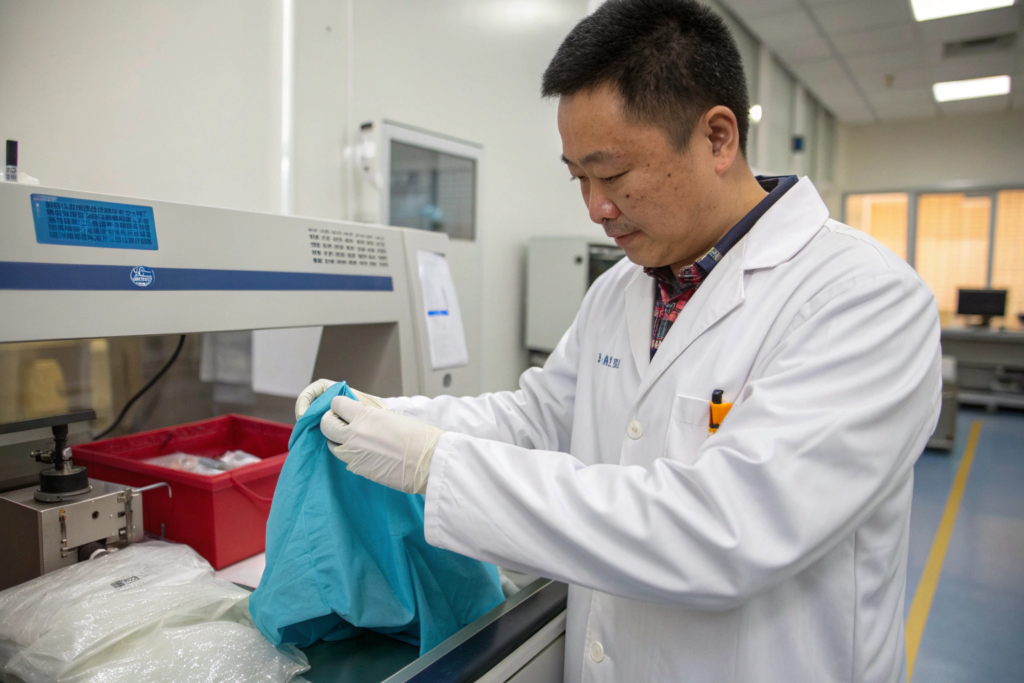
- Independent Lab Testing (if required): For new product articles or annual renewal, we submit a complete garment sample to an OEKO-TEX accredited lab. The lab tests the finished product for the full range of substances.
Last fall, a client insisted on adding a last-minute decorative glitter print to their velour romper. While the velour was certified, the glitter ink was not. Our pre-shipment audit flagged this. We sourced an OEKO-TEX approved glitter ink within 48 hours, tested a swatch, and proceeded. This prevented a shipment of 2,000 units from being rejected or, worse, causing a safety issue. The delay was minimal compared to the alternative.
What does the final certificate cover?
The resulting OEKO-TEX Standard 100 certificate is issued for the specific finished product (e.g., "Velour Back Tie Romper, Style #XYZ") manufactured by Shanghai Fumao. It lists our company as the certificate holder. This is the document you provide to retailers or consumers as proof.
How does this impact logistics?
Only after receiving the "all-clear" from our internal audit (and the lab report if applicable) do we release the order for packing and shipping. This gate ensures that every carton leaving our facility is backed by a verifiable chain of compliance. It directly addresses a major buyer pain point: the fear of delayed shipments due to last-minute quality failures.
What common pitfalls must brands actively avoid?
Compliance can be undermined by well-intentioned but uninformed decisions. Brand owners and designers must be aware of these pitfalls to partner effectively with their manufacturer.
Pitfall 1: The "Small Trim" Assumption. Believing that a tiny piece of elastic or a single button "won't matter." In OEKO-TEX testing, every component matters.
Pitfall 2: Last-Minute Design Changes. Introducing a new, untested component late in the process is the most common cause of compliance failure and shipment delays.
Pitfall 3: Focusing Only on Fabric Cost. Choosing a cheaper, non-certified component to save $0.05/unit can invalidate the entire $25 product and expose the brand to immense risk.
How can brands set up their internal team for success?
- Educate Design & PD: Ensure your team understands that every material spec must be "certified" from the start.
- Centralize Communication: Have one point of contact with the factory (like our Project Managers) to vet all material submissions.
- Plan for Testing Time: Factor in 2-3 weeks for final product certification testing for new styles in your timeline.
What questions should you ask your manufacturer?
- "Do you have dedicated OEKO-TEX production lines?"
- "Can you provide a full component traceability log?"
- "What is your process for verifying and managing supplier certificates?"
Their answers will reveal if they truly manage compliance or just hope for it. Guidance on supply chain due diligence can also be found through resources like Sedex, a leader in ethical supply chain data.
Conclusion
Ensuring OEKO-TEX compliance for a complex item like a velour back tie romper is a detailed, proactive engineering of your supply chain. It requires a manufacturer with a systemic approach—one that controls materials, isolates processes, validates outputs, and educates clients. It is a partnership where transparency and discipline are paramount.
Attempting this without an integrated system risks your brand's reputation, your timelines, and your financial investment. The peace of mind that comes with true compliance allows you to market your product with unwavering confidence.
If you are developing a premium velour collection where safety and quality cannot be left to chance, you need a partner with a proven, systematic approach. Shanghai Fumao specializes in navigating the precise requirements of OEKO-TEX compliance, turning a complex challenge into a reliable, scalable process. Let us help you ensure every romper is as safe as it is soft. Contact our Business Director Elaine to begin your compliant production journey: elaine@fumaoclothing.com.