
A brand CEO once showed me a folder of OEKO-TEX certificates from his various suppliers—fabric mill, dye house, garment factory. "I have all the papers," he said. But when I asked which certificate covered the specific batch of thread in his last shipment, or if the laminator of his waterproof membranes was audited, he fell silent. His supply chain was documented, but it was not transparent. True transparency means you can trace the journey of every component and verify its compliance at every step, not just at the end. This is the power OEKO-TEX can unlock when implemented as a system, not just a stamp.
Building a transparent supply chain with OEKO-TEX certification requires using the standard as the foundational framework for traceability, verification, and open communication at every tier. It moves beyond collecting a final product certificate to mapping, auditing, and digitally linking the compliance status of all suppliers—from raw material processors to finishers. This creates an unbroken chain of verified safety that you can see, trust, and communicate to your customers.
Transparency is built layer by layer. Let's outline the actionable steps to construct it.
How Does OEKO-TEX Create a Framework for Traceability?
A supply chain is like a river with many tributaries. OEKO-TEX certification, when properly applied, acts as a water testing protocol at every major confluence. It doesn't just test the water at the mouth; it ensures each tributary is clean, allowing you to trace any contamination back to its source.
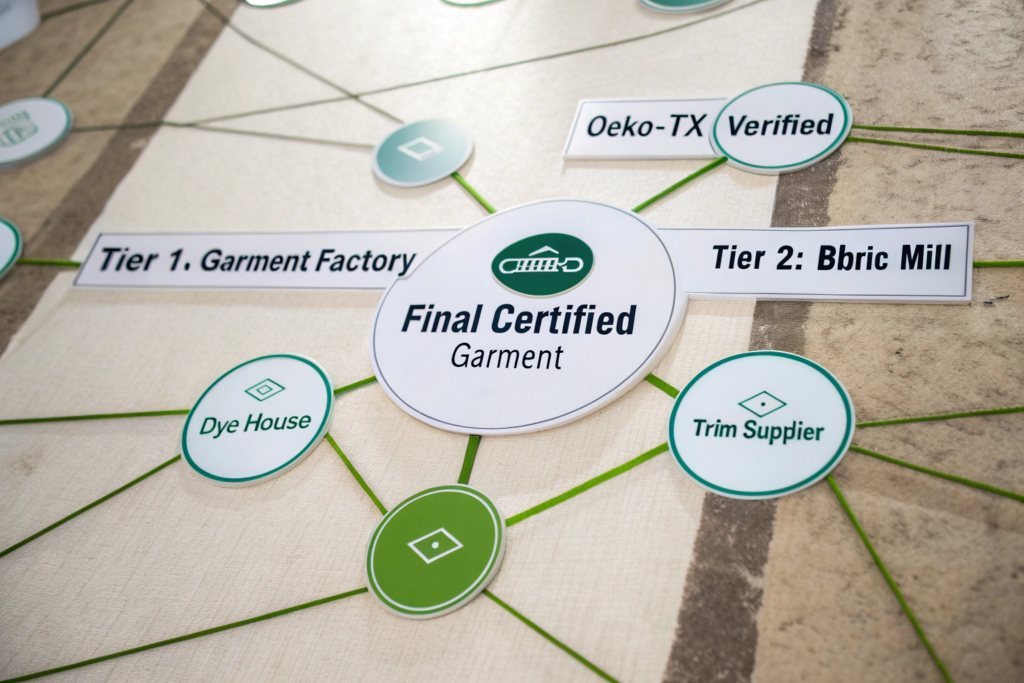
OEKO-TEX creates a traceability framework through its requirement for declaration of materials and suppliers during the certification process. To certify a final garment, the applying manufacturer must disclose the composition and origin of all materials. This forces visibility into the supply chain's first tier (direct suppliers). More advanced standards within the OEKO-TEX ecosystem, like STeP (Sustainable Textile & Leather Production), require even deeper transparency into chemical management, environmental performance, and social responsibility at the production site itself. By demanding these disclosures, the certification process naturally builds a map of your supply chain, identifying each critical node where compliance must be verified. At Shanghai Fumao, we use this framework to create a digital compliance dossier for each order, linking every component to its source certificate.
What is the Difference Between a Certificate and a Traceability System?
A certificate is a snapshot—a statement that a specific product from a specific supplier passed tests at a specific time. A traceability system is the live film. It links that certificate to a purchase order (PO), a batch number, and a bill of materials (BOM). It answers: "Does this certificate cover the actual materials in this batch of goods I'm receiving?" OEKO-TEX provides the criteria for the snapshots; you and your partners must build the system to connect them.
How Can You Map Your Supply Chain Tiers?
Start by requiring your direct factory (Tier 1) to provide a list of their key material suppliers (Tier 2). For each Tier 2 supplier, request their OEKO-TEX certificates or test reports. For critical components like waterproof membranes or recycled polyester, you may need to go to Tier 3 (e.g., the polymer supplier). This mapping exercise, though tedious, is the bedrock of transparency.
What Are the Key Components of a Transparent Compliance Dossier?
A transparent supply chain is proven with documents, not promises. The "compliance dossier" is the living evidence file. It should be so complete that any auditor or curious customer could open it and follow the verified path of any garment.
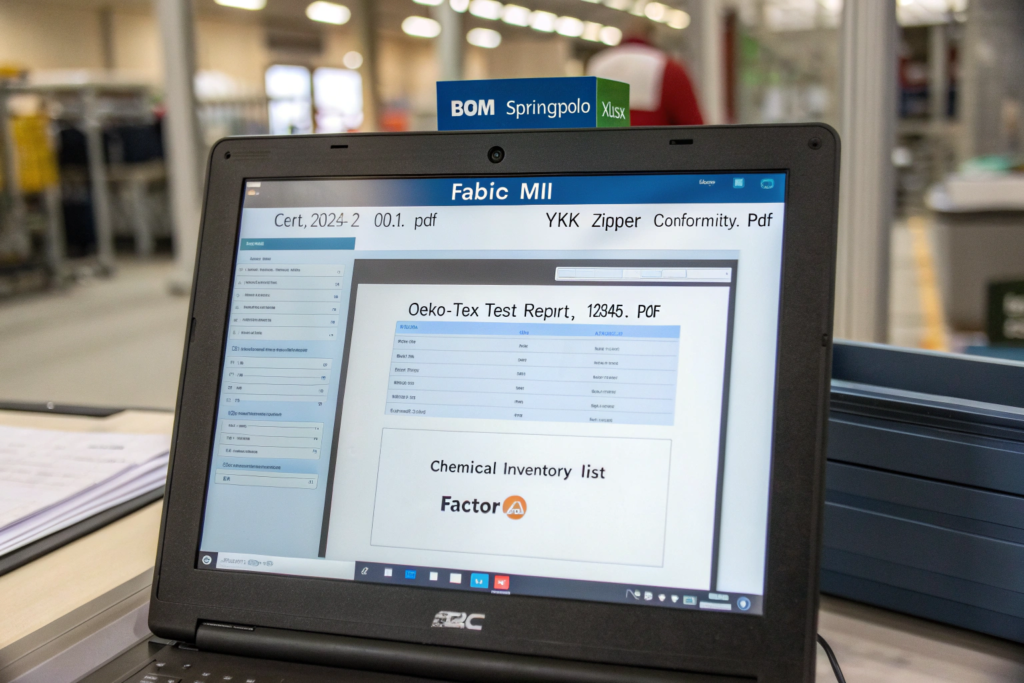
A transparent compliance dossier must contain, at minimum:
- Final Product OEKO-TEX Certificate: With valid date, correct product class, and scope.
- Detailed Test Reports: Showing numerical results for all parameters.
- Component-Level Certificates/Declarations: For fabric, thread, buttons, zippers, prints, labels, etc.
- Bill of Materials (BOM): Listing each component and linking it to its supporting document.
- Supplier Information: Names and contacts of Tier 1 and key Tier 2 suppliers.
- Transaction Certificates (for GRS, RDS, etc.): If applicable, proving chain of custody for recycled or responsible materials.
This dossier should be compiled and maintained by your manufacturer for each production lot. We provide this as a digital package to our clients at Shanghai Fumao, updating it with each new order to ensure continuous traceability.
How Do You Verify That Dossier Contents Are Authentic and Current?
Verification is an active process:
- Cross-Check Certificates: Use the official OEKO-TEX certificate checker online to validate numbers and expiry dates.
- Audit Sample Testing: Periodically conduct your own independent lab tests on finished goods to verify results match the dossier.
- Supplier Audits: Conduct on-site or virtual audits of your factory and key mills to review their documentation processes and chemical inventories.
This proactive verification closes the loop between documentation and reality.
What Role Does Digital Technology Play?
Digital platforms (PLM - Product Lifecycle Management, blockchain, or simple cloud-based databases) are transformative. They allow you to:
- Store documents centrally with version control.
- Link certificates directly to line items in the BOM.
- Set automated alerts for certificate expirations.
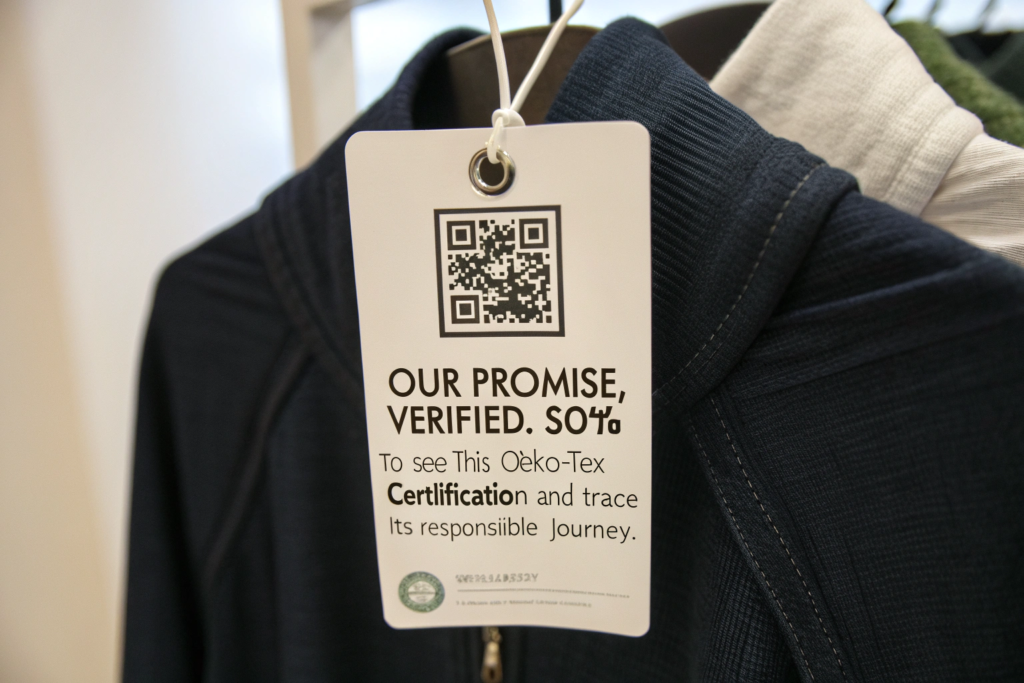
- Provide limited access to retailers or consumers (e.g., via QR code) to view key compliance facts.
Technology turns a static dossier into a dynamic, accessible system.
Why is Partnering with a Vertically-Integrated Manufacturer Crucial?
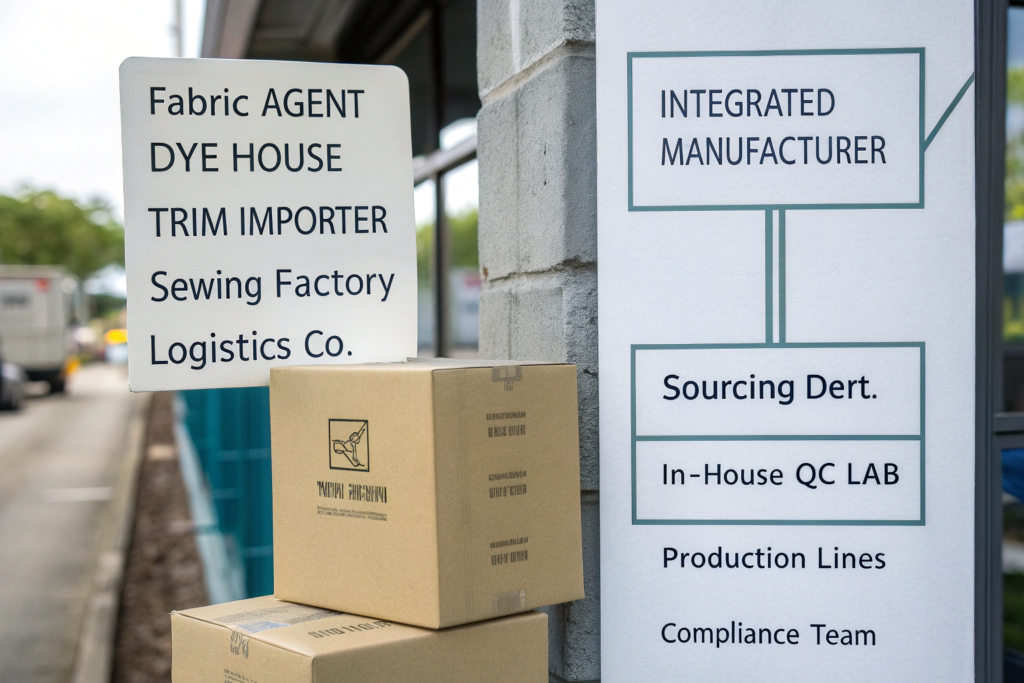
If your supply chain is a patchwork of independent agents, mills, and assemblers, achieving transparency is like herding cats. Information gets lost, responsibility is diluted, and verifying each step becomes a monumental task. Vertical integration consolidates control.
Partnering with a vertically-integrated or full-package manufacturer is crucial because they control—or have tightly managed partnerships with—multiple stages of production. For example, a manufacturer that manages fabric sourcing, dyeing, cutting, sewing, and finishing under one operational umbrella (like Shanghai Fumao) has inherent visibility into those tiers. They can enforce a unified chemical compliance policy, maintain centralized records, and guarantee that the materials flowing into production are the ones that were certified. This drastically reduces the number of independent entities you need to monitor and audit, making true transparency achievable and cost-effective.
How Does This Integration Prevent "Certification Falsification"?
In a fragmented chain, a fabric mill might send a certified sample for testing but ship a cheaper, non-compliant bulk fabric. An integrated manufacturer with a strong incoming quality control (IQC) lab will test bulk fabric upon arrival against the certified sample's specs. This physical verification, combined with control over the source, makes substitution nearly impossible and immediately detectable.
Does Vertical Integration Limit Material or Design Choice?
Not necessarily. A good integrated manufacturer will have a broad network of certified material suppliers to draw from. The limitation is that you must work within their vetted network, but this network should be extensive enough to support diverse design needs. This is preferable to the unlimited but unverified choices of the open market, which carry hidden risk.
How to Communicate This Transparency to B2B Buyers and End Consumers?
Building transparency is an operational achievement. Communicating it is a marketing imperative. It turns your behind-the-scenes diligence into a compelling brand story that builds trust at every level of the sales chain.
Communicate transparency by making evidence accessible and stories relatable. For B2B buyers (retailers, distributors), provide a summarized version of your compliance dossier during sales pitches. Offer virtual factory tours focusing on chemical management and QC labs. For end consumers, use QR codes on hangtags that link to a simple webpage showing the garment's OEKO-TEX certificate number, origin story of key materials, or a video about the factory's commitment. Language should be benefit-oriented: "Track the journey of your shirt. Scan to see its safety certification and learn about our responsible production."
What Communication Channels Are Most Effective?
- B2B: Sales presentations, line sheets with certification badges, dedicated retailer portals on your website.
- B2C: Product page "Sustainability" tabs, email campaigns focused on "The Story Behind Your Gear," social media content showing factory floors and lab testing.
The goal is to weave transparency into the narrative at every touchpoint.
How Does Transparency Impact Brand Loyalty and Risk?
Transparency directly builds brand loyalty by fostering trust. Consumers and buyers stick with brands they believe are honest and responsible. It also mitigates reputational risk. If a question about sourcing ever arises, you have a ready, documented answer. You are not scrambling to find proof; you are presenting an open book. This proactive stance is your greatest defense in a crisis.
What Are the Common Pitfalls in Building This System?
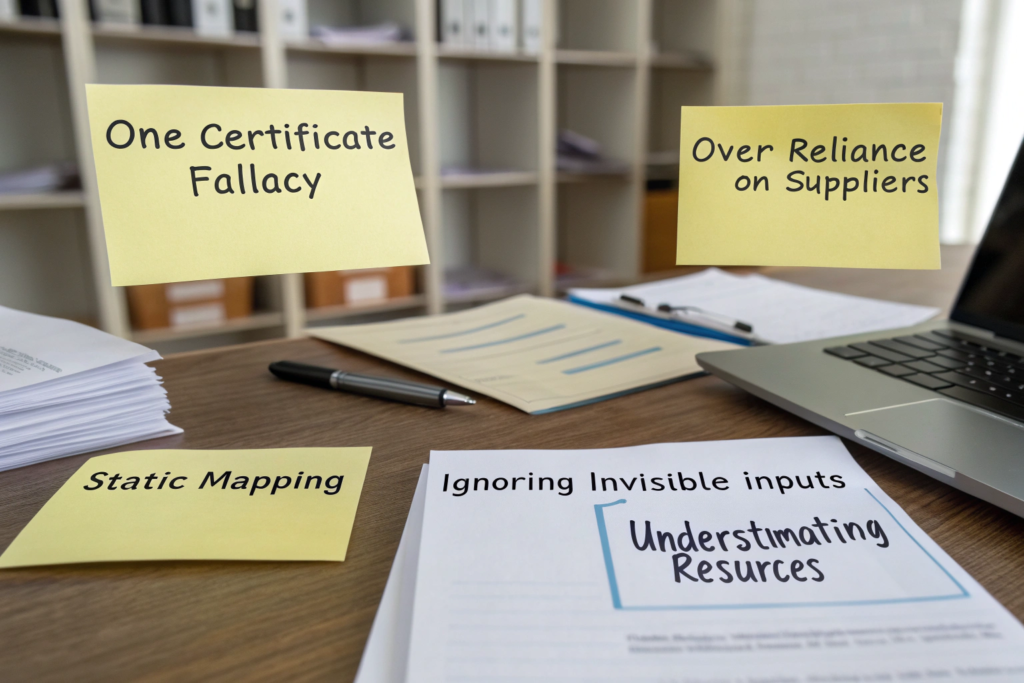
The path to transparency is littered with well-intentioned mistakes. The most common pitfall is assuming one certificate at the end is enough. Others include over-reliance on verbal assurances and failing to plan for the ongoing cost and effort of maintenance.
Common pitfalls include:
- The "One Certificate" Fallacy: Believing the final garment certificate covers everything, without verifying component-level compliance.
- Over-Reliance on Suppliers' Word: Accepting "yes, it's compliant" without demanding documented proof.
- Static Mapping: Not updating your supply chain map as suppliers change.
- Ignoring "Invisible" Inputs: Forgetting about processing aids, lubricants, or laundry chemicals used in finishing.
- Underestimating Resources: Failing to allocate staff time or budget for ongoing auditing and dossier management.
Avoiding these requires a mindset of continuous, skeptical verification and investment in the right partners.
How Can You Start Small and Scale?
For a new brand, start with your best-selling, simplest product. Build a full transparency dossier for that one SKU. Learn the process, identify reliable partners, and understand the costs. Then, apply the same blueprint to your next product, and the next. This phased approach is manageable and proves the concept before scaling across your entire line.
What is the Role of Continuous Improvement?
Transparency is not a one-time project; it's a continuous improvement cycle. Use insights from your audits and testing to work with suppliers on upgrading their processes. Maybe a trim supplier needs to find a new plating process to reduce nickel. This collaborative approach strengthens your entire chain over time, making it not just transparent, but also more resilient and higher quality.
Conclusion
Building a transparent supply chain with OEKO-TEX certification is a strategic journey that transforms a simple compliance goal into a core competitive advantage. It moves from opaque confidence to verified clarity, linking every step of production to a document, an audit, or an open door. This transparency builds unshakeable trust with B2B partners and consumers alike, mitigates profound business risks, and ultimately creates a brand defined by integrity.
In an era where consumers look behind the label, the most powerful thing your brand can own is a story it can prove.
Achieving this level of transparency requires a manufacturing partner who is an architect of systems, not just a builder of garments. At Shanghai Fumao, our integrated model and commitment to documented compliance are designed to be the foundation of your transparent supply chain. Contact our Business Director Elaine to begin constructing yours: elaine@fumaoclothing.com. Let's build a chain of trust, link by verifiable link.