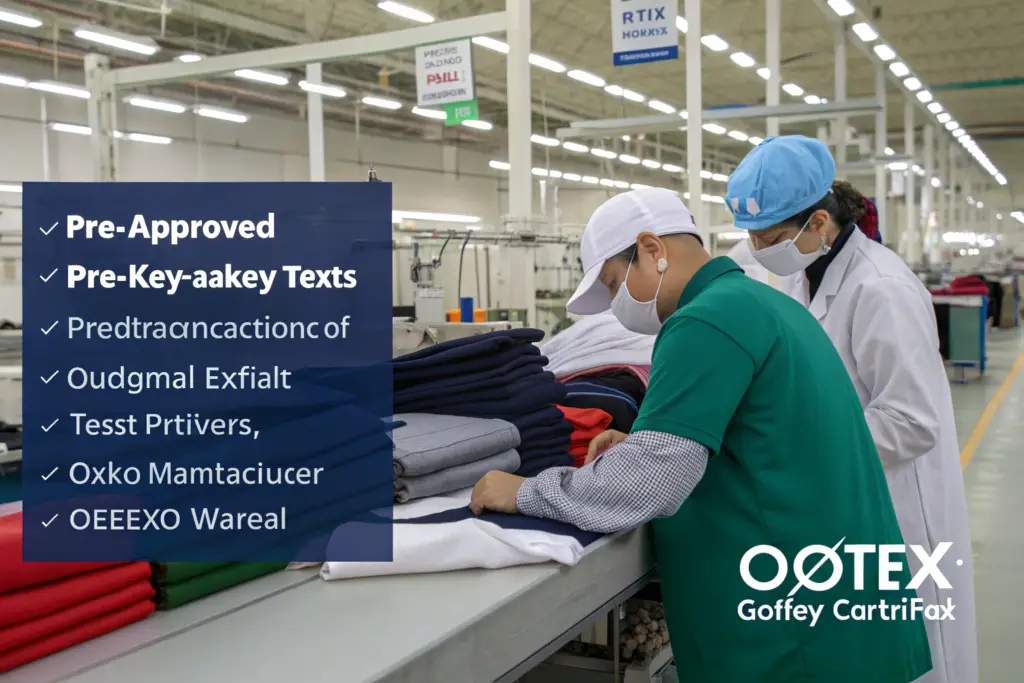
You've locked in your marketing campaign for the spring golf collection. The launch date is set. Then, an email from your factory: "Sorry, the fabric failed the OEKO-TEX test. We need to re-source. This will delay production by 4-6 weeks." Your entire season is now in jeopardy. This exact scenario cost one of our clients a prime retail spot last year. The root cause wasn't bad luck; it was a reactive, poorly planned approach to certified production. Delays with certified apparel are almost always predictable and preventable.
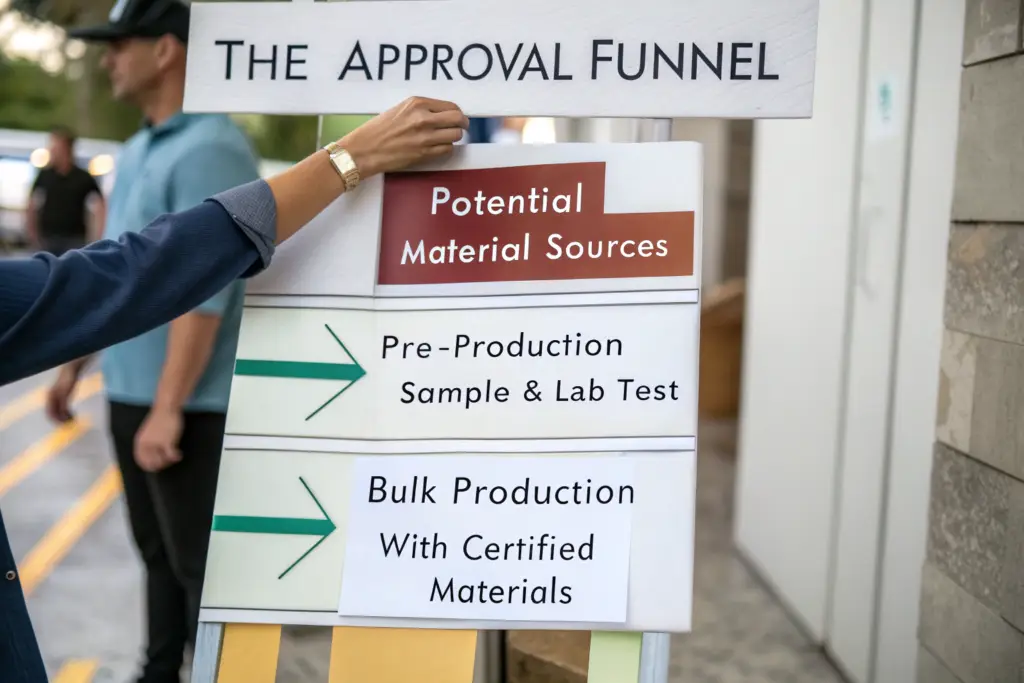
To avoid production delays with OEKO-TEX certified golfwear, you must adopt a proactive, integrated planning strategy that treats certification as a core part of the production timeline, not a last-minute check. This involves front-loading critical steps: pre-approving all materials and components, conducting pre-production lab tests, and partnering with a manufacturer that has a controlled, certified supply chain. The key is to remove uncertainty at every stage before bulk production begins.
Moving from a crisis-response mode to a smooth, predictable flow requires understanding where delays lurk and systematically eliminating them. Let's map out the proven strategy.
Why is Pre-Production Material Approval the Most Critical Step?
Leading paragraph: The single biggest cause of delay is discovering a material failure after bulk fabric has been ordered, cut, or even sewn. At that point, every solution is costly and slow: re-sourcing fabric, air freighting new materials, and re-running production. This domino effect can derail a project for months.
Featured paragraph: Pre-production material approval is critical because it de-risks the entire project at the earliest possible stage. This means obtaining and testing lab-dip or bulk-lot samples of every single component—fabric, thread, buttons, zippers, prints, embroidery thread—before issuing the final purchase order for bulk materials. A competent factory will have these samples tested at an approved laboratory to ensure they pass OEKO-TEX parameters. Only when all components have a "pass" report should bulk procurement begin. At Shanghai Fumao, we operate a "No Green Light, No Cut" policy. We do not authorize fabric cutting for any certified order until we have physical pre-production samples that have passed our in-house and external verification checks.
What Exactly Should Be Included in a "Material Approval Package"?
A complete package for each component should include:
- Physical Swatch/Sample: Large enough for testing.
- Supplier's OEKO-TEX Certificate: For that specific material.
- Mill Test Report: Showing physical and chemical properties.
- Your Factory's In-house Test Result: For quick indicators like pH.
- A Signed Approval Form from your brand.
For a golf polo, this means separate packages for: the main knit fabric, the collar rib, the sewing thread, the care label fabric, the printable logo ink, and the embroidery thread. Missing any one is an invitation for delay.
How Long Does This Pre-Testing Really Take?
Plan for 2-3 weeks for comprehensive pre-testing. While a basic OEKO-TEX test can take 2-4 weeks, factories with established lab relationships and in-house rapid tests (for pH, formaldehyde, etc.) can often get preliminary "go/no-go" results in 7-10 days. This time must be built into your critical path schedule from day one. Rushing or skipping this step virtually guarantees a delay later.
How Does Partnering with a Certified-Focused Factory Prevent Delays?
Leading paragraph: Not all factories are equal in managing certified orders. A general apparel factory may see certification as an extra step, disrupting their normal flow. A certified-focused factory designs its entire system—sourcing, storage, production—around ensuring seamless compliance, which inherently protects your timeline.
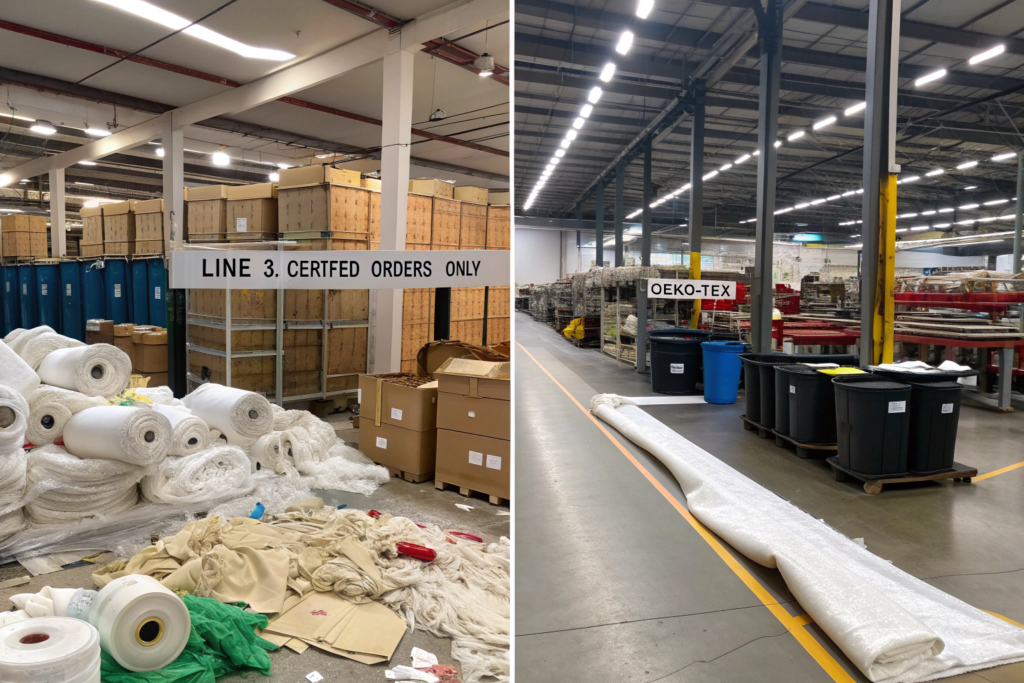
Featured paragraph: A certified-focused factory prevents delays through systemic integration. They maintain an inventory of pre-certified base fabrics for common items like golf polos and shorts. They have vetted, long-term relationships with trim suppliers who consistently provide certified components. Their production lines are calibrated to handle certified materials without cross-contamination. Most importantly, they have a dedicated technical team whose job is to manage the certification process, not just a salesperson who adds it to a checklist. This specialized focus turns potential bottlenecks into standardized procedures. For example, because we at Shanghai Fumao routinely stock OEKO-TEX certified pique fabrics, a client's order for 5,000 polos can often bypass the 4-week fabric sourcing and testing wait, shaving weeks off the lead time.
What Questions Reveal a Factory's True Integration Level?
Ask these operational questions:
- "Do you have a segregated warehouse area for certified raw materials?"
- "How do you prevent non-certified thread or chemicals from being used on a certified order?"
- "Can you show me your procedure for batch tracing certified materials from receipt to shipment?"
- "What is your average lead time from order confirmation to shipment for a certified vs. non-certified golf polo?"
Answers that describe concrete procedures, not vague assurances, indicate true integration.
How Does This Affect Communication Efficiency?
A dedicated technical team means you communicate directly with experts who understand the nuances of REACH, PFAS restrictions, and product classes. This eliminates the painful back-and-forth and misunderstandings that cause delays when a sales agent acts as a middleman relaying technical questions. Efficient, accurate communication is a major timeline saver.
What Role Does Realistic Scheduling Play in Avoiding Rushed Mistakes?
Leading paragraph: Aggressive, unrealistic timelines pressure factories to cut corners. They might skip pre-testing, mix certified and non-certified materials to keep lines running, or falsify documents. These rushed decisions inevitably lead to larger delays when failures are caught later, or worse, when non-compliant goods are rejected at customs.
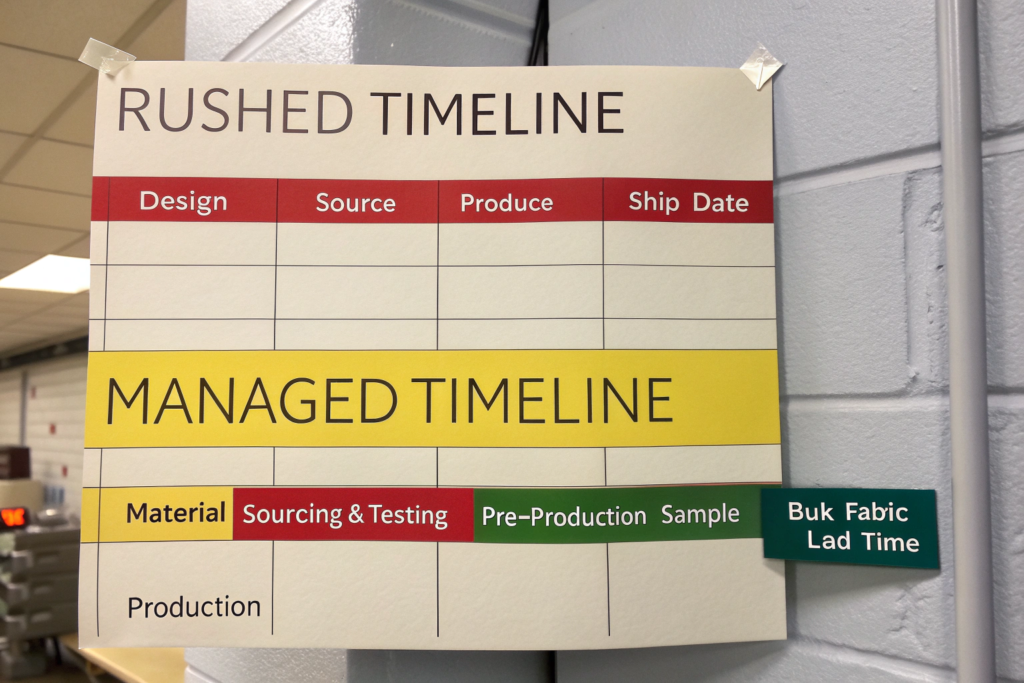
Featured paragraph: Realistic scheduling is the framework that allows all other preventive measures to work. It acknowledges that certified production has non-negotiable extra steps. A realistic schedule should build in buffer time for:
- Material pre-approval (2-3 weeks)
- Official sample making and submission for certification (3-4 weeks)
- Potential lab retesting in case of a minor failure.
- Dedicated production line scheduling (which is more efficient but requires forward booking).
Presenting this timeline to your marketing and sales teams early manages expectations and prevents last-minute panic that forces bad decisions. We provide all our clients with a detailed, phase-gated timeline at the quotation stage, so there are no surprises.
How to Create a Bulletproof Certified Production Timeline?
Start from your required in-warehouse date and work backward, adding these minimum lead times:
- Ocean Freight & Customs: 4-6 weeks
- Production: 4-5 weeks (for dedicated bulk order)
- Certification Sample & Testing: 3-4 weeks
- Material Sourcing & Pre-Approval: 3 weeks
- Design & Tech Pack Finalization: 2 weeks
Total minimum lead time: 16-20 weeks. For new brands or new factories, add a 2-week contingency buffer. Communicating this internally from the outset is half the battle.
What is the "Domino Effect" of a Single Delay?
A one-week delay in fabric approval doesn't mean a one-week later shipment. It can mean:
- Losing your booked production line slot (pushed back 2-3 weeks).
- Missing the scheduled laboratory testing window (pushed back 1-2 weeks).
- Missing the consolidated ocean freight booking (pushed back 1-2 weeks).
A one-week input delay can easily become a 5-8 week output delay. Realistic scheduling with buffers absorbs small shocks without collapsing.
How Can Technology and Clear Documentation Keep the Process on Track?
Leading paragraph: In complex supply chains, information silos and manual tracking are enemies of timeliness. An email about a failed test gets buried; a revised component spec isn't shared with the QC team. These small breakdowns create massive delays.
Featured paragraph: Technology and clear documentation keep the process on track by creating a single source of truth and enabling proactive monitoring. Use a shared Product Lifecycle Management (PLM) system or even a well-structured cloud spreadsheet to track every component's status: "Sourced", "Sample Received", "Lab Test Submitted", "Result: Pass/Fail", "Bulk PO Issued". All certificates, test reports, and approval forms should be uploaded here. This allows both brand and factory to see potential bottlenecks in real-time and act before they cause a stoppage. We use a client-accessible portal for this purpose, which has reduced approval loop times by over 50%.

What are Essential Documents for Timeline Integrity?
Maintain these live documents:
- Compliance Matrix: A spreadsheet linking each component to its supplier, certificate number, and test report.
- Approval Tracker: Log of every sample sent, date, result, and approver.
- Production Critical Path: A shared timeline with dependencies and responsibilities.
- Communication Log: Record of all key decisions and change requests.
Having these documents updated weekly in a shared location prevents "I didn't know" delays.
How Can Regular Milestone Check-Ins Help?
Schedule weekly or bi-weekly alignment calls during the pre-production and production phases. Use the shared tracker as the agenda. Focus on:
- Resolving any "pending" or "failed" statuses.
- Confirming the next milestone dates.
- Identifying any potential risks early.
This proactive rhythm keeps the project moving forward predictably.
Conclusion
Avoiding production delays with OEKO-TEX certified golfwear is not about hoping for the best; it's about engineering out the risks. The formula is straightforward but requires discipline: pre-approve everything, partner with an integrated specialist, schedule realistically, and track everything transparently. This proactive approach transforms certification from a volatile variable into a reliable, streamlined component of your production cycle.
The brands that master this are the ones that launch on time, season after season, building unshakeable trust with their retailers and customers.
If consistent, on-time delivery of certified apparel is critical to your business, you need a manufacturing partner whose systems are designed for this exact challenge. At Shanghai Fumao, our entire process—from pre-certified material stocks to dedicated production and digital tracking—is built to deliver your certified collections on schedule, every time. Contact our Business Director Elaine to plan your next timely launch: elaine@fumaoclothing.com. Let's build a schedule you can count on.