You've perfected your golf wear designs for the European market. The fabrics are high-tech, the styles are on-trend. But when your first shipment lands in Hamburg, it's held at customs. The reason? Non-compliant chemical levels. You face costly testing, delays, and potential returns. This isn't a hypothetical scare story—it happened to a sportswear start-up we consulted for in early 2023. Their $50,000 order was stuck for six weeks. The lesson was clear: entering Europe isn't just about style and price; it's about navigating a complex web of regulations. Certifications are your pre-approved passport.
For exporting golf wear to Europe, the must-have certifications are OEKO-TEX STANDARD 100 (for chemical safety), REACH compliance (a legal requirement), and GRS (if using recycled materials). Additionally, brand-enhancing certifications like Fair Wear or ISO 14001 are increasingly valued. These certifications collectively ensure your products are legally admissible, safe for consumers, and aligned with the region's strong sustainability and ethical values. They are not just labels; they are risk mitigation tools.
Understanding this certification matrix is critical for any brand looking to build a credible and durable presence in Europe. Let's break down each one and why it matters for your golf apparel line.
Why is OEKO-TEX STANDARD 100 Non-Negotiable for the EU Market?
Leading paragraph: Europe has some of the world's strictest consumer protection laws, especially regarding textiles. Golf wear, worn during physical activity with prolonged skin contact, is under particular scrutiny. A general "safe fabric" claim from your supplier is worthless to European regulators and savvy consumers. You need proof that aligns with recognized European norms.
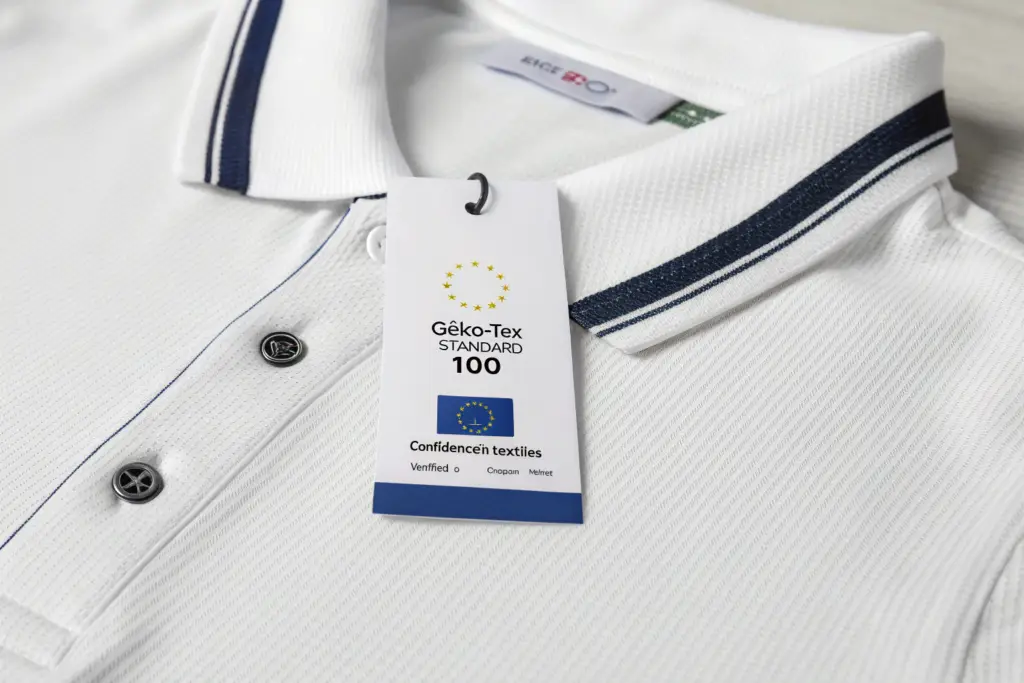
Featured paragraph: OEKO-TEX STANDARD 100 is non-negotiable because it is the most recognized and trusted eco-label for textile safety in Europe. It tests for over 100 harmful substances regulated by European laws (like REACH) and goes beyond them, checking for unregulated but problematic chemicals. For an importer, presenting an OEKO-TEX certificate significantly speeds up customs clearance, as it serves as credible evidence of compliance. For consumers, it's a trusted symbol of safety and quality. At Shanghai Fumao, we consider it the baseline for any European-bound order, as it directly addresses the core European demand for human-ecological safety.
How Does OEKO-TEX Specifically Address EU Regulatory Concerns?
OEKO-TEX acts as a comprehensive compliance tool. Its test criteria are updated annually to reflect the latest European Union regulations, including the REACH Candidate List of Substances of Very High Concern (SVHCs) and restrictions under the EU Ecolabel. By certifying your golf wear to OEKO-TEX, you are essentially outsourcing complex chemical compliance verification to a globally accepted authority. This is crucial because EU enforcement is rigorous. In 2022, the EU's RAPEX system issued numerous alerts for sportswear containing excessive levels of chemicals like phthalates or azo dyes—all substances strictly controlled by OEKO-TEX.
What is the Business Risk of Skipping This Certification?
The risk is threefold: financial, operational, and reputational. Financially, non-compliant shipments can be rejected, destroyed, or forced into costly corrective actions at the border. Operationally, delays can cause you to miss the entire selling season for golf apparel. Reputationally, being listed on a EU non-compliance alert can damage your brand for years. A client of ours avoided this by insisting on OEKO-TEX for their initial EU launch. Their competitor, who did not, had a shipment held and subsequently featured in an industry compliance newsletter—a setback from which they struggled to recover.
Is REACH a Certification or a Law, and How Do You Prove Compliance?
Leading paragraph: You'll hear suppliers say, "Our fabrics are REACH compliant." But often, it's just a verbal assurance. REACH is not a certification you earn from a third party; it's a complex European Union regulation (Registration, Evaluation, Authorisation and Restriction of Chemicals). The burden of proof is on the importer (you or your European buyer) to demonstrate compliance.
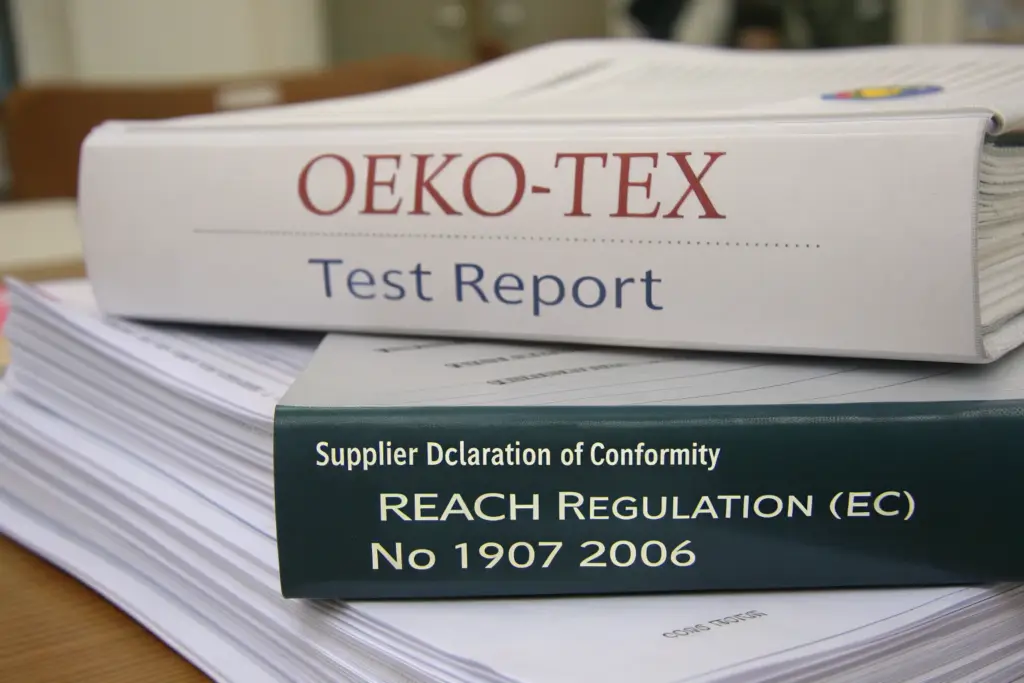
Featured paragraph: REACH is a binding EU law, not a voluntary certification. Proving compliance typically requires a combination of documentation: a detailed Supplier's Declaration of Conformity (SDoC), supported by test reports from accredited laboratories (like those providing OEKO-TEX tests), and a full materials breakdown list from your manufacturer. The most efficient strategy is to use OEKO-TEX STANDARD 100 certification as your primary evidence, as it covers and exceeds REACH's restricted substance list (RSL). For a manufacturer like Shanghai Fumao, providing a comprehensive compliance dossier—including mill test reports and our own SDoC—is a standard part of our full-package manufacturing service for Europe.
What Are the Key REACH Restrictions for Golf Apparel?
For golf wear, pay close attention to these REACH Annex XVII restrictions:
- Azo Dyes: Certain azo dyes that may release carcinogenic aromatic amines are banned.
- Cadmium, Lead, Nickel: Restrictions on these heavy metals in accessories (zippers, snaps) and prints.
- Phthalates: Restricted in plasticized components (like some prints or plastic logos).
- Per- and polyfluoroalkyl substances (PFAS): Increasingly restricted in durable water repellent (DWR) finishes on outerwear.
A common pitfall is focusing only on the main fabric and forgetting trims. We once helped a client reformulate the plastic pellet used in their snap buttons on golf shorts because the original supplier's buttons contained over-limit cadmium. This level of detail is where professional manufacturing makes the difference.
How Can a Factory Help You Build a REACH Compliance Dossier?
A competent factory will not just make the product; they will provide the evidence trail. This includes:
- Component-Level Test Reports: For fabric, thread, buttons, zippers, and prints.
- Bill of Materials (BOM) with CAS Numbers: Listing all chemical substances used.
- Internal Quality Control Records: Showing consistent adherence to compliant inputs.
We maintain a digital library of compliance documents for all our standard materials, which we can quickly assemble into a client-specific dossier. This proactive support turns a daunting regulatory hurdle into a manageable administrative step.
Beyond Basics: Which Sustainability Certifications Give You a Competitive Edge?
Leading paragraph: Meeting legal requirements gets you in the door. But to win shelf space and consumer loyalty in Europe, you need to speak the language of sustainability. European consumers and retailers are highly informed and skeptical of greenwashing. Third-party certifications are their shorthand for trust.
Featured paragraph: To gain a competitive edge in Europe, sustainability certifications like the Global Recycled Standard (GRS) for recycled content, the Global Organic Textile Standard (GOTS) for organic fibers, and Bluesign® for responsible resource management are highly influential. For golf wear made from recycled polyester (a common choice for performance gear), GRS is particularly powerful. It verifies recycled content and tracks it through the supply chain, meeting the EU's drive toward a circular economy. Additionally, certifications like ISO 14001 (Environmental Management) for the factory itself signal a deep commitment to reducing environmental impact.
Why is GRS Becoming a De Facto Standard for Performance Wear?
GRS answers the European market's specific demand for transparency in circularity. It's not enough to say "made from recycled bottles." GRS provides audited proof of the recycled content percentage (e.g., 50% or 100%) and ensures responsible social and environmental practices in production. Major European golf and outdoor brands are increasingly demanding GRS from their suppliers. We've seen RFQs (Request for Quotation) from German and Scandinavian brands where GRS certification was a mandatory bidding requirement, not an optional bonus.
Do Ethical Certifications Like Fair Wear Matter for Golf Wear?
Yes, increasingly so. While not a legal requirement for import, ethical certifications like Fair Wear Foundation (FWF) or SA8000 are highly valued by European retailers, corporate buyers, and end-consumers. They address the "social" pillar of ESG (Environmental, Social, and Governance). A brand story that includes "ethically manufactured" certification, alongside product safety and eco-materials, creates a compelling, holistic narrative. For a factory, adhering to these standards also results in better worker retention and production stability, which indirectly benefits your on-time delivery reliability.
What is the Practical Process to Get Your Order Certified?
Leading paragraph: Knowing which certifications you need is one thing. Actually getting them for your specific order is another. The process can seem daunting, but with a systematic approach and the right factory partner, it's straightforward. The key is to integrate certification planning into the earliest stages of product development.
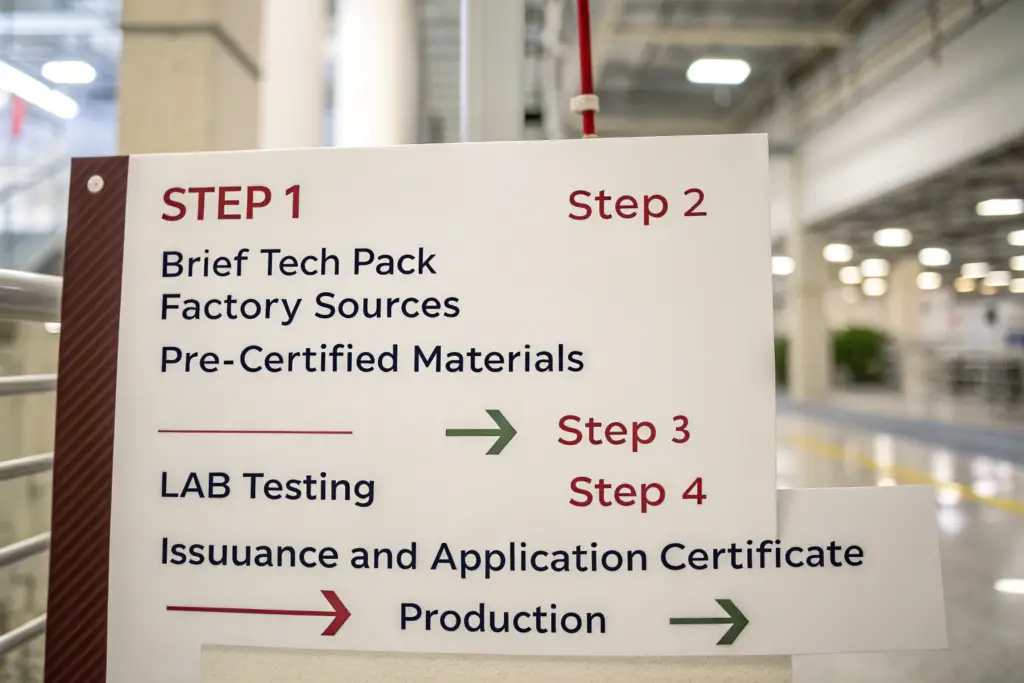
Featured paragraph: The practical process involves: 1) Defining Requirements Early: Specify needed certifications (OEKO-TEX, GRS) in your initial tech pack. 2) Partnering with a Certified Factory: Choose a manufacturer like Shanghai Fumao that already works with pre-certified materials and has experience with the certification process. 3) Product Testing & Submission: The factory will prepare a representative sample of your final product (with all trims and prints) and submit it to the certifying body (e.g., an OEKO-TEX institute). 4) Documentation & Labeling: Upon passing, you receive the certificate and can apply the relevant labels to your hangtags and care labels.
How Long Does This Process Take and What Does It Cost?
Timeline and cost are critical for planning:
- OEKO-TEX STANDARD 100: Testing typically takes 2-4 weeks. Cost depends on the number of substances tested and the product class, ranging from a few hundred to over a thousand euros. Using a factory with pre-certified base materials can drastically reduce this.
- GRS Certification: This is a chain of custody certification. If your factory is already GRS certified for its processes, and you use GRS-certified materials, the transaction certificate for your order can be issued relatively quickly (a week or two). Initial factory certification is a longer, more expensive audit process.
We always advise clients to budget for these costs and lead times upfront. Trying to shortcut them inevitably leads to greater expense and delay later.
What's the Biggest Mistake Brands Make with Certifications?
The biggest mistake is treating certification as an afterthought—something to be checked just before shipment. This leads to panic when a chosen fabric fails testing, forcing a last-minute (and expensive) material change that can alter the garment's hand feel and performance. The correct approach is "design for certification." This means selecting your materials and trims from the start with compliance in mind. Our design team works with clients in this phase, steering them toward our library of pre-vetted, certified materials to ensure a smooth path to market.
Conclusion
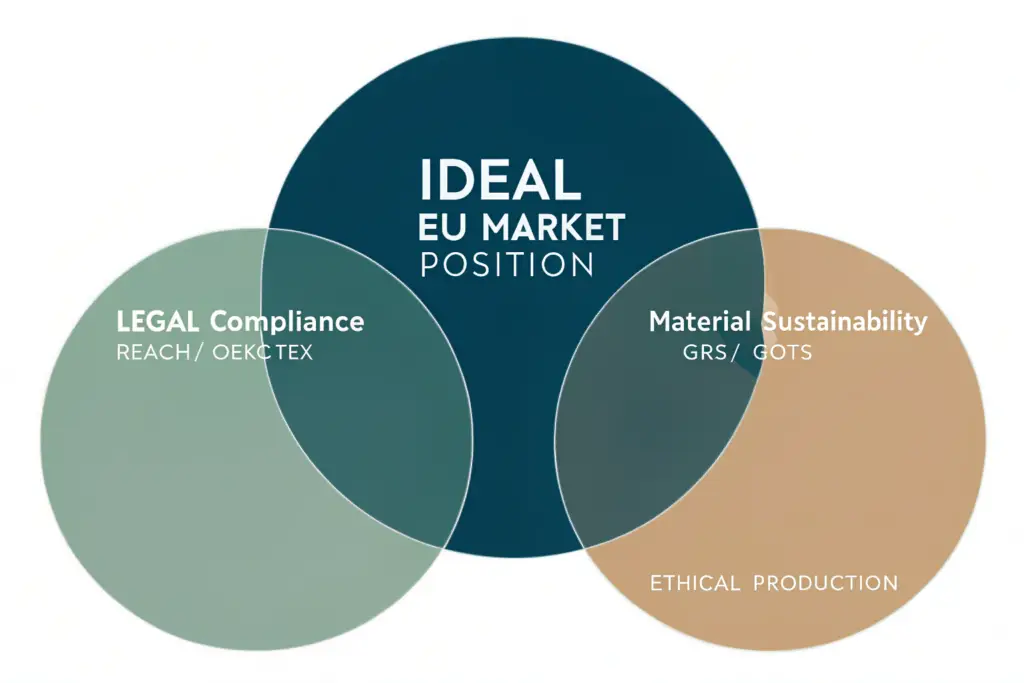
Exporting golf wear to Europe successfully hinges on a strategic approach to certifications. The must-haves are clear: OEKO-TEX STANDARD 100 and REACH compliance for legal market entry, and GRS for competitive advantage in the sustainability arena. These are not mere stickers on a hangtag; they are essential components of your product's integrity, your brand's credibility, and your operational risk management.
Navigating this landscape requires a manufacturing partner who doesn't just react to your requests but proactively guides you through the requirements. The right partner embeds compliance into their sourcing and production DNA.
If you are looking to enter or expand in the European market with confidence, let Shanghai Fumao be your guide and manufacturer. Our expertise in certified production for Europe, from OEKO-TEX to GRS, ensures your golf wear meets the highest standards of safety, sustainability, and quality. Contact our Business Director Elaine to start planning your certified European collection: elaine@fumaoclothing.com. Let's build your success in Europe, the right way.