Your brand wants to launch a sustainable golf line. You're looking at recycled polyester shirts and talking about circularity. But then a buyer asks: "Are these shirts safe? What chemicals are in them?" Suddenly, you realize sustainability isn't just about materials—it's about the entire lifecycle. This exact challenge faced a startup brand we worked with last year. They had great recycled fabric but couldn't answer the chemical safety question. That's where the connection between OEKO-TEX and circular fashion becomes crucial.
The link between OEKO-TEX and circular fashion in golf apparel is foundational: OEKO-TEX certification ensures that garments are free from harmful substances, making them safer to wear, recycle, and ultimately return to the biological or technical cycle. It addresses the "chemical leg" of circularity, without which recycled materials or end-of-life processing can perpetuate toxicity. For brands, this combination creates a powerful story of responsible consumption that resonates with today's eco-conscious golfer.
Understanding this synergy is key to building a credible and future-proof sustainable apparel line. Let's explore how these two concepts work together to create better golf apparel.
How Does OEKO-TEX Certification Support Circular Economy Principles?
Leading paragraph: Circular fashion aims to keep materials in use. But what happens if those materials are contaminated? Imagine trying to recycle a polyester golf shirt that contains traces of heavy metals or restricted dyes. The recycled flake produced would carry that contamination forward, undermining the entire circular system. OEKO-TEX acts as a crucial filter at the beginning of the cycle.
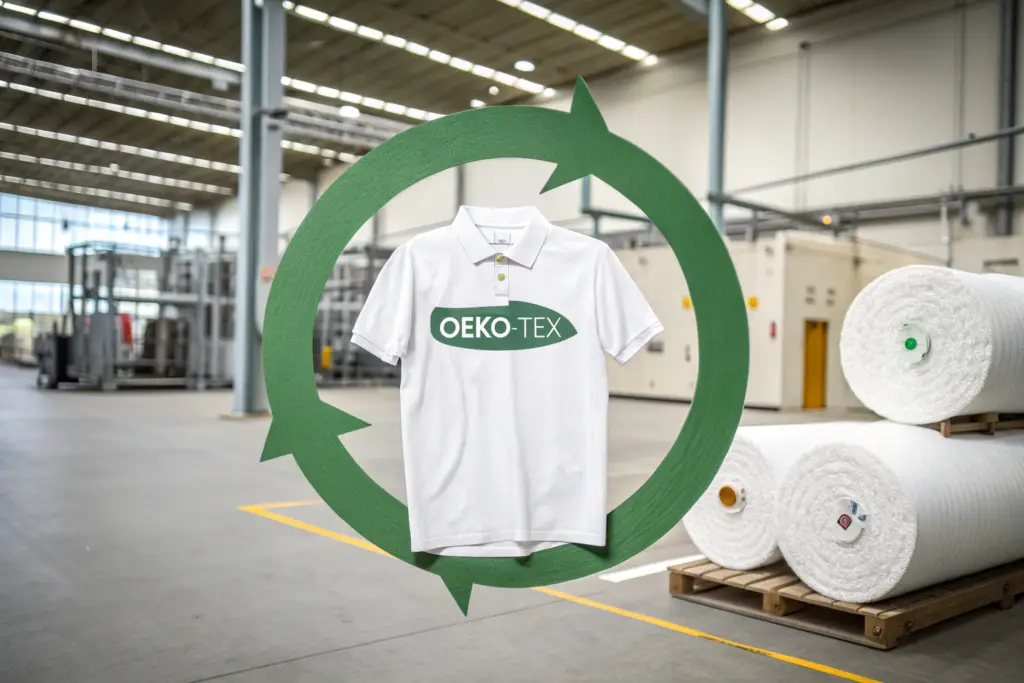
Featured paragraph: OEKO-TEX certification supports circular economy principles by ensuring material health from the start. The Cradle to Cradle Certified product standard, a leading circularity framework, lists "Material Health" as its first pillar—and OEKO-TEX is a key accepted methodology to verify it. By screening out harmful chemicals, OEKO-TEX makes golf shirts safer for long-term wear, easier to safely recycle at end-of-life, and reduces the risk of toxic substances leaking into the environment if garments are eventually landfilled. At Shanghai Fumao, we see this as non-negotiable; you can't build a clean circular system with dirty inputs.
What is "Material Health" and Why is it the First Step in Circularity?
Material health refers to the safety of all chemicals and materials used in a product. In a circular model, products are designed to be disassembled and their components reused or recycled. If those components are toxic, they poison the next cycle. OEKO-TEX provides a rigorous, globally recognized assessment of material health. For a golf shirt, this means the polyester, the dyes, the moisture-wicking finish, and even the sewing thread are evaluated. A real-world example: we helped a brand replace a standard water-repellent finish (which contained long-chain PFCs) with a OEKO-TEX compliant alternative. This made their golf jackets not only safer to wear but also far less problematic for future recycling efforts.
Can Certified Apparel Be More Easily Recycled?
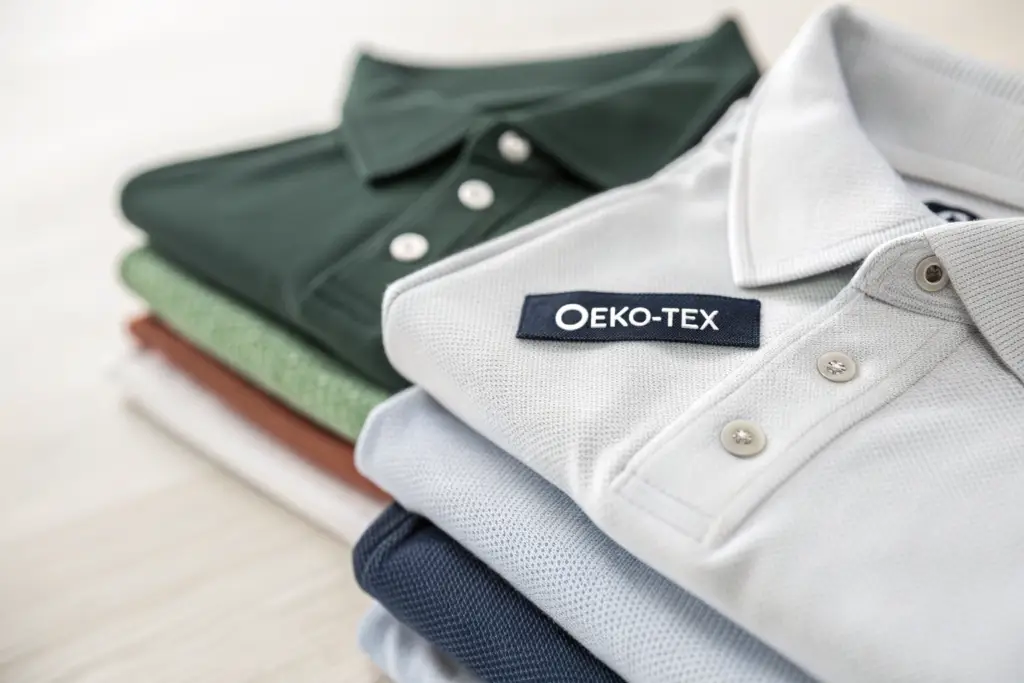
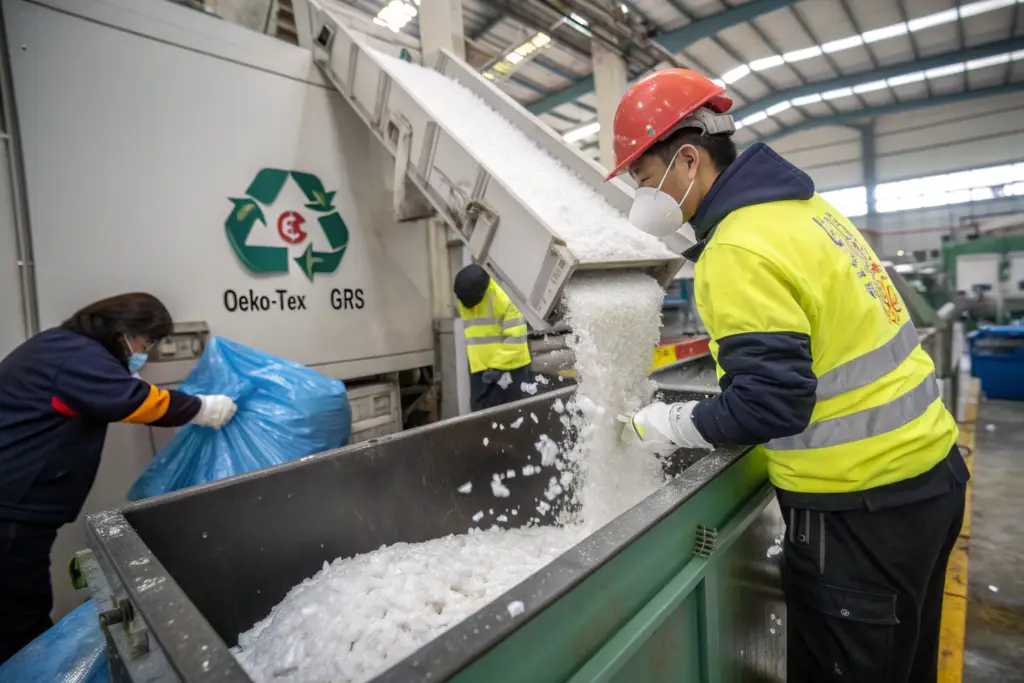
Yes, significantly. Recycling facilities, especially mechanical recyclers, prefer clean, uniform material streams. Apparel with OEKO-TEX certification signals a lower risk of chemical contamination that could damage recycling equipment or degrade the quality of the recycled output. For instance, certain heavy metals can interfere with the melting process of polyester. By ensuring their absence, OEKO-TEX helps maintain the intrinsic value of the material for its next life. This is a key selling point for brands pitching to large corporate buyers who have ESG (Environmental, Social, and Governance) mandates.
What's the Difference Between OEKO-TEX and GRS in a Circular Model?
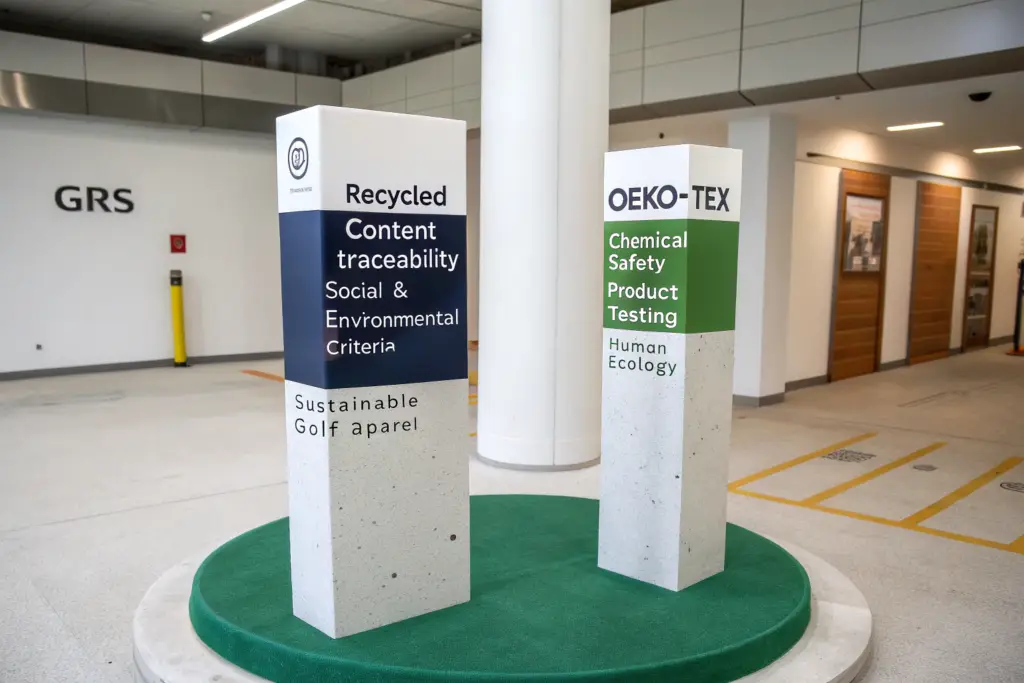
Leading paragraph: You see both labels on sustainable golf wear. One says "safe," the other says "recycled." Are they competing? Not at all. They play complementary but distinct roles. Think of them as two essential pillars: GRS (Global Recycled Standard) verifies the "what" (recycled content), while OEKO-TEX verifies the "how" (safe chemistry). You need both for a credible circular product.
Featured paragraph: In a circular model, GRS tracks the physical flow and percentage of recycled material, ensuring chain of custody. OEKO-TEX STANDARD 100 certifies the chemical safety of the final product. The key difference is focus: GRS is about material origin and traceability; OEKO-TEX is about material safety and human-ecological health. A golf shirt can be 100% GRS-certified recycled polyester but still contain harmful dye auxiliaries. Conversely, a shirt can be OEKO-TEX certified but made from virgin material. The most responsible choice is a product that holds both certifications, which we consistently advocate for at Shanghai Fumao.
How Do These Standards Work Together in Production?
In production, these standards create a layered quality control system. First, the recycled polyester yarn supplier must provide a GRS Transaction Certificate. Then, when that yarn is dyed and knitted/ woven into fabric, the entire process must comply with OEKO-TEX's restricted substances list. Finally, the finished garment is tested. We manage this for our clients by pre-qualifying mills that are certified for both standards. Last season, this dual requirement helped us identify and reject a batch of GRS recycled fabric that failed OEKO-TEX testing for pH value, preventing a potential quality disaster for a client's high-profile golf line launch.
Which Certification is More Important for a "Circular" Claim?
For a credible "circular" claim, both are essential, but they serve different parts of the narrative. GRS is non-negotiable for making a "made from recycled materials" claim. It provides the audited proof. OEKO-TEX is critical for the "designed for next use" and "safe" aspects of circularity. A brand communicating a full circular story should highlight both: "Our polos are made from GRS-certified recycled polyester and are OEKO-TEX certified for chemical safety, ensuring they are ready for a future recycling loop." This comprehensive approach directly addresses the sourcing key points of today's savvy corporate buyers.
What Are the Practical Benefits for a Golf Brand Using Both?
Leading paragraph: Merging OEKO-TEX with circular materials isn't just theory. It delivers concrete business advantages. From stronger marketing to reduced risk, this combination is a powerful tool for differentiation in the crowded golf apparel market. It turns sustainability from a cost center into a value driver.
Featured paragraph: The practical benefits for a golf brand include enhanced brand credibility, compliance with tightening global regulations, reduced long-term liability, and access to premium market segments. A brand can confidently market its apparel as "responsibly made and safe," appealing to golfers who care about both the planet and their health. Furthermore, by designing with certified safe materials, brands future-proof themselves against potential bans on certain substances, protecting their inventory and reputation. Our clients who have adopted this dual approach report better sell-through at retail and stronger relationships with corporate partners.
How Does This Impact Marketing and Customer Trust?
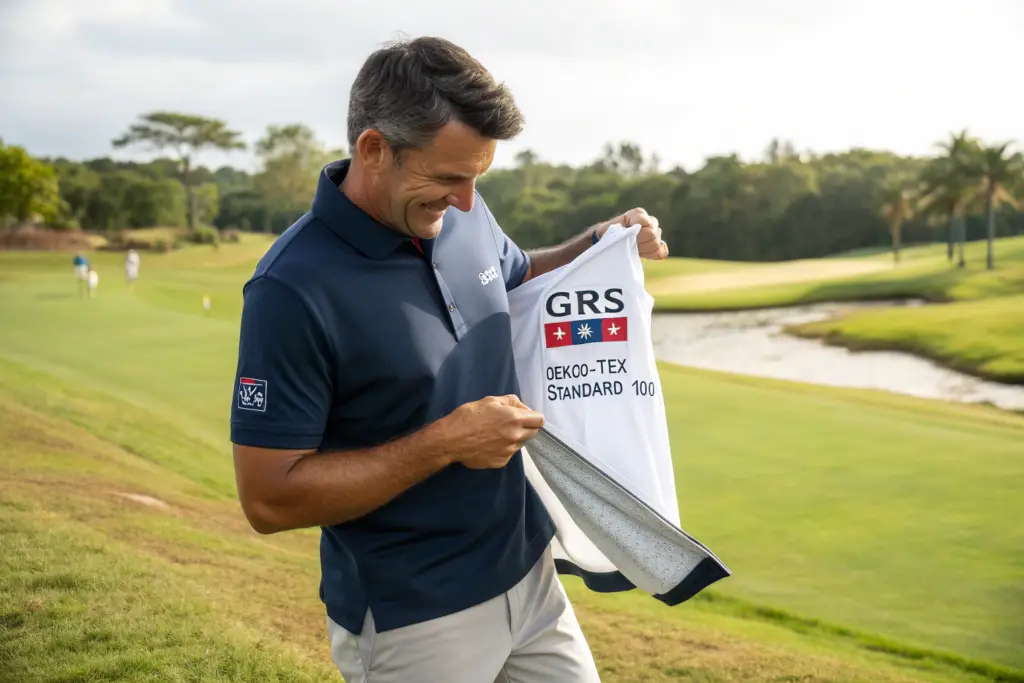
This combination provides a powerful, evidence-based story. Instead of vague terms like "eco-friendly," brands can communicate specific, verifiable achievements: "Every shirt saves 5 plastic bottles from landfill (GRS) and is independently certified free from over 100 harmful substances (OEKO-TEX)." This tangible narrative builds tremendous trust. It also answers the growing consumer demand for transparency. We've seen brands use this story not just in consumer marketing, but also in B2B pitches to golf clubs and corporate event planners, where demonstrating due diligence is paramount.
Does This Lead to Higher Costs or Longer Lead Times?
There is a moderate cost increase. OEKO-TEX testing fees and GRS certification costs add up, and compliant, high-quality recycled fabrics often cost 10-20% more than conventional ones. Lead times can be slightly longer due to the need to source from certified specialized mills. However, these are investments in brand equity and risk mitigation. At Shanghai Fumao, we mitigate these impacts through strategic fabric stocking and consolidated testing programs. We helped one brand redesign their line to use fewer, standardized certified fabrics across multiple styles, which actually reduced their overall material costs and simplified production.
How Does This Influence End-of-Life and Recycling Programs?
Leading paragraph: The final test of circularity is what happens when the garment is no longer wanted. A shirt that is safe and made from single-material recycled content is exponentially easier to process into a new, high-quality product. This closes the loop in a meaningful way, turning marketing claims into operational reality.
Featured paragraph: OEKO-TEX certification directly influences end-of-life by providing a "chemical passport" for the garment. Recyclers can have greater confidence that the material stream is clean, leading to higher-quality recycled output and potentially lower processing costs. For a brand initiating a take-back program, offering OEKO-TEX certified products simplifies the sorting and recycling process, as the chemical risk is minimized. This makes the entire circular business model more viable and scalable.
What Role Does Design Play in This Certified Circular System?
Design is the orchestrator. For true circularity, designers must consider not just aesthetics but also disassembly and material compatibility. This means:
- Designing for monomaterial construction (e.g., a polyester shirt with polyester thread and labels) to ease recycling.
- Avoiding permanent chemical finishes that contaminate the recycling stream.
- Using OEKO-TEX certified components for every element.
We worked with a design team to create a golf jacket where the zipper could be easily removed and the shell fabric (recycled polyester) was separate from the lining, with both layers being OEKO-TEX certified. This design thinking, combined with certification, maximized the garment's future recycling potential.
How Can Brands Start Implementing This Today?
Brands can start with a phased approach:
- Phase 1: Select one best-selling golf polo style. Source GRS recycled fabric that is also OEKO-TEX STANDARD 100 compliant.
- Phase 2: Apply the same standards to all trims (thread, labels) and customization inks.
- Phase 3: Work with a full-package manufacturer like Shanghai Fumao to document the entire chain and obtain the official certificates.
- Phase 4: Build the communication story around this pilot product.
This low-risk approach allows brands to test the market, understand cost implications, and build internal expertise before scaling. The key is partnering with a factory that understands both the certification logistics and the practicalities of sustainable production.
Conclusion
The link between OEKO-TEX and circular fashion in golf is both profound and practical. OEKO-TEX provides the essential foundation of material health, without which circular systems risk circulating toxins. When combined with recycled content standards like GRS, it creates a holistic framework for producing golf apparel that is truly responsible—safe for people today and designed for the planet tomorrow.
For forward-thinking brands, this is no longer a niche consideration but a strategic imperative. It meets regulatory trends, consumer demand, and the ethical duty to produce better.
Transitioning to this model requires a knowledgeable and reliable manufacturing partner. At Shanghai Fumao, we specialize in guiding brands through the integration of OEKO-TEX certification and circular material sourcing, ensuring your golf apparel line is competitive, compliant, and genuinely sustainable. Let us help you build the future of golf fashion. Contact our Business Director Elaine to start the conversation: elaine@fumaoclothing.com. Let's design a cycle of success for your brand.