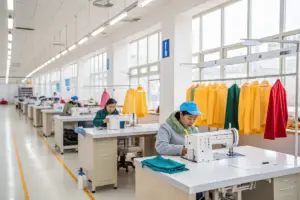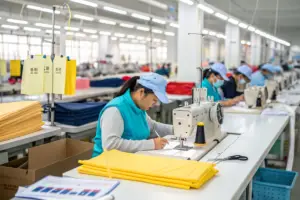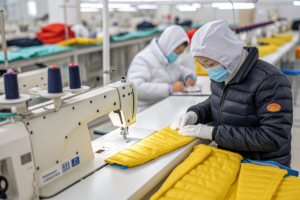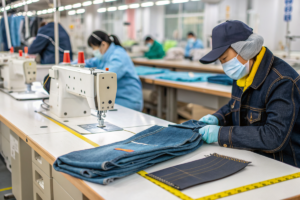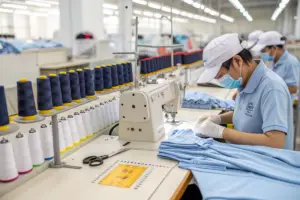
When you think of golf wear, you might picture performance and style. But what about its footprint? The apparel industry is a major contributor to water pollution and chemical waste. As a resort owner or brand, you face growing pressure to demonstrate real environmental responsibility. Guests and members are asking harder questions, and “greenwashing” is no longer enough.
The environmental benefits of OEKO-TEX® certified golf wear are significant and verifiable. They stem from a “preventative” approach that restricts harmful substances at the source, leading to cleaner wastewater from factories, safer products that don’t leach toxins into the environment during use or washing, and a push towards more sustainable manufacturing practices overall. It’s a certification that translates directly into tangible ecological protection.
This isn’t just about a feel-good label. It’s about measurable impacts on water, soil, and long-term sustainability. Let’s explore how choosing certified apparel creates a cleaner product lifecycle from the factory floor to the golf course and beyond.
How Does Certification Reduce Water Pollution from Dyeing and Finishing?
The most immediate environmental impact is on water. Traditional textile dyeing and finishing are notoriously water-intensive and polluting. Harmful chemicals like heavy metals, chlorinated phenols, and toxic softeners can end up in factory effluent, contaminating local waterways.
OEKO-TEX® certification directly combats this by setting strict limits on substances that are toxic to aquatic life. By mandating that these chemicals are not used in production, or are used only within safe, traceable limits, the certification ensures that the wastewater from certified manufacturing is significantly cleaner. This protects ecosystems near production facilities, which are often in developing regions.
What specific water pollutants are restricted?
The STANDARD 100 by OEKO-TEX® prohibits or severely limits a comprehensive list of substances known to harm aquatic environments. Key categories include:
- Heavy Metals: Such as cadmium, lead, mercury, and chromium (VI), which are highly toxic and persistent in water.
- Chlorinated Phenols: Used as biocides and preservatives, these are toxic to fish and other organisms.
- Alkylphenols (APs) and Alkylphenol Ethoxylates (APEOs): Used in detergents and dyeing aids, these are endocrine disruptors for wildlife.
- Phthalates: Often used in plastisol prints or coatings, they can leach out and are harmful to aquatic life.
By banning these at the production stage, certification prevents them from entering the water cycle in the first place.
How does this create a ripple effect in the supply chain?
The requirement forces positive change upstream. To earn and keep certification, a factory must demand cleaner inputs from its own suppliers—the dye houses, chemical suppliers, and trim manufacturers. For example, to meet the standard, a fabric mill must source dyes and auxiliaries that are free of restricted substances. This creates market demand for greener chemistry. At Shanghai Fumao, we’ve seen this firsthand. When we switched key dye suppliers to meet OEKO-TEX® requirements, those suppliers, in turn, reformulated their products, creating a positive multiplier effect throughout the local textile industry.
Does OEKO-TEX Certification Promote Safer End-of-Life for Garments?
A garment’s environmental impact doesn’t end at purchase. When it’s washed, worn out, and finally discarded, what happens? Conventional apparel can leach microplastics and residual chemicals during washing and slowly release toxins if sent to landfill.
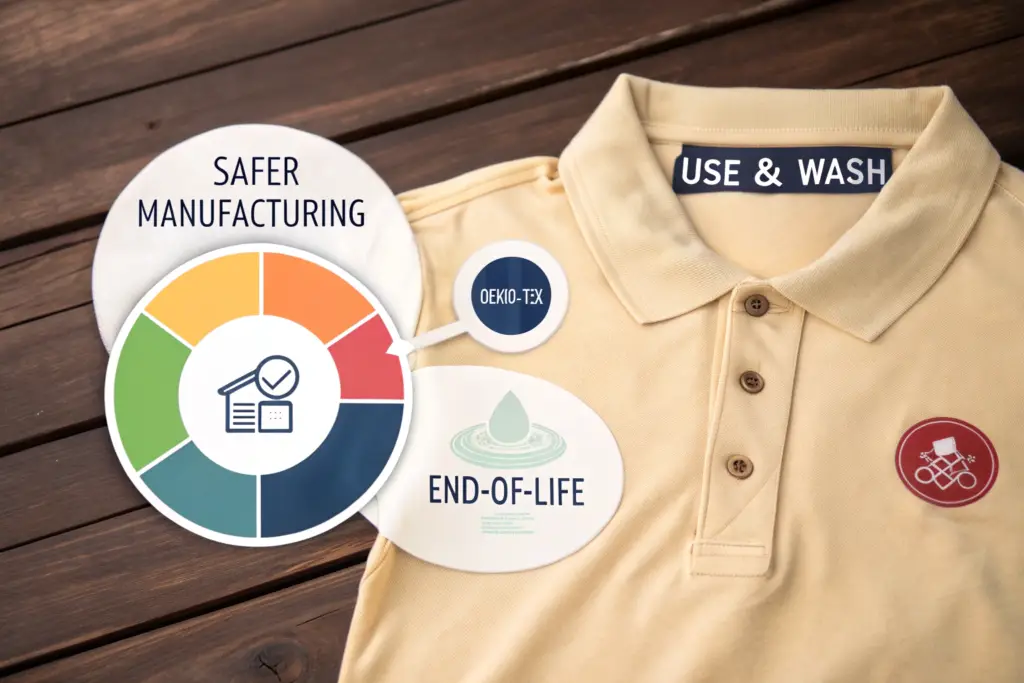
Yes, OEKO-TEX® certification promotes a safer end-of-life. By ensuring the garment is free from harmful levels of regulated substances, it reduces the toxic burden released back into the environment throughout its usable life and upon disposal. This makes the product safer for home washing systems and less damaging in landfill scenarios.
How does it impact microplastic and chemical shedding during washing?
While OEKO-TEX® does not directly test for microplastic shedding, its restrictions on chemical formulations have an indirect benefit. Certain toxic softeners and finishing agents can degrade fiber integrity. Fabrics produced under cleaner chemical protocols can be more durable. More importantly, by restricting harmful substances, the certification ensures that any fibers or chemicals released during washing are less toxic to aquatic ecosystems. This is a crucial, often overlooked benefit for products like golf polos and vests that are frequently laundered.
Is certified apparel better for recycling or composting?
It creates a cleaner feedstock. For mechanical or chemical textile recycling, incoming materials with lower contamination levels are easier and less costly to process. Fabrics laden with heavy metals or persistent organic pollutants can ruin a batch of recycled material. OEKO-TEX® certified garments, being cleaner, are more compatible with emerging circular economy models. While not compostable by default, they present a less hazardous waste stream if landfilled, aligning with broader waste management and sustainability goals for forward-thinking resorts and brands.
What is the Link Between OEKO-TEX and Sustainable Manufacturing (STeP)?
OEKO-TEX® is more than a product test. The STeP (Sustainable Textile & Leather Production) certification focuses on the factory itself. For brands who want to dig deeper, this is the tool to assess and improve the environmental performance of their manufacturing partners.
STeP by OEKO-TEX® provides a holistic assessment of a factory’s environmental practices, covering six key areas: Chemicals Management, Environmental Performance, Environmental Management, Social Responsibility, Quality Management, and Health & Safety. It measures metrics like energy and water consumption, wastewater treatment, and emissions. A facility with STeP certification is demonstrably committed to reducing its overall operational footprint.
How does STeP certification translate to real-world resource savings?
STeP is data-driven. Certified facilities must track and optimize key resources. For instance:
- Water: Implementing water recycling loops in dyeing reduces freshwater intake by 30-50%.
- Energy: Upgrading to efficient boilers and heat recovery systems can cut fossil fuel use significantly.
- Chemicals: The required Chemicals Management system minimizes waste and promotes safer substitutions.
A golf apparel brand we work with specifically chose our factory because our STeP certification data showed a 40% lower water consumption per kilogram of fabric compared to the industry average in our region—a tangible metric they could share in their sustainability report.
Can a brand use STeP to make better sourcing decisions?
Absolutely. STeP provides a standardized, credible scorecard (from Level 1 to Level 3) for comparing factories. Instead of relying on vague promises, a brand can ask for a potential supplier’s STeP report or certificate. This allows for objective decision-making based on environmental and social criteria. For a resort sourcing custom uniforms, partnering with a STeP-certified manufacturer like Shanghai Fumao is a powerful way to substantiate claims of a responsible supply chain, adding depth to the story behind the OEKO-TEX® label on the finished garment.
How Do These Benefits Align with a Golf Resort’s Green Initiatives?
For a golf resort, environmental stewardship is often part of the core brand identity—from water conservation on the course to habitat protection. The apparel worn by staff and sold in the pro shop should reflect these same values to avoid hypocrisy and build an authentic, unified brand.
OEKO-TEX® certified uniforms and merchandise directly support a resort’s green initiatives by ensuring the apparel pillar of the operation aligns with broader environmental goals. It demonstrates a comprehensive commitment that extends from the macro (the golf course ecosystem) to the micro (the chemicals in a shirt). This coherence strengthens marketing messages and meets the expectations of eco-conscious guests.

Can certified apparel be part of a resort’s sustainability reporting?
Yes, it provides verifiable data points. Resorts pursuing certifications like GEO (Golf Environment Organization) or Audubon International can include their procurement policy for OEKO-TEX® certified textiles as evidence of responsible supply chain management. The certificates from suppliers serve as third-party proof. This moves beyond aspiration to documented action, which is increasingly important for investors, members, and regulatory bodies.
How does this influence guest perception and engagement?
It turns a purchase into a participation. When a guest buys a pro shop item with the OEKO-TEX® label, they aren’t just buying a souvenir; they are supporting the resort’s environmental ethic. This fosters a deeper connection. Resorts can educate guests through signage or website content: “Our staff uniforms and pro shop collections are OEKO-TEX® certified, meaning they’re produced with strict limits on water pollutants and harmful chemicals—part of our promise to protect the environment you enjoy.” This narrative enhances the guest experience and builds brand loyalty based on shared values.
Conclusion
The environmental benefits of OEKO-TEX® certified golf wear are profound and multi-layered. They begin at the very start of the supply chain by preventing water pollution from toxic dyes and finishes. They extend through the product’s life, making it safer to wash and less damaging to discard. Through the STeP certification, the system drives whole factories towards greater energy efficiency and resource conservation.
For golf resorts and brands, these benefits are not just operational checkboxes; they are strategic assets. They align apparel with broader sustainability missions, provide authentic content for marketing and reporting, and meet the rising demand for genuine responsibility from guests and consumers.
Making the switch to certified manufacturing is a clear step towards a greener operation. Partnering with an experienced, certified manufacturer ensures you capture these benefits seamlessly. Shanghai Fumao is committed to producing high-performance golf wear that meets both your quality standards and environmental values. To explore how our OEKO-TEX® and STeP certified production can support your green initiatives, contact our Business Director, Elaine, at elaine@fumaoclothing.com. Let’s dress your team and your pro shop in apparel that respects the game and the planet.